
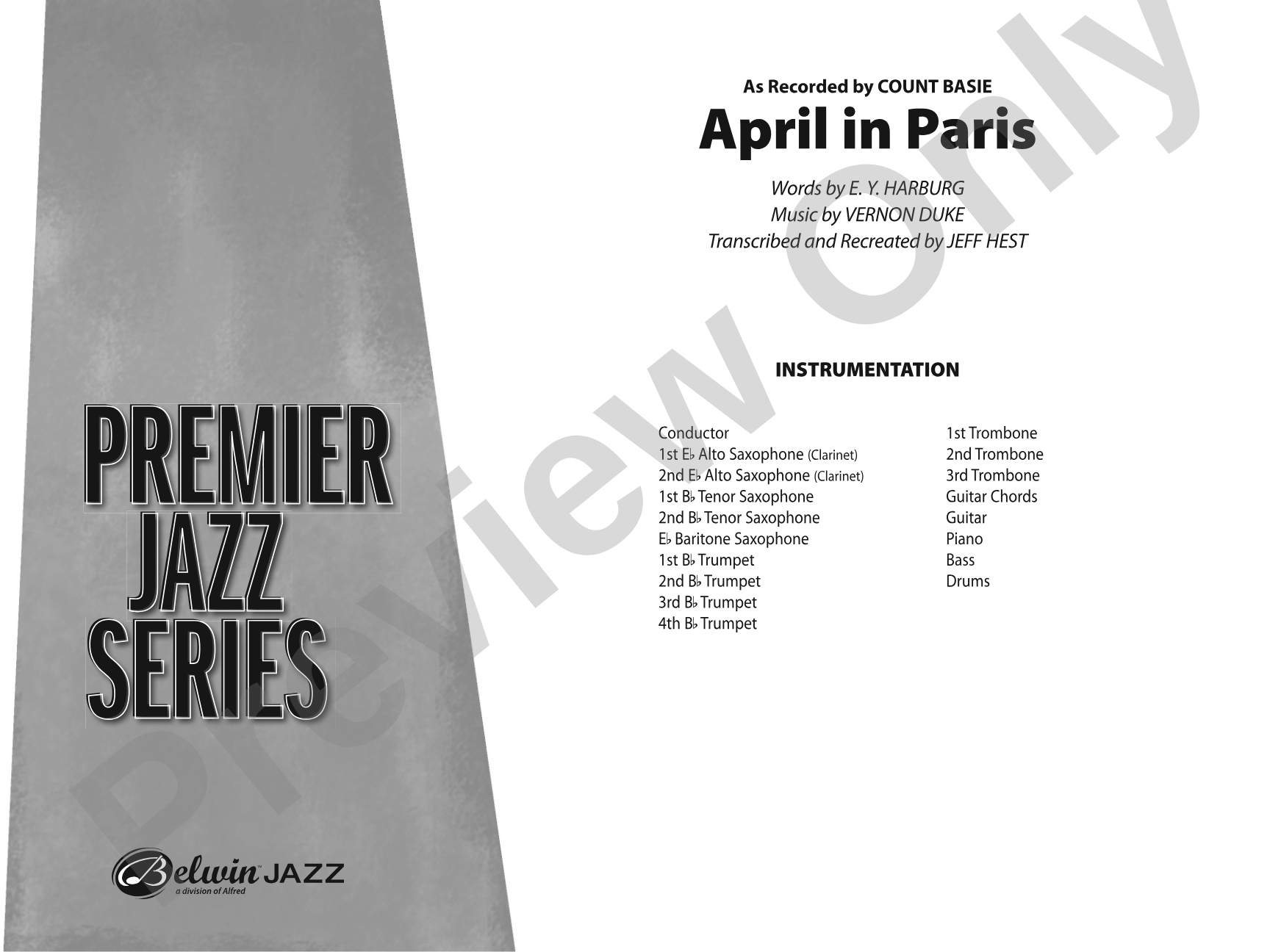

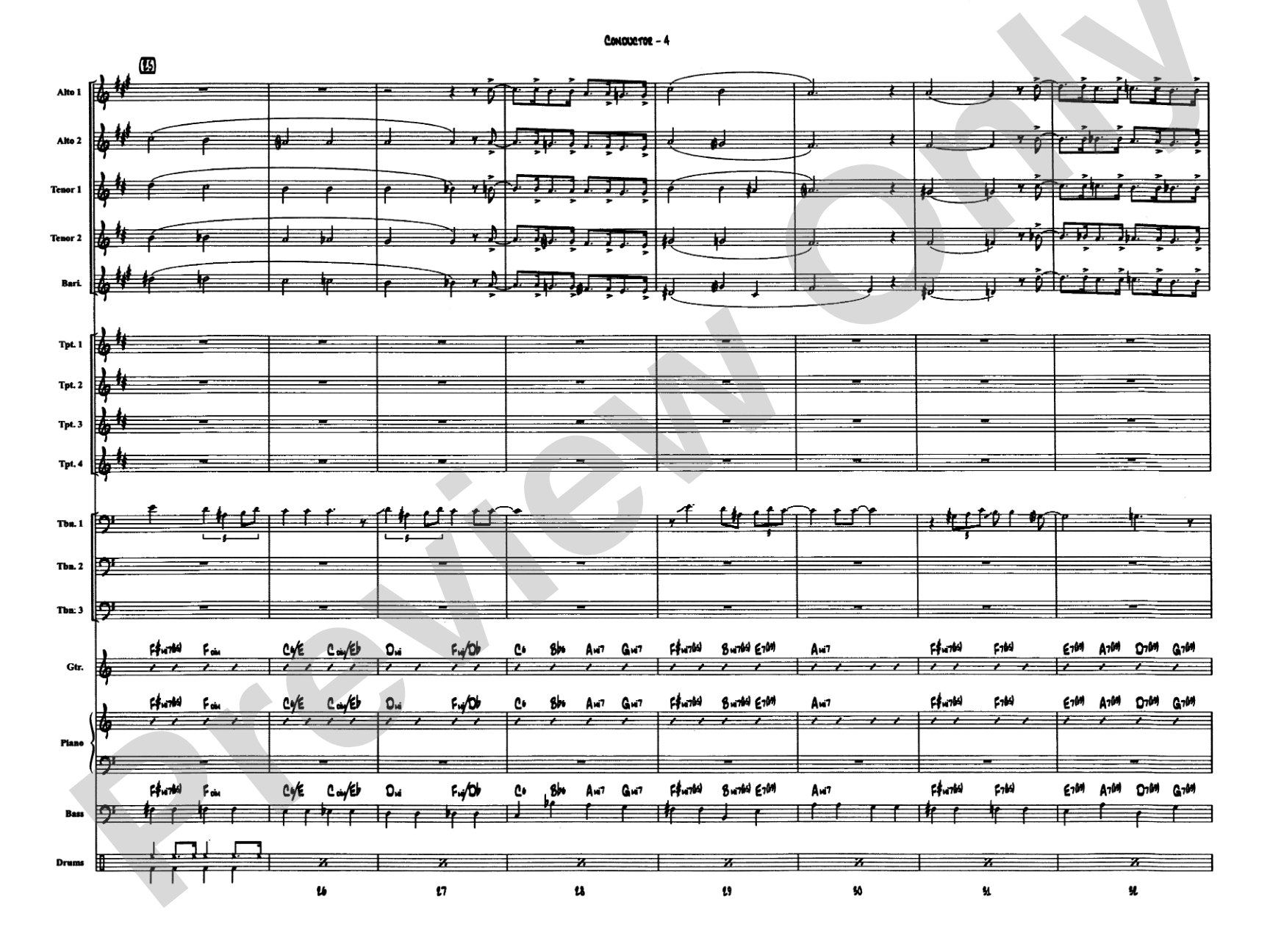
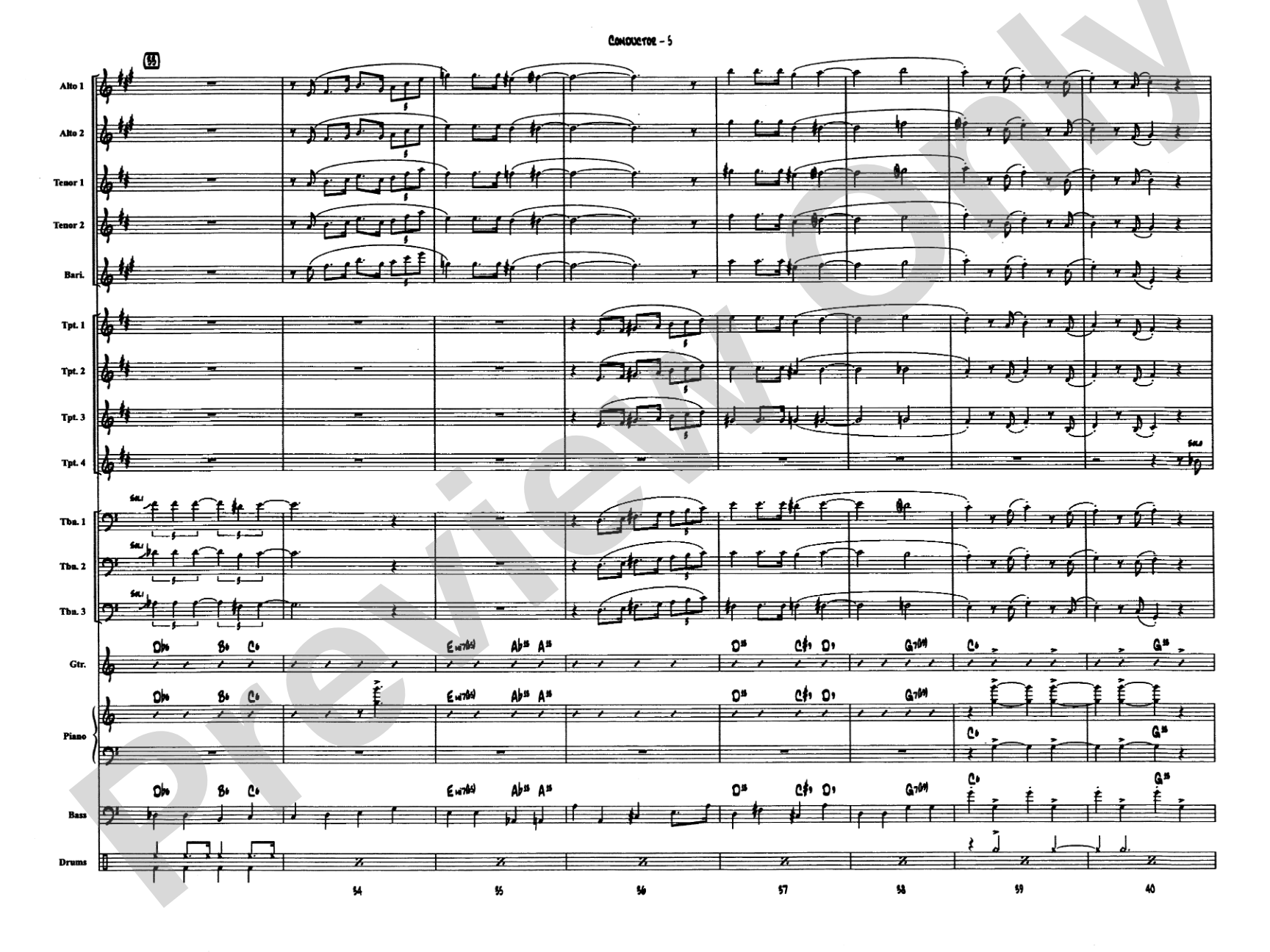
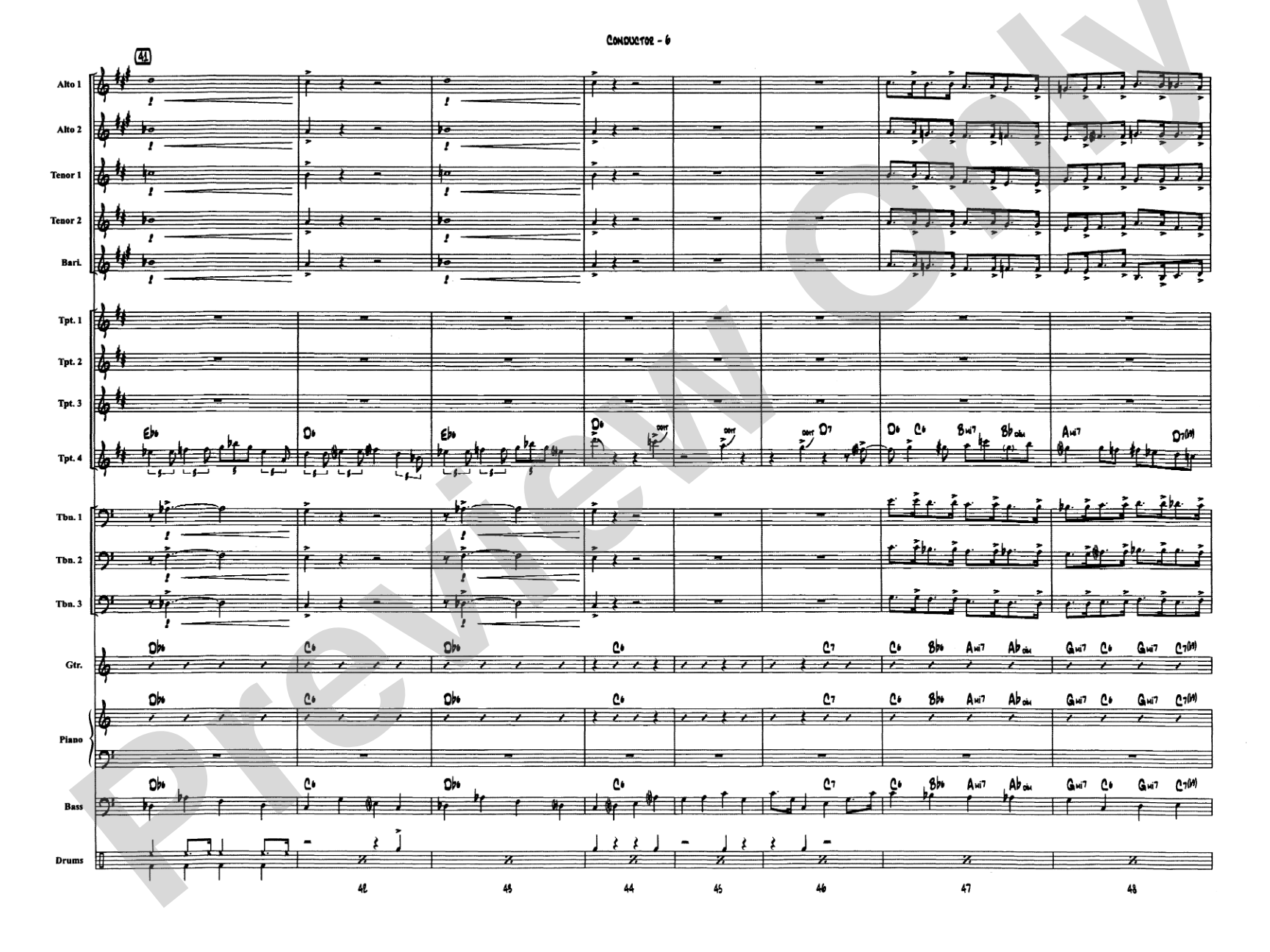
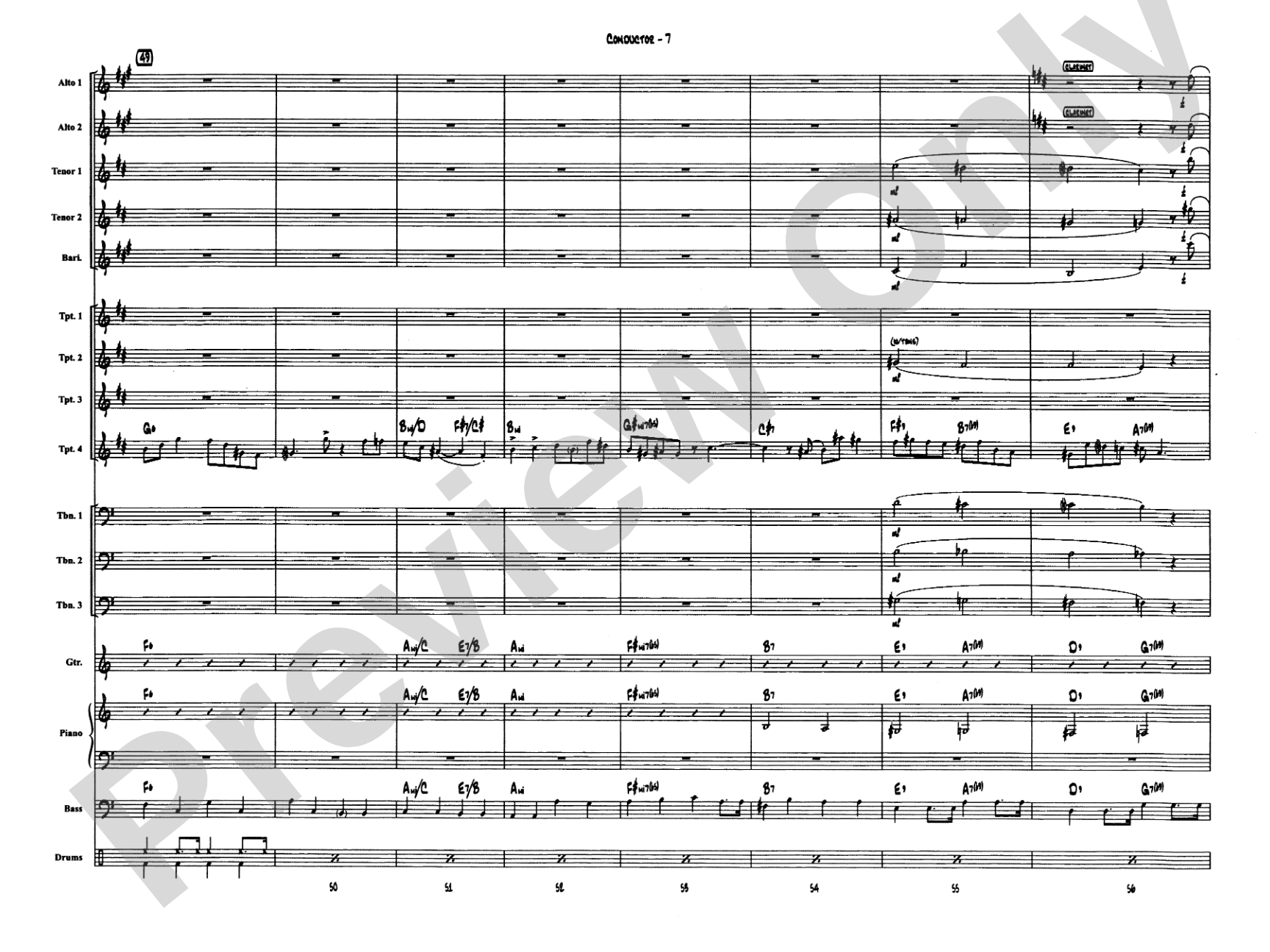

April in Paris: Jazz Ensemble Conductor Score & Parts
Words by E. Y. Harburg, music by Vernon Duke / arr. Jeff Hest
Grade: 4 (Medium Advanced / Difficult)
Item: 00-PK-0006852

$60.00
Pickup currently not available
Buy Extra Parts (Digital PDF Download)
| Product | Price | Quantity |
|---|---|---|
| April in Paris: Score | $11.00 | |
| April in Paris: E-flat Alto Saxophone | $5.99 | |
| April in Paris: 2nd E-flat Alto Saxophone | $5.99 | |
| April in Paris: B-flat Tenor Saxophone | $5.99 | |
| April in Paris: 2nd B-flat Tenor Saxophone | $5.99 | |
| April in Paris: E-flat Baritone Saxophone | $5.99 | |
| April in Paris: 1st B-flat Trumpet | $5.99 | |
| April in Paris: 2nd B-flat Trumpet | $5.99 | |
| April in Paris: 3rd B-flat Trumpet | $5.99 | |
| April in Paris: 4th B-flat Trumpet | $5.99 | |
| April in Paris: 1st Trombone | $5.99 | |
| April in Paris: 2nd Trombone | $5.99 | |
| April in Paris: 3rd Trombone | $5.99 | |
| April in Paris: Guitar Chords | $5.99 | |
| April in Paris: Guitar | $5.99 | |
| April in Paris: Piano Accompaniment | $5.99 | |
| April in Paris: String Bass | $5.99 | |
| April in Paris: Drums | $5.99 |
Parts Added to Cart!
Description
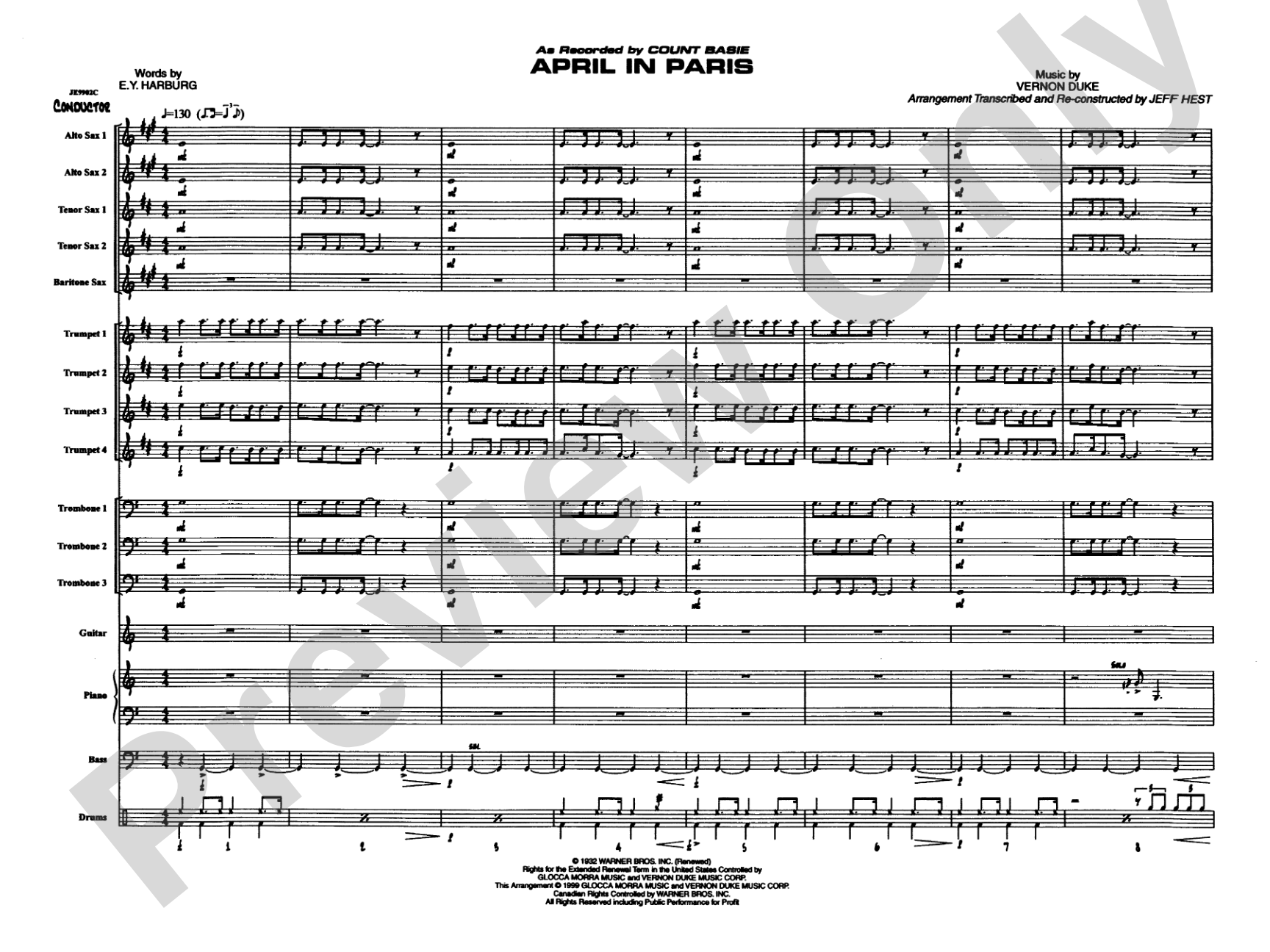
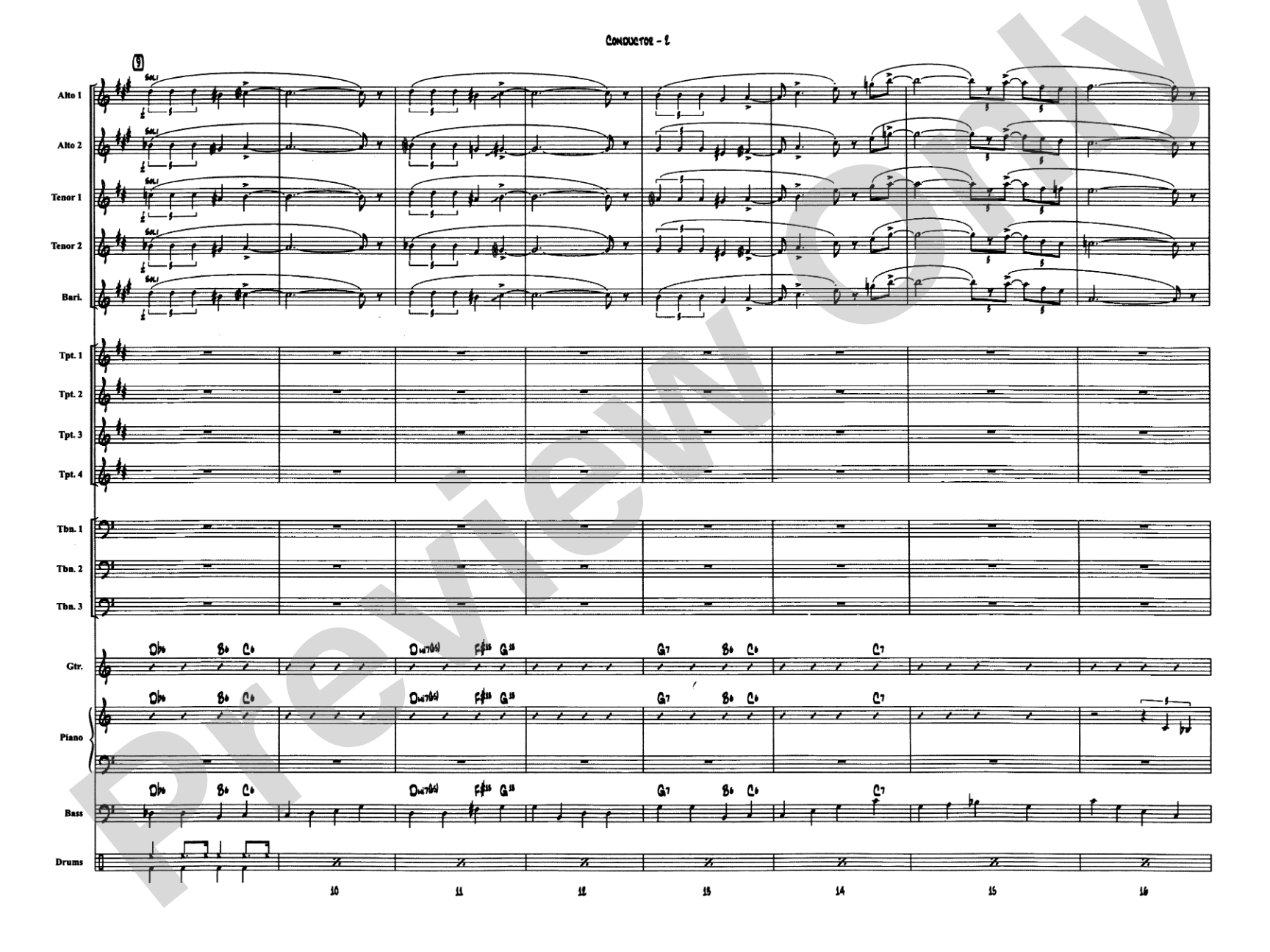
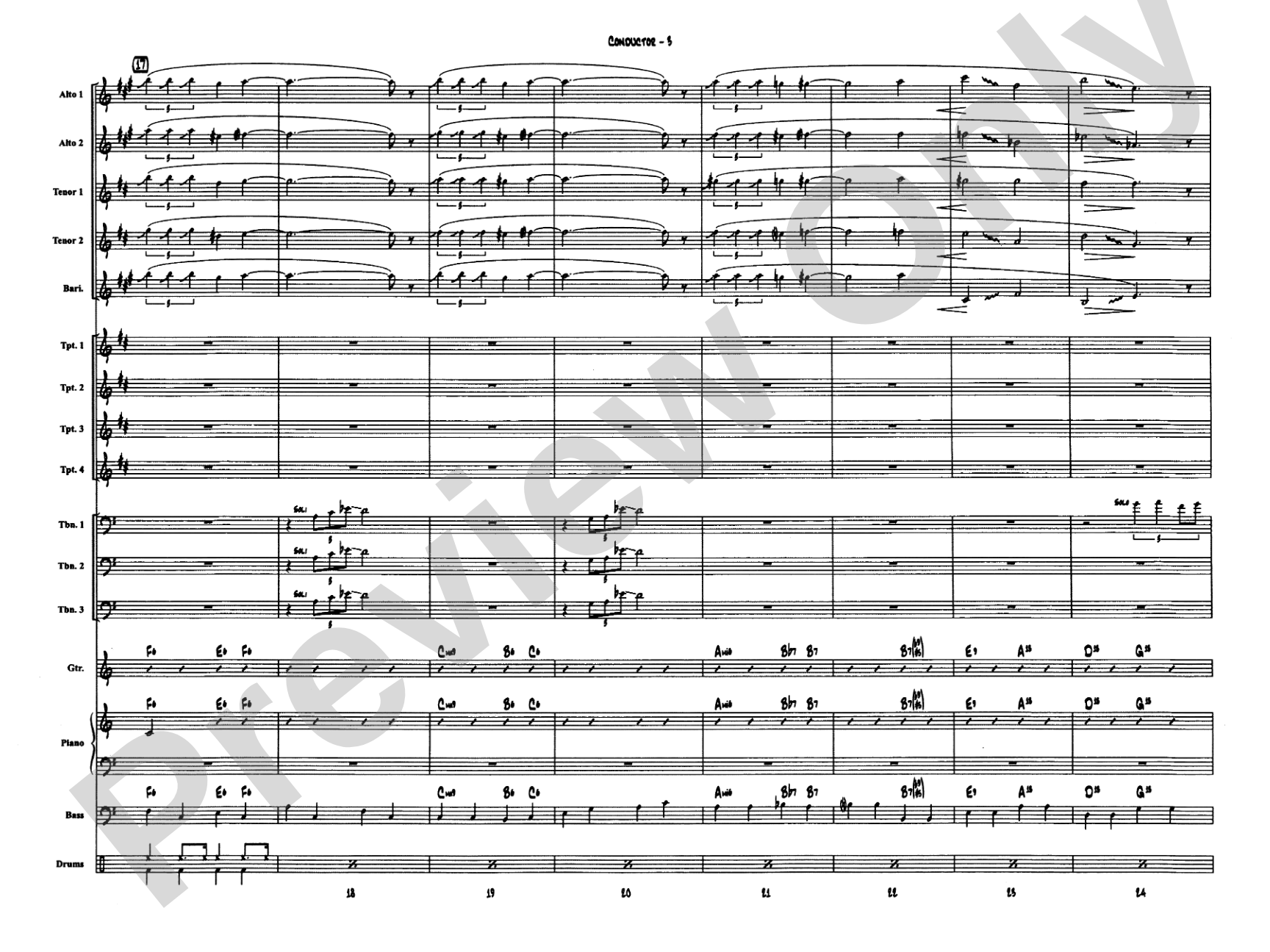
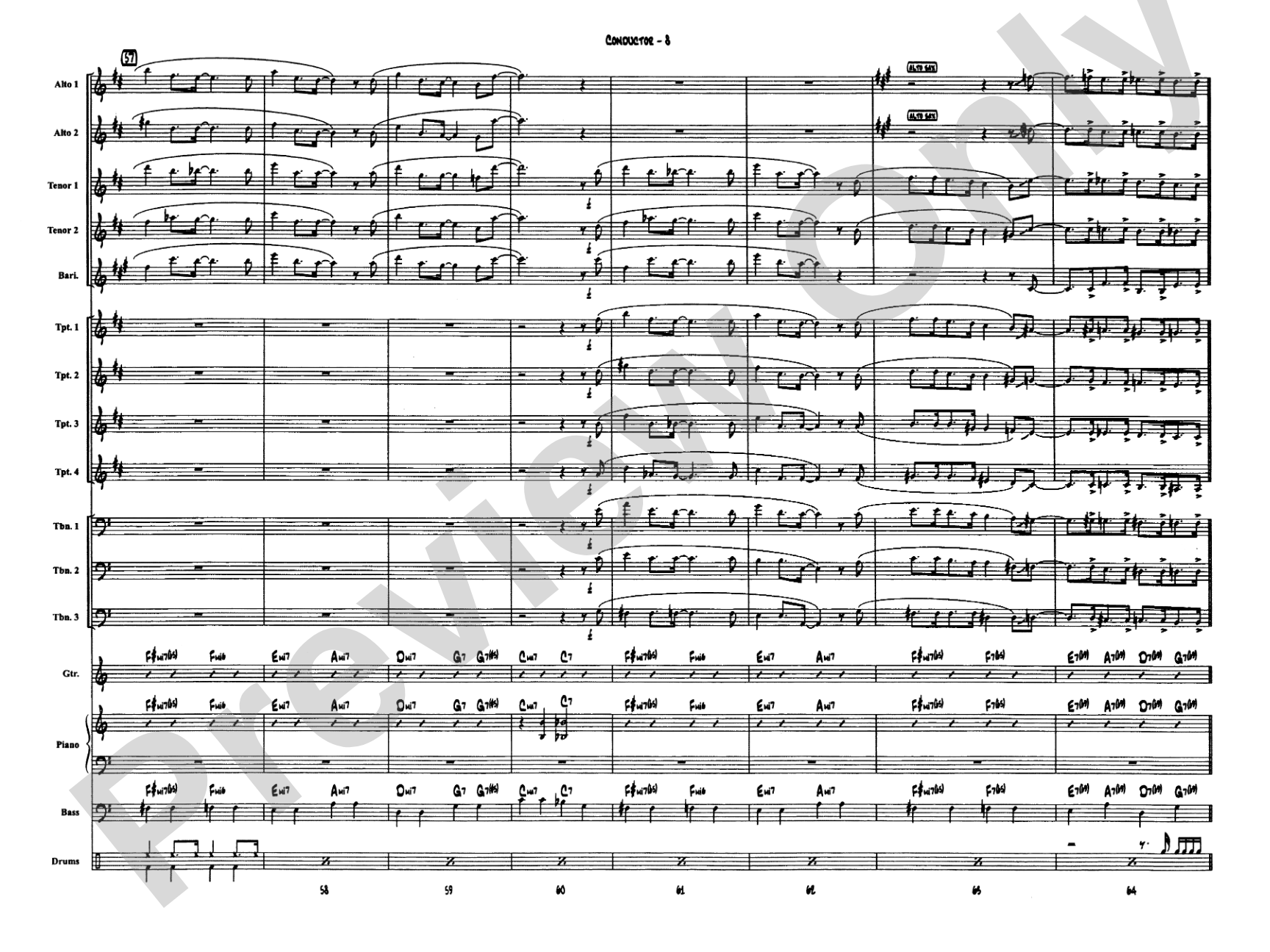
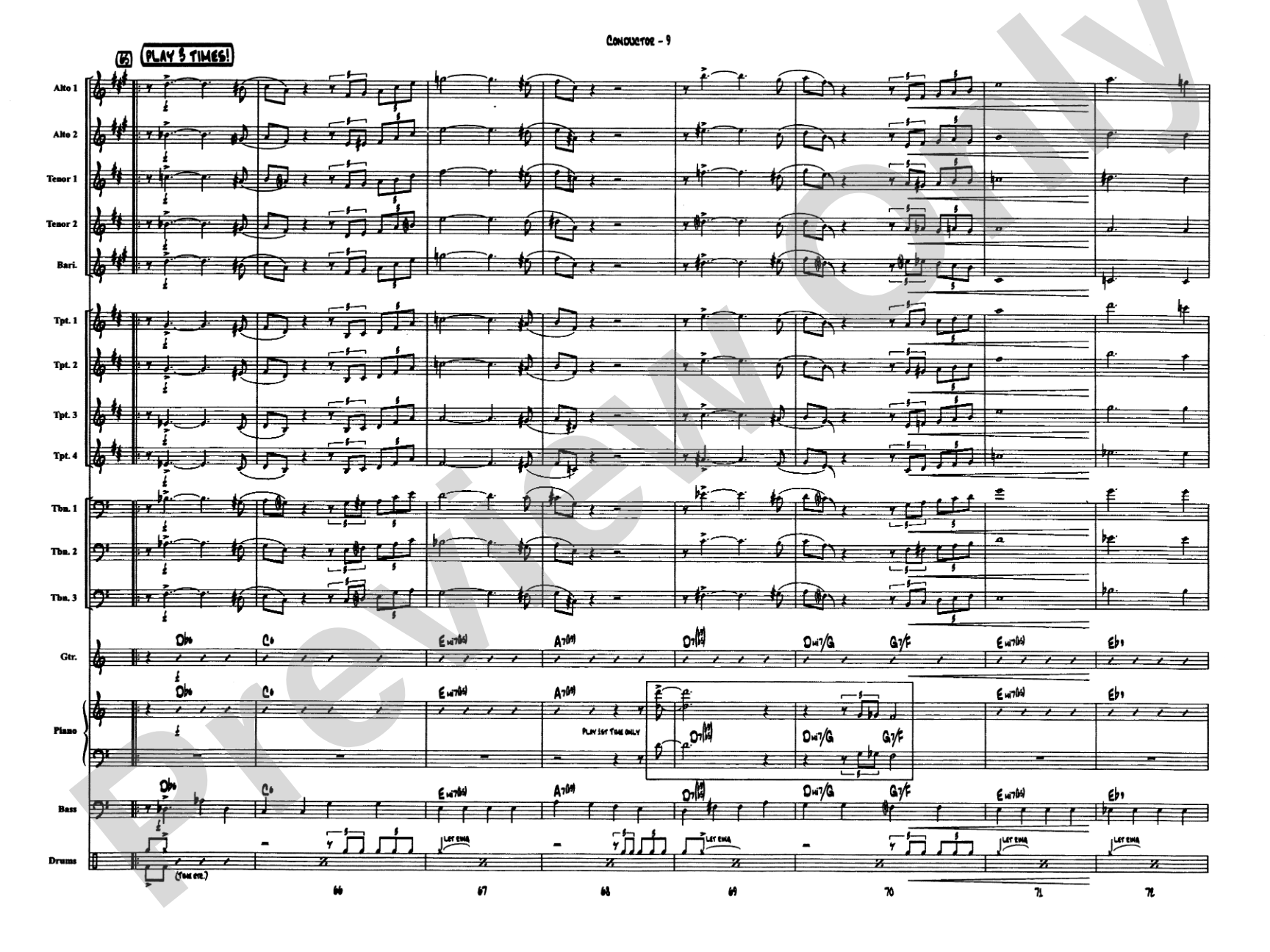
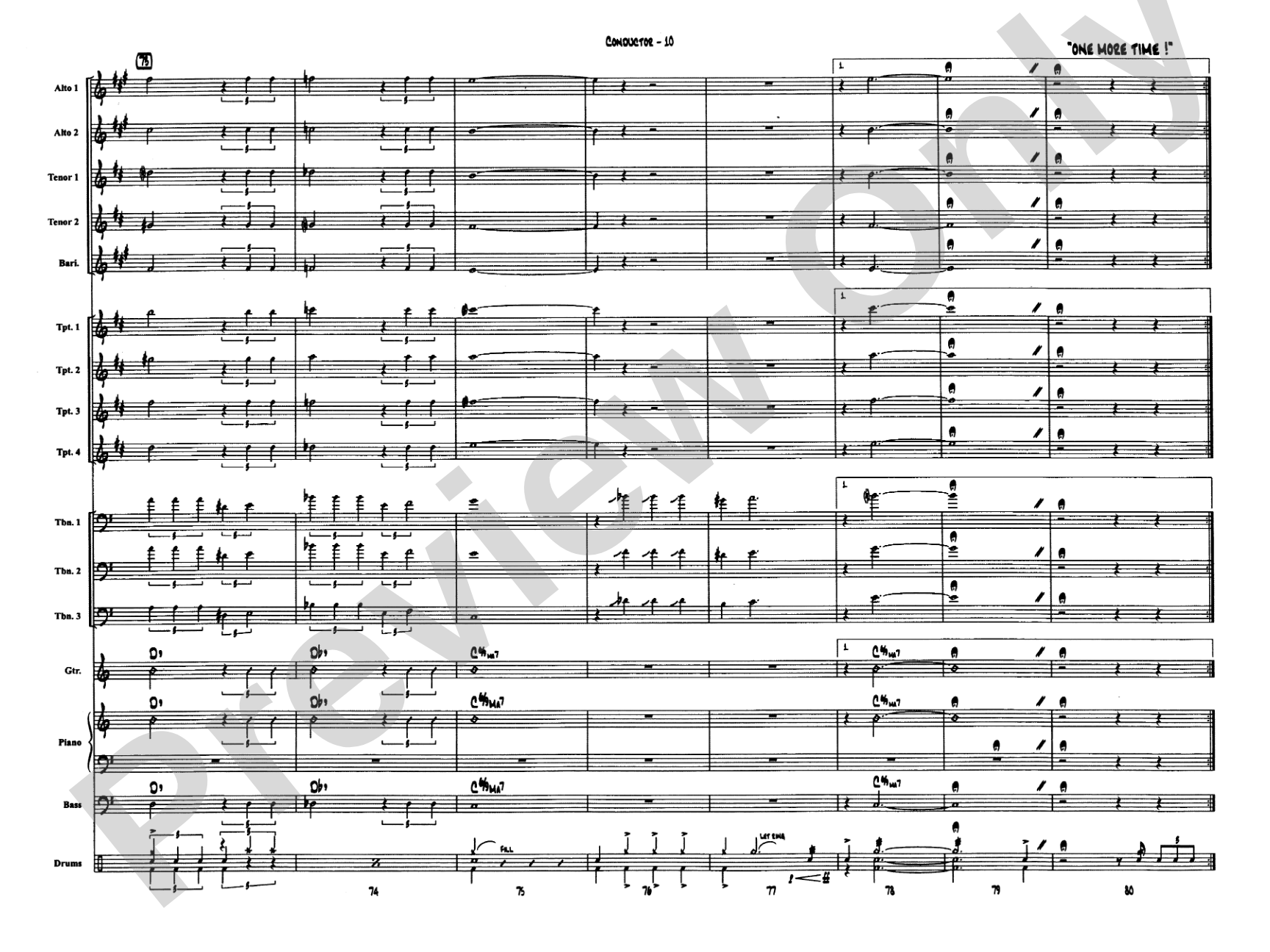
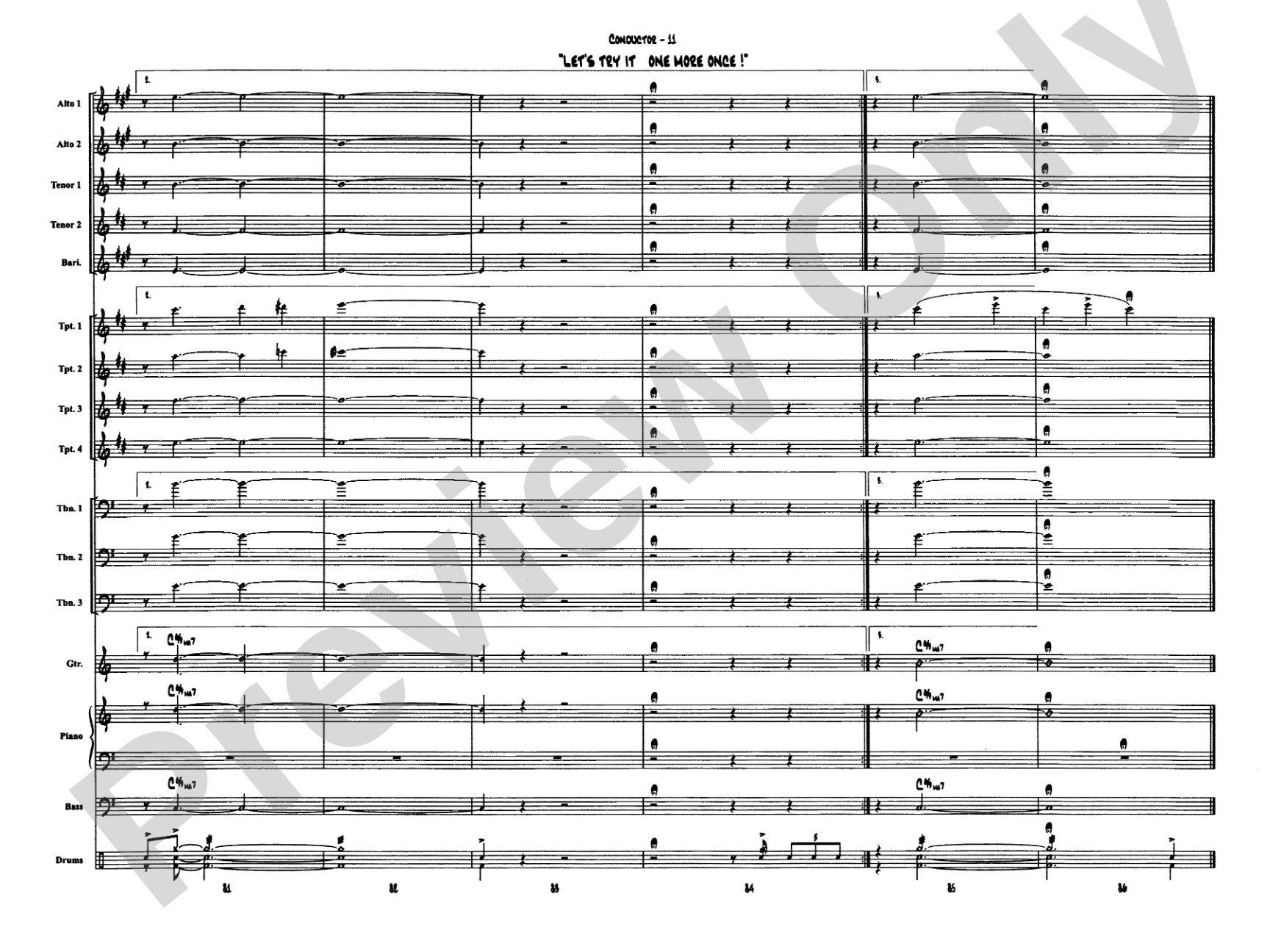
Here it is exactly how Count Basie and his orchestra played it! Every detail of this jazz standard has been transcribed and reconstructed by Jeff Hest. What better way to learn about the Basie style than to play the music? This is an important educational vehicle that is long overdue. Medium (3:44)


Don't just read it, hear it, play along with it, and watch your students grow with it. In MakeMusic Cloud, April in Paris: Jazz Ensemble Conductor Score & Parts comes alive with professional accompaniment, adjustable tempo, and built-in practice tools that turn solo practice into real progress.
Open in the Player
Jump straight in and assign it today.
Start Your Free Trial
Open this title and explore the full library in minutes.
Sample Audio
No sample audio found.
Sample Video
No sample videos found.
Additional Details
Series:
Premier Jazz Series
Publisher:
Alfred Music
Page Count:
62
SKU:
00-PK-0006852
More about this title
About the Arranger: Jeff Hest

Jeff Hest has built a prolific career as an arranger, composer, and producer in the New York City music industry. His work spans commercial music (hundreds of national advertising campaigns), jazz and pop recordings (over 40 albums), and scoring for Broadway productions and film, collaborating with musicians including Urbie Green, Eddie Daniels, Derek Smith, and Milt Hinton.
Recognized for his contributions to music and music business, Hest holds a doctoral equivalency from the City University of New York, where he serves as an assistant professor teaching music business and technology.
Why we love this
This transcription captures the authentic Basie sound in every detail, giving your ensemble direct access to how a master bandleader shaped phrasing, voicing, and groove. Rather than a generic jazz standard arrangement, you're studying the actual voice-leading and rhythmic sensibilities that made the Basie style distinct and influential. It's an honest educational tool that teaches by example.
What to expect
The groove settles immediately into that classic relaxed swing that Basie perfected. Underneath the melody lies a perfectly calibrated sense of ease and propulsion, with the ensemble moving together in that way that feels effortless but actually requires everyone locked in.
Who it's for
Jazz ensembles at the Grade 4 level will find this appropriate for a group with solid fundamentals in swing style and section playing. Directors preparing for contests, festivals, or concert programs benefit from having an authoritative version that reflects how the music was actually performed in the Basie era.
How to get the most out of it
- Study the Basie recordings alongside this score so your ensemble internalizes the relaxed, swinging articulation and behind-the-beat phrasing that defines the style.
- Balance the saxes and brass carefully; Basie's orchestrations were built on lean, cutting sections that propelled each other rather than competed.
- Lock in the rhythm section first, especially the relationship between the walking bass and comping piano, before the full ensemble joins in.
- Listen for the dynamic restraint in this arrangement; Basie favored control and space over constant volume, which actually creates more impact.
How to use it
Program this as a centerpiece for a jazz program focused on big band history or as a contest selection that demonstrates your ensemble's grasp of authentic jazz style. It pairs naturally with other standards arranged in the Basie tradition, and the substantial duration (3:44) makes it a substantial solo performance piece rather than a shorter novelty.
Skills your students will build
- Swing articulation and behind-the-beat phrasing in the Basie style
- Section balance and blending within saxophone and brass choirs
- Reading and executing authentic jazz voicings and chord qualities
- Responding to the rhythm section's groove and maintaining ensemble cohesion across longer musical forms
- Listening and playing with restraint, using dynamic control to create impact