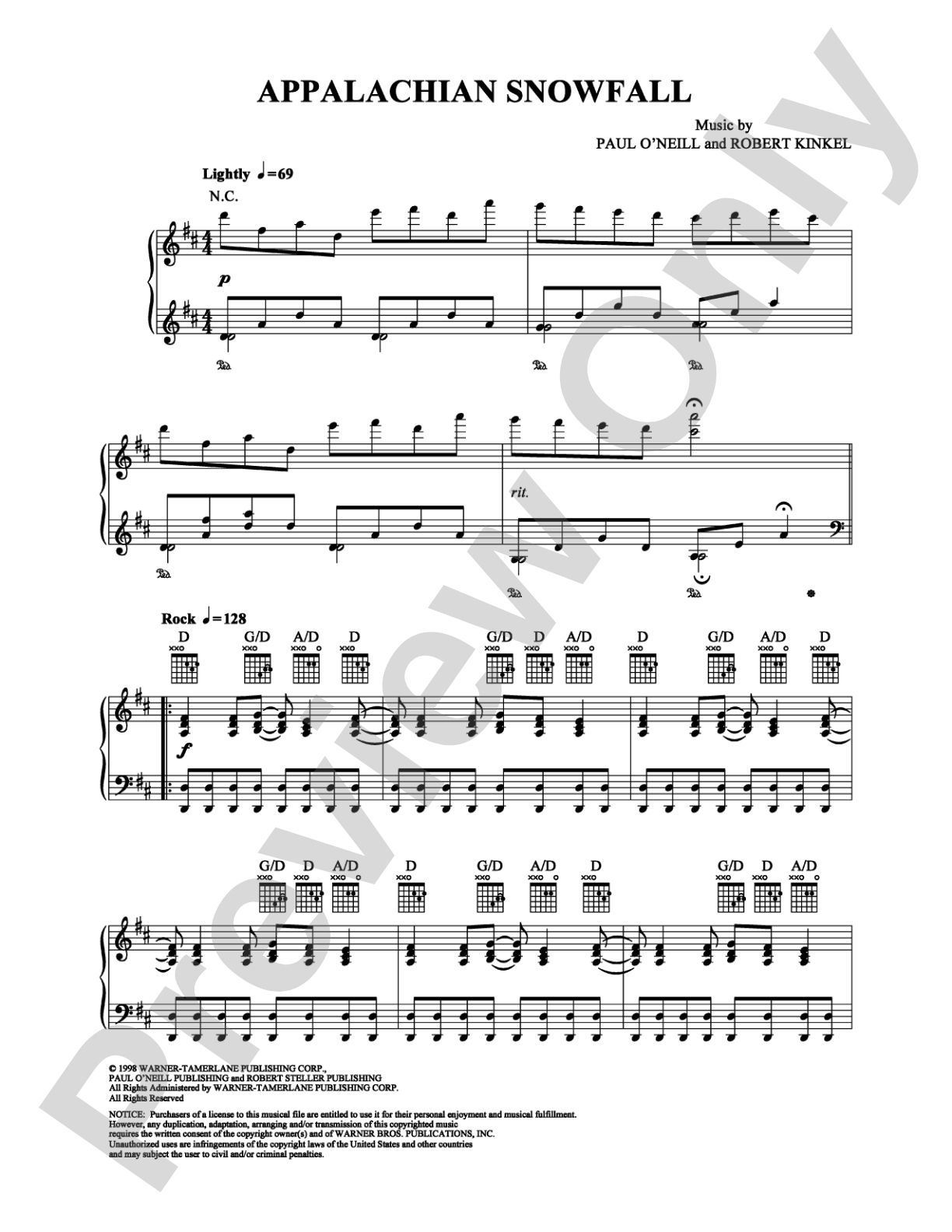
Appalachian Snowfall: Piano Digital Sheet Music

Appalachian Snowfall: Piano Digital Sheet Music

Paul O'Neill, Trans-Siberian Orchestra, Robert Kinkel

Item: 00-PS-0001481

Digital Download
$3.99
Description

Appalachian Snowfall: Piano Digital Sheet Music isn't in MakeMusic Cloud just yet...but it could be. Let us know you'd like to see it, and you'll help shape what comes next. In the meantime, start a free trial and dive into thousands of interactive titles your students can play along with today.

Sample Audio
No sample audio found.
Sample Video
Additional Details
SKU: 00-PS-0001481

More about this title

About the Artist: Trans-Siberian Orchestra

Trans-Siberian Orchestra is a rock band known for blending classical instrumentation with contemporary rock and metal elements, creating a cinematic, orchestral sound. Their annual winter tour and holiday albums have made them fixtures in seasonal programming, particularly appealing to audiences who connect rock music with classical compositional depth.

Why we love this

This arrangement brings orchestral grandeur into a solo piano format without sacrificing the dramatic arc that defines Trans-Siberian Orchestra's style. Students encounter a piece that demands both technical precision and emotional storytelling, bridging the gap between classical training and contemporary rock sensibility in a way that keeps practice engaging.

What to expect

Sweeping and atmospheric, with crystalline upper register passages that evoke falling snow against a rich harmonic foundation. The piece builds from delicate, almost minimalist moments into moments of genuine power, creating a journey that feels both intimate and grand.

Who it's for

Pianists in the intermediate to advanced range who want to expand beyond classical or jazz standards into contemporary rock literature. This appeals especially to students drawn to cinematic, arrangement-heavy music and to recital programmers seeking pieces that connect with non-traditional audiences.

How to get the most out of it

  • Balance the layered dynamics carefully; what sounds like a wall of sound in the original recording requires intentional voicing choices at the keyboard to prevent muddiness.
  • Shape the harmonic progressions with subtle tempo flexibility rather than metronomic rigidity. The piece breathes best when you allow rubato during emotional peaks.
  • Record yourself and listen for clarity in the middle register, where much of the melody sits. This is often the hardest range to control on piano.
  • Study the original recording to internalize the orchestral colors and articulations you're translating through two hands.

How to use it

Ideal for winter recitals or holiday-themed concerts where you want to move beyond traditional seasonal repertoire. This arrangement also works well in contemporary music showcases or as a contrast piece between classical works, demonstrating how rock composition draws from orchestral principles.

Skills your students will build

  • Managing dense harmonic textures with limited hands
  • Translating orchestral color and arrangement into pianistic voicing
  • Shaping extended melodic lines across the staff
  • Balancing simultaneous musical layers (melody, accompaniment, counter-melody)

You May Also Like