
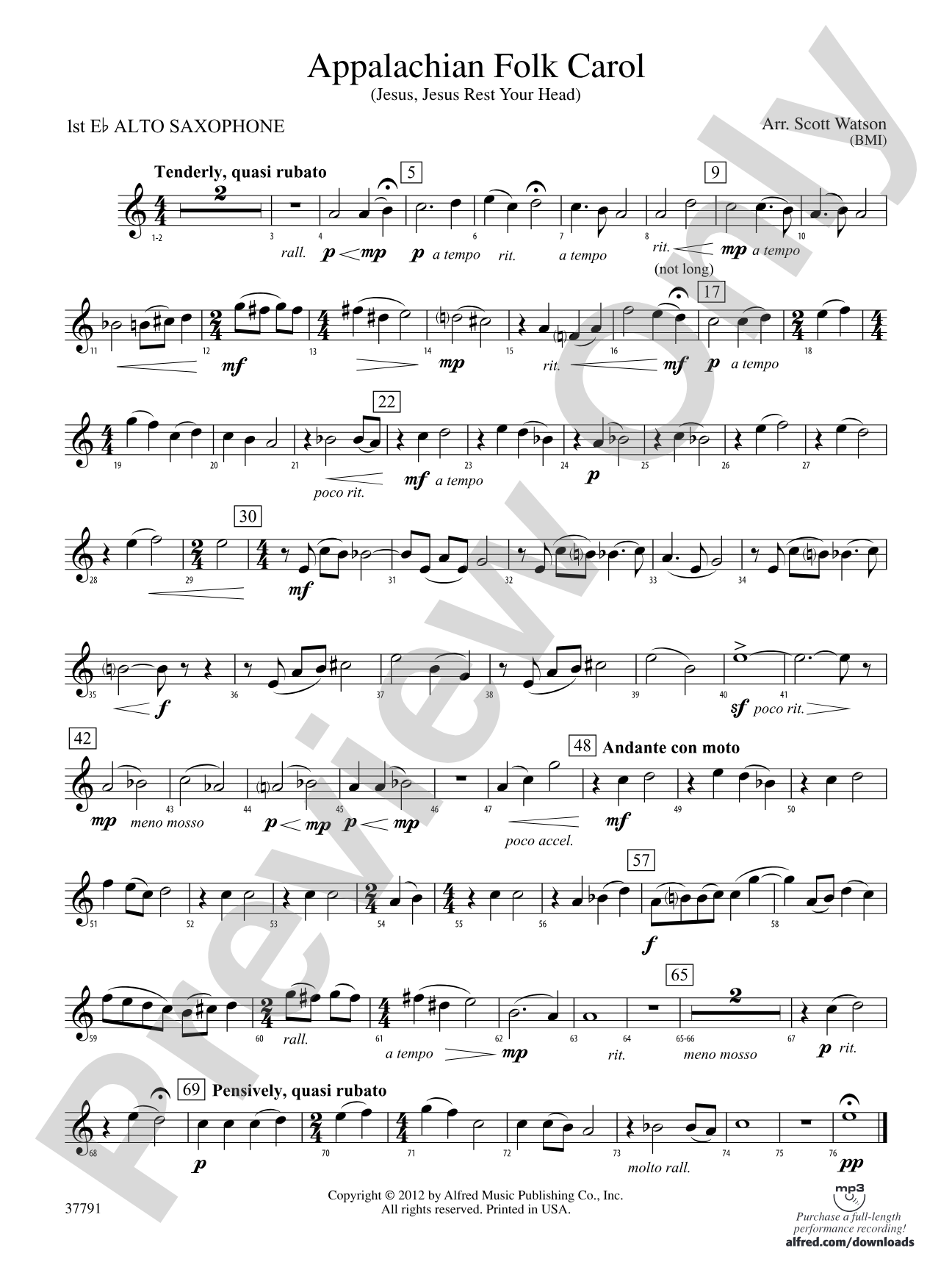

Appalachian Folk Carol: E-flat Alto Saxophone
Traditional / arr. Scott Watson
Grade: 1.5 (Easy)
Item: 00-PC-0015322_AX1
$3.00
Pickup currently not available
Description
The Appalachian folk carol, "Jesus, Jesus, Rest Your Head," was collected by folk musicologist (and the composer of the tune, "I Wonder as I Wander"), John Jacob Niles, in the early Twentieth Century. This hauntingly beautiful arrangement of the tune explores the Nativity with peaceful reverence and mysterious wonder. Watson's writing includes expressive tempo changes, lush scoring for full band, transparent episodes for woodwinds, and delicate percussion writing, offering bands ample opportunity for performing with musical beauty and eloquence. (3:50)


Don't just read it, hear it, play along with it, and watch your students grow with it. In MakeMusic Cloud, Appalachian Folk Carol: E-flat Alto Saxophone comes alive with professional accompaniment, adjustable tempo, and built-in practice tools that turn solo practice into real progress.
Open in the Player
Jump straight in and assign it today.
Start Your Free Trial
Open this title and explore the full library in minutes.
Sample Audio
1
Audio File
--:--
0:00
0:00
Sample Video
No sample videos found.
Additional Details
Series:
Challenger Band Series
Publisher:
Alfred Music
Page Count:
126
SKU:
00-PC-0015322_AX1
More about this title
About the Arranger: Scott Watson

Scott Watson brings three decades of classroom experience to his work as a composer and arranger. After spending 35 years teaching instrumental music in the Parkland School District (Allentown, PA), where he directed the high school bands and coordinated the elementary band and strings program across the district, he moved into higher education as Associate Professor of Music at Cairn University in Langhorne, Pennsylvania. His compositional output reflects this dual foundation: more than 120 published works for concert band, string orchestra, and chamber ensembles span all levels and show equal influence from contemporary art music and the living traditions of the band world.
Watson's music has reached audiences internationally and at major American venues including the Academy of Music in Philadelphia, the Midwest Clinic in Chicago, and the White House. He serves as exclusive composer and clinician for Alfred Publications, contributes to their Sound Innovations series, and has authored the music education text "Using Technology to Unlock Musical Creativity" (Oxford University Press, 2011). He regularly leads workshops and guest conducts at honor bands and festival ensembles.
Why we love this
This arrangement respects the carol's origins while giving your band a chance to shape something genuinely expressive. Watson's grade 1.5 writing avoids simplification; instead, he deepens the music through selective detail: tempo shifts that breathe with the text, woodwind episodes that feel intimate without losing presence, and percussion scoring that enhances rather than clutters. The result is a piece that sounds finished and musical in the hands of developing musicians.
What to expect
The arrangement unfolds with hushed reverence and quiet wonder. Transparent textures create space for contemplation, while carefully placed moments of fuller scoring suggest the profound emotion beneath the carol's simple melody. The hauntingly beautiful tune carries a spiritual weight that Watson's orchestration honors throughout.
Who it's for
Concert bands at the grade 1.5 level will find this arrangement accessible without condescension. The writing engages developing players through musical responsibility (expressive phrasing, balance, transparency) rather than technical demand, making it ideal for groups ready to move beyond basic fundamentals into genuine artistry.
How to get the most out of it
- Honor the expressive tempo changes as structural anchors. They're not flourishes; they create the emotional arc Watson intended, so resist the urge to push through them. Let each shift settle before moving forward.
- Balance the transparent woodwind passages carefully. These moments showcase individual voices, so clarity matters more than volume. Have your section leaders model the tone quality before rehearsal.
- Shape the full band passages with gradual dynamic development. The lush scoring invites layered growth rather than sudden swells, giving the reverent mood room to expand naturally.
- Give the delicate percussion writing space to be heard. Mallets and rolls need definition without forcing; think of them as harmonic color rather than rhythmic punctuation.
How to use it
This work anchors a winter concert beautifully, whether programmed as a standalone reflection or paired with contrasting sacred or secular material. Its moderate length (3:50) allows flexible placement; many directors choose it as a closing piece to set a thoughtful tone for the audience's departure.
Skills your students will build
- Responding to expressive tempo changes and their dramatic function
- Balancing blend in transparent woodwind writing
- Shaping dynamic contours across sustained passages
- Listening for and refining tone quality in reverent contexts
- Understanding how percussion color contributes to harmonic atmosphere