
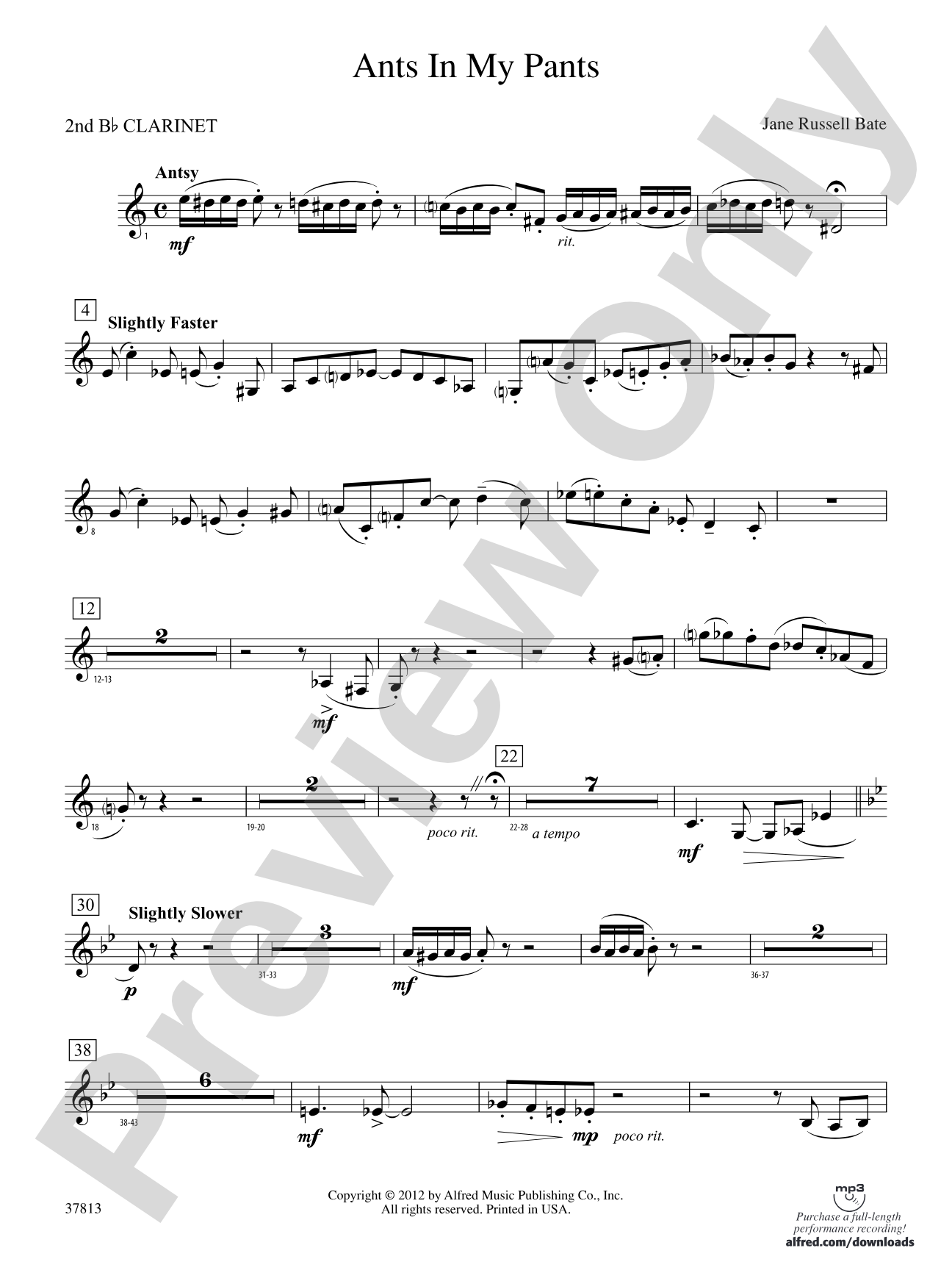

Ants in My Pants: 2nd B-flat Clarinet
By Jane Russell Bate
Grade: 2.5 (Medium Easy)
Item: 00-PC-0015343_C2
$3.00
Pickup currently not available
Description
This piece is a sophisticated rag on a not-so-sophisticated subject---a literal case of ants in the pants. As the hapless fellow performs his syncopated gyrations caused by the ants, the music quickens and we hear the victim slapping and scratching in an effort to rid himself of the tickly creatures. Brass players will enjoy flutter-tonguing, glisses, and "wa-was" in this highly entertaining tune. (3:05)


Don't just read it, hear it, play along with it, and watch your students grow with it. In MakeMusic Cloud, Ants in My Pants: 2nd B-flat Clarinet comes alive with professional accompaniment, adjustable tempo, and built-in practice tools that turn solo practice into real progress.
Open in the Player
Jump straight in and assign it today.
Start Your Free Trial
Open this title and explore the full library in minutes.
Sample Audio
1
Audio File
--:--
0:00
0:00
Sample Video
No sample videos found.
Additional Details
Series:
Young Symphonic
Publisher:
Alfred Music
Page Count:
232
SKU:
00-PC-0015343_C2
More about this title
About the Composer: Jane Russell Bate

Jane Russell Bate brings a distinctive voice to concert band literature, shaped by rigorous study across multiple musical disciplines. She studied arranging at Eastman School of Music's summer workshops under Ray Wright and Manny Albam, and pursued private instruction in jazz piano and composition at Hartford Conservatory and Hartt School of Music. She holds a B.A. from Smith College and graduate degrees in Music Education from Central Connecticut State University.
For many years, Bate balanced a teaching career in instrumental music with active performance as a pianist, synthesizer player, and bassoonist in regional theater and wind ensembles throughout Connecticut. Her retirement from the classroom marked the beginning of her publishing career as a composer. Her works demonstrate the practical knowledge of a musician who understands both the capabilities and personalities of student players.
Why we love this
This piece nails the balance between musical substance and sheer fun that Grade 2.5 bands crave. The clever writing for brass gives every section colorful moments (flutter-tonguing, glisses, and plunger effects) without demanding anything beyond their current technical reach, and the narrative arc of escalating musical chaos mirrors the ants' relentless advance. Programming something this entertaining at this level actually strengthens student engagement for the entire concert.
What to expect
The music captures escalating physical comedy with syncopated brass lines that mimic frantic movement, accelerating rhythms that build urgency, and colorful special effects that amplify the absurdity of the situation. There's genuine wit in the orchestration: you hear the victim's distress not just in fast notes but in the specific timbral choices Bate makes for each instrument family.
Who it's for
Concert bands at the Grade 2 to 2.5 level will find this novelty piece both musically rewarding and genuinely entertaining. It works equally well for experienced younger musicians or developing high school ensembles looking to build confidence and ensemble cohesion through a less formal entry. Directors seeking a palate-cleansing program piece that doesn't sacrifice musicianship will appreciate the clever compositional voice.
How to get the most out of it
- Coordinate the plunger and flutter-tonguing effects across the brass section during rehearsals so the timbral colors read clearly; these special techniques are the heart of the comedic effect.
- Work the tempo changes methodically. The piece quickens as the situation intensifies, so establish a clear relationship between each tempo and the musical action before running full sections.
- Balance the syncopated rhythmic figures in the ensemble so forward motion doesn't get muddied; clarity serves the humor better than weight.
- Let the conductor's gestures reflect the protagonist's increasingly frantic movements. Visual energy from the podium invites the band to embrace the character of the piece.
How to use it
Place this strategically in a concert to shift mood and energy. A performance in the middle or latter portion of the program offers relief after heavier works and demonstrates your band's versatility and musicianship in a style that engages audiences of all ages. It also serves as an excellent morale booster during rehearsals when the ensemble needs a confidence builder before tackling more technically demanding repertoire.
Skills your students will build
- Syncopated rhythm reading and execution in ensemble contexts
- Flutter-tonguing and muted articulation techniques for brass players
- Tempo flexibility and response to conductor-led tempo changes
- Special effects (plunger technique, glissandi) as expressive musical tools
- Listening for and balancing individual lines within comedic musical scenarios