

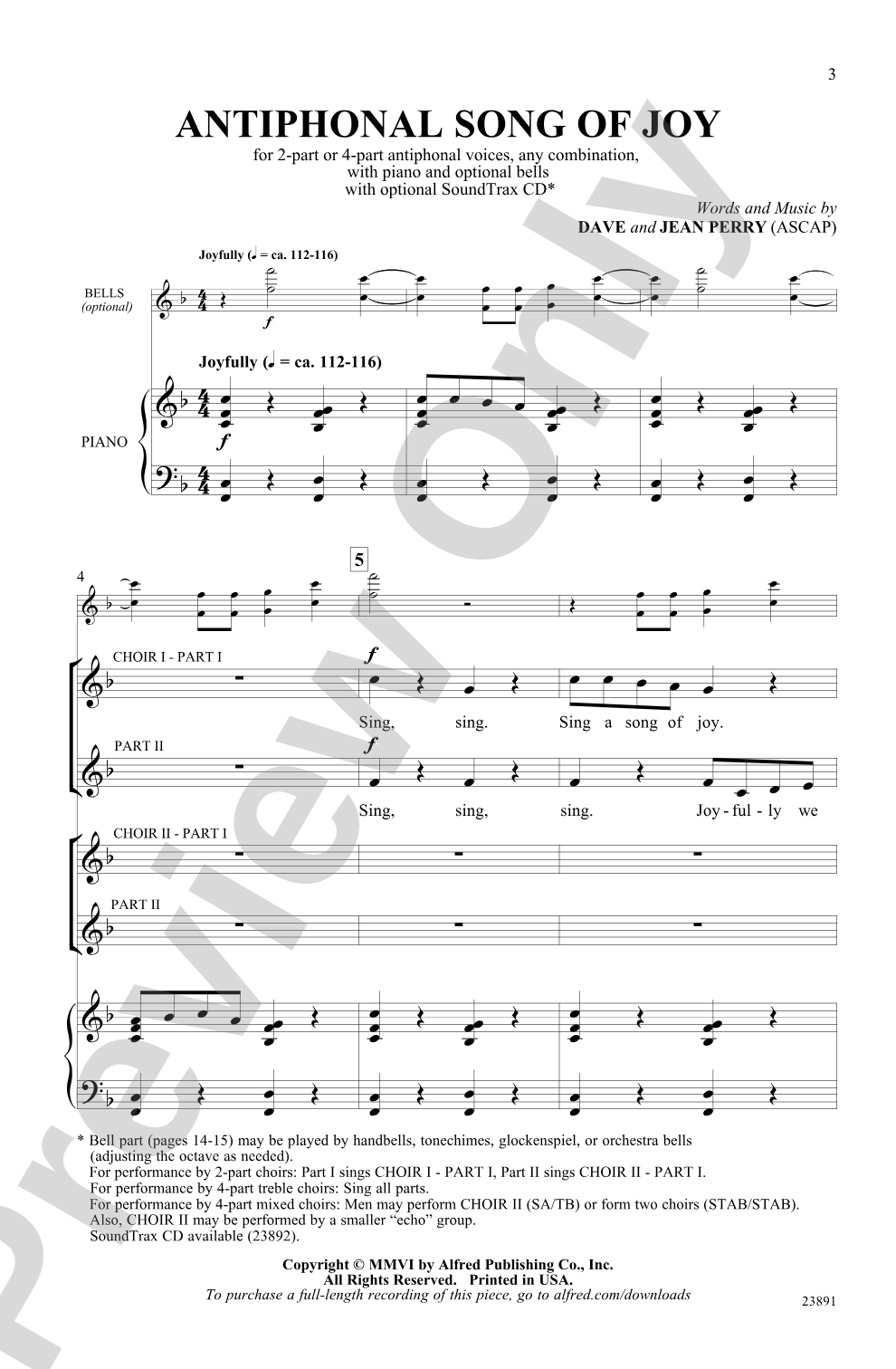
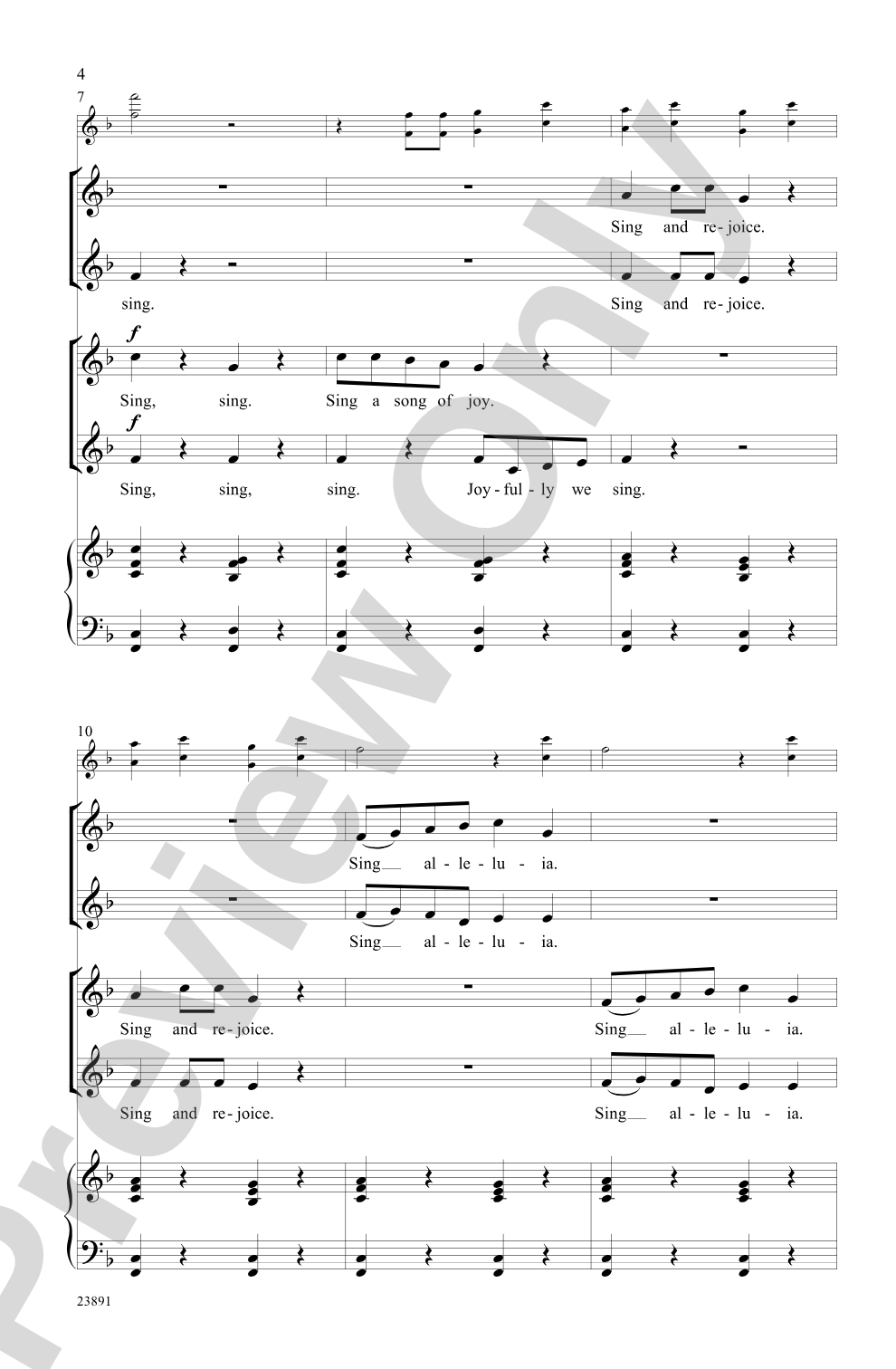

Antiphonal Song of Joy: 2-Part or 4-Part, any combination of voices Choral Octavo
By Dave and Jean Perry
Item: 00-PO-0000005
$1.85
Minimum order quantity: 20 copies
Pickup currently not available
Description
Consider positioning your antiphonal choir or small ensemble at opposite sides of the performance hall for this stately selection. Any combination of 2- or 4-part choirs will excel with this flexible feature. Includes an optional bell part in the octavo. Create a joyful effect any time of year.


Antiphonal Song of Joy: 2-Part or 4-Part, any combination of voices Choral Octavo isn't in MakeMusic Cloud just yet...but it could be. Let us know you'd like to see it, and you'll help shape what comes next. In the meantime, start a free trial and dive into thousands of interactive titles your students can play along with today.
Request This Title
Tell us you want it.
Start Your Free Trial
Explore everything that's ready to play right now.
Sample Audio
1
Audio File
--:--
0:00
0:00
Sample Video
No sample videos found.
Additional Details
Series:
Alfred Choral Designs
Publisher:
Alfred Music
Page Count:
16
SKU:
00-PO-0000005
Instrumentation:
Opt. Bells
More about this title
Why we love this
The antiphonal setup transforms a simple piece into a spatial experience that engages both singers and audience. Perry's flexible voicing means you can use this with any combination of available singers, making it genuinely adaptable to your roster rather than forcing a predetermined format.
What to expect
Stately and celebratory, with a sense of call and response that feels both structured and accessible. The optional bells add sparkle without overwhelming the voices, creating a joyful atmosphere that works across seasons and contexts.
Who it's for
Directors working with mixed-voice or treble choirs of any size, including small ensembles where standard four-part voicing isn't practical. This piece also works well for programs featuring flexible formations or where you want to create visual interest through spatial arrangement.
How to get the most out of it
- Position the two choirs or ensemble sections at opposite sides of the performance hall to maximize the antiphonal effect and create clear acoustic separation.
- Balance the dynamic energy between the two groups so the dialogue feels conversational rather than competitive.
- If using the optional bell part, rehearse it separately first so the players can lock the rhythm before combining with the full ensemble.
How to use it
Antiphonal works as a standout opener or closer that immediately captures attention through spatial staging. It pairs well in a concert exploring call-and-response traditions or works featuring flexible voicing arrangements.
Skills your students will build
- Singing in antiphonal formations and maintaining independence across spatial separation
- Adapting to flexible voicing combinations (2-part and 4-part options)
- Ensemble balance and dialogue when performing as distinct choral groups
- Integration of optional instrumental parts with choral texture