
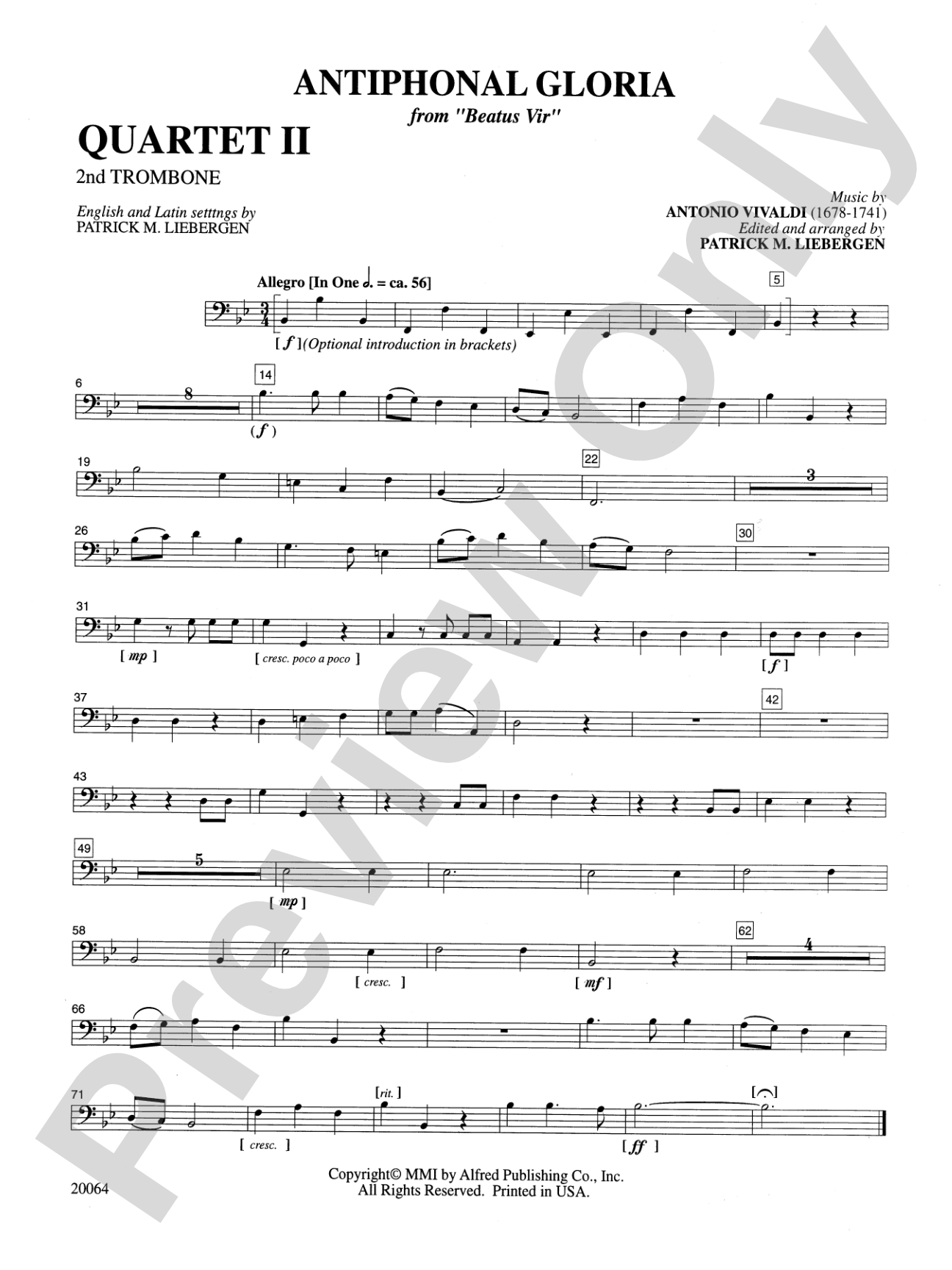

Antiphonal Gloria: 2nd Trombone Quartet 2: Choral SoundPax
Music by Antonio Vivaldi / arr. Patrick M. Liebergen
Item: 00-PC-0000357_TN22
$3.00
Pickup currently not available
Description
Perform this Vivaldi masterwork in one of many ways, including: choir and keyboard (piano or organ), choir and echo choir, or choir(s) with brass quartet(s). A truly versatile publication. The piece is in fanfare style and is suitable for secular or sacred use year round, including holiday concerts. Ideal for festivals and adjudications. As with all Dr. Liebergen's editions, it contains editor's notes and performance suggestions.


Don't just read it, hear it, play along with it, and watch your students grow with it. In MakeMusic Cloud, Antiphonal Gloria: 2nd Trombone Quartet 2: Choral SoundPax comes alive with professional accompaniment, adjustable tempo, and built-in practice tools that turn solo practice into real progress.
Open in the Player
Jump straight in and assign it today.
Start Your Free Trial
Open this title and explore the full library in minutes.
Sample Audio
1
Audio File
--:--
0:00
0:00
Sample Video
No sample videos found.
Additional Details
Series:
Alfred Choral Designs
Publisher:
Alfred Music
Page Count:
16
SKU:
00-PC-0000357_TN22
Instrumentation:
SoundPax
More about this title
About the Composer: Antonio Vivaldi
Antonio Vivaldi (1678-1741) was a Venetian priest and prolific composer whose output shaped the Baroque concerto and established many conventions of instrumental and vocal writing that composers still follow today. His mastery of counterpoint, harmonic drive, and melodic invention made him one of the most performed composers of his era and beyond. Vivaldi's sacred music, including his Gloria and numerous motets, demonstrates his gift for combining grandeur with accessibility, making his work ideal for both liturgical and concert settings.
Why we love this
Liebergen's edition unlocks genuine flexibility without sacrificing the exuberance of Vivaldi's original concept. The fanfare energy and bright harmonic language shine equally whether you're pairing voices with organ, brass quartet, or another choir, giving you a masterwork that adapts to your ensemble's actual resources rather than demanding a single instrumentation.
What to expect
Vivaldi's Gloria radiates celebration and pageantry through bright harmonies, spirited rhythms, and soaring vocal lines. The fanfare character feels ceremonial yet joyful, making it equally at home in a sanctuary or concert hall. Each entrance and harmonic shift sparkles with the clarity and confidence that define Baroque vocal writing at its finest.
Who it's for
This edition serves any choir director seeking a Baroque showpiece that works for holiday programs, spring festivals, and adjudication season. Whether your ensemble is a church choir with keyboard support, a school group with instrumental options, or a community chorus exploring sacred and secular repertoire, Liebergen's arrangement scales to your resources.
How to get the most out of it
- Lean into the rhythmic vitality of the fanfare sections; these passages thrive on crisp articulation and forward momentum rather than lyrical phrasing.
- If using the recorded accompaniment, rehearse your choir's parts independently first so singers develop secure internalization of their lines before balancing with the track.
- Clarify your staging approach early if you're employing an echo choir or multiple brass quartets. Spatial separation in rehearsal prevents confusion and maximizes the antiphonal effect on performance day.
- Balance the choral texture so that harmonic clarity reads through; Baroque counterpoint depends on hearing each voice's individual line while maintaining ensemble unity.
How to use it
Open a holiday concert with this to establish festive energy immediately, or anchor a spring festival program as a statement piece that showcases both vocal and instrumental capability. Its secular framing also makes it work as a concert opener in non-religious contexts where majesty and fanfare set the right tone.
Skills your students will build
- Singing Baroque counterpoint with clear articulation and independent voice lines
- Ensemble balance in textures where soprano, alto, tenor, and bass lines carry equal musical weight
- Coordinating vocals with instrumental accompaniment using recorded tracks or live musicians
- Interpreting period-appropriate ornamentation and rhythmic style based on editor's notes
- Responding to antiphonal or echo effects (if using multiple choirs or spatial arrangement)