

Antiphonal Gloria: SATB (Opt. Double Choir) Choral Octavo
Music by Antonio Vivaldi / arr. Patrick M. Liebergen
Item: 00-PO-0004193
$2.25
Minimum order quantity: 20 copies
Pickup currently not available
Related Items
Antiphonal Gloria: SSAB (Opt. Double Choir) Choral Octavo |
$2.25
|
View | |
Antiphonal Gloria: Choral SoundPax |
$20.00
|
View | |
Antiphonal Gloria: SATB (Opt. Double Choir) Choral Octavo |
$2.25
|
View | |
Antiphonal Gloria: SSAB (Opt. Double Choir) Choral Octavo |
$2.25
|
View | |
Antiphonal Gloria: Choral Octavo SoundTrax CD |
$19.95
|
View | |
Antiphonal Gloria: Choral SoundPax |
$20.00
|
View |
Description
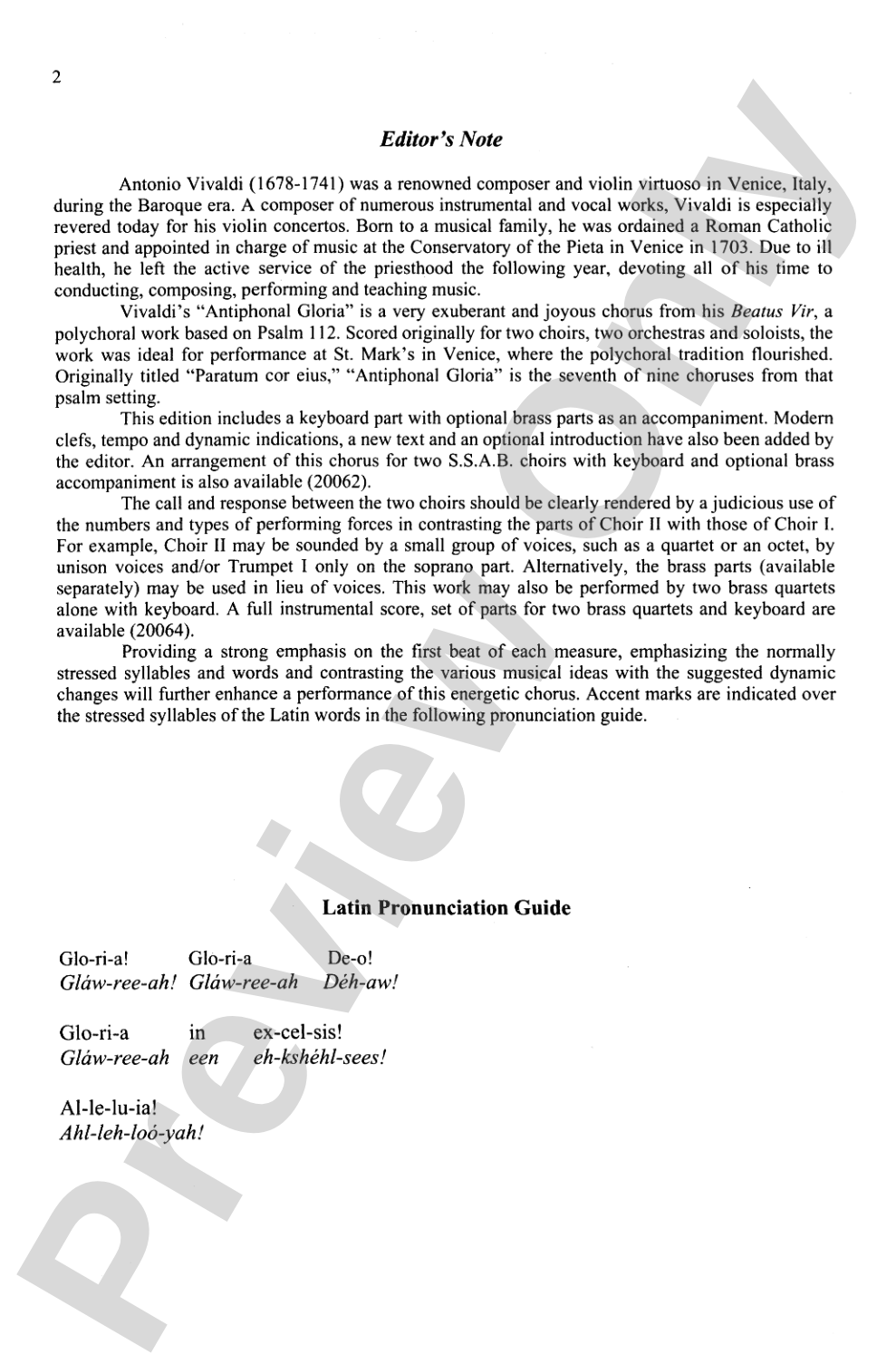
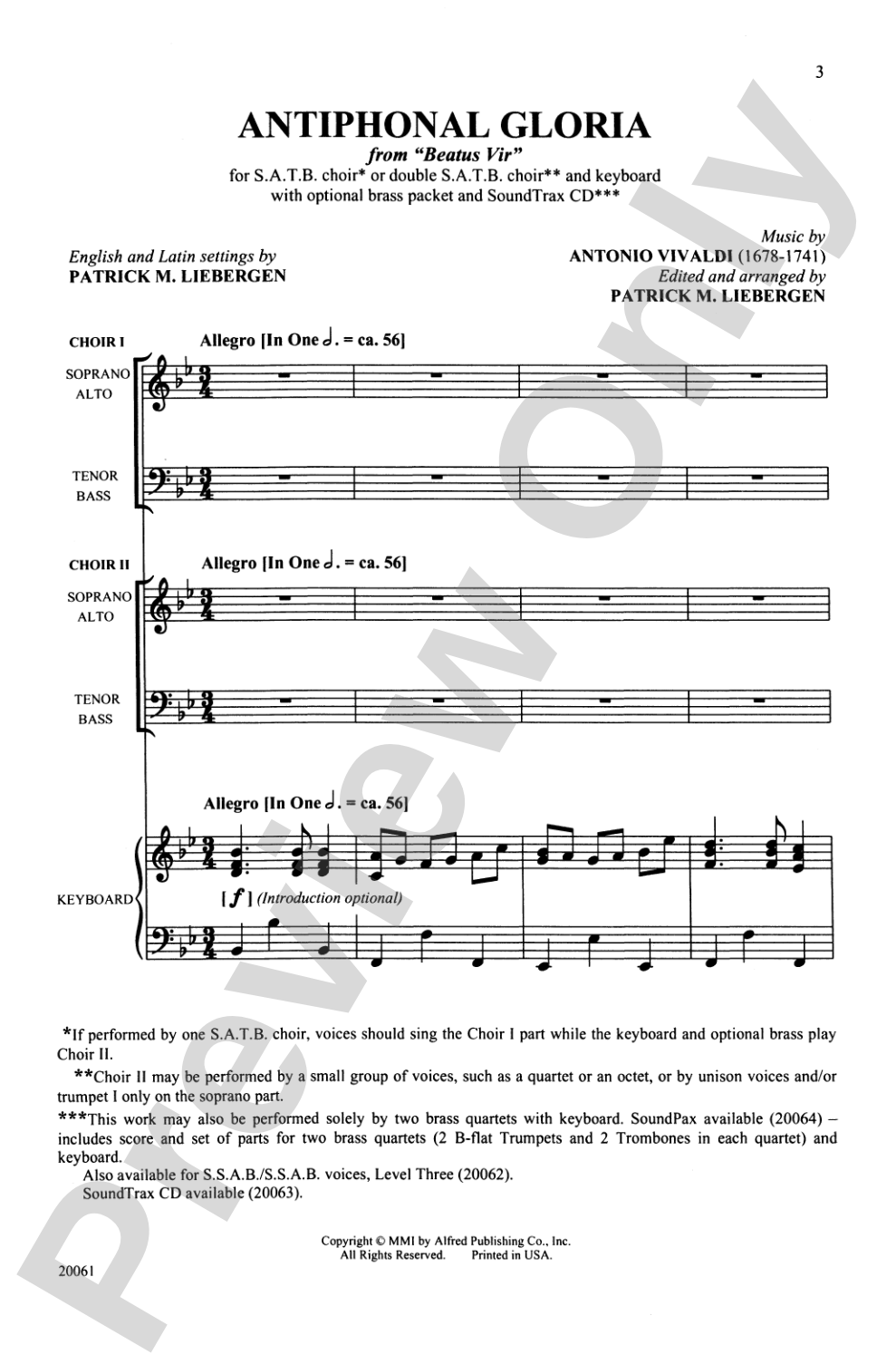
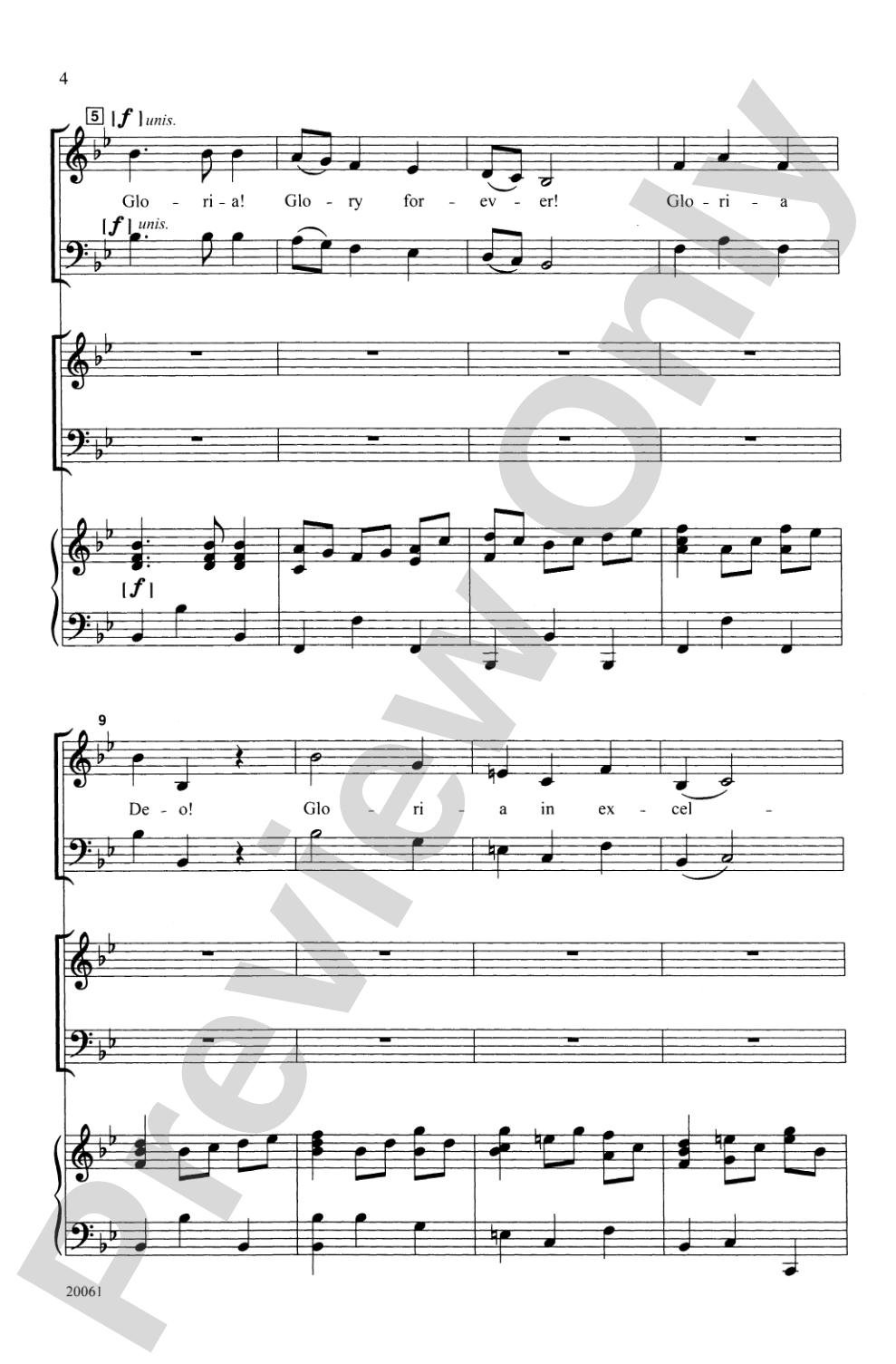
Perform this Vivaldi masterwork in one of many ways, including: choir and keyboard (piano or organ), choir and echo choir, or choir(s) with brass quartet(s). A truly versatile publication. The piece is in fanfare style and is suitable for secular or sacred use year round, including holiday concerts. Ideal for festivals and adjudications. As with all Dr. Liebergen's editions, it contains editor's notes and performance suggestions.


Antiphonal Gloria: SATB (Opt. Double Choir) Choral Octavo isn't in MakeMusic Cloud just yet...but it could be. Let us know you'd like to see it, and you'll help shape what comes next. In the meantime, start a free trial and dive into thousands of interactive titles your students can play along with today.
Request This Title
Tell us you want it.
Start Your Free Trial
Explore everything that's ready to play right now.
Sample Audio
1
Audio File
--:--
0:00
0:00
Sample Video
No sample videos found.
Additional Details
Series:
Alfred Archive Edition: Alfred Choral Designs
Publisher:
Alfred Music
Page Count:
12
SKU:
00-PO-0004193
More about this title
About the Composer: Antonio Vivaldi
Antonio Vivaldi (1678-1741) stands as one of the Baroque era's most prolific and inventive composers. A Venetian priest and virtuoso violinist, Vivaldi composed over 500 works across nearly every genre, from concertos to operas to sacred music. His influence on instrumental music—particularly his use of ritornello form and vivid orchestration—shaped the development of the concerto and influenced composers from Bach to Mozart.
Vivaldi's sacred works, including his many settings of liturgical texts, blend the grandeur of Italian opera with the architectural precision of Baroque form. His music combines technical brilliance with immediate, communicative appeal, making his works as rewarding for performers and singers to learn as they are for audiences to hear.
Why we love this
Patrick Liebergen's edition unlocks multiple rehearsal and performance pathways without requiring separate publications. The fanfare idiom sits naturally in both sacred and secular contexts, and the optional double-choir texture creates genuine dramatic excitement on stage. Directors can build flexibility into their season planning: rehearse the piece one way in fall, then reconfigure it for a winter concert or festival without extra printing costs.
What to expect
Vivaldi's Gloria unfolds with the ceremonial grandeur of a Baroque fanfare, all bright brass-like gestures and cascading vocal lines. The harmonies ring with clarity and confidence; there's an almost theatrical energy in the antiphonal exchanges that keeps both singers and listeners engaged.
Who it's for
This edition serves choirs at the intermediate to advanced level who want a substantial Baroque work with modern flexibility in instrumentation. It suits groups preparing for festival participation or adjudication, as well as programs seeking a festive, accessible piece that works year-round without sacrificing musical substance.
How to get the most out of it
- Bring the trumpet-like quality of the opening fanfare into the choral sound through crisp consonants and bright vowels, especially on the initial attacks.
- If performing with brass quartet, establish the keyboard accompaniment as the binding layer that holds both the choir and instruments in metric alignment.
- Experiment with the echo-choir option in rehearsal even if you ultimately perform as a single choir; the antiphonal concept clarifies phrase structure and helps singers hear where the musical argument lands.
- Allow the keyboard realization (whether piano or organ) to set the harmonic foundation and rhythmic grid; the choral parts will sit more securely when the accompaniment is steady and clear.
How to use it
Program this in a holiday concert as a secular alternative to more somber sacred works, or hold it for spring festivals where its celebratory character shines. The multiple performance options make it ideal for repertoire you'll revisit across several concert seasons, adapting the instrumentation to match whatever resources you have available.
Skills your students will build
- Reading and performing Baroque counterpoint and phrase architecture
- Balancing blend across antiphonal (call-and-response) sections
- Adapting tone and articulation to match optional instrumental accompaniments (keyboard versus brass)
- Coordinating ensemble precision when performing with accompaniment or auxiliary choirs