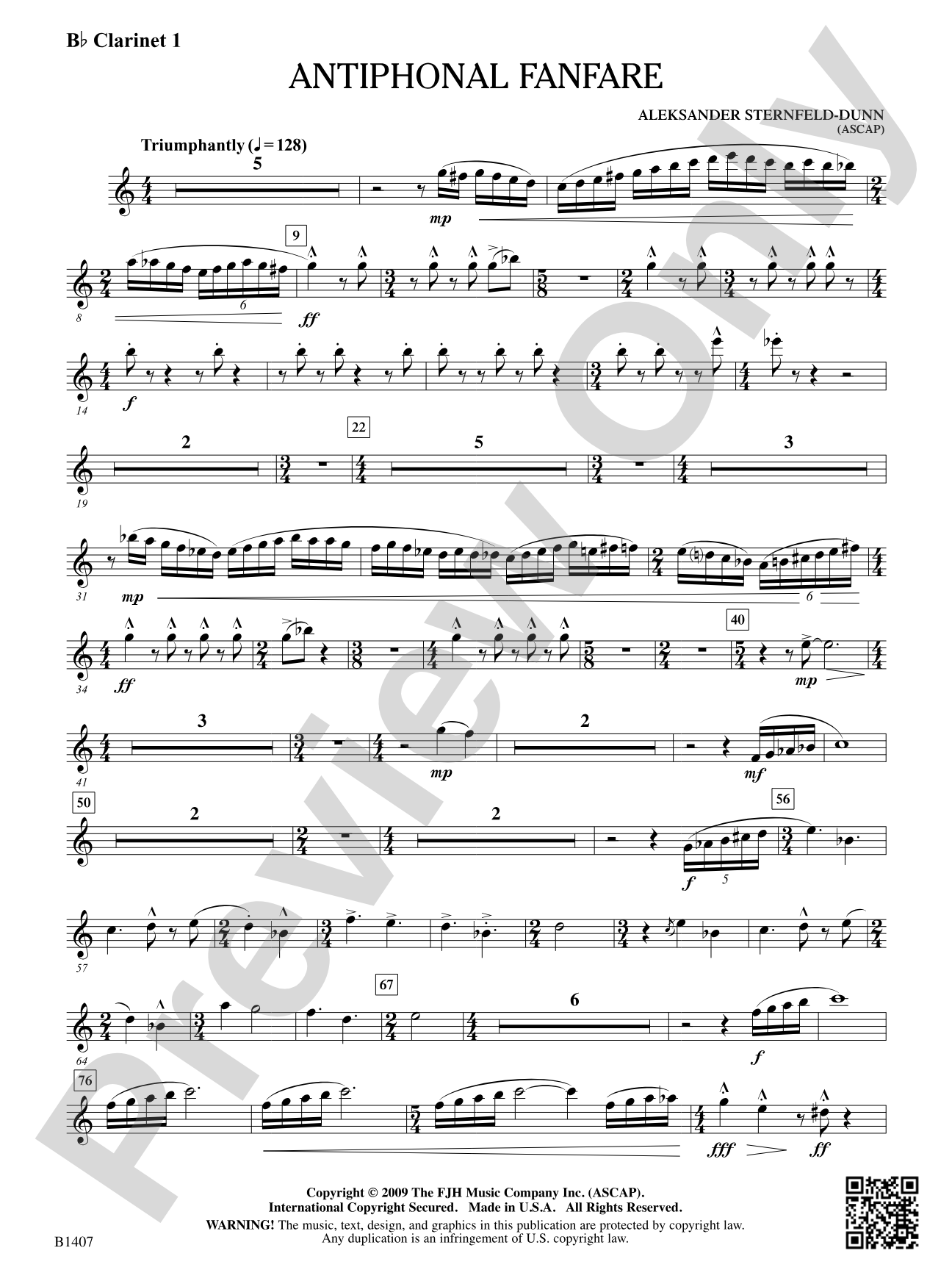
This outstanding contemporary fanfare is based on phrases that overlap throughout the ensemble. The work carries a sense of triumph and power as the sweeping phrases continue to build in intensity under spectacular woodwind runs. A middle section contrasts the first with long melodic lines before returning to the opening material in a truncated form to bring the work to a stunning conclusion. Incredible use of counterpoint and harmony make this an exceptional work that will set your group apart from the rest!
Discover MakeMusic Cloud: thousands of interactive titles your students can play along with today.
Sternfeld-Dunn constructs this fanfare around overlapping phrases that create genuine textural interest rather than relying on bombast alone. The architecture is ambitious: the counterpoint never feels cluttered, the harmonic language supports rather than obscures the momentum, and the middle section's contrast lands because the outer sections earn it through disciplined writing. Your students will hear and perform sophisticated voice-leading that doesn't require an advanced theory background to appreciate.
What to expect
Confidence and forward momentum built from interlocking lines that create a sense of inevitability rather than simple brightness. The middle section brings a moment of reflection with sweeping melodic phrases, then the opening energy returns transformed and intensified, closing with genuine power rather than mere volume.
Who it's for
Grade 5 concert bands seeking a contemporary fanfare with real musical substance. Directors who want their students to engage with counterpoint and harmonic sophistication during a piece that still delivers the triumphant sound audiences expect from fanfares. This works equally well as a contest selection or a concert opener.
How to get the most out of it
Shape the overlapping phrases as distinct voices even when they occur simultaneously. Have each section mark which phrase they carry in rehearsal so everyone understands the architecture beneath the surface.
Balance the woodwind runs against the surrounding harmonic material. These runs should sparkle without drowning out the foundation that supports them.
Find the architecture in the middle section's long melodic lines. They're not breaks from the action; they're the emotional center. Don't rush them.
The return to opening material happens in truncated form. Clarify for your ensemble where the shortened section differs from the exposition so the abbreviated arc feels intentional, not cut short.
How to use it
Open a concert with this to set a sophisticated tone and showcase your band's ability to balance multiple textural layers. Program it as the centerpiece of a contest set, where its compositional craft will stand out against more straightforward selections. Pair it with a contrasting piece from your grade 5 repertoire to highlight both works' strengths.
Skills your students will build
Tracking independent melodic lines within a contrapuntal texture
Balancing multiple simultaneous phrases without losing individual voices
Sustaining long lines with musical intent rather than just air support
Understanding how harmonic progression creates structure and momentum
Executing rapid woodwind passages with clarity and precision
Responding to sectional cues when phrases overlap across the ensemble
You May Also Like
Scan to Complete Your Purchase
Use your phone's camera to scan the code below
You'll log in on your phone and the order will be added to your account