

Antiphonal Fanfare: 2-Part Choral Octavo
Words and music by Andy Beck
Item: 00-PO-0007586
$2.30
Minimum order quantity: 20 copies
Pickup currently not available
Description
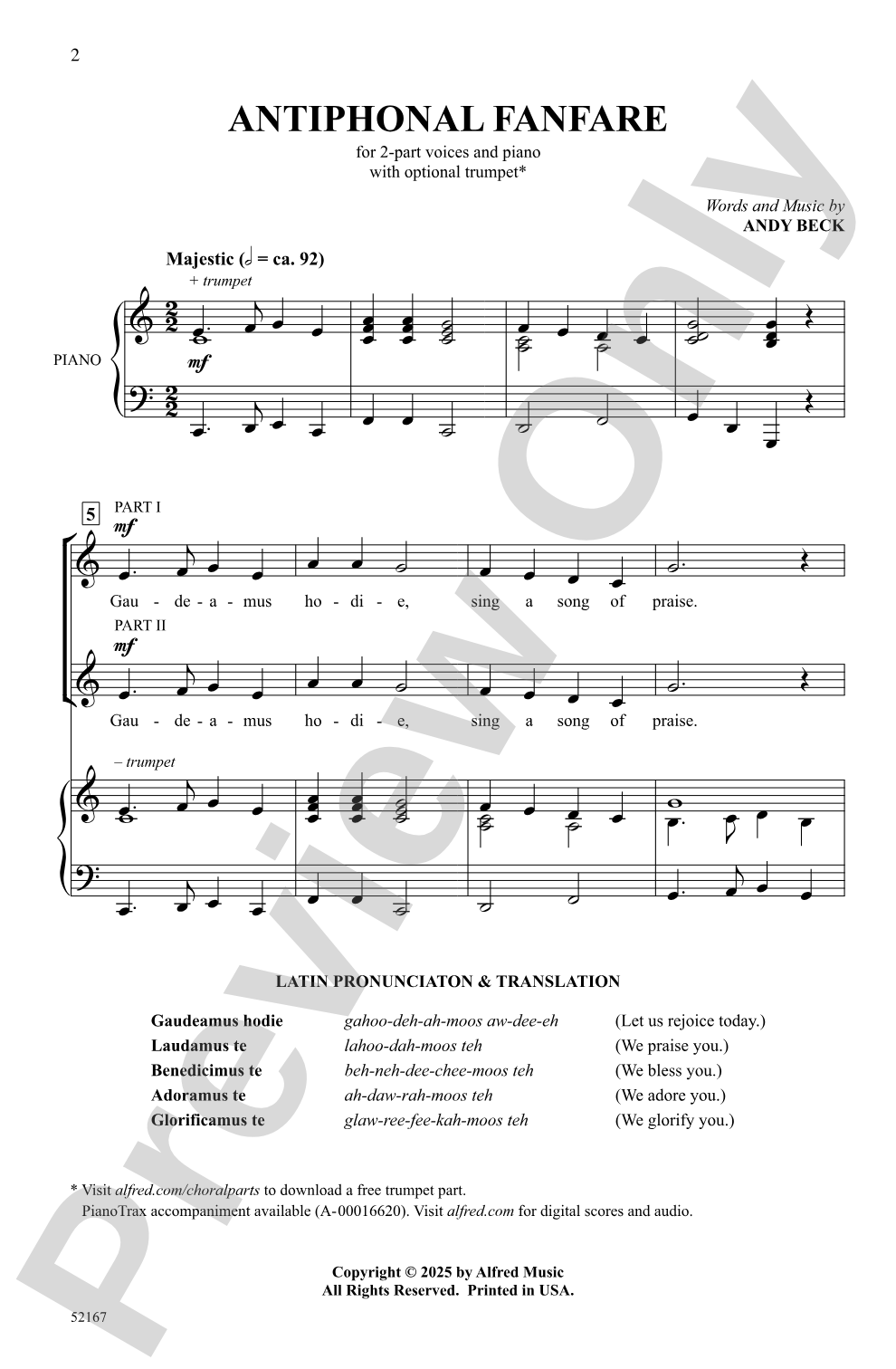
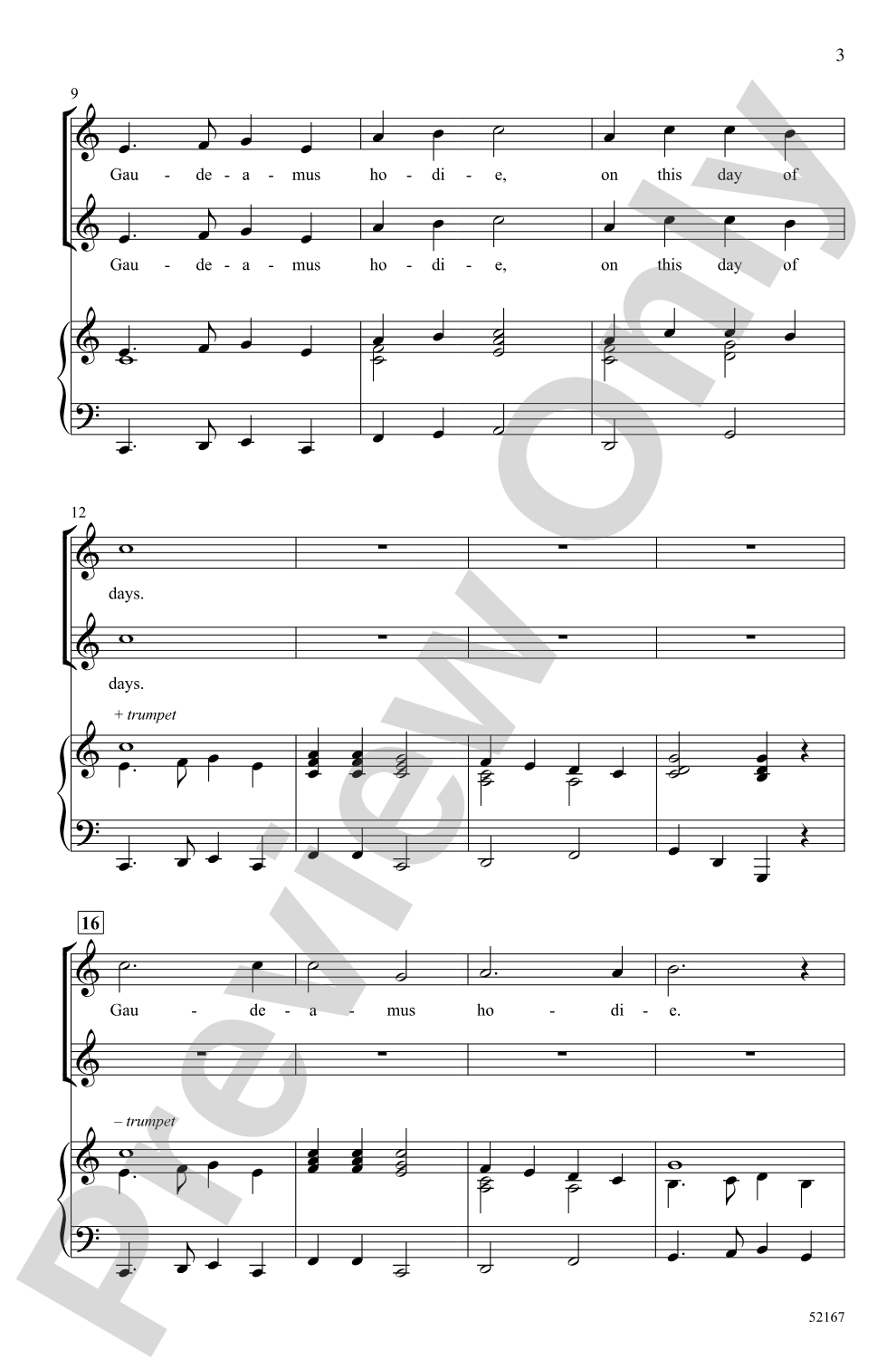
An outstanding selection for concert, contest, or festival, this vibrant piece features joyful English and Latin text, with a pronunciation guide included. Call-and-response figures as well as countermelodies provide an engaging introduction to two-part singing. A free trumpet part adds an extra touch of majesty. Lively, accessible, and perfect for a concert opener!


Antiphonal Fanfare: 2-Part Choral Octavo isn't in MakeMusic Cloud just yet...but it could be. Let us know you'd like to see it, and you'll help shape what comes next. In the meantime, start a free trial and dive into thousands of interactive titles your students can play along with today.
Request This Title
Tell us you want it.
Start Your Free Trial
Explore everything that's ready to play right now.
Sample Audio
1
Audio File
--:--
0:00
0:00
Sample Video
Additional Details
Series:
Alfred Choral Designs
Publisher:
Alfred Music
Page Count:
12
SKU:
00-PO-0007586
More about this title
About the Composer: Andy Beck

Andy Beck leads the choral publications division at Alfred Music and has established himself as one of the most performed choral composers working today, with over 450 works spanning octavos, musicals, and pedagogical resources. His compositions appear regularly in festival programs and all-state honor choirs across the country, a testament to his ability to write music that challenges singers while remaining genuinely enjoyable to perform.
Beyond the page, Beck is an active conductor, clinician, and adjudicator who works extensively with music educators and student ensembles. A tenor himself with degrees from Ithaca College and Northwest Missouri State University, he brings a performer's sensibility to everything he writes. His method books, Sing at First Sight, Foundations in Choral Sight Singing, and Vocalize!, have become staples in choral classrooms, reflecting his deep commitment to music literacy and vocal technique.
Why we love this
Beck writes two-part literature that actually respects young singers' musicality while keeping technical demands reasonable. The call-and-response structure here is more than a gimmick; it's built into the piece's DNA, giving singers individual moments to shine before joining voices. Adding a free trumpet part elevates the production value without burdening your budget or requiring a separate rehearsal.
What to expect
Bright, energetic, and celebratory. The combination of English and Latin text creates an almost processional confidence, while the call-and-response figures keep the energy interactive rather than formal. The fanfare character is lively without being march-like.
Who it's for
This piece works for mixed-age, mixed-ability choirs making the jump from unison to true two-part singing. It's equally at home in a concert setting with a community choir or festival with a middle school ensemble.
How to get the most out of it
- Bring out the contrast between sections during the call-and-response passages. The answering voices should enter with clarity and confidence, making the dialogue feel like a real conversation rather than an echo.
- Use the pronunciation guide early in rehearsal so singers internalize the Latin text naturally. Spend rehearsal time on vowel matching between the two parts during the countermelody sections.
- If adding the trumpet, schedule a separate sectional rehearsal so your singers can lock in their parts before combining. The trumpet adds majesty only if the choir is secure underneath it.
- Program this as your opener and lean into its joyful energy. The recorded accompaniment can support your rehearsals, but consider performing it live with a pianist or organist if possible, it lifts differently.
How to use it
Open your concert with this. Its vibrancy sets an immediate tone of joy and competence, and the layered texture, English text, Latin text, optional trumpet, gives you programming flexibility whether you're building toward something more contemplative or continuing in a festive vein. It also holds its own in contest or festival settings because the musicality shines through the accessibility.
Skills your students will build
- Two-part harmonic singing with independent melodic lines
- Call-and-response singing and ensemble dialogue
- Sight-reading of mixed English and Latin text with pronunciation accuracy
- Balancing solo melody with countermelody lines