
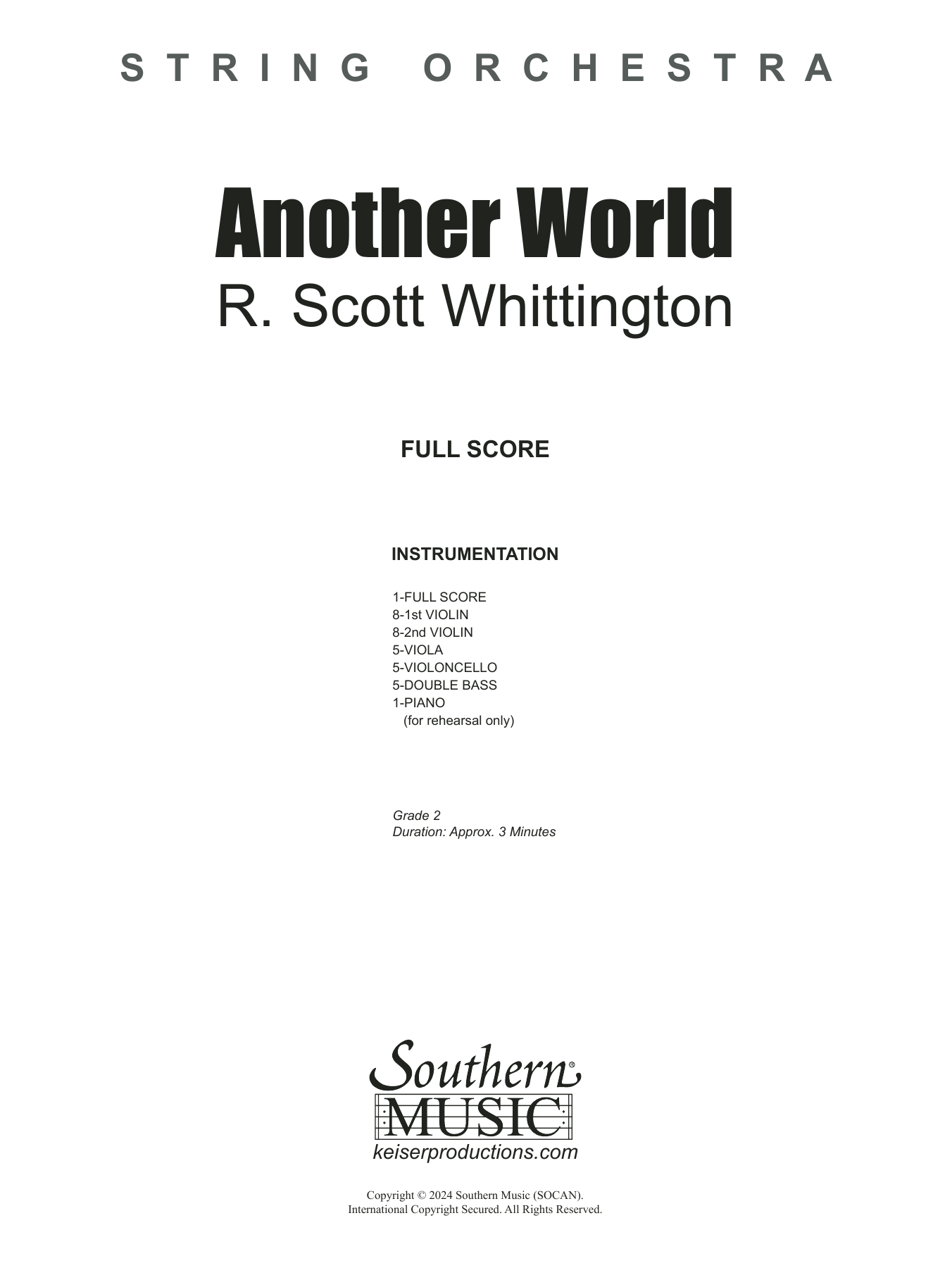

Another World: String Orchestra Conductor Score & Parts
By R. Scott Whittington
Grade: 2
Item: 35-PK01723600
$40.00
Pickup currently not available
Buy Extra Parts (Digital PDF Download)
| Product | Price | Quantity |
|---|---|---|
| Another World - Full Score | $6.00 | |
| Another World - Violin 1 | $2.50 | |
| Another World - Violin 2 | $2.50 | |
| Another World - Viola | $2.50 | |
| Another World - Cello | $2.50 | |
| Another World - Bass | $2.50 | |
| Another World - Piano | $2.50 |
Parts Added to Cart!
Description
Written at a level 2 in difficulty, ANOTHER WORLD is highly melodic, underpinned with appealing rhythmic interest. The simple original melody is explored and expanded as the piece progresses. A bright section in G major provides an optimistic contrast to the mysterious minor flavor of the beginning.


Another World: String Orchestra Conductor Score & Parts isn't in MakeMusic Cloud just yet...but it could be. Let us know you'd like to see it, and you'll help shape what comes next. In the meantime, start a free trial and dive into thousands of interactive titles your students can play along with today.
Request This Title
Tell us you want it.
Start Your Free Trial
Explore everything that's ready to play right now.
Sample Audio
No sample audio found.
Sample Video
No sample videos found.
Additional Details
Publisher:
Hal Leonard
SKU:
35-PK01723600
More about this title
About the Composer: R. Scott Whittington
R. Scott Whittington is a composer whose work reflects a clear commitment to writing for young musicians with both musical substance and accessibility. His pieces balance melodic clarity with harmonic interest, making them effective tools for building musicianship while maintaining genuine artistic value.
Why we love this
Whittington builds momentum through gradual expansion of a single idea, giving student musicians the satisfaction of watching familiar material transform before their ears. The tonal contrast between the minor introduction and the G major section provides natural drama without requiring technical pyrotechnics, letting younger ensembles sound polished and purposeful.
What to expect
The piece unfolds from a mysterious, introspective beginning into something optimistic and assured. The simple melody feels like it could reveal new dimensions with each hearing, giving the experience of discovering something familiar in a fresh light.
Who it's for
Grade 2 string orchestras seeking repertoire with real musical substance and clear structural development. This works equally well for a conductor looking to program something engaging that doesn't require advanced technical facility, or for students ready to experience how composers work with thematic material.
How to get the most out of it
- Shape the opening minor section with slight dynamic restraint and a sense of anticipation, allowing the transition to G major to feel genuinely brighter by comparison.
- Keep rhythmic figures clean and precise as the melody is passed between sections; this clarity prevents the expanding treatment from sounding scattered.
- Balance melody against accompanying voices so that inner parts support rather than overshadow the primary line as it shifts across the ensemble.
How to use it
This sits naturally on a concert exploring mood and contrast, especially alongside other pieces in different keys or character studies. Its compact scope makes it an ideal bridge between shorter warm up pieces and longer works, or a confident closer for a program aimed at younger audiences.
Skills your students will build
- Following melodic transformation across multiple voices
- Understanding major and minor tonal centers and their expressive function
- Balance of primary and secondary melodic material
- Maintaining rhythmic precision through rhythmic expansion and variation
- Reading and interpreting dynamic contrast at the section level