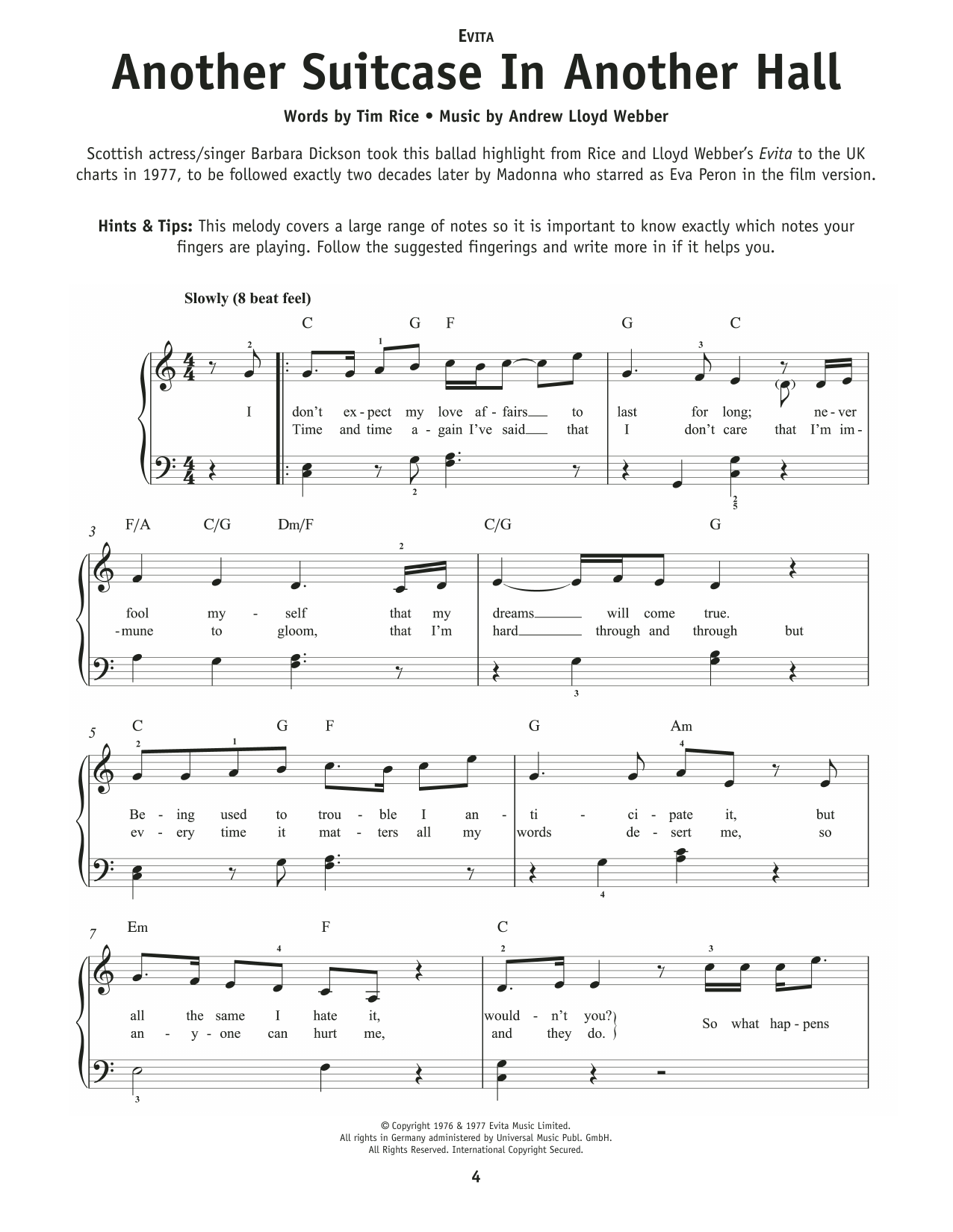
Andrew Lloyd Webber reshaped musical theater in the late twentieth century, writing scores that blend operatic ambition with pop sensibility. His work in Evita established him as a composer unafraid to tackle grand historical narratives through song, creating music that demands vocal maturity and emotional precision from performers.
Why we love this
This character's departure number cuts deeper than typical Broadway fare. The song requires a vocalist who can balance vulnerability with defiance, and the score itself rewards thoughtful phrasing without sacrificing the theatrical momentum that makes Webber's work so singable.
What to expect
Bittersweet and defiant in equal measure. The melody captures both the sting of being left behind and a character's stubborn refusal to disappear quietly, creating a moment of reckoning that lingers after the last note.
Who it's for
Singers preparing auditions for musical theater programs, community theater productions, or vocal competitions will find substantial material here. The song works equally well for teaching interpretation and handling the emotional complexity Broadway demands.
How to get the most out of it
Shape the melody through the shift in emotional perspective. The opening resignation and later anger require distinct vocal colors; mark these transitions in your score.
Keep the accompaniment driving forward even in the softer sections. The rhythm underneath never stops propelling the narrative, and matching that energy prevents the song from sagging.
Treat the repeated phrases as escalations rather than repetitions. Each cycle builds intensity, so resist the urge to deliver them identically.
How to use it
Include this in a pops or musical theater concert as a showcase solo for an advanced vocalist, or pair it with other character moments from contemporary musicals to highlight theatrical storytelling. It also serves as a solid teaching piece for singers developing dramatic interpretation skills.
Skills your students will build
Dynamic control across contrasting emotional beats
Sustaining legit vocal production through a song that spans considerable range
Character interpretation and emotional authenticity in musical theater
Phrasing that supports narrative arc rather than musical phrase alone
You May Also Like
Scan to Complete Your Purchase
Use your phone's camera to scan the code below
You'll log in on your phone and the order will be added to your account