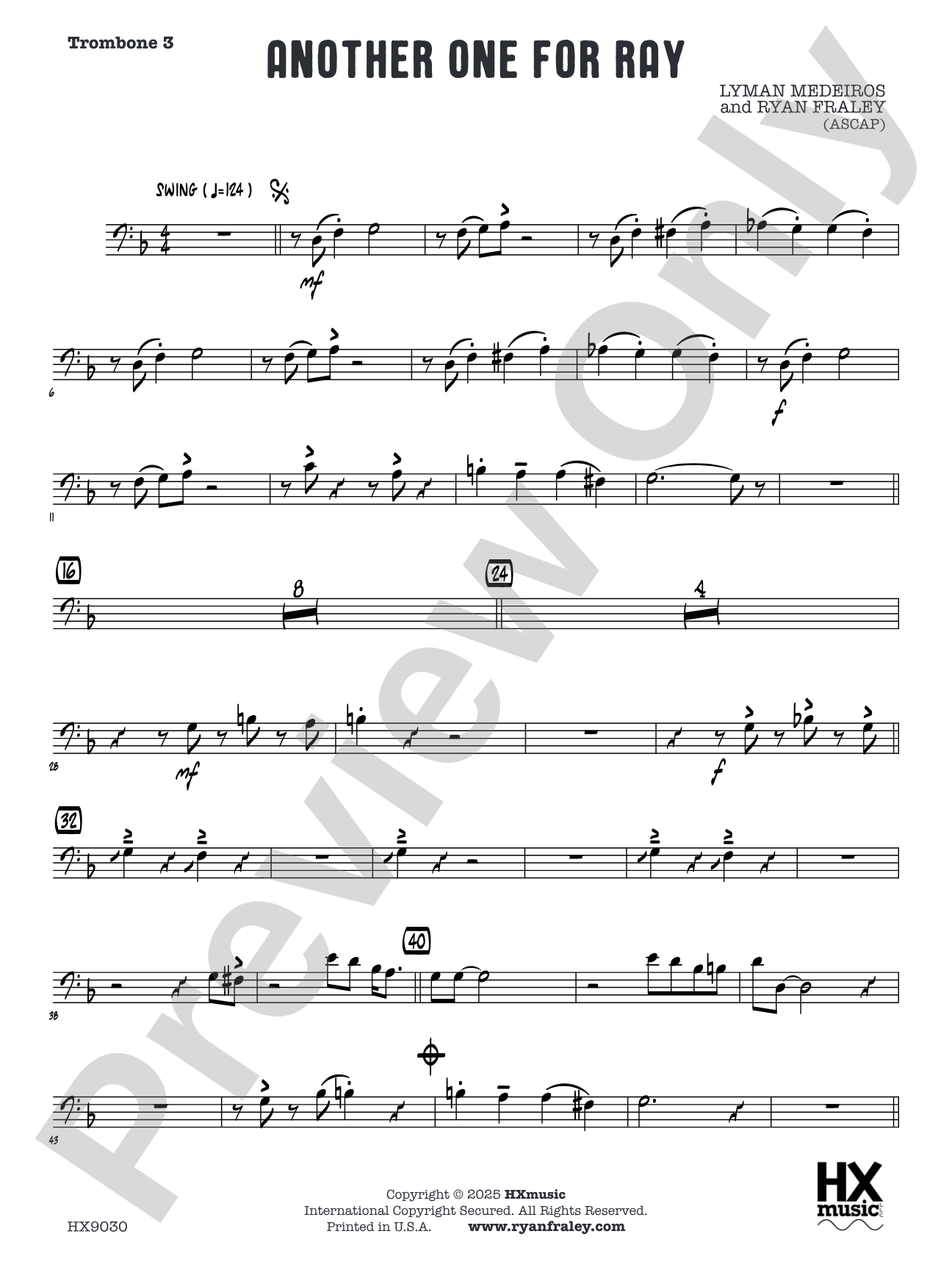
Let the bass take the spotlight in this straight-ahead swing chart with a classic jazz feel. Written to showcase the upright bass, it keeps the groove locked in while the band provides solid support with a brass interlude and a sax soli. This chart swings hard and gives your bassist a well-deserved moment to shine. (Top trumpet note: G5)
Discover MakeMusic Cloud: thousands of interactive titles your students can play along with today.
The bass solo sits front and center without ever feeling like an indulgence. Medeiros and Fraley have written a chart that treats the walking line as the melody, letting your section absorb what a real lead voice sounds like from the bottom up. Your ensemble players stay engaged with purposeful comping and brass interjections that frame rather than overshadow the feature.
What to expect
Honest swing with a workmanlike groove that never tries too hard. The bass carries the melody with the kind of easy authority that makes you believe in the instrument as a solo voice. Brass punchlines and sax conversations give the arrangement texture without cluttering the pocket.
Who it's for
High school and college jazz ensembles with a solid walking bassist ready to carry a tune and enough ensemble maturity to support rather than fill space. Bandleaders looking for a straightforward vehicle to build confidence in a section member.
How to get the most out of it
Lock the bass and drums together before rehearsing the full ensemble; their pocket is the foundation everything else rides on.
Let the sax soli breathe with a slightly relaxed tempo relative to the head; the written rhythm section can pull back just enough to give those soloists room to phrase naturally.
Balance the brass interlude so it answers the bass without overpowering the groove. These moments punctuate rather than compete.
How to use it
Ideal as a first-half closer or mid-set energy lift where your bassist gets featured without requiring a full-ensemble ballad context. Pairs well with harder-swinging ensemble pieces as a study in how to voice a band around a single soloist.
Skills your students will build
Walking bass lines and phrasing as a soloist
Section comping that supports rather than dominates
Swing articulation and groove awareness
Trading and responding between soloists and ensemble
Balance and voicing in small-group settings within a larger ensemble
You May Also Like
Scan to Complete Your Purchase
Use your phone's camera to scan the code below
You'll log in on your phone and the order will be added to your account