Another Brick in the Wall (Part 2): Piano/Vocal/Chords Digital Sheet Music

Another Brick in the Wall (Part 2): Piano/Vocal/Chords Digital Sheet Music

Pink Floyd, Roger Waters

Item: 00-PS-0010057

Digital Download
$3.99
Description

Another Brick in the Wall (Part 2): Piano/Vocal/Chords Digital Sheet Music isn't in MakeMusic Cloud just yet...but it could be. Let us know you'd like to see it, and you'll help shape what comes next. In the meantime, start a free trial and dive into thousands of interactive titles your students can play along with today.

Sample Audio
No sample audio found.
Sample Video
Additional Details
SKU: 00-PS-0010057

More about this title

About the Artist: Pink Floyd

Pink Floyd emerged from Cambridge in the late 1960s to become one of rock music's most innovative and conceptually ambitious bands. Their 1979 album The Wall stands as a landmark work in progressive rock, blending theatrical storytelling with sophisticated compositional arrangements that challenge performers to balance rock authenticity with musical precision.

The band's influence on music education extends beyond their chart success. Teachers and arrangers continue to draw on Pink Floyd's work because it engages students who might otherwise resist classical training, demonstrating that complex harmony, dynamic control, and emotional depth belong everywhere in music, not just in traditional repertoire.

Why we love this

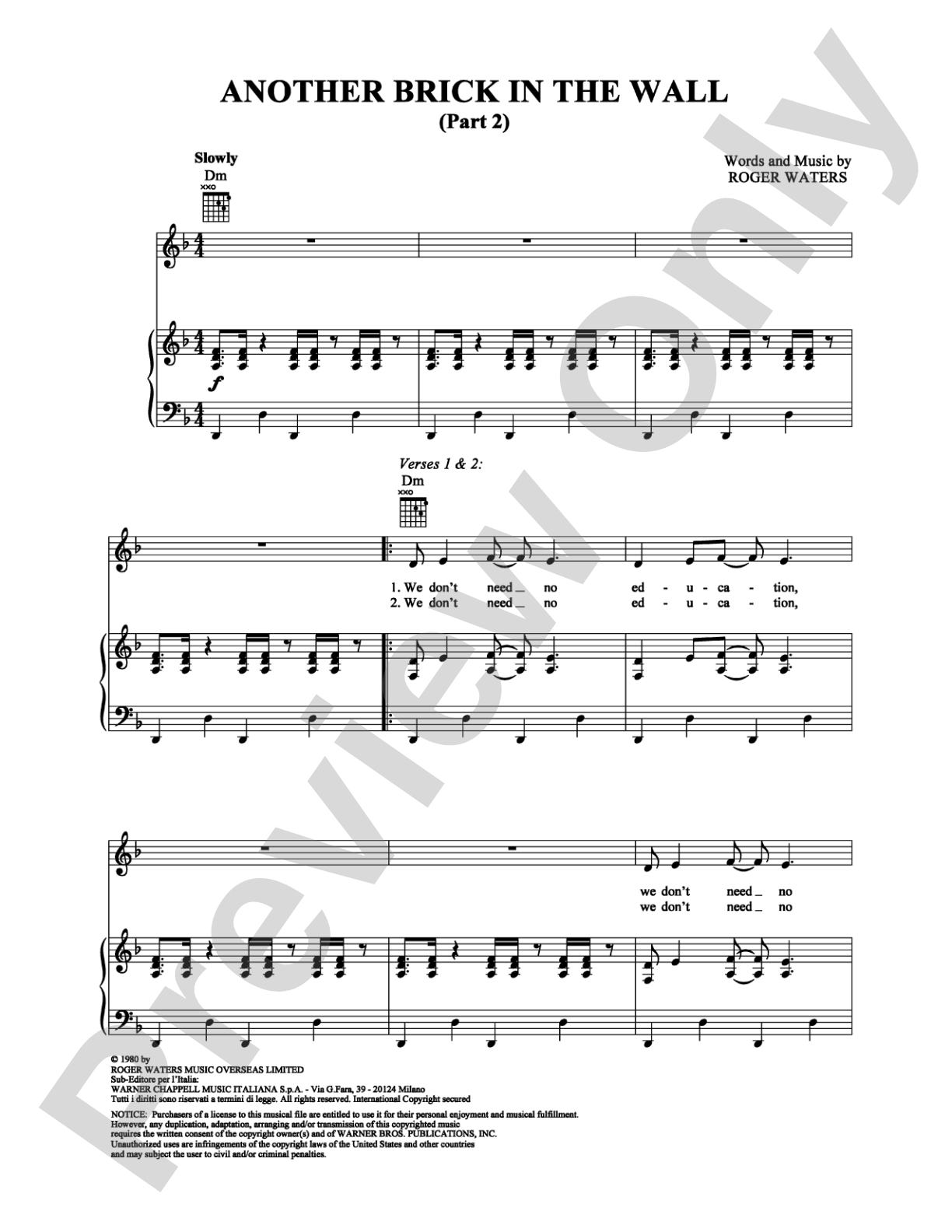
This arrangement captures one of rock's most recognizable protest songs in a format that works equally well for a solo vocalist with piano or a classroom ensemble. The iconic piano riff is immediately playable yet demands precise control of dynamics and articulation, making it rewarding for intermediate players who need a modern touchstone that sounds sophisticated without requiring virtuosic technique.

What to expect

Relentless and hypnotic. The repeated piano figure becomes almost meditative, creating space for the vocal line to carry the song's defiant message. There's an understated intensity here, a build that comes not from crescendo but from rhythmic inevitability and the weight of what's being said.

Who it's for

Pianists at the intermediate level who connect with rock and pop repertoire, vocalists building confidence with contemporary material, and educators seeking sheet music that speaks to students' actual listening habits. The piano/vocal/chords format also works for music theory students analyzing how chord progressions function in modern songs.

How to get the most out of it

  • Lock the piano part's rhythmic pocket to the vocal line. The driving quarter-note pattern works only if both parts maintain unwavering pulse.
  • Shape the vocal melody with restraint. The song's power comes from its deliberateness, not volume. Understatement serves the lyric.
  • Voice the chords with attention to the bass movement. Even simple voicings sound polished when the left hand follows the harmonic direction clearly.
  • Record yourself playing the piano accompaniment to establish a steady tempo before adding vocals. This song punishes rushing.

How to use it

Pair this with other protest songs or songs about education to build a thematic set. It also works as a powerful solo number in a contemporary concert or a student recital centerpiece for pianists wanting to branch beyond classical traditions. Consider it for interdisciplinary performances connecting English, history, or social studies classes to music.

Skills your students will build

  • Maintaining steady pulse against syncopated vocal phrasing
  • Dynamic control in rock/pop idiom (using restraint rather than constant intensity)
  • Reading chord symbols and realizing bass movement from figured harmony
  • Balancing accompaniment prominence with vocal support
  • Interpreting modern notated music with historical and lyrical awareness

You May Also Like