
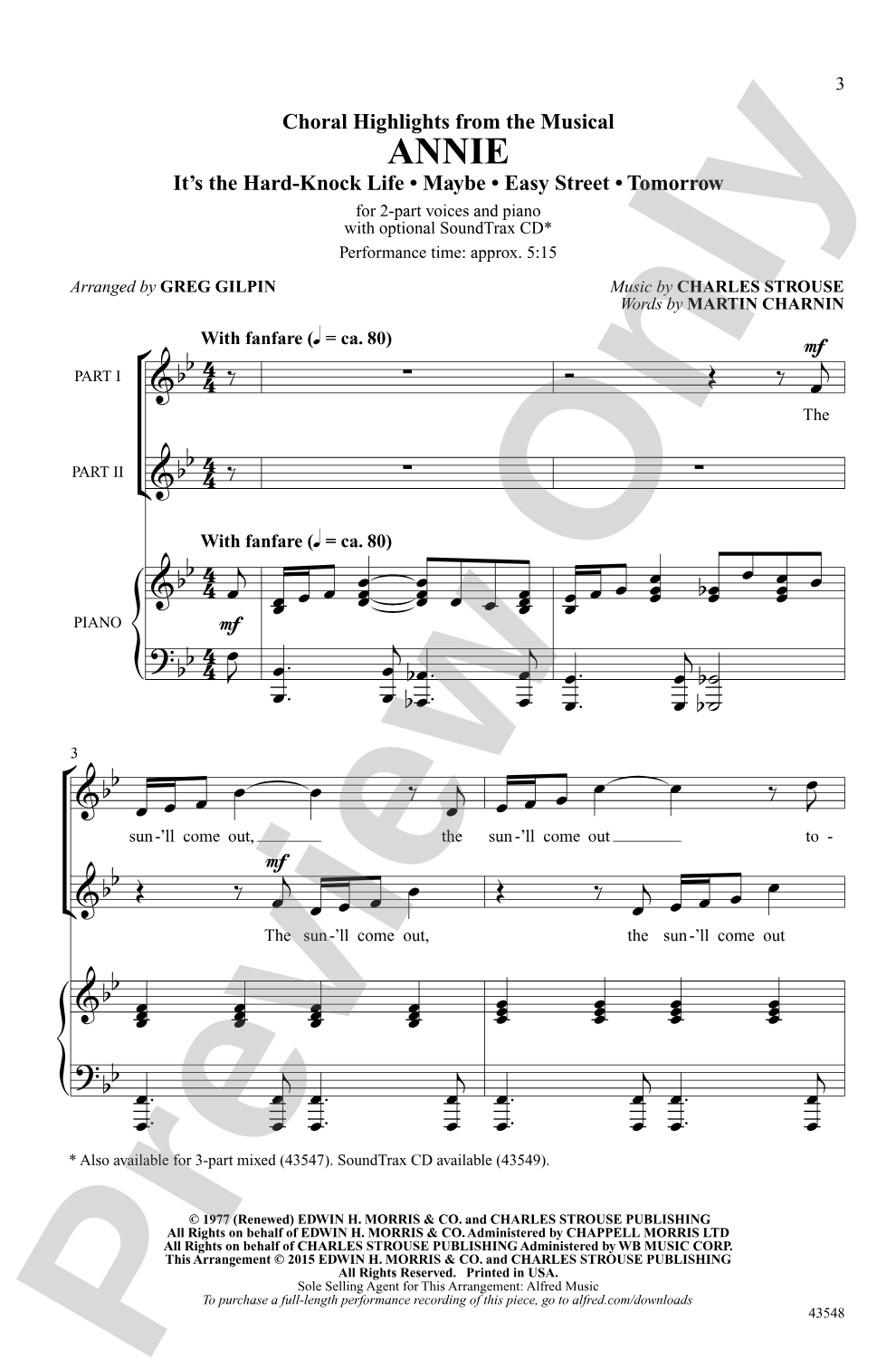
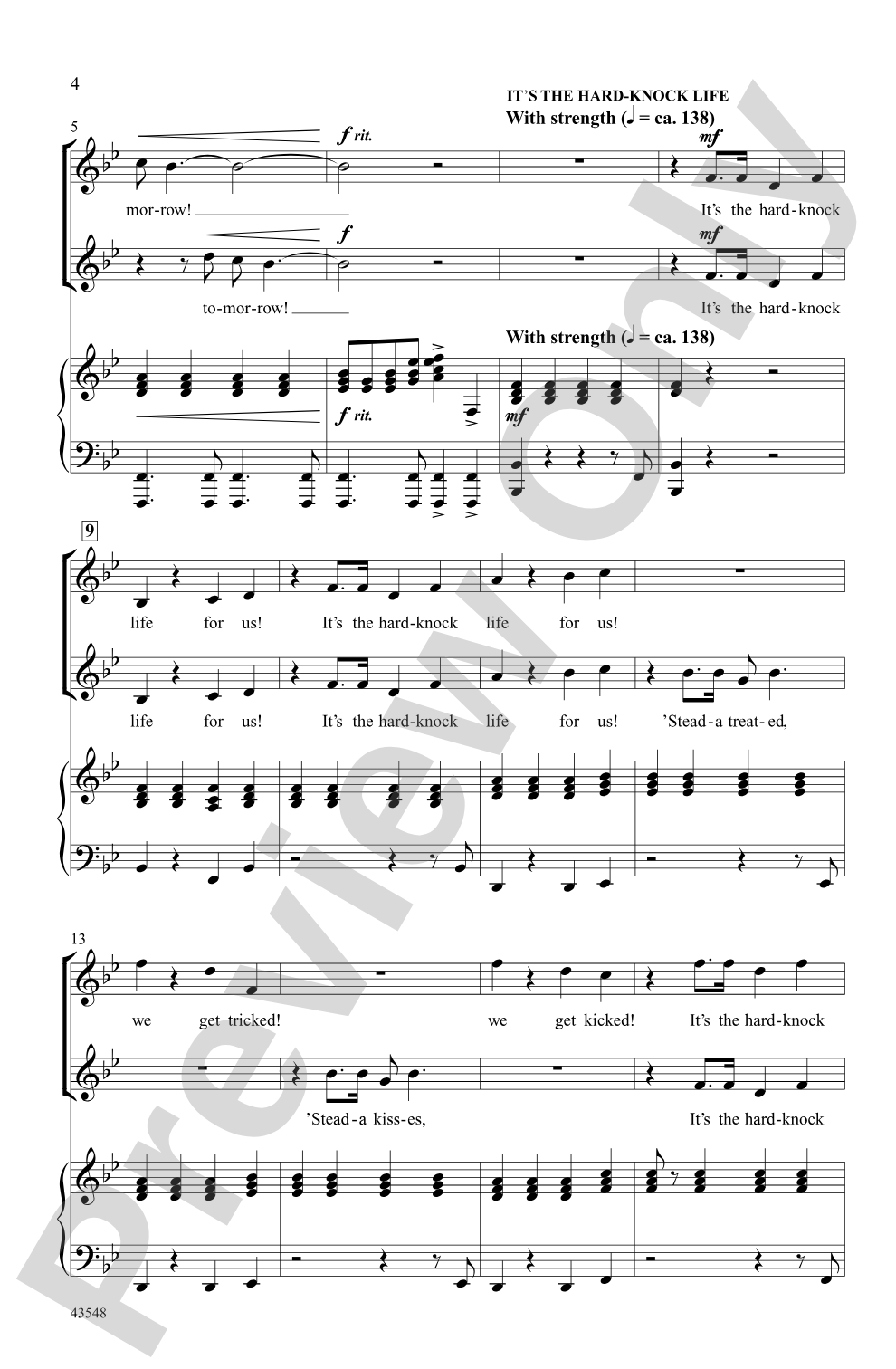
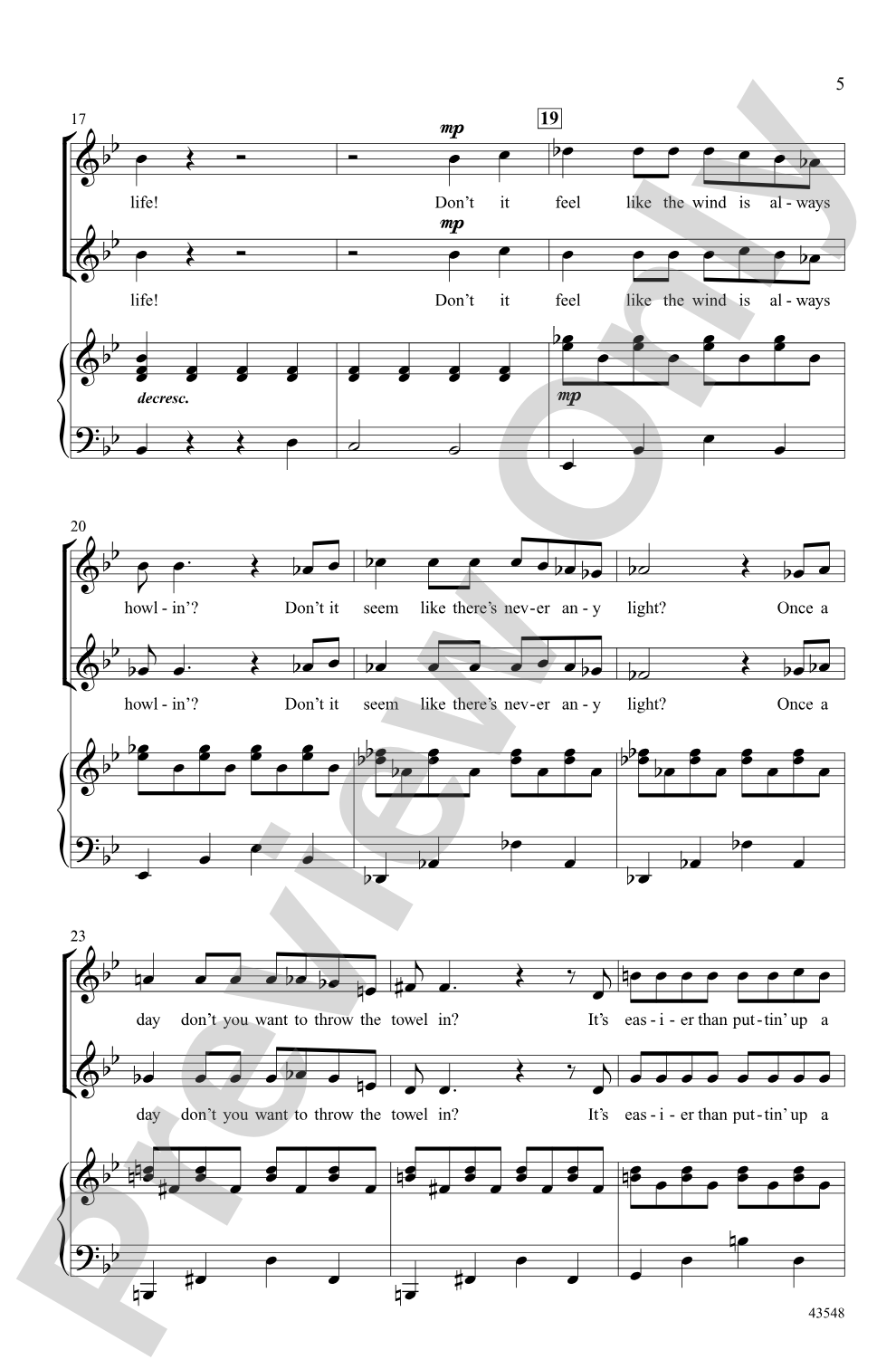

Annie: 2-Part Choral Octavo
Choral Highlights
Music by Charles Strouse, words by Martin Charnin / arr. Greg Gilpin
Item: 00-PO-0003430

$2.50
Minimum order quantity: 20 copies
One moment…
Description
A true American musical theater classic, Annie is still thrilling audiences world-wide. Introduce younger choirs to this wonderful show with five minutes of favorite highlights. Don't be surprised if your audience joins in!


Don't just read it, hear it, play along with it, and watch your students grow with it. In MakeMusic Cloud, Annie: 2-Part Choral Octavo comes alive with professional accompaniment, adjustable tempo, and built-in practice tools that turn solo practice into real progress.
Open in the Player
Jump straight in and assign it today.
Start Your Free Trial
Open this title and explore the full library in minutes.
Sample Audio
1
Audio File
--:--
0:00
0:00
Sample Video
No sample videos found.
Additional Details
Publisher:
Alfred Music
Page Count:
20
SKU:
00-PO-0003430
More about this title
About the Composer: Charles Strouse
Charles Strouse composed the score for Annie, which debuted on Broadway in 1977 and became one of the most beloved musicals in American theater. His gift for writing accessible, emotionally resonant melodies that lodge themselves in audiences' memories defined the show's enduring appeal. Strouse studied at Eastman School of Music and went on to compose scores for numerous Broadway productions, always prioritizing clarity and singability alongside theatrical impact.
Why we love this
Greg Gilpin's 2-part arrangement captures the infectious energy and melodic heart of Annie without demanding advanced vocal technique, making it genuinely playable for younger choirs while preserving the magic that makes audiences recognize these songs instantly. The five-minute medley format respects rehearsal time constraints while delivering real theatrical satisfaction. Choirs consistently report that audiences respond with genuine joy to this arrangement, often singing along without being prompted.
What to expect
Stepping into Annie means embracing optimism, resilience, and the kind of infectious melodic joy that defined 1970s Broadway at its most popular. The arrangement sparkles with energy while maintaining the emotional sincerity that made the show resonate with millions; it's theatrical without being campy, accessible without losing its character.
Who it's for
This octavo is ideal for middle school and early high school choirs seeking Broadway repertoire that's genuinely fun to sing and that audiences recognize immediately. It works for any director wanting to introduce younger singers to musical theater literature without overwhelming them with vocal or technical demands.
How to get the most out of it
- Balance the melodic line clearly in the first verse of each section so listeners can follow the familiar tunes; the arrangement's effectiveness depends on recognition and singability, not blend obscuring the melody.
- Treat the dynamic contrasts marked in the score as essential storytelling, not optional; moving from the quiet vulnerability of certain moments to the bold energy of others gives the medley dramatic shape.
- Work the recorded accompaniment into rehearsal early so singers hear how their parts sit within the fuller arrangement; this builds confidence and clarifies rhythmic placement in busier sections.
- Shape the phrasing around the lyrical content even in shorter sections; Annie's emotional core comes through when choir members understand what each moment is about, not just the notes.
How to use it
Open a spring concert with this medley to set an uplifting tone, or place it strategically in the second half when audience energy needs a boost. It pairs naturally with other show tune arrangements or can anchor a Broadway-themed program; at just five minutes, it fits comfortably alongside longer choral works without dominating rehearsal focus.
Skills your students will build
- Singing melodically connected phrasing across multiple song sections
- Interpreting dynamic and tempo markings to serve theatrical storytelling
- Coordinating with recorded accompaniment and responding to its tempo
- Balancing two-part harmony while maintaining melodic clarity and recognition