
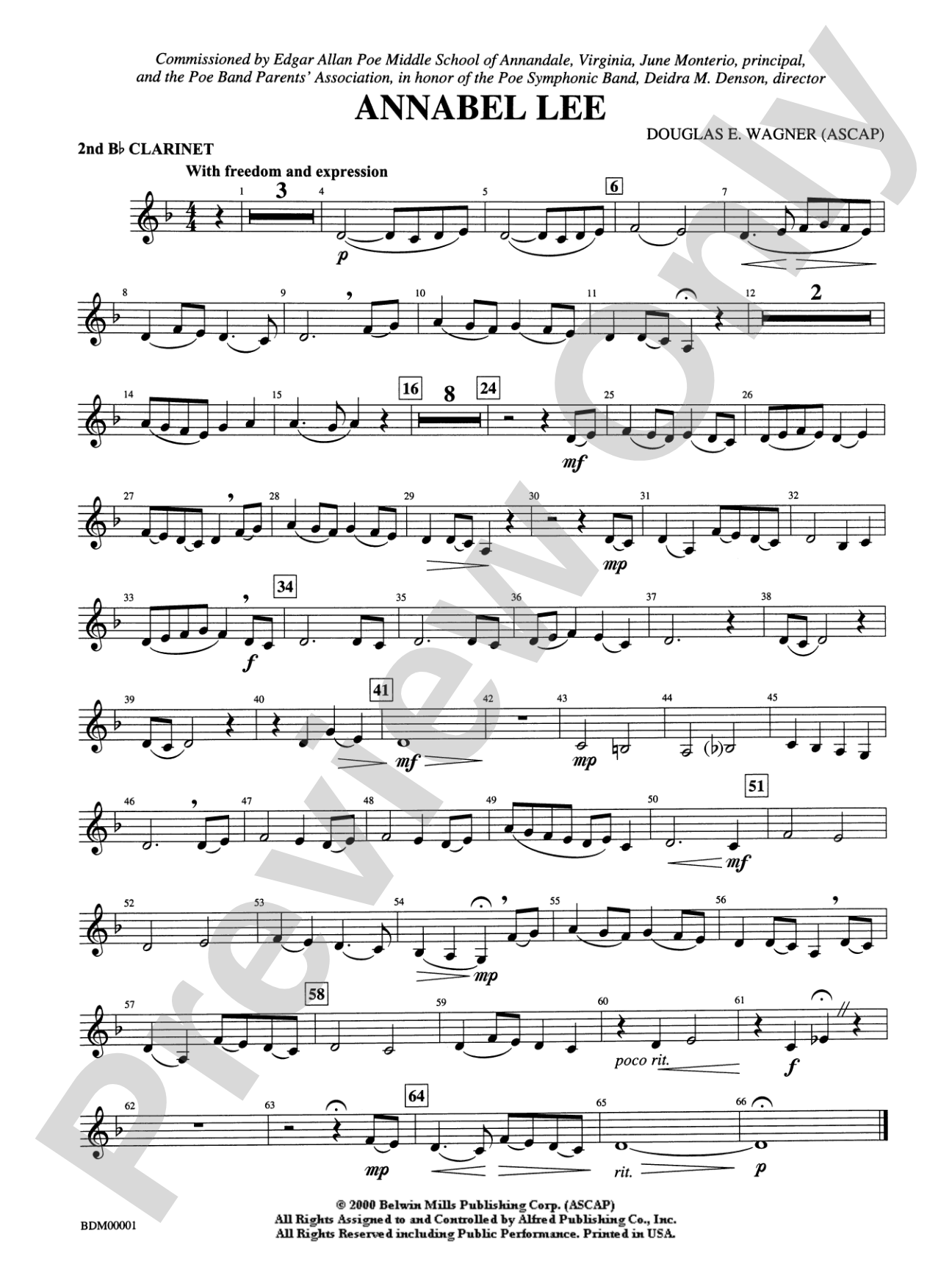

Annabel Lee: 2nd B-flat Clarinet
By Douglas E. Wagner
Grade: 2 (Easy)
Item: 00-PC-0002114_C2
$3.00
Pickup currently not available
Description
Based on the exquisitely beautiful poem of the same name, by Edgar Allan Poe, Annabel Lee by composer Douglas Wagner is a charismatic work, with the main thematic material reoccurring as a dialogue between the two lovers in counterpoint in both the first and last section. The middle segment paints a musical picture of a cold, desolate, windswept shoreline . . . a place where this portrait might have been discovered. Wonderfully flowing lines with fascinating harmonic coloration.


Don't just read it, hear it, play along with it, and watch your students grow with it. In MakeMusic Cloud, Annabel Lee: 2nd B-flat Clarinet comes alive with professional accompaniment, adjustable tempo, and built-in practice tools that turn solo practice into real progress.
Open in the Player
Jump straight in and assign it today.
Start Your Free Trial
Open this title and explore the full library in minutes.
Sample Audio
1
Audio File
--:--
0:00
0:00
Sample Video
No sample videos found.
Additional Details
Series:
Belwin Young Band
Publisher:
Alfred Music
Page Count:
140
SKU:
00-PC-0002114_C2
More about this title
About the Composer: Douglas E. Wagner

Douglas E. Wagner studied music at Butler University, earning both undergraduate and graduate degrees before spending three decades as a high school music educator and administrator. Since 1973, he has composed and arranged over 3,500 works across multiple genres: school and church choral music, concert band, orchestra, handbell ensemble, organ, piano, and vocal literature. His prolific output has sold more than seventeen million copies worldwide and continues to be performed in concert halls, on radio, and on television broadcasts internationally.
Now based in Indianapolis, Indiana, Wagner devotes his full attention to composition and related musical activities. His extensive experience in secondary music education directly informs his writing for young ensembles, resulting in works that balance musical substance with accessibility.
Why we love this
Wagner captures the gothic atmosphere of Poe's narrative without resorting to theatrical excess. The piece works beautifully at Grade 2 because the counterpoint between the lovers' theme feels musically sophisticated while remaining well within reach of developing ensembles. Programming this alongside other ballad-inspired works or as a concert centerpiece gives your band a programmatic arc that audiences remember.
What to expect
The piece unfolds like a melancholy memory. Its flowing melodic lines evoke the tenderness between the two lovers, then shift into something colder and more atmospheric as the music paints that windswept, desolate shore. The return of the main theme carries weight, as though the lovers' voices echo back across time.
Who it's for
This work suits Grade 2 concert bands preparing for festivals or formal concerts, particularly those seeking repertoire with literary or programmatic depth. It's ideal for bands wanting to program a single substantial piece that doesn't demand advanced technical facility but rewards careful musical interpretation.
How to get the most out of it
- Shape the recurring thematic dialogue between soprano and lower voices as if two characters are literally speaking to each other across the arrangement; this clarifies the romantic counterpoint and heightens the narrative impact.
- Allow the middle section to breathe with a slightly looser tempo and more dynamic space. The desolate shoreline imagery demands atmospheric silence and restraint rather than consistent forward drive.
- Balance harmonic color carefully in the first and final sections where themes interweave. Ensure inner voices aren't buried so the 'fascinating harmonic coloration' mentioned in the score actually reaches your audience.
How to use it
This programmatic work anchors a concert thematically when paired with other Poe-inspired pieces or works exploring themes of love and loss. Use it as a showcase moment for your band's ability to shape a narrative arc, or feature it in a fall or Halloween concert where the atmospheric middle section feels seasonally appropriate.
Skills your students will build
- Counterpoint awareness (recognizing and balancing two simultaneous melodic lines)
- Sustained lyrical phrasing across extended sections
- Dynamic shaping to create atmospheric contrast between sections
- Harmonic listening and balance of inner voices
- Tempo flexibility and rubato in service of musical storytelling