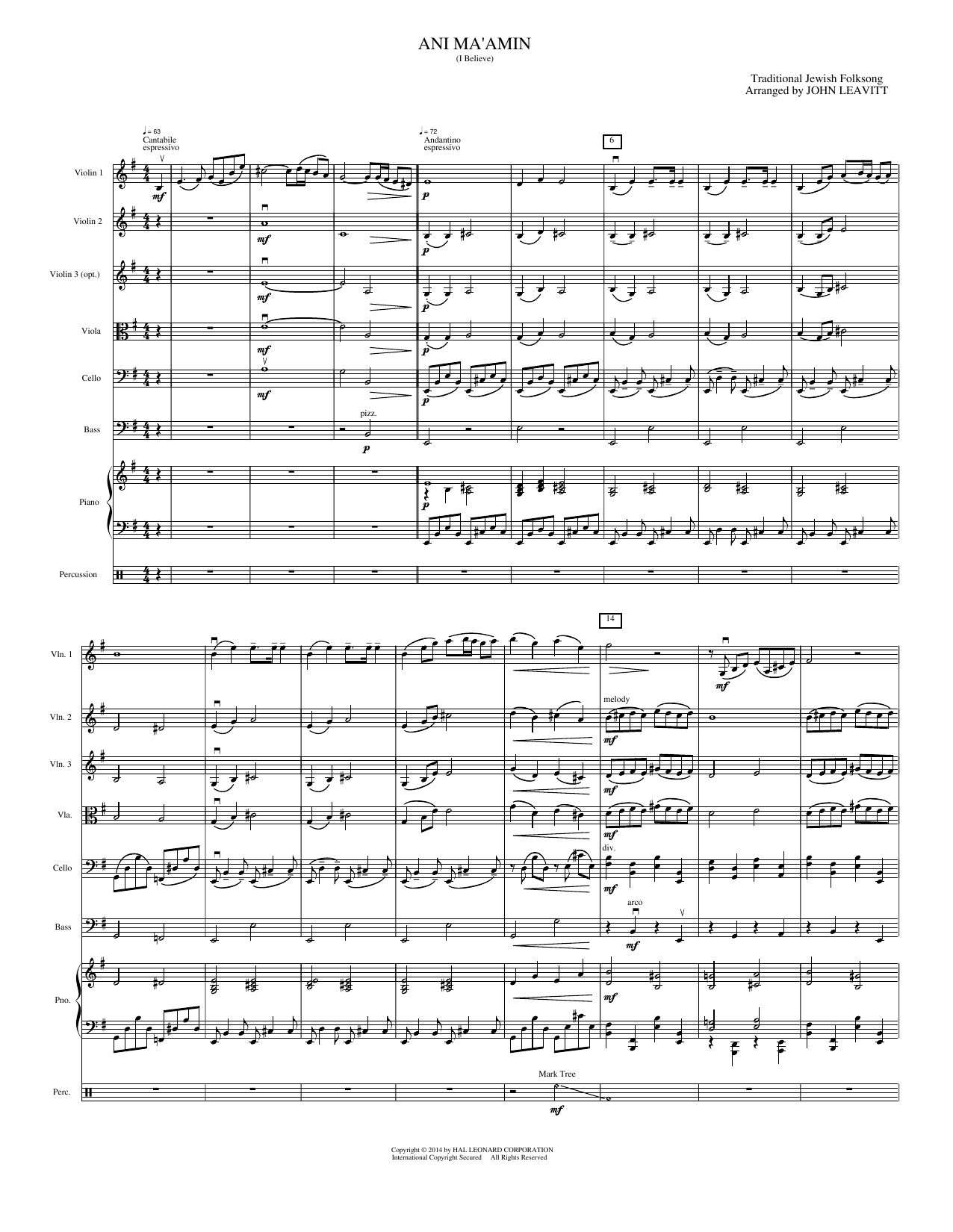
John Leavitt is a prolific composer and arranger whose work spans choral, instrumental, and vocal genres. His compositions are known for their accessibility without sacrificing musical substance, making him a trusted voice in music education circles where teachers need repertoire that engages students while building real skills.
Why we love this
Leavitt captures the emotional depth of this Hebrew text with orchestration that sits perfectly in the sweet spot between early intermediate and solid intermediate writing. The string writing is idiomatic without being showy, giving players the chance to shape meaningful phrases while the conductor can focus on bringing out the quiet dignity of the piece.
What to expect
Ani Ma'amin carries a contemplative, affirming quality. The string writing unfolds with gentle insistence, building from introspective passages into moments of collective conviction without ever becoming bombastic. It feels like witnessing a quiet act of faith.
Who it's for
String orchestras at the Grade 3-4 level who want meaningful concert repertoire beyond standard folk arrangements. Directors seeking music that honors cultural and spiritual content while meeting students where they are technically will find this a natural fit.
How to get the most out of it
Shape the melodic line with gentle vibrato in the upper strings; the piece gains warmth when players understand this as a declarative statement rather than a purely technical exercise.
Watch the balance between divisi sections and unison passages. The unison moments carry conviction when the ensemble has rehearsed them as unified statements.
Resist the urge to rush. This text deserves space and breath, so tempo control and subtle rubato will serve the emotional arc far better than a metronomic approach.
Let dynamic contrasts breathe naturally. Grade 3-4 orchestras often benefit from explicit instruction about maintaining pianissimos, which become this piece's most expressive moments.
How to use it
This works beautifully as an opening piece on a concert celebrating cultural or spiritual themes, or as a bridge between lighter repertoire and more substantial works. The moderate length and Grade 3-4 accessibility make it ideal for mid-year programs when students have built ensemble confidence but still benefit from focused, achievable literature.
Skills your students will build
Sustaining long phrases with consistent tone quality
Balancing between divisi and unison textures
Responsive dynamic control, especially in softer passages
Interpreting text-driven meaning in instrumental music
Blend and intonation awareness in string sections
You May Also Like
Scan to Complete Your Purchase
Use your phone's camera to scan the code below
You'll log in on your phone and the order will be added to your account