Ani L'dodi Sheet Music Preview

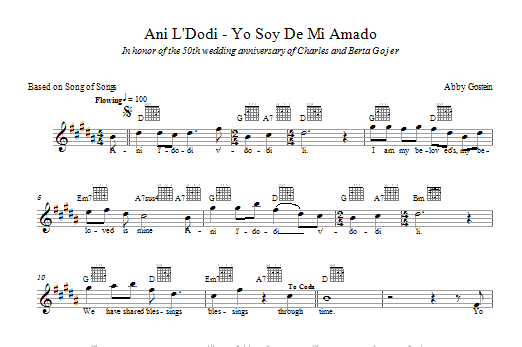
Ani L'dodi: Lead Sheet / Fake Book

As performed by Abby Gostein

Item: 35-DS00090821

Digital Download
$3.99
Description

Ani L'dodi: Lead Sheet / Fake Book isn't in MakeMusic Cloud just yet...but it could be. Let us know you'd like to see it, and you'll help shape what comes next. In the meantime, start a free trial and dive into thousands of interactive titles your students can play along with today.

Sample Audio
No sample audio found.
Sample Video
Additional Details
Publisher: Hal Leonard
Page Count: 1
SKU: 35-DS00090821

More about this title

Why we love this

A single-page lead sheet distills this traditional melody into its essential harmonic and melodic content, making it ideal for jazz pianists, vocalist-accompanists, or anyone building improvisation skills on familiar material. The format respects the song's lyrical roots while opening it up for reharmonization and personal interpretation.

What to expect

Intimate and intentional. The single-page format creates a clarity that honors the melody's directness while the lead sheet notation invites the performer to bring their own voice to the harmony. There's breathing room here for personal choices.

Who it's for

Pianists and keyboardists working with vocalists, jazz students learning to read and interpret lead sheets, and ensemble musicians who want to accompany singers with agency over harmonic texture. It works equally well for classroom study of traditional song forms or informal performance settings.

How to get the most out of it

  • Explore the relationship between the lead line and chord changes before adding voicings; understanding the harmonic progression underneath helps inform rhythmic choices and phrasing.
  • Consider the text setting and syllable stress as guides for where to place harmonic movement or comping rhythms; lyrics carry weight that pure melody doesn't always show.
  • Experiment with different comp styles (sparse block chords, walking patterns, or rhythmic stabs) to find what serves the vocalist or primary melodic voice.

How to use it

Pair this with vocal repertoire in a worship, folk, or chamber setting where flexible accompaniment matters more than a fixed arrangement. It's also valuable as a teaching score for showing students how to read and realize lead sheets in real time, turning notation into responsive musicianship.

Skills your students will build

  • Reading lead sheet notation with chord symbols
  • Improvising voicings and comping patterns from given changes
  • Balancing melody support with harmonic independence
  • Text underlay and how lyrics shape phrasing decisions

You May Also Like