
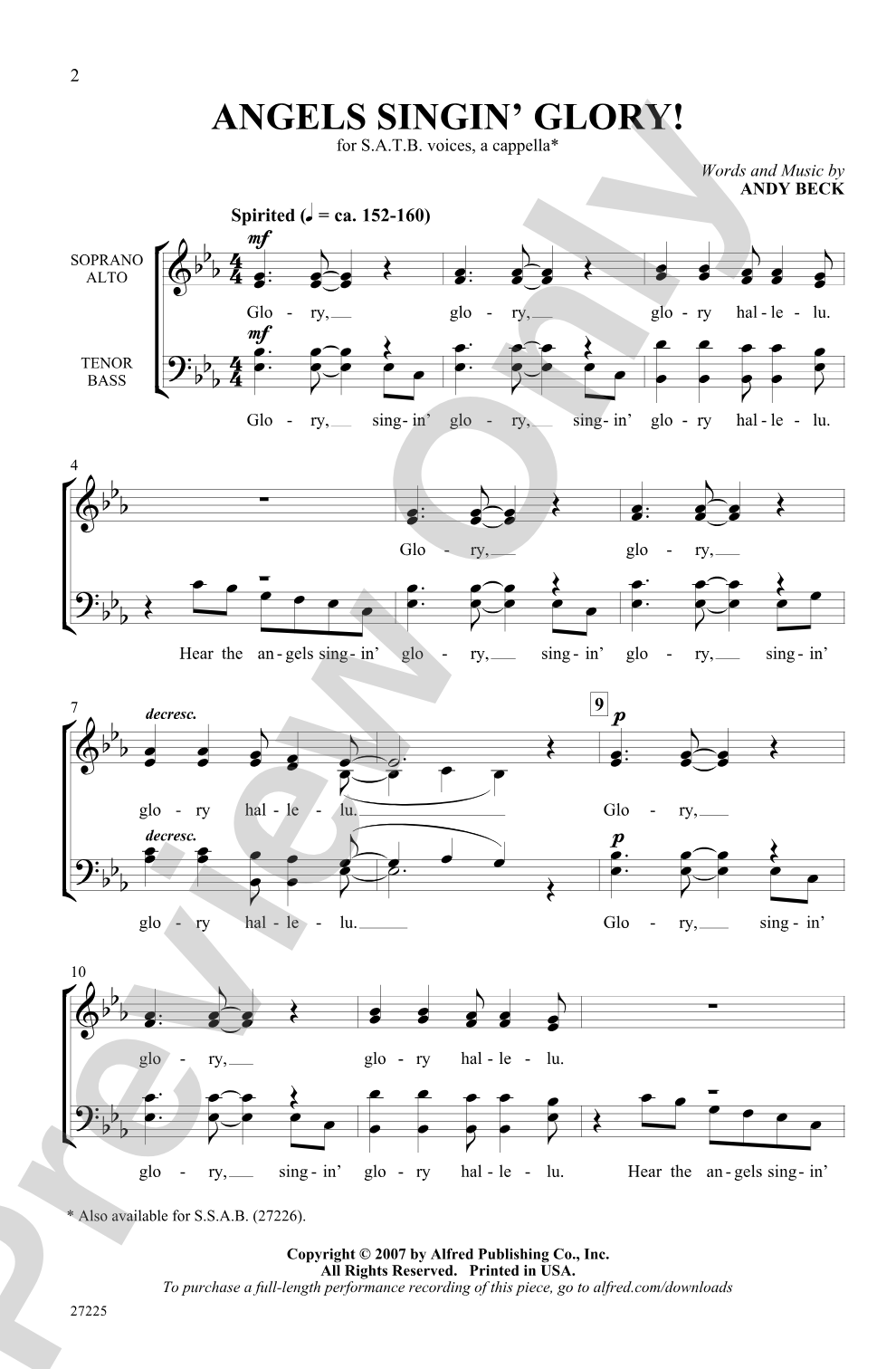
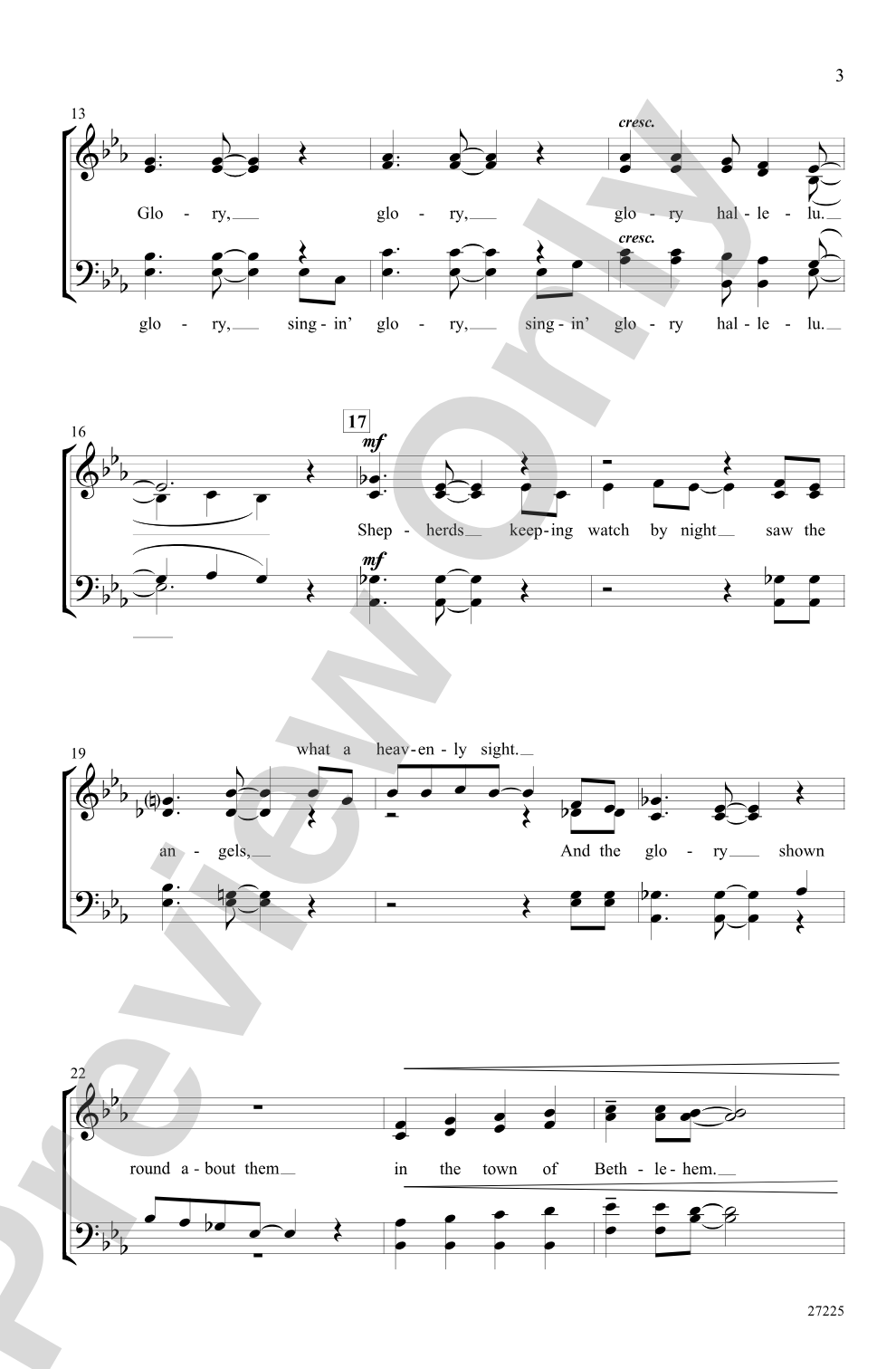

Angels Singin' Glory!: SATB, a cappella Choral Octavo
Words and music by Andy Beck
Item: 00-PO-0000333
$1.75
Minimum order quantity: 20 copies
Pickup currently not available
Description
A lively, a cappella chorus opens and closes this original Christmas spiritual with a sweet rubato chorale in the middle. Composed in a traditional style with a contemporary flair, each section of the choir has a moment to shine, especially the basses/baritones--singing spirited interjections throughout.


Angels Singin' Glory!: SATB, a cappella Choral Octavo isn't in MakeMusic Cloud just yet...but it could be. Let us know you'd like to see it, and you'll help shape what comes next. In the meantime, start a free trial and dive into thousands of interactive titles your students can play along with today.
Request This Title
Tell us you want it.
Start Your Free Trial
Explore everything that's ready to play right now.
Sample Audio
1
Audio File
--:--
0:00
0:00
Sample Video
Additional Details
Series:
Alfred Choral Designs
Publisher:
Alfred Music
Page Count:
8
SKU:
00-PO-0000333
More about this title
About the Composer: Andy Beck

Andy Beck directs choral publications at Alfred Music and has composed and arranged more than 450 works for choral ensembles, vocal groups, and children's theater. His educational resources, including Sing at First Sight, Foundations in Choral Sight Singing, and Vocalize! 45 Vocal Warm-Ups That Teach Technique, are widely used in schools and studios. He holds degrees in Music Education from Ithaca College and Northwest Missouri State University.
Beck is a sought-after guest conductor, adjudicator, and clinician who has worked with honor choirs across the United States, including multiple all-state groups in the Southeast. A tenor himself, he performs with the North Carolina Master Chorale Chamber Choir and has served as an Alfred Music recording artist since 1992. His compositions reflect a deep understanding of what works in rehearsal and on stage, grounded in both pedagogical insight and genuine musicianship.
Why we love this
Beck gives every voice section something memorable to do. The basses and baritones get rhythmic, spirited lines that anchor the piece and give lower voices genuine musical authority rather than relegating them to background support. The contrast between the energetic framing sections and the tender middle chorale keeps singers engaged throughout, and the accessible a cappella writing means you can program this without instrumental support.
What to expect
The piece captures the warmth of a spiritual tradition while embracing contemporary musical gestures. Energy and exuberance in the outer sections give way to intimate, unhurried singing in the middle, creating emotional shape and keeping the listener present throughout.
Who it's for
This octavo works for high school and adult choirs seeking a Christmas piece that feels fresh without requiring sophisticated harmonic literacy or extended vocal ranges. The a cappella format makes it accessible for groups without accompaniment resources, and the eight pages mean minimal rehearsal time for a strong performance outcome.
How to get the most out of it
- Keep the outer sections driving and rhythmically tight; the basses' interjections need clarity and precision to land their full effect.
- Shape the rubato chorale in the middle with genuine legit singing and careful attention to blend, letting it breathe as a moment of calm reflection.
- Balance upper and lower voices carefully in the opening section so the bass and baritone lines are heard as integral to the arrangement, not buried.
How to use it
Pair this as a closing number on a Christmas concert to send the audience out with joy and energy, or position it alongside other spirituals to highlight the depth and variety within that tradition. Its length and moderate difficulty make it a strong choice for a mixed December program that includes both sacred repertoire and secular holiday material.
Skills your students will build
- Balancing multiple simultaneous rhythmic lines in a cappella texture
- Singing sustained vowels and legit tone without instrumental anchor
- Blending upper and lower voices to achieve unified sound across four parts
- Responding to rubato and expressive gesture in the middle chorale section