Angel's Lullaby: Piano/Vocal/Chords Digital Sheet Music

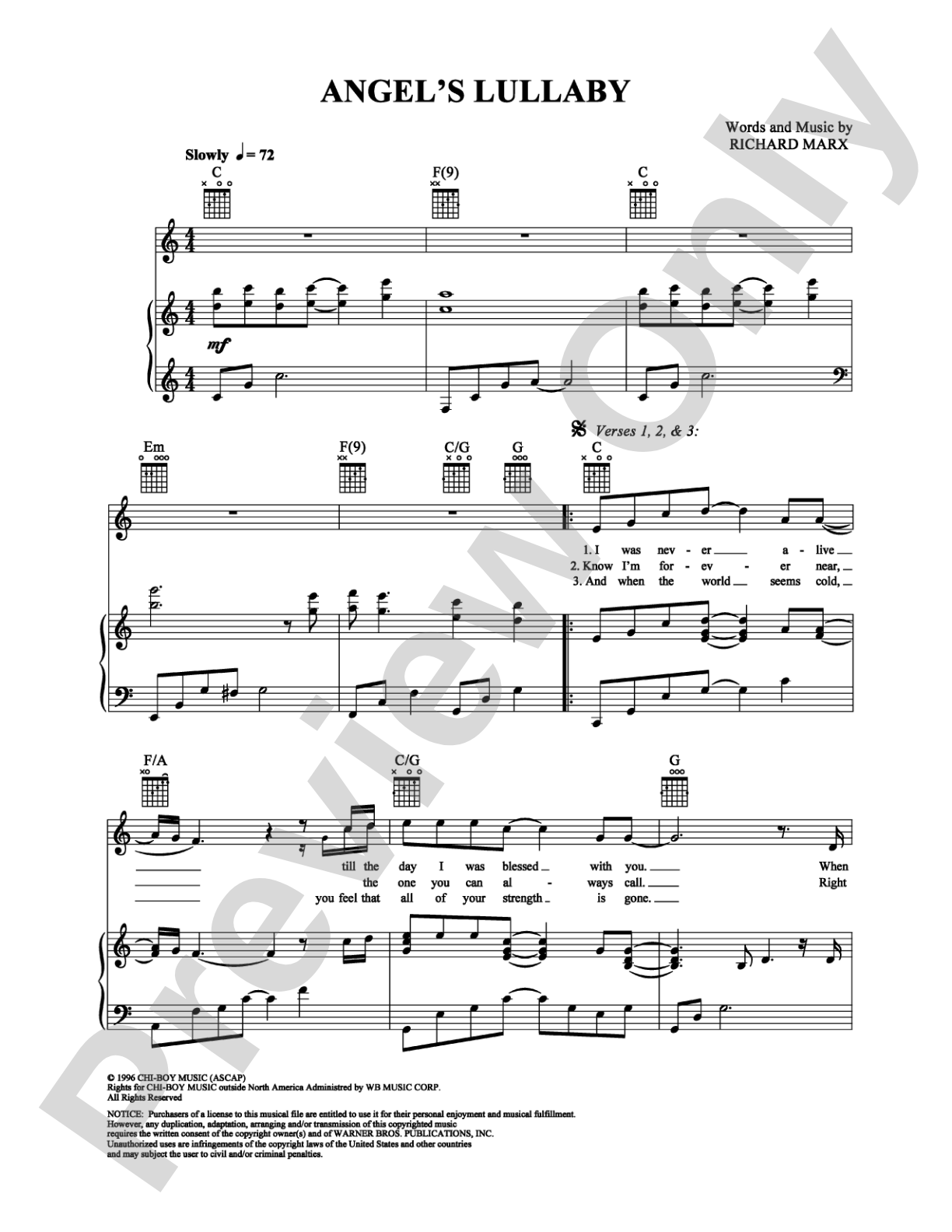
Angel's Lullaby: Piano/Vocal/Chords Digital Sheet Music

Richard Marx

Item: 00-PS-0007974

Digital Download
$2.95
Description

Angel's Lullaby: Piano/Vocal/Chords Digital Sheet Music isn't in MakeMusic Cloud just yet...but it could be. Let us know you'd like to see it, and you'll help shape what comes next. In the meantime, start a free trial and dive into thousands of interactive titles your students can play along with today.

Sample Audio
No sample audio found.
Sample Video
Additional Details
SKU: 00-PS-0007974

More about this title

About the Artist: Richard Marx

Richard Marx built his career in the 1980s and 1990s as a singer-songwriter whose blend of rock sensibility and melodic pop craftsmanship earned him multiple platinum certifications and Grammy nominations. His work spans film soundtracks, duets with major artists, and a steady output of original material that consistently showcases his gift for accessible, emotionally direct songwriting.

Why we love this

This piano/vocal arrangement captures the intimacy that makes Marx's songwriting resonate with singers and pianists alike. The chord notation gives you flexibility to interpret the accompaniment while keeping the vocal line clear and singable, making it ideal for recital programs that blend contemporary pop with art song sensibility.

What to expect

A moment of tenderness and comfort, wrapped in soft harmony. The piece has the emotional directness of a lullaby even within a pop sensibility, inviting both performer and listener into a quieter emotional space where melody and lyric matter most.

Who it's for

Pianists preparing a pop or contemporary recital will find this arrangement immediately useful, as will singers who need accessible material that doesn't require a full band. Voice students exploring crossover repertoire and adult learners returning to music will appreciate the straightforward accessibility alongside genuine musical substance.

How to get the most out of it

  • Study the chord symbols carefully to understand harmonic movement; they'll guide your voicing choices and help you shape the accompaniment to support the vocal line rather than overpower it.
  • Work out the piano part and vocal melody separately first, then layer them together slowly to lock in the rhythmic relationship before building tempo.
  • Pay attention to dynamics marked in the score; lullabies need space and restraint, so resist the urge to add volume when the music feels understated.
  • Experiment with different voicings of the given chords to find colors that match the peaceful, tender mood the lyric suggests.

How to use it

Slot this into a recital as a palate-cleanser between larger dramatic works, or use it to open a contemporary music set where you're mixing established pop songwriters with art song and musical theater. It also works well in informal settings like coffee house performances or intimate recitals where audiences appreciate skilled, emotionally genuine singing.

Skills your students will build

  • Interpreting chord symbols and choosing complementary voicings
  • Balance between vocal line and piano accompaniment in a contemporary context
  • Sustaining legato phrasing across a slow-moving harmonic progression
  • Connecting pop and art song traditions through song interpretation

You May Also Like