Angel Band Sheet Music Preview

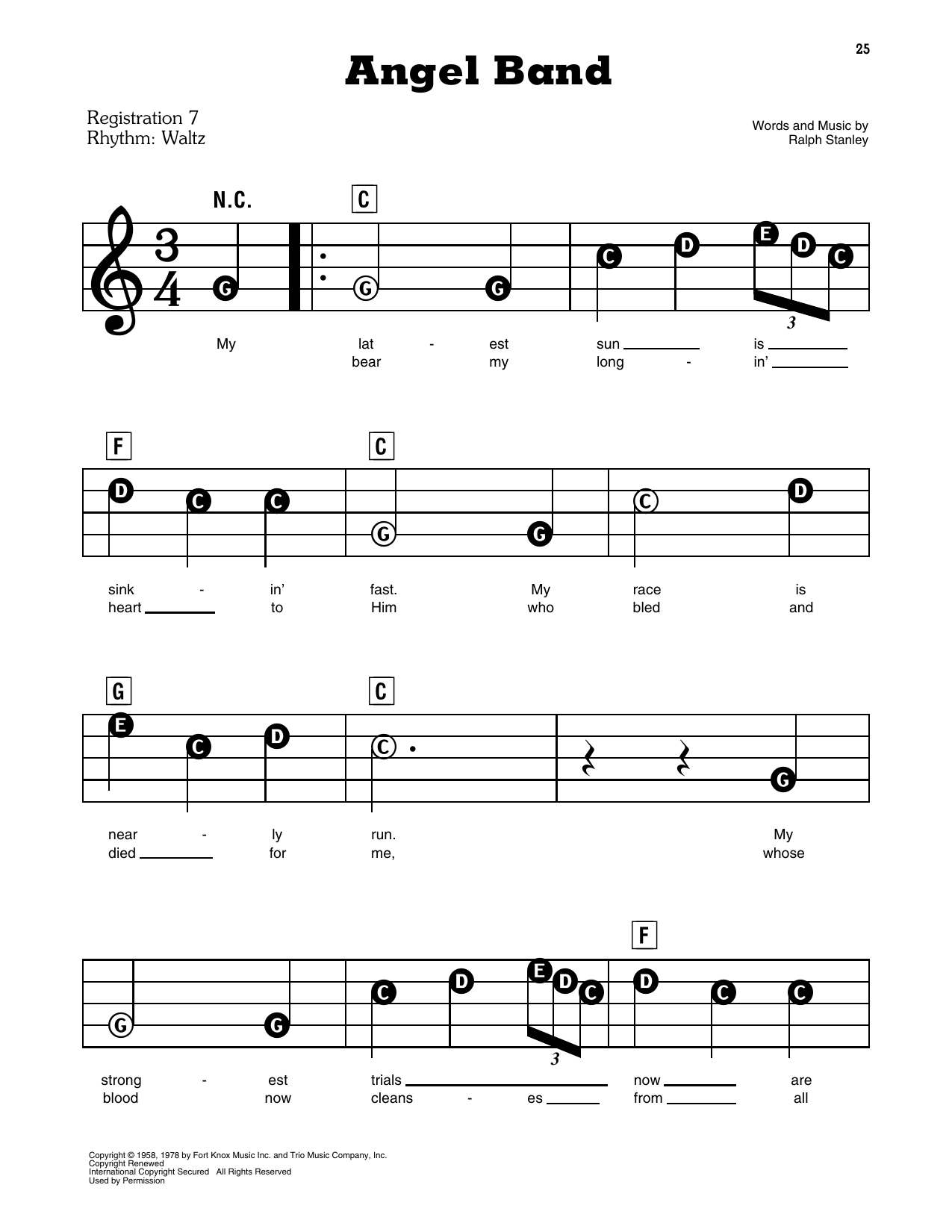
Angel Band: E-Z Play Today

As performed by The Stanley Brothers

Item: 35-DS01888409

Digital Download
$4.99
Description

Angel Band: E-Z Play Today isn't in MakeMusic Cloud just yet...but it could be. Let us know you'd like to see it, and you'll help shape what comes next. In the meantime, start a free trial and dive into thousands of interactive titles your students can play along with today.

Sample Audio
No sample audio found.
Sample Video
Additional Details
Publisher: Hal Leonard
Page Count: 3
SKU: 35-DS01888409

More about this title

About the Artist: The Stanley Brothers

The Stanley Brothers, Carter and Ralph, were foundational figures in bluegrass music who helped define the genre's sound and sensibility during the 1940s and 1950s. Their high, lonesome vocal blend and instrumental precision became a template for generations of bluegrass musicians, and their songwriting drew deeply from Appalachian folk traditions while creating something entirely modern.

Why we love this

Angel Band captures the spiritual depth that made the Stanley Brothers' music resonate across decades. This arrangement honors their authentic approach to sacred folk material while remaining accessible enough for pianists developing their jazz and folk voicing techniques.

What to expect

Angel Band carries the weight of spiritual yearning familiar to anyone who knows Appalachian hymns, yet the jazz harmonies and contemporary arrangement give it a reflective, almost wistful quality. You'll find yourself drawn into a space between tradition and reinterpretation, where the melody feels both timeless and newly discovered.

Who it's for

Pianists exploring American roots music and folk traditions will find this arrangement rewarding at the intermediate level. It works equally well for jazz students interested in how traditional songs function within jazz harmony and for pianists seeking sacred music that connects to folk authenticity.

How to get the most out of it

  • Lean into the rubato. This isn't a strict metronomic piece; allow the melody room to breathe, especially at phrase endings, to reflect the hymnal origins of the song.
  • Balance melody with harmonic texture. The piano part should support the tune without overshadowing it; think accompaniment rather than feature.
  • Explore the harmonic movement deliberately. The jazz chords invite subtle voice leading that can reveal the emotional arc of the piece.

How to use it

Consider pairing this with other American folk spirituals for a concert theme exploring how sacred music shapes regional identity, or program it as a solo piano interlude that shifts the emotional temperature of a larger set. Its three pages make it substantial enough to anchor a segment without demanding excessive rehearsal time.

Skills your students will build

  • Jazz voicing and reharmonization of traditional melodies
  • Rubato and expressive timing in vocal music accompaniment
  • Harmonic analysis of folk material within jazz harmonic frameworks
  • Balancing melodic prominence with accompanying texture

You May Also Like