Andantino (from Symphony No. 4): Viola Sheet Music Preview

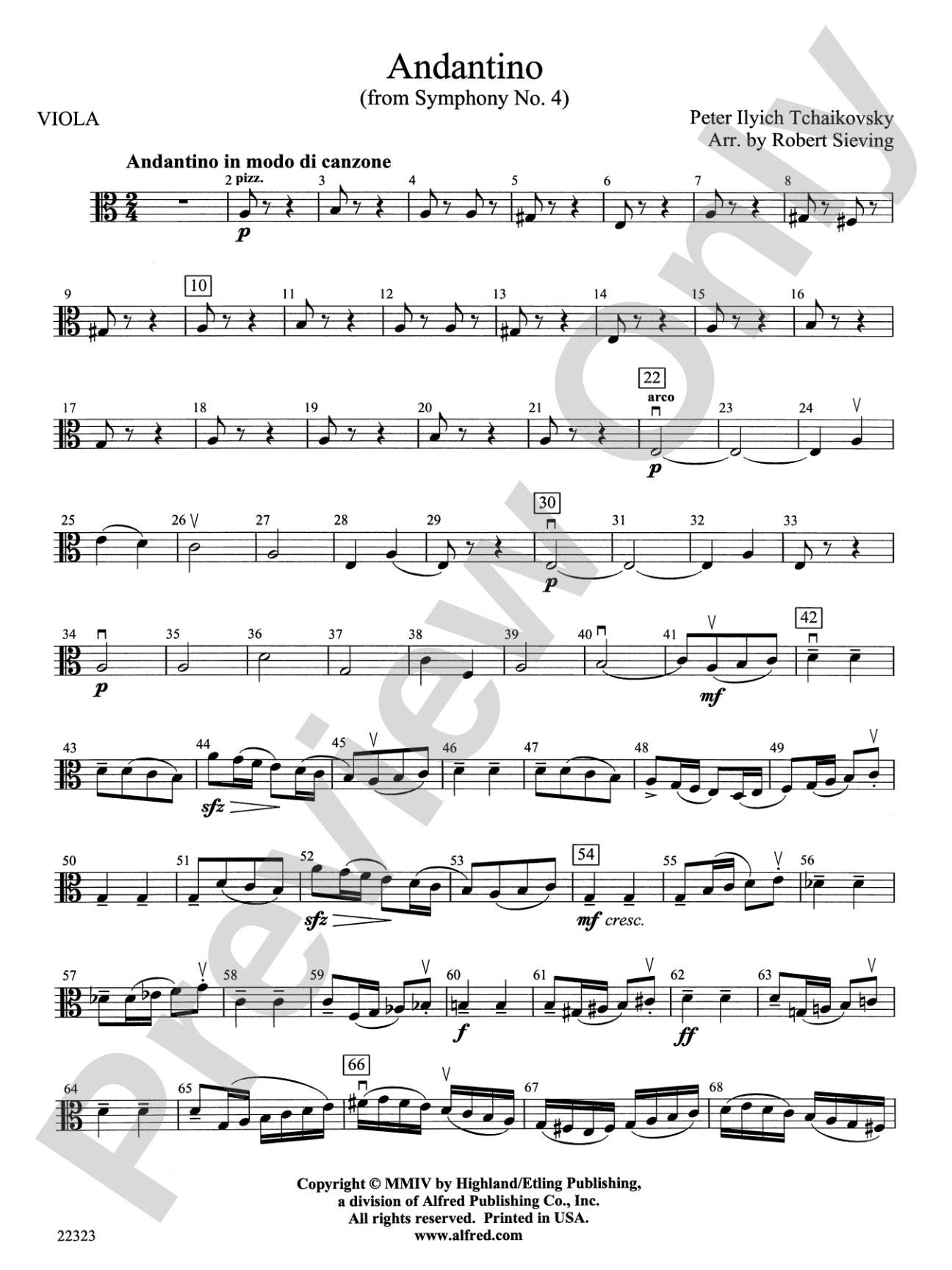
Andantino (from Symphony No. 4): Viola

(from Symphony No. 4)

By Peter Ilyich Tchaikovsky / arr. Robert Sieving

Grade: 3.5

Item: 00-PC-0000572_VA1

Digital Download
$5.99
Description
This arrangement features the main theme from the second movement of Tchaikovsky's Symphony No. 4 in F minor, Op. 36. Tchaikovsky composed this during a period of personal crisis, therefore the work as a whole is a restless and tempestuous one, reflecting his chaotic and dispirited state of mind. The melody, while pleasant and lyrical, is filled with a certain melancholy, reflecting the sadness in his life.

Don't just read it, hear it, play along with it, and watch your students grow with it. In MakeMusic Cloud, Andantino (from Symphony No. 4): Viola comes alive with professional accompaniment, adjustable tempo, and built-in practice tools that turn solo practice into real progress.

Sample Audio
0:00
0:00
Sample Video
Additional Details
Series: Highland/Etling String Orchestra
Publisher: Alfred Music
Page Count: 124
SKU: 00-PC-0000572_VA1

More about this title

About the Composer: Peter Ilyich Tchaikovsky

Peter Ilyich Tchaikovsky (1840-1893) stands as one of the most performed composers in the orchestral repertoire, celebrated for melodies that cut directly to emotional truth. His gift for writing instrumental music that feels singable and profoundly human made him a bridge between Russian nationalism and European tradition.

Why we love this

Robert Sieving's arrangement gives young orchestras access to one of the Romantic era's most recognizable and emotionally direct themes without overwhelming them with orchestrational complexity. The Grade 3.5 scoring preserves the melody's lyrical character while keeping the string writing idiomatic and playable, making this a legitimate concert piece rather than a simplified excerpt.

What to expect

This movement moves with quiet, introspective sadness—not dramatic or stormy, but intimate and deeply felt. The melody unfolds like a personal confession, tinged with longing, and the arrangement allows young musicians to discover how much emotion lives in simplicity and sustained tone.

Who it's for

String orchestras at the intermediate level (Grade 3-4 programs) who want to program substantial, recognizable masterworks without requiring advanced technique. This works equally well for festival performances, concert programming, or as a teaching tool for introducing students to Tchaikovsky's harmonic language and orchestral thinking.

How to get the most out of it

  • Shape the main melody with a gentle, singing tone rather than playing it straight through. The theme needs space to breathe, and young players often rush melancholic material.
  • Balance the inner voices carefully so the melody emerges naturally without the accompaniment drowning it out. This teaches ensemble listening at a manageable level.
  • Allow time in rehearsal to discuss what Tchaikovsky was expressing when he wrote this—it changes how students approach phrasing and dynamics significantly.
  • Attend to consistent vibrato across the ensemble in the sustained passages; this unifies the sound and deepens the piece's emotional weight.

How to use it

Pair this with lighter or brighter works to create program contrast; its melancholic character makes it an ideal centerpiece or second-half opener. It also serves as an excellent educational concert piece, where you can brief the audience on Tchaikovsky's life circumstances during composition, turning the performance into a storytelling moment.

Skills your students will build

  • Phrasing and shaping of long, legato melodic lines
  • Balancing melody against harmonic accompaniment
  • Sustaining tone quality in slower tempos
  • Interpreting musical expression from emotional context
  • Ensemble blend and unified vibrato in sustained passages

You May Also Like