
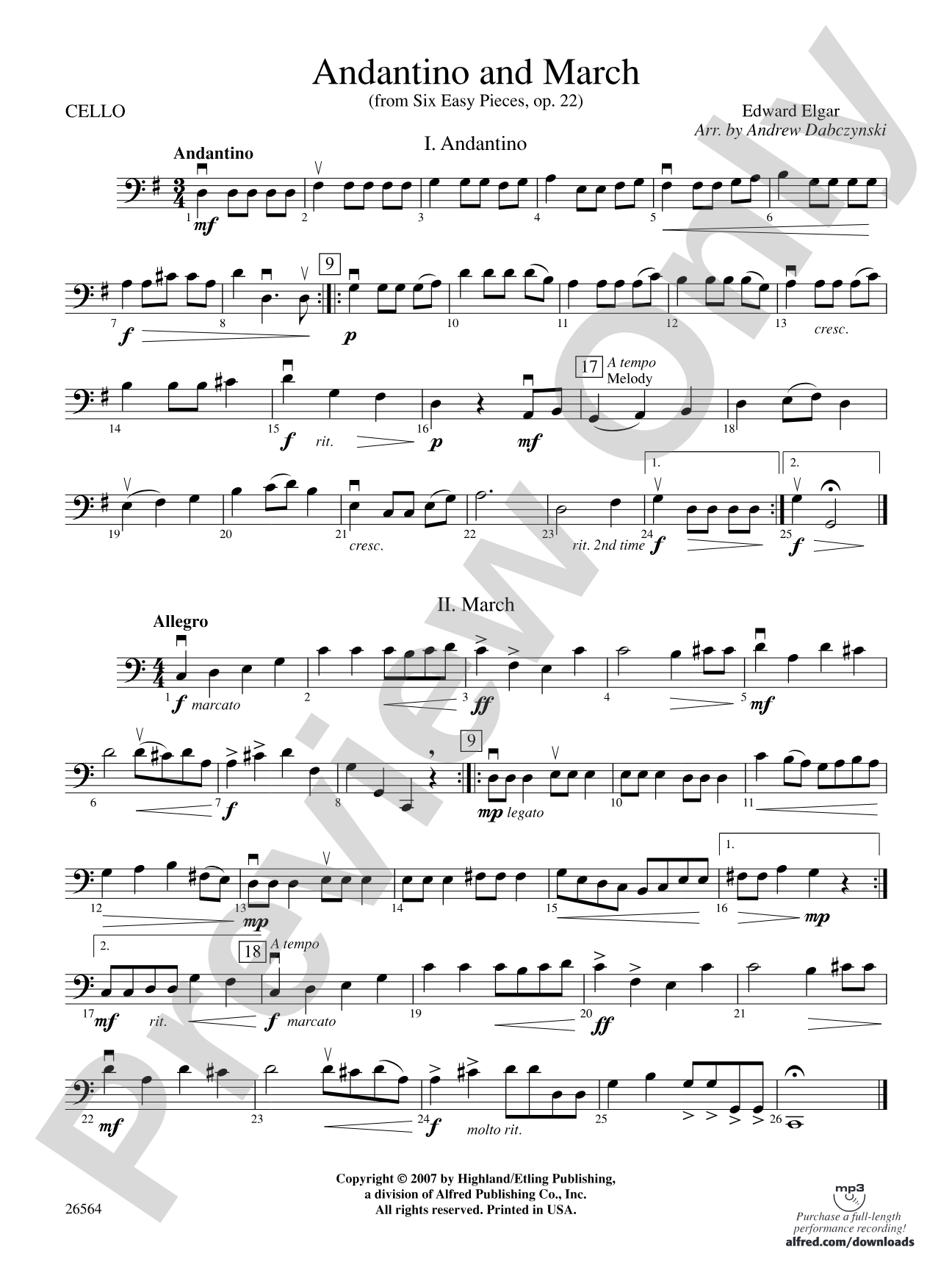

Andantino and March: Cello
By Edward Elgar / arr. Andrew H. Dabczynski
Grade: 2
Item: 00-PC-0001080_VC1
$5.99
Pickup currently not available
Description
String students with only basic skills can experience the rich sounds of the Romantic era in these two contrasting movements from Elgar's delightful work. All sections have a chance to play interesting melodies and lush harmonic accompaniments. While playable by beginners, students with more advanced skills will find this a rewarding piece, making it a perfect choice for concerts or festival. Correlates with String Explorer Book 1, Unit 14. This title is available in MakeMusic Cloud.


Don't just read it, hear it, play along with it, and watch your students grow with it. In MakeMusic Cloud, Andantino and March: Cello comes alive with professional accompaniment, adjustable tempo, and built-in practice tools that turn solo practice into real progress.
Open in the Player
Jump straight in and assign it today.
Start Your Free Trial
Open this title and explore the full library in minutes.
Sample Audio
1
Audio File
--:--
0:00
0:00
Sample Video
No sample videos found.
Additional Details
Series:
Highland/Etling String Explorer
Publisher:
Alfred Music
Page Count:
36
SKU:
00-PC-0001080_VC1
More about this title
About the Composer: Edward Elgar
Edward Elgar (1857-1934) stands as one of England's most significant composers, known for his mastery of orchestral color and emotional depth. His works span symphonies, concertos, and choral masterpieces that defined the Romantic era in British music. Elgar's gift for melody and his sophisticated harmonic language have made his music a cornerstone of the concert repertoire, and his compositions continue to inspire musicians of all levels.
Why we love this
This arrangement captures the hallmark richness of Elgar's orchestral writing while remaining fully accessible to young players. Every string section gets genuine musical material to play, not padding; violas and cellos sing just as prominently as violins, building student confidence and ensemble balance from the ground up. The contrast between the contemplative Andantino and the march gives students a complete concert moment without overwhelming their technical abilities.
What to expect
The Andantino unfolds with gentle eloquence, its long singing lines inviting students to discover how a simple melody can shimmer when voiced across the entire string section. The March bursts forth with confident energy and straightforward charm, capturing the dignity and brightness that made Elgar's marches beloved in concert halls worldwide.
Who it's for
Grade 2 string orchestras with mixed experience levels, from students just developing basic technique to more confident players ready for nuanced musical interpretation. This works equally well for beginning ensembles working through String Explorer Book 1 and for slightly more advanced groups seeking concert repertoire that honors both musical ambition and technical reality.
How to get the most out of it
- Balance the Andantino's sustained lines by having players use consistent bow weight; younger students often rush on long notes, so practice holding whole notes at the same volume from start to finish.
- Shape the march section with light articulation and rhythmic clarity; march style requires crisp attacks, not sustained legato, so work on separating notes cleanly while maintaining ensemble precision.
- Listen carefully to cello and viola lines in both movements. These voices carry essential harmonic support and thematic interest, not accompaniment; make sure your lower sections understand they are playing the heart of the arrangement.
- Use the conductor score to identify which section holds the main melody in each phrase, then rehearse so students can hear when leadership passes from violins to lower voices.
How to use it
Program these two movements as a complete contrasting pair on a concert, giving your orchestra a polished closer that feels substantial without demanding virtuosity. They pair beautifully with contemporary works or other Grade 2 repertoire, and their Romantic character offers a rewarding change of style if your program includes baroque or modern pieces.
Skills your students will build
- Sustaining long notes with consistent tone quality and steady bow control
- Playing lyrical melodic lines across different string sections (violins, violas, cellos) with musical phrasing
- Balancing melody and accompaniment when one section leads while others provide harmonic support
- Executing clean, separated articulation in the march section while maintaining ensemble togetherness
- Recognizing Romantic era orchestral writing and how composers use all voices to create full, rich texture
- Following conductor cues that shift melodic leadership between instrumental choirs