
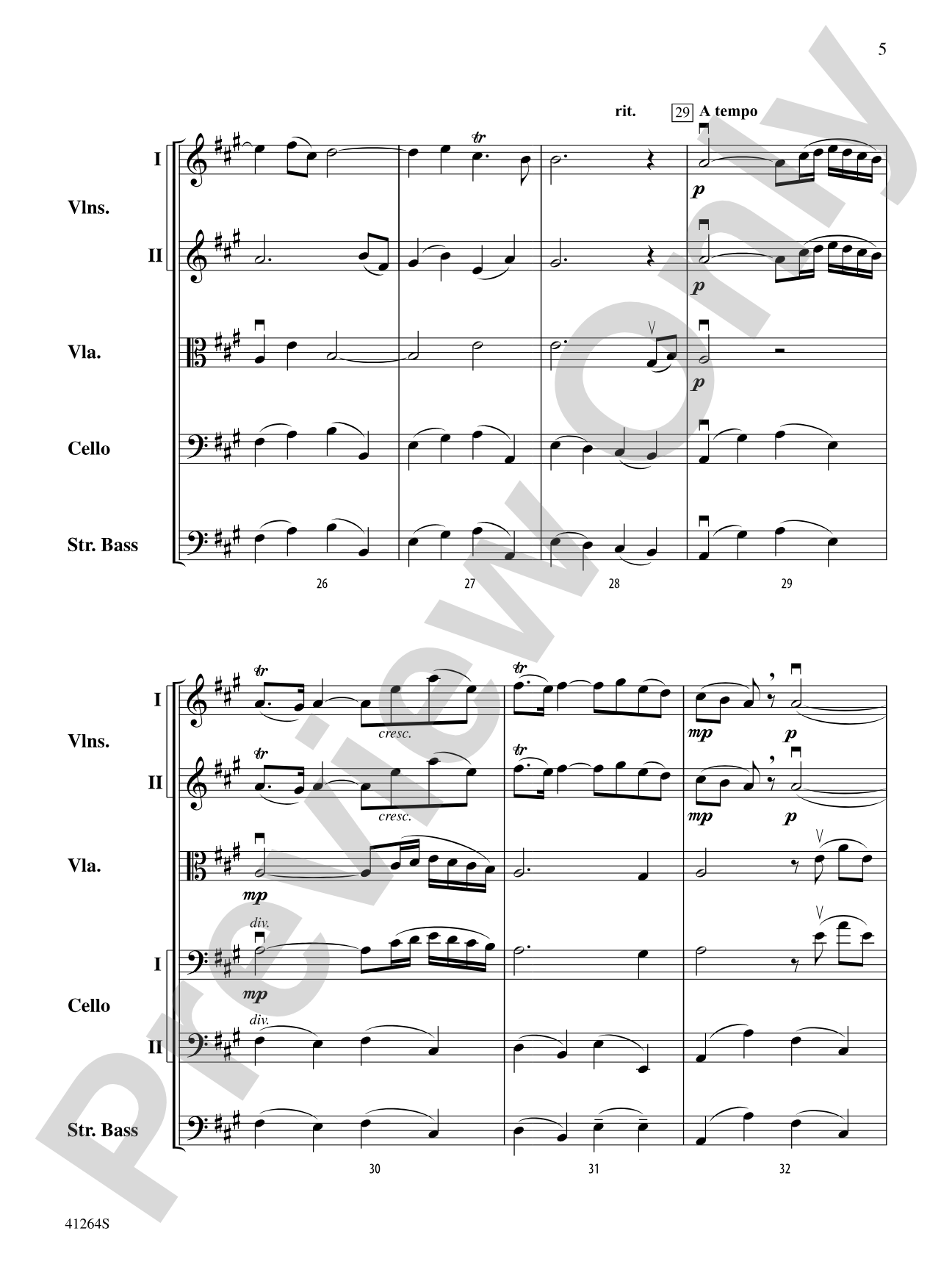
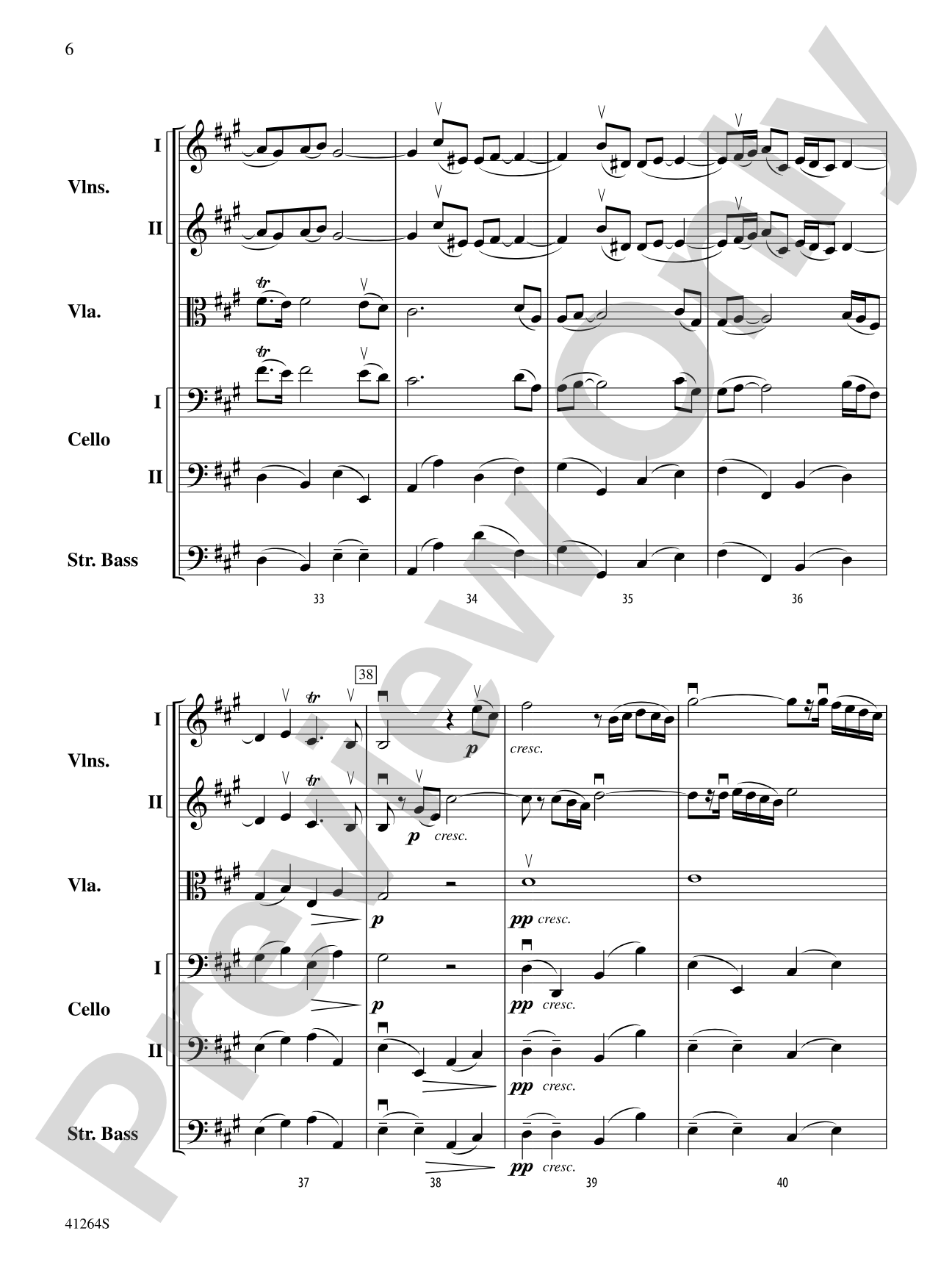
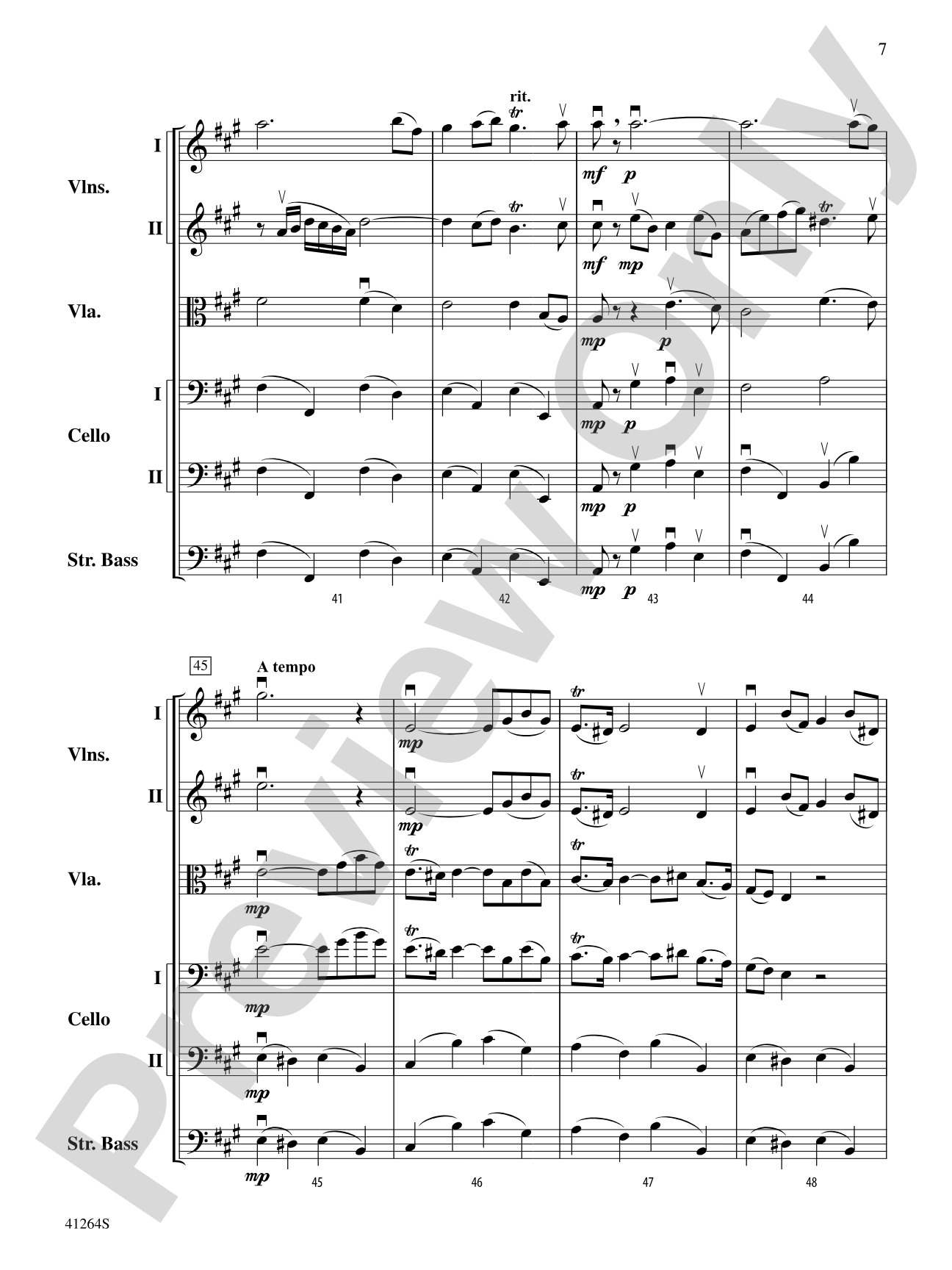
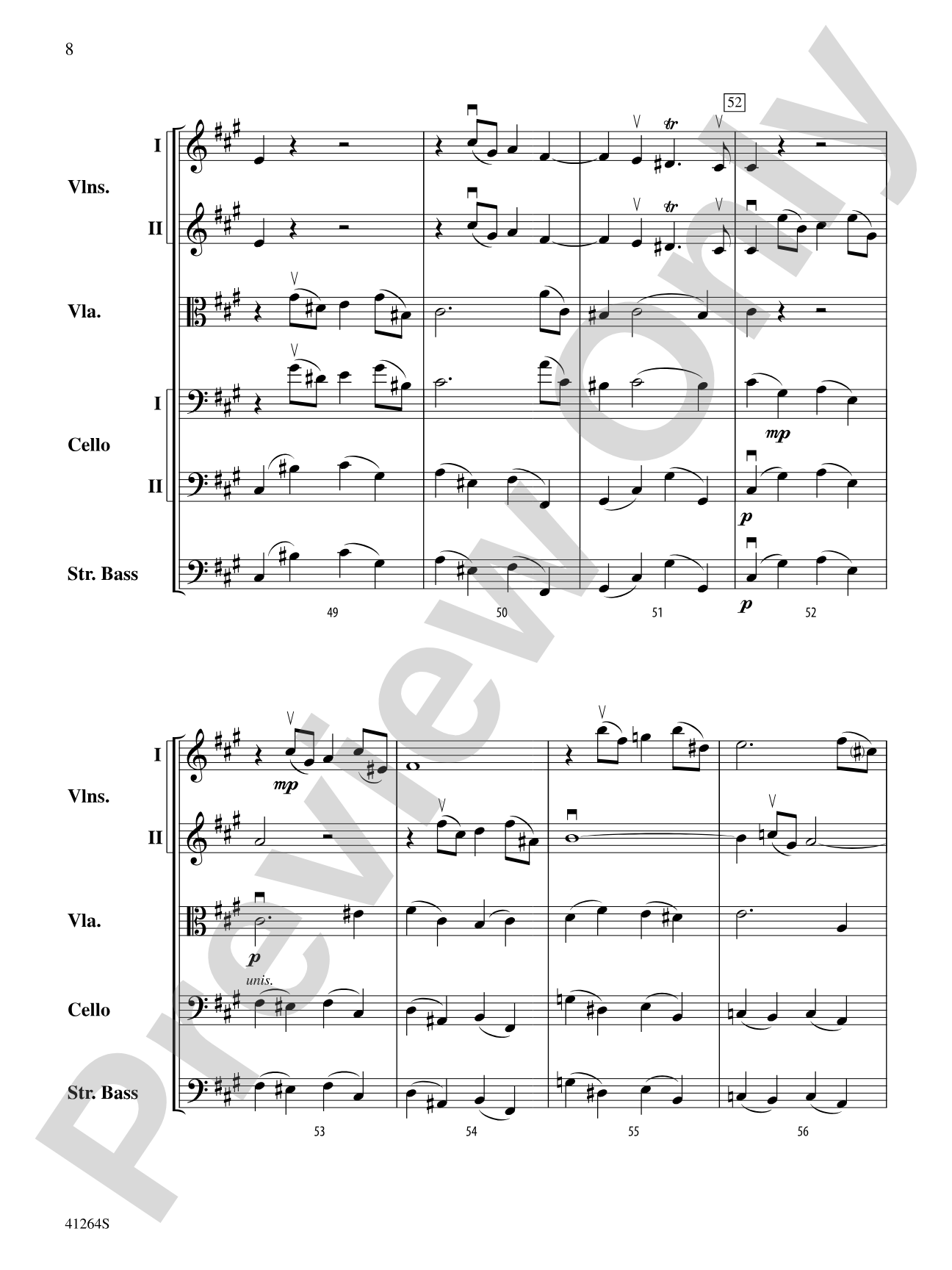
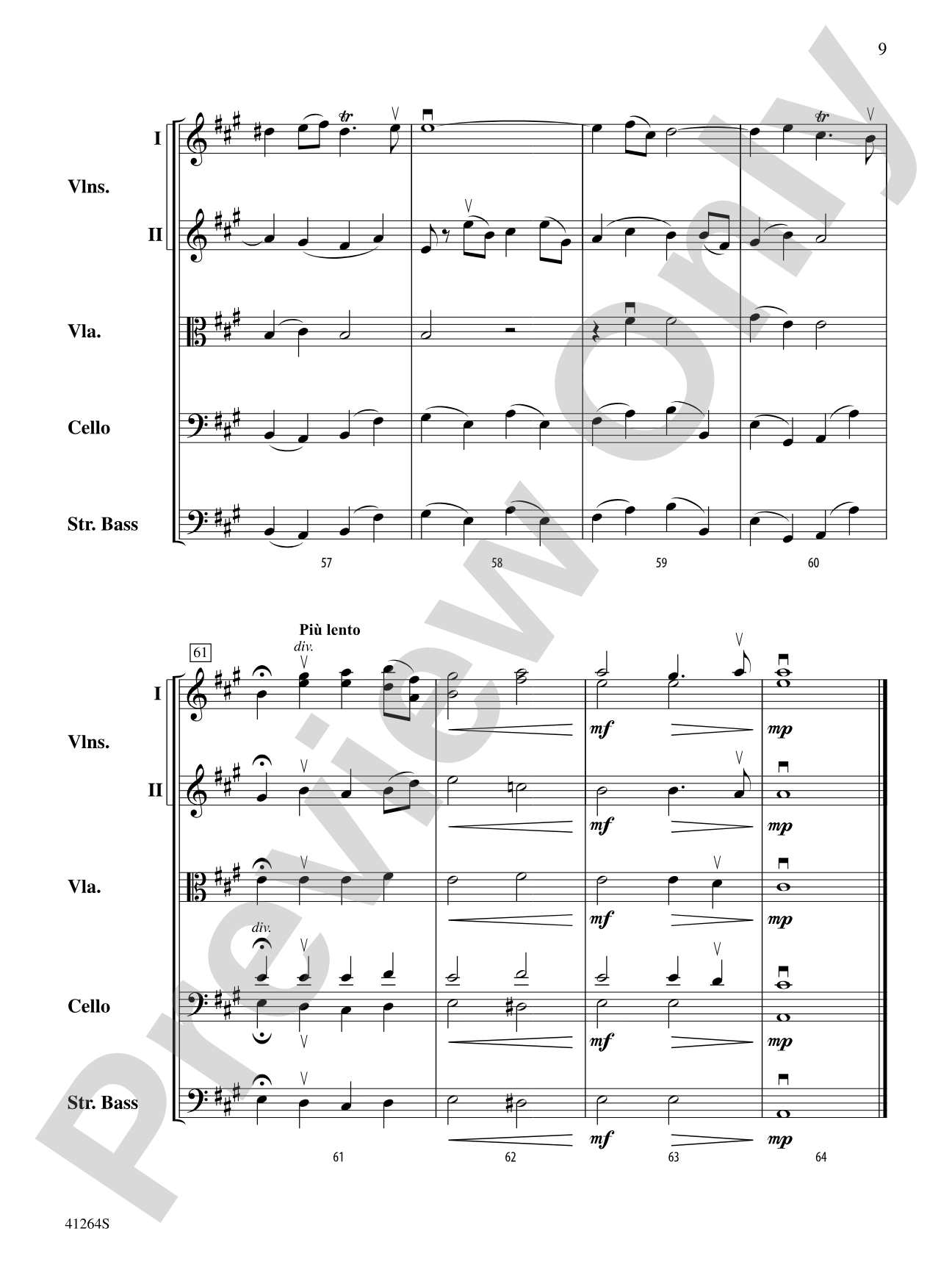

Andante from Trio Sonata Op. 5, No. 1: String Orchestra Conductor Score & Parts
By George Frideric Handel / arr. Robert Sieving
Grade: 3
Item: 00-PK-0006125

$48.00
Pickup currently not available
Buy Extra Parts (Digital PDF Download)
Parts Added to Cart!
Related Items
Andante from Trio Sonata Opus 5, No. 1: String Orchestra Conductor Score |
$7.00
|
View |
Description
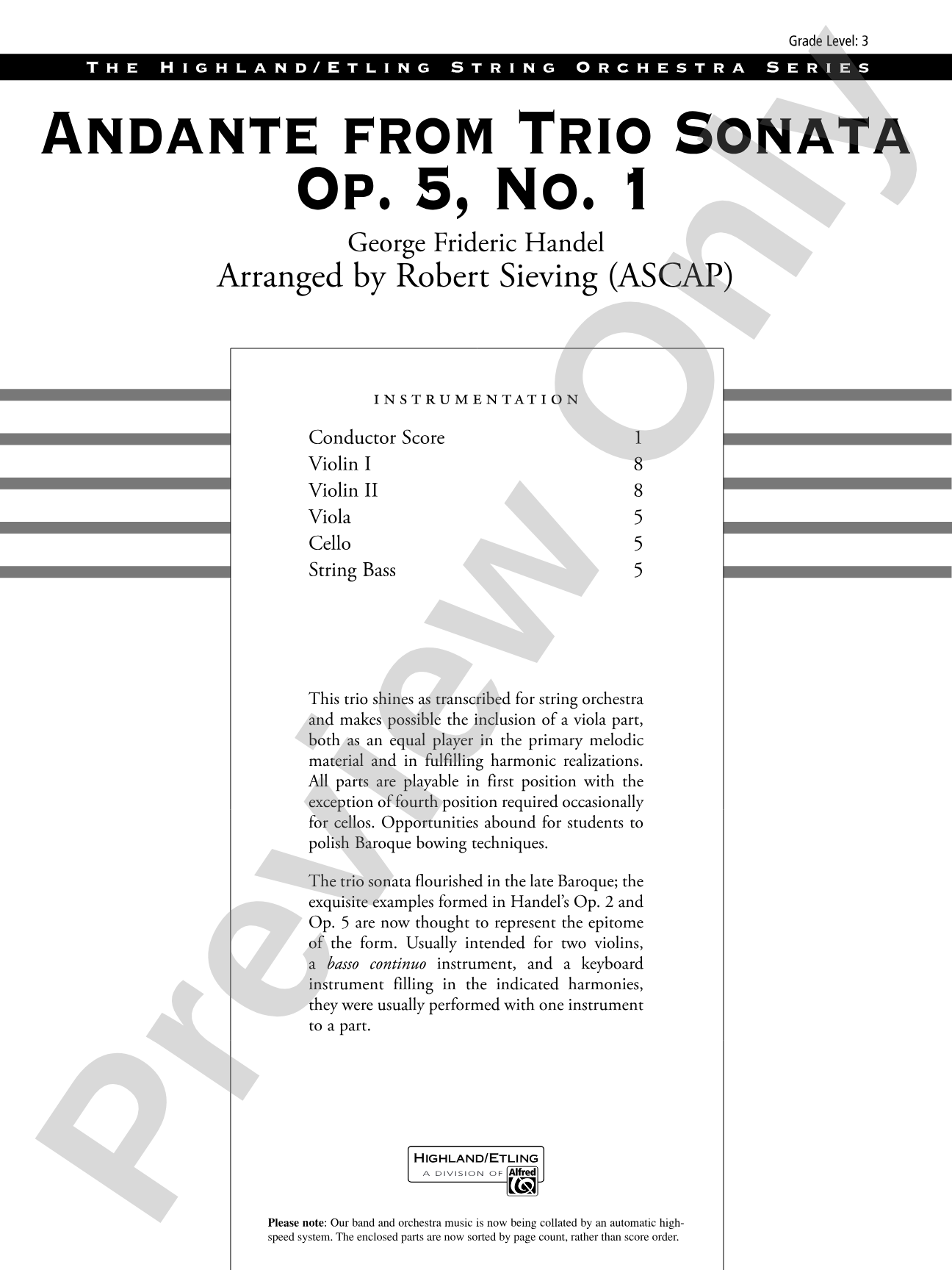
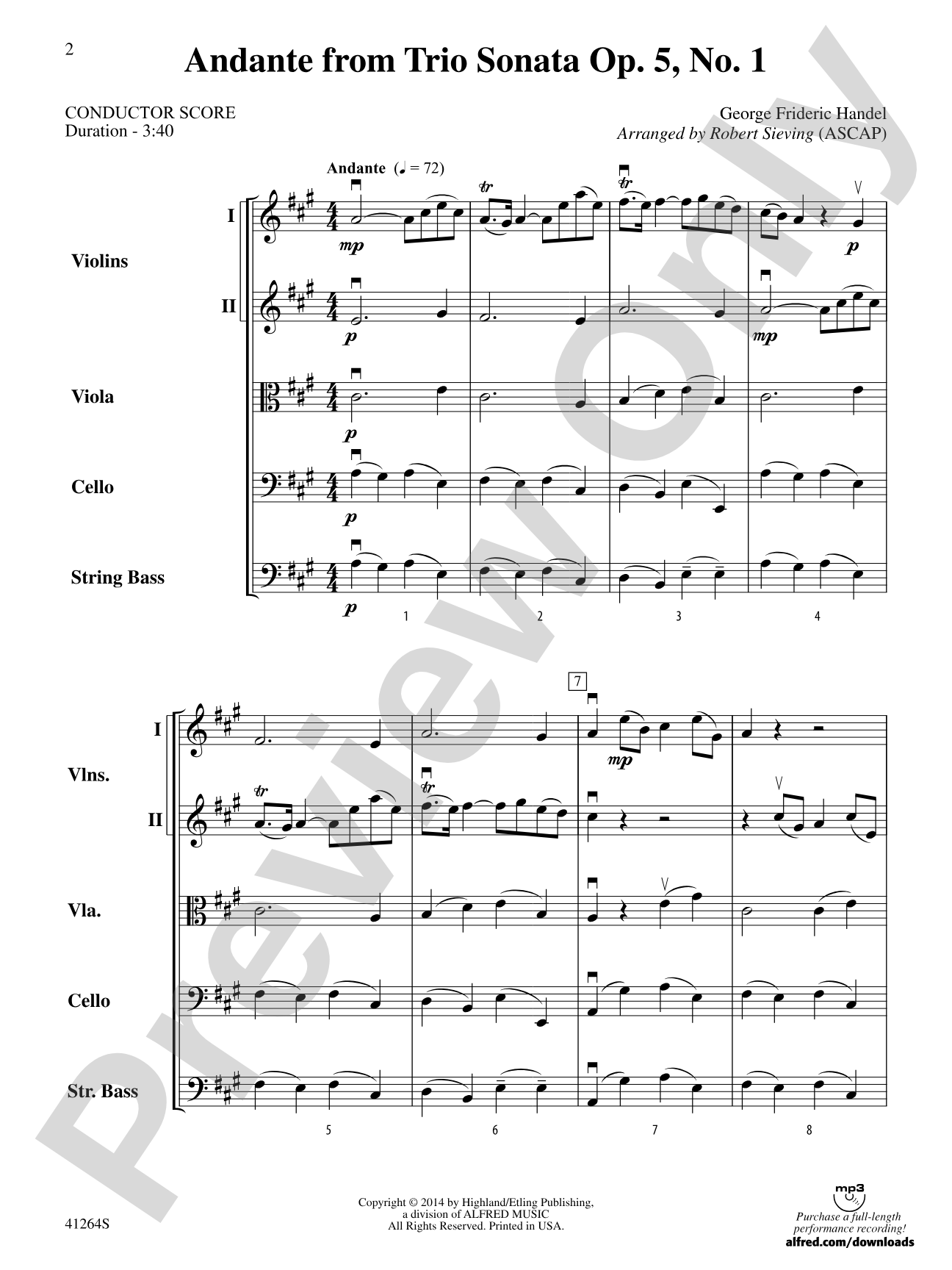
This trio shines as transcribed for string orchestra and makes possible the inclusion of a viola part, both as an equal player in the primary melodic material and in fulfilling harmonic realizations. All parts are playable in first position with the exception of fourth position required occasionally for cellos. Opportunities abound for students to polish Baroque bowing techniques. (4:30) This title is available in MakeMusic Cloud.


Don't just read it, hear it, play along with it, and watch your students grow with it. In MakeMusic Cloud, Andante from Trio Sonata Op. 5, No. 1: String Orchestra Conductor Score & Parts comes alive with professional accompaniment, adjustable tempo, and built-in practice tools that turn solo practice into real progress.
Open in the Player
Jump straight in and assign it today.
Start Your Free Trial
Open this title and explore the full library in minutes.
Sample Audio
1
Audio File
--:--
0:00
0:00
Sample Video
No sample videos found.
Additional Details
Series:
Highland/Etling String Orchestra
Publisher:
Alfred Music
Page Count:
124
SKU:
00-PK-0006125
More about this title
About the Composer: George Frideric Handel
George Frideric Handel (1685-1759) was a German-born composer who spent most of his career in England, where he became one of the most celebrated musicians of the Baroque era. His prolific output spans operas, oratorios, concertos, and chamber works that showcase both dramatic flair and structural mastery. Handel's music remains central to string orchestra repertoire because of its clarity, memorable melodic lines, and the technical opportunities it provides for developing musicians.
As a virtuoso himself, Handel wrote idiomatically for the instruments of his time, understanding exactly what performers could achieve. His trio sonatas, in particular, balance accessibility with musical substance, making them ideal for building ensemble skills while studying the architecture of Baroque form.
Why we love this
Robert Sieving's transcription makes this cornerstone Baroque work genuinely playable for a developing string orchestra. Adding a meaningful viola part transforms what was originally a chamber composition into a fuller orchestral sound without sacrificing the transparent voice-leading that makes Handel's writing so satisfying. Audiences hear a complete, historically significant work rather than an arrangement that feels secondary.
What to expect
Calm, lyrical, and formally clear. The Andante unfolds with graceful melodic curves and transparent harmonies that let you hear exactly how each voice moves. There's an elegance to the phrasing and a warmth that comes from careful voice-leading, giving the piece a meditative quality even as it demands precise rhythmic coordination and clean attacks.
Who it's for
String orchestras at the intermediate level (Grade 3) who are ready to explore Baroque masterworks with genuine musical weight. Directors looking to program a piece that builds bowing technique, part independence, and ensemble listening while offering meaningful work for every section, including violas.
How to get the most out of it
- Balance the viola part carefully during runs and harmonic filler passages; violas should support without overwhelming the melody played by violins or cellos. Listen through rehearsal recordings to hear where the part becomes essential to harmonic clarity.
- Shape the phrases using Baroque bowing conventions: separate note groups in stepwise passages, use the bow to clarify articulation rather than relying on the tongue alone. Work with your concertmaster on consistent bowings that highlight the melodic contour.
- Take the optional fourth-position passages in the cello section slowly in rehearsal so players can locate the position confidently. By performance, these shifts should feel natural rather than cautious.
- Let the Andante breathe; this is a singing movement, not a march. Resist the urge to drive forward, and allow silence between phrases to frame the melodic gestures.
How to use it
Pair this with other Baroque works for a thematic concert exploring the era's chamber and orchestral traditions. It also works beautifully as a contrasting movement in a program with Romantic or contemporary pieces, allowing the audience to experience the clarity and economy of Baroque style. The modest length (4:30) makes it ideal for festival competitions or concert openings that call for a substantive but focused piece.
Skills your students will build
- Baroque bowing techniques including articulation and phrasing conventions
- Part independence and voice-leading awareness, especially across four distinct string parts
- Fourth-position intonation and shifting for cellos
- Ensemble balance and listening, particularly for inner voices
- Stylistic interpretation of a Baroque masterwork
- Rhythmic precision across multiple melodic lines