
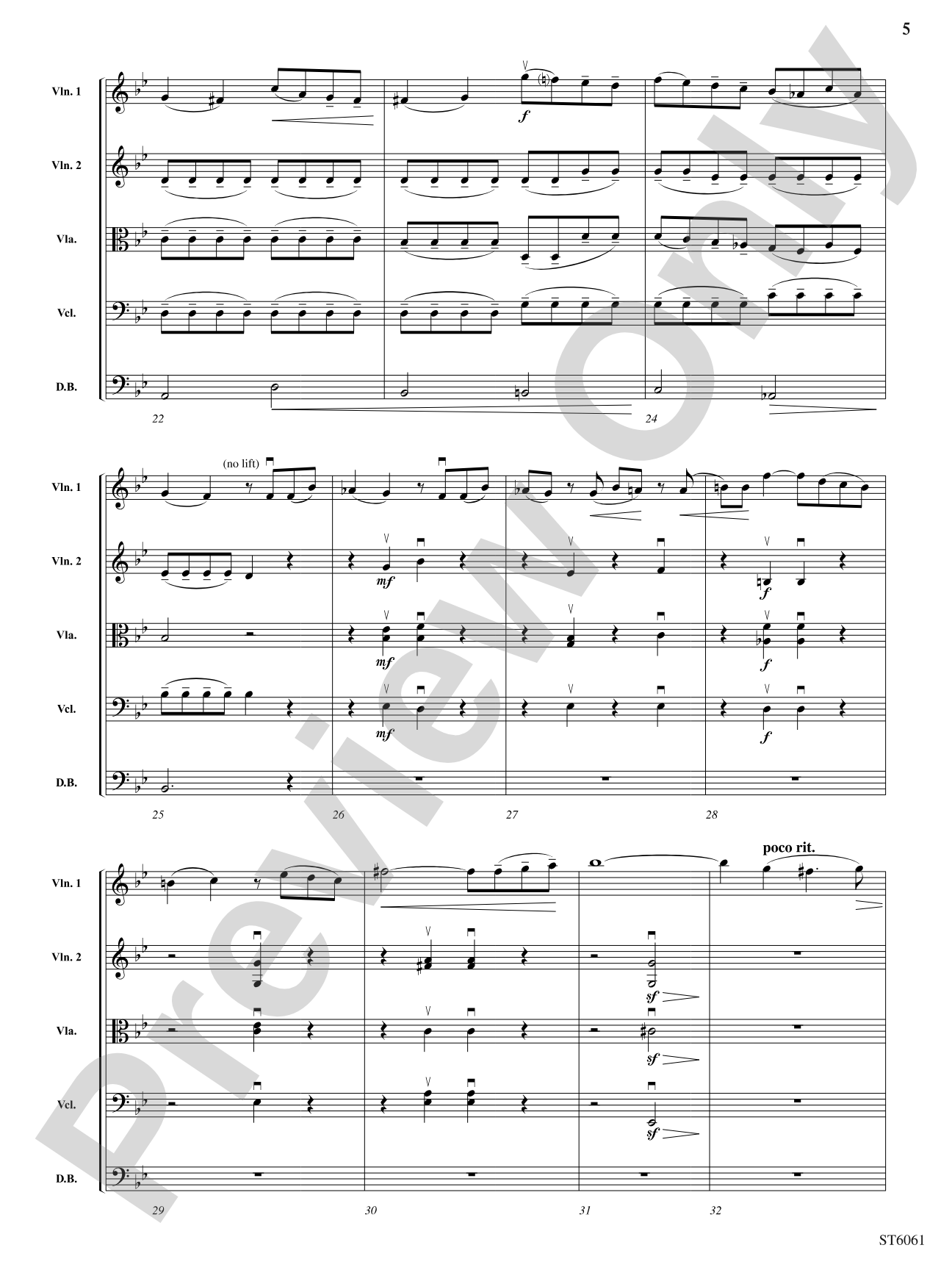
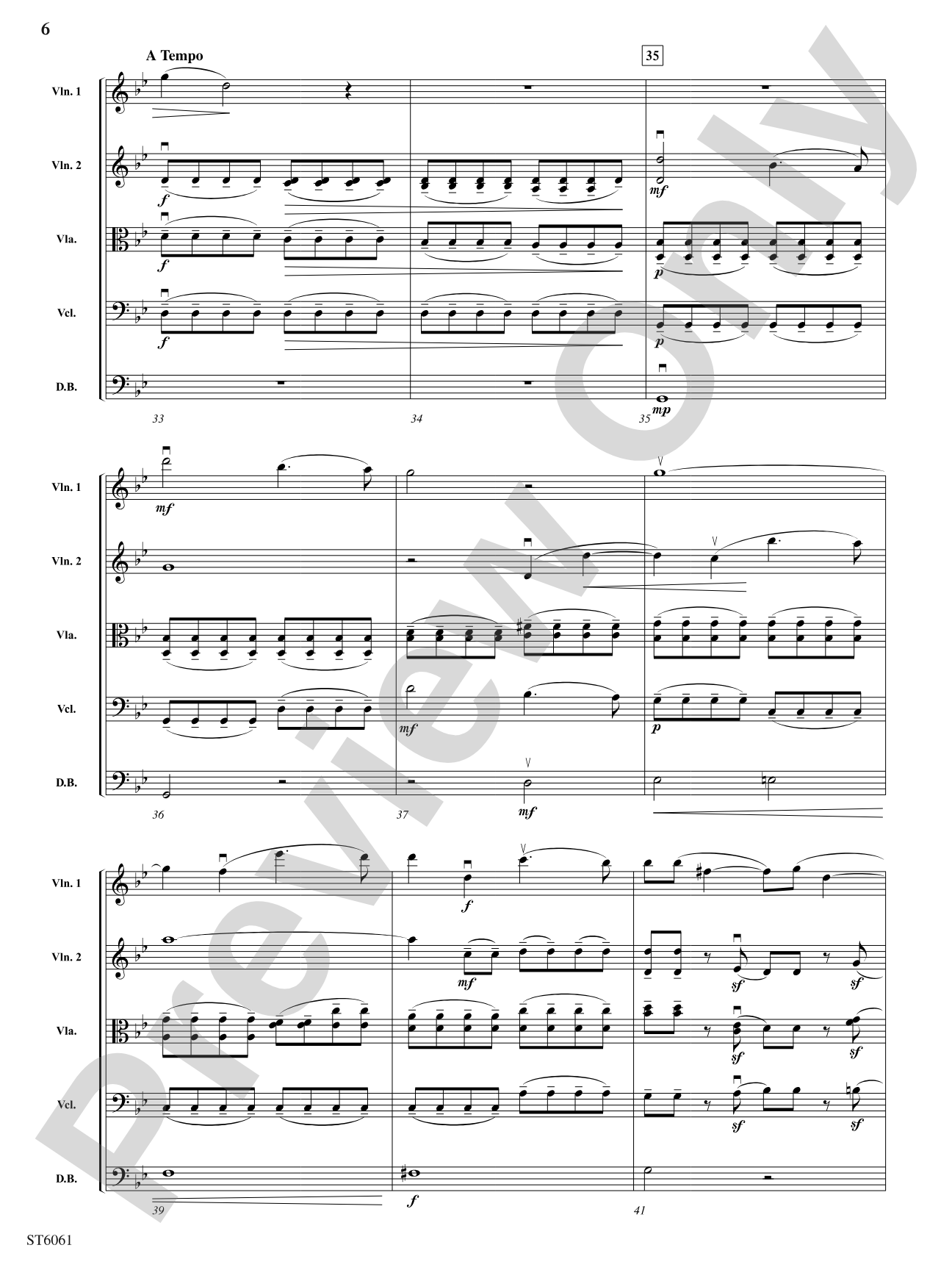
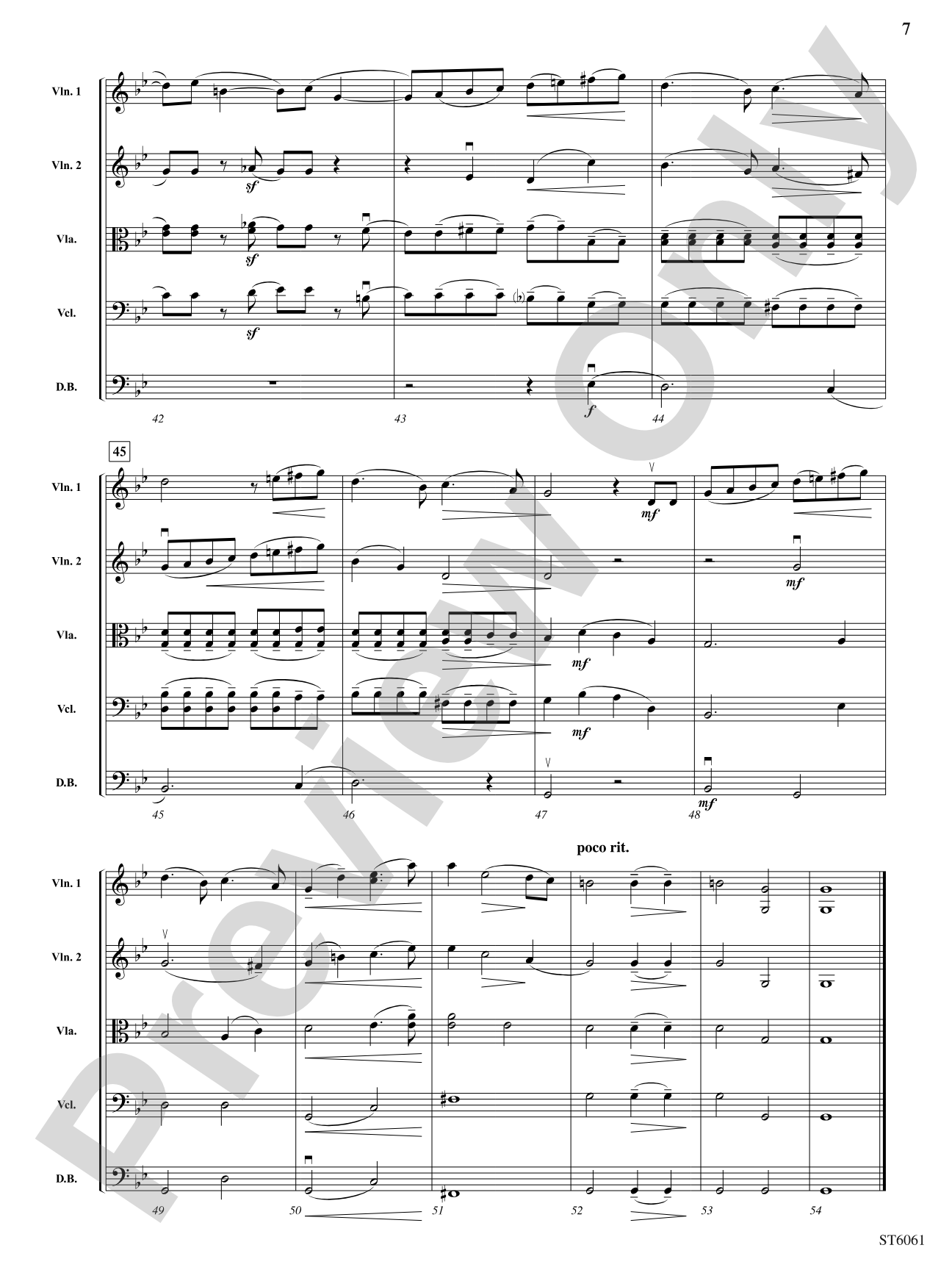

Andante from Symphony No. 5: String Orchestra Conductor Score & Parts
By Felix Mendelssohn / arr. Robert D. McCashin
Grade: 3.5
Item: 98-DST6061

$45.00
Pickup currently not available
Buy Extra Parts (Digital PDF Download)
| Product | Price | Quantity |
|---|---|---|
| Andante from Symphony No. 5: Score | $5.00 | |
| Andante from Symphony No. 5: Violin 1 | $7.00 | |
| Andante from Symphony No. 5: Violin 2 | $7.00 | |
| Andante from Symphony No. 5: Viola | $7.00 | |
| Andante from Symphony No. 5: Violoncello | $7.00 | |
| Andante from Symphony No. 5: Double Bass | $7.00 |
Parts Added to Cart!
Description
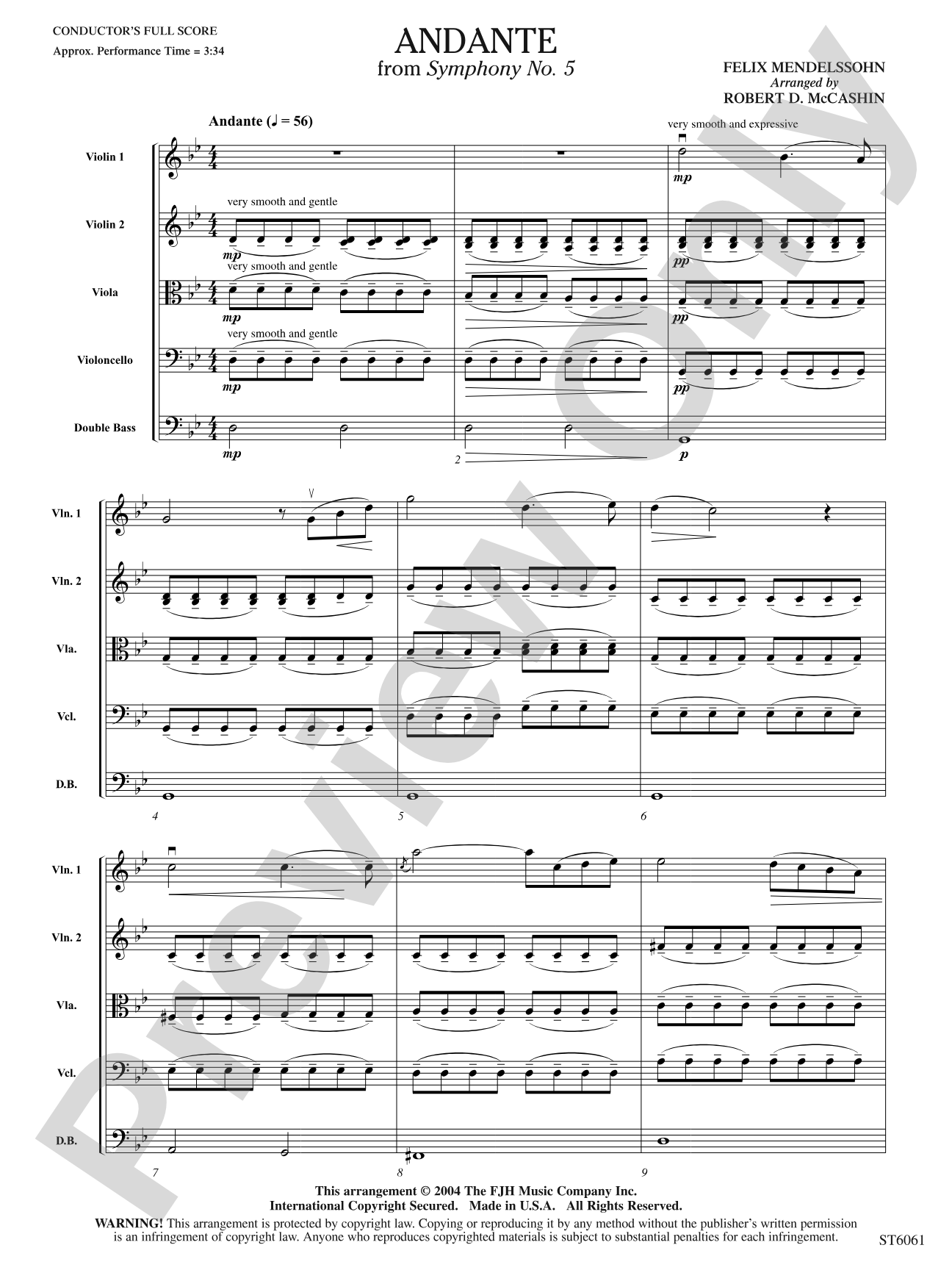
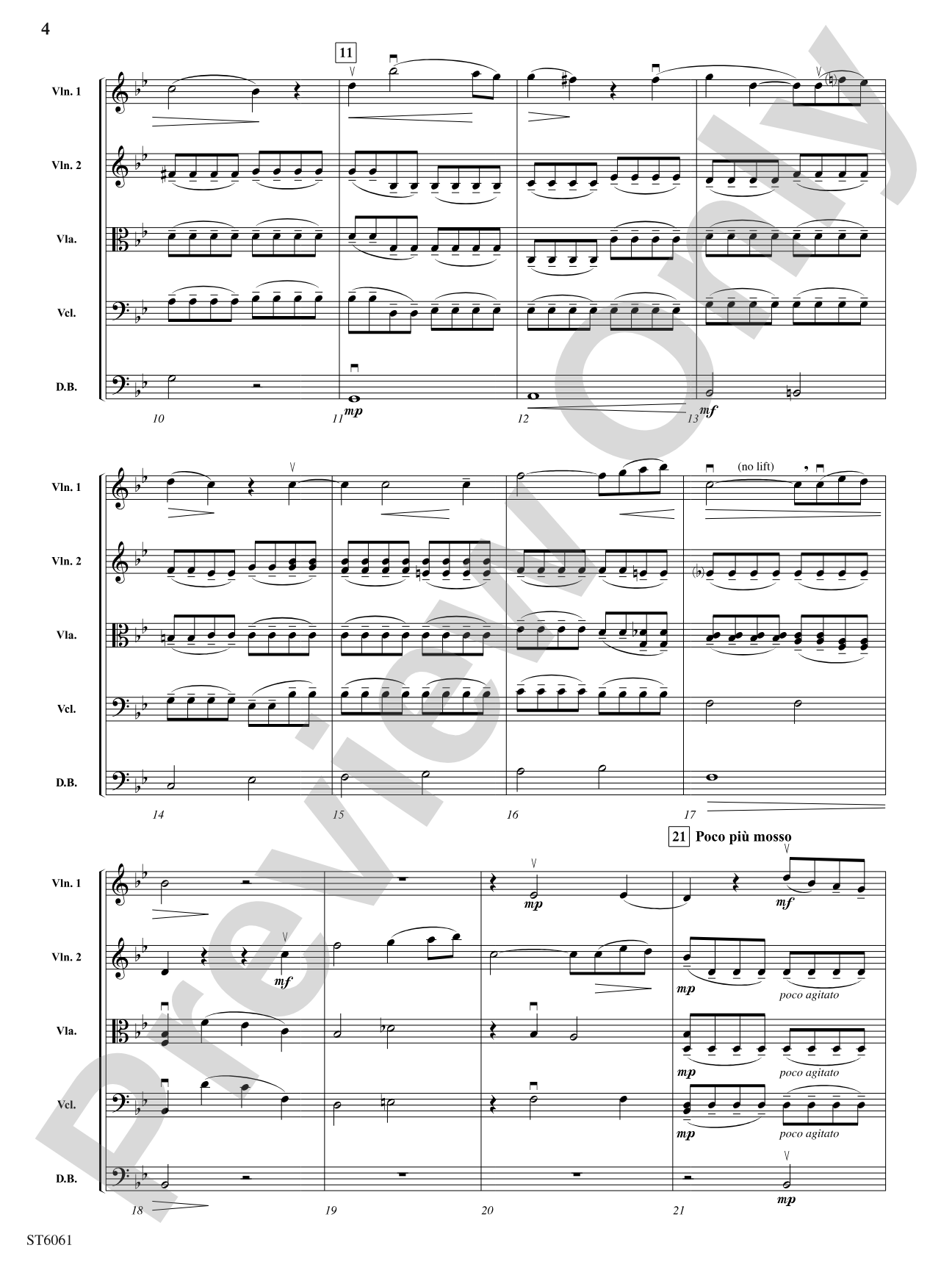
This superb arrangement features the third movement of Mendelssohn's Symphony No. 5 (Reformation). Arguably one of the most memorable melodies Mendelssohn ever wrote, this version for strings retains all the beauty and finesse of the original. An ideal opportunity to teach phrasing and develop the slow bow control necessary for languid, singing passages. This is fantastic music.


Don't just read it, hear it, play along with it, and watch your students grow with it. In MakeMusic Cloud, Andante from Symphony No. 5: String Orchestra Conductor Score & Parts comes alive with professional accompaniment, adjustable tempo, and built-in practice tools that turn solo practice into real progress.
Open in the Player
Jump straight in and assign it today.
Start Your Free Trial
Open this title and explore the full library in minutes.
Sample Audio
1
Audio File
--:--
0:00
0:00
Sample Video
No sample videos found.
Additional Details
Series:
FJH String Orchestra
Publisher:
The FJH Music Company, Inc.
SKU:
98-DST6061
More about this title
About the Composer: Felix Mendelssohn
Felix Mendelssohn (1809-1847) was a German composer whose gift for melody and orchestral color made him one of the most performed classical composers of the 19th century. A virtuoso pianist and conductor as well as a composer, Mendelssohn wrote across every major genre: symphonies, concertos, chamber music, choral works, and piano pieces that remain central to concert life today.
Mendelssohn's symphonies are models of formal clarity and emotional directness. His five symphonies span from youthful exuberance to mature spiritual reflection, and the third movement of the Reformation Symphony stands among the most singing, introspective passages in his catalog. His influence on music education extends beyond repertoire; his emphasis on craftsmanship, clarity of orchestration, and the primacy of melody shaped how generations of composers approached writing for young ensembles.
Why we love this
This movement gives string orchestras genuine masterwork material at an accessible level. McCashin's arrangement preserves the harmonic sophistication and orchestral texture of the original while keeping the part writing lean enough that Grade 3.5 ensembles can achieve real beauty without struggle. The piece rewards careful ensemble work and phrasing discipline in a way that immediately sounds professional.
What to expect
This is music of gentle introspection that feels both intimate and grand. The long, singing lines and warm harmonic language create an atmosphere of repose without sentimentality; it's meditative rather than drowsy, inviting the listener into quiet reflection. The arrangement sits comfortably in the strings, where each voice can ring with its own warmth and character.
Who it's for
String orchestras at the Grade 3.5 level ready to tackle slow movements that demand real musicianship. This works equally well for a young ensemble building its craft and for an advanced middle school or early high school orchestra seeking something substantial for a concert program.
How to get the most out of it
- Shape the opening melody phrase by phrase rather than measuring it out mechanically; Mendelssohn's lines breathe naturally, and the accompaniment should follow the lead violin's architecture, not the metronome.
- Balance the divisi passages so the inner voices don't disappear. The harmonic foundation matters here, and even a soft second violin line needs presence and intonation awareness.
- Reserve vibrato selectively to highlight significant cadential moments and the peak of long lines. The crystal clarity of this movement's architecture comes through when the ensemble allows some passages to be purely luminous.
- Invest in control of the lower bow half where the sustained passages live. This is where string players discover what it means to support a melody rather than simply play the notes.
How to use it
Program this as a centerpiece of a concert's second half, where it can anchor a Mendelssohn thematic program or stand alone as a moment of contrast in a mixed repertoire concert. It also fits naturally alongside other 19th-century string literature (early Dvořák, Tchaikovsky's Serenade for Strings) and works beautifully as a festival or solo/ensemble contest piece.
Skills your students will build
- Sustaining legit tone across extended phrases at soft dynamic levels
- Adjusting vibrato deliberately as an expressive choice, not a default
- Balancing and blending divisi passages while maintaining harmonic integrity
- Reading and executing rubato and phrasing within a formal structure
- Coordinating bow control in slow tempos where every motion is audible