
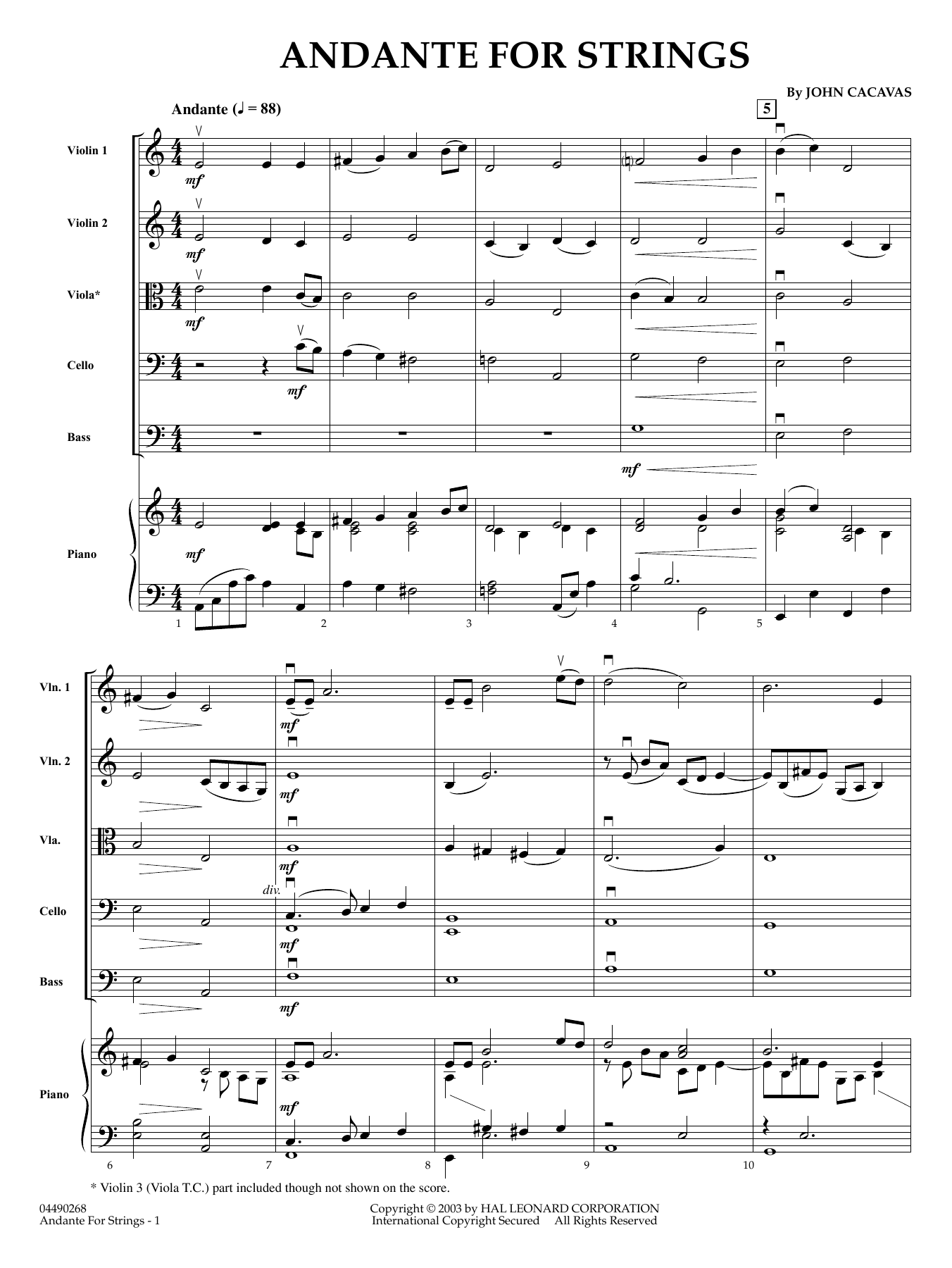

Andante for Strings: String Orchestra Conductor Score & Parts
By John Cacavas
Grade: 3
Item: 35-PK01412732
$40.00
Pickup currently not available
Buy Extra Parts (Digital PDF Download)
| Product | Price | Quantity |
|---|---|---|
| Andante for Strings - Full Score | $6.00 | |
| Andante for Strings - Violin 1 | $7.00 | |
| Andante for Strings - Violin 2 | $7.00 | |
| Andante for Strings - Violin 3 (Viola Treble Clef) | $7.00 | |
| Andante for Strings - Viola | $7.00 | |
| Andante for Strings - Cello | $7.00 | |
| Andante for Strings - String Bass | $7.00 | |
| Andante for Strings - Piano | $7.00 |
Parts Added to Cart!
Description
A simple tune, supplemented by skilled counterpoint, makes this new work appealing to younger groups. A rich sounding piece that will bring the best out of your string orchestra.


Andante for Strings: String Orchestra Conductor Score & Parts isn't in MakeMusic Cloud just yet...but it could be. Let us know you'd like to see it, and you'll help shape what comes next. In the meantime, start a free trial and dive into thousands of interactive titles your students can play along with today.
Request This Title
Tell us you want it.
Start Your Free Trial
Explore everything that's ready to play right now.
Sample Audio
No sample audio found.
Sample Video
No sample videos found.
Additional Details
Publisher:
Hal Leonard
SKU:
35-PK01412732
More about this title
About the Composer: John Cacavas
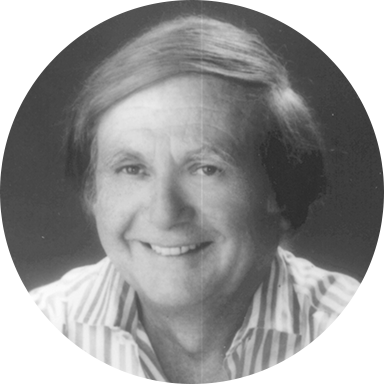
John Cacavas built his career on understanding what works for both concert halls and broadcast audiences. After earning his degree in Composition and Theory from Northwestern University, he served as an arranger with the United States Army Band in Washington, D.C., where he honed his craft writing for ensemble voices. His output has been staggering: over 400 television hours, 50 TV movies, and 15 feature films all bearing his orchestrations.
Beyond film and television work, Cacavas has shaped how musicians think about their craft. He authored two influential books, Orchestration and Music Arranging and The Art of Writing Music, distilling decades of professional experience into practical guidance for composers and arrangers. His string writing in particular reflects his deep understanding of how to extract richness from limited forces.
Why we love this
Cacavas resists the urge to overcomplicate at Grade 3. The melody sits comfortably in your students' range and technique, but the counterpoint underneath isn't window dressing—it gives violins, violas, and cellos genuinely interesting material that keeps ensemble balance honest and rewarding. Your string orchestra will sound far more polished than the score's apparent simplicity suggests.
What to expect
Straightforward and honest without being bland. The melody unfolds with gentle clarity while inner voices add harmonic warmth and movement underneath, creating a sound that feels full and composed rather than sparse. There's an older European sensibility to the writing, something timeless about how the parts fit together.
Who it's for
String orchestras at the Grade 3 level who want to program something accessible yet musically substantive. This works equally well for middle school ensembles looking for a win or younger high school programs building confidence. It's also smart programming for festivals where judges expect proper writing beneath approachable difficulty.
How to get the most out of it
- Balance the counterpoint by having your violas and lower voices practice their lines independently before the first full rehearsal. Once students hear how their parts weave around the main tune, tuning and blend improve dramatically.
- Shape the melody with long-term phrasing in mind rather than note-to-note inflection. Let the counterpoint support your legato direction without cluttering it.
- Secure rhythmic unison in the ensemble before worrying about dynamic nuance. Younger groups often rush when parts move at different rates, so lock that foundation early.
How to use it
Pair this with a faster contemporary piece to create contrast in a festival performance or concert. It's also an excellent choice for the second half of the season when students have developed the control to shape longer lines without sacrificing accuracy.
Skills your students will build
- Sustaining long-line melody while tracking supporting parts
- Balance and blend across divisi sections
- Listening for and tuning to inner voices
- Phrasing independent lines within a unified ensemble sound