
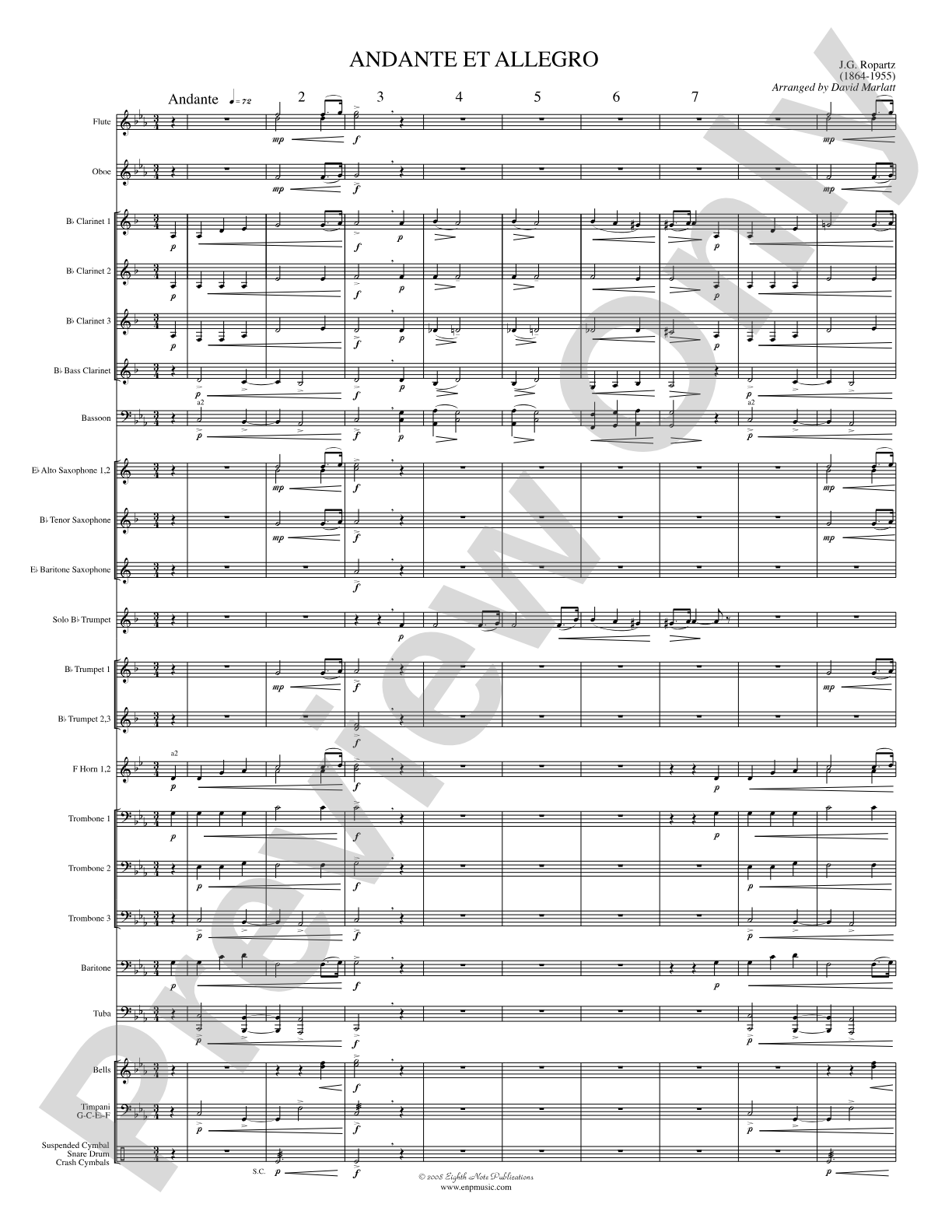
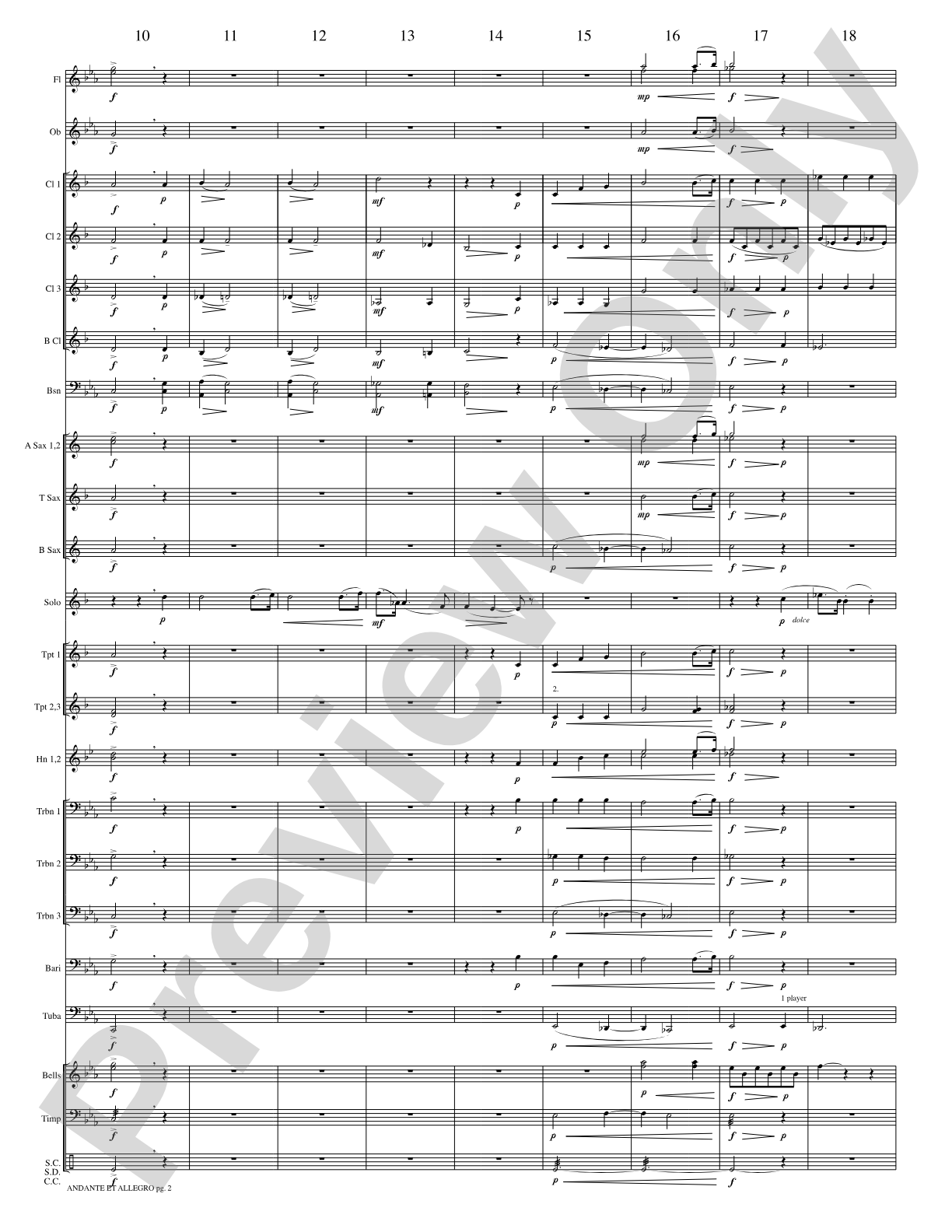
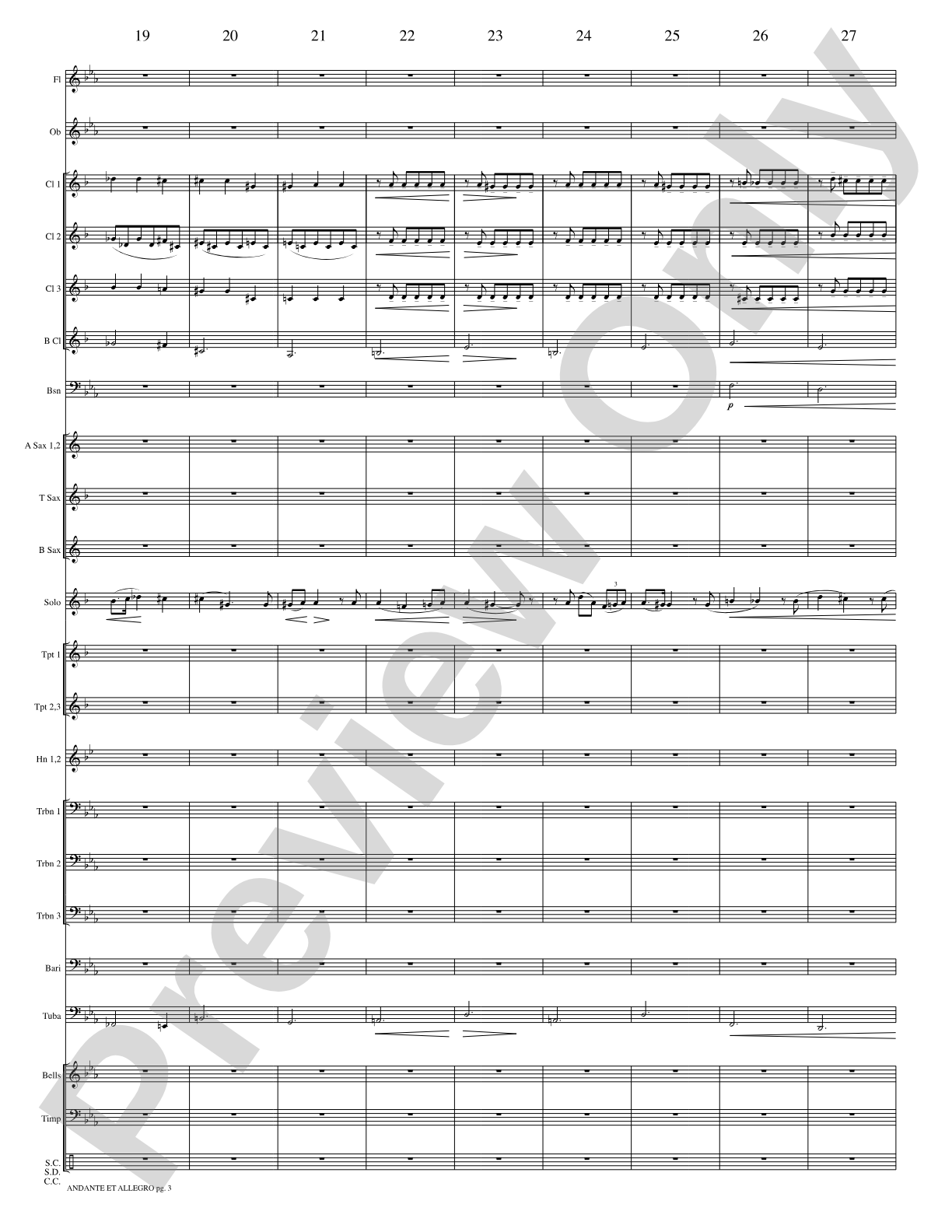
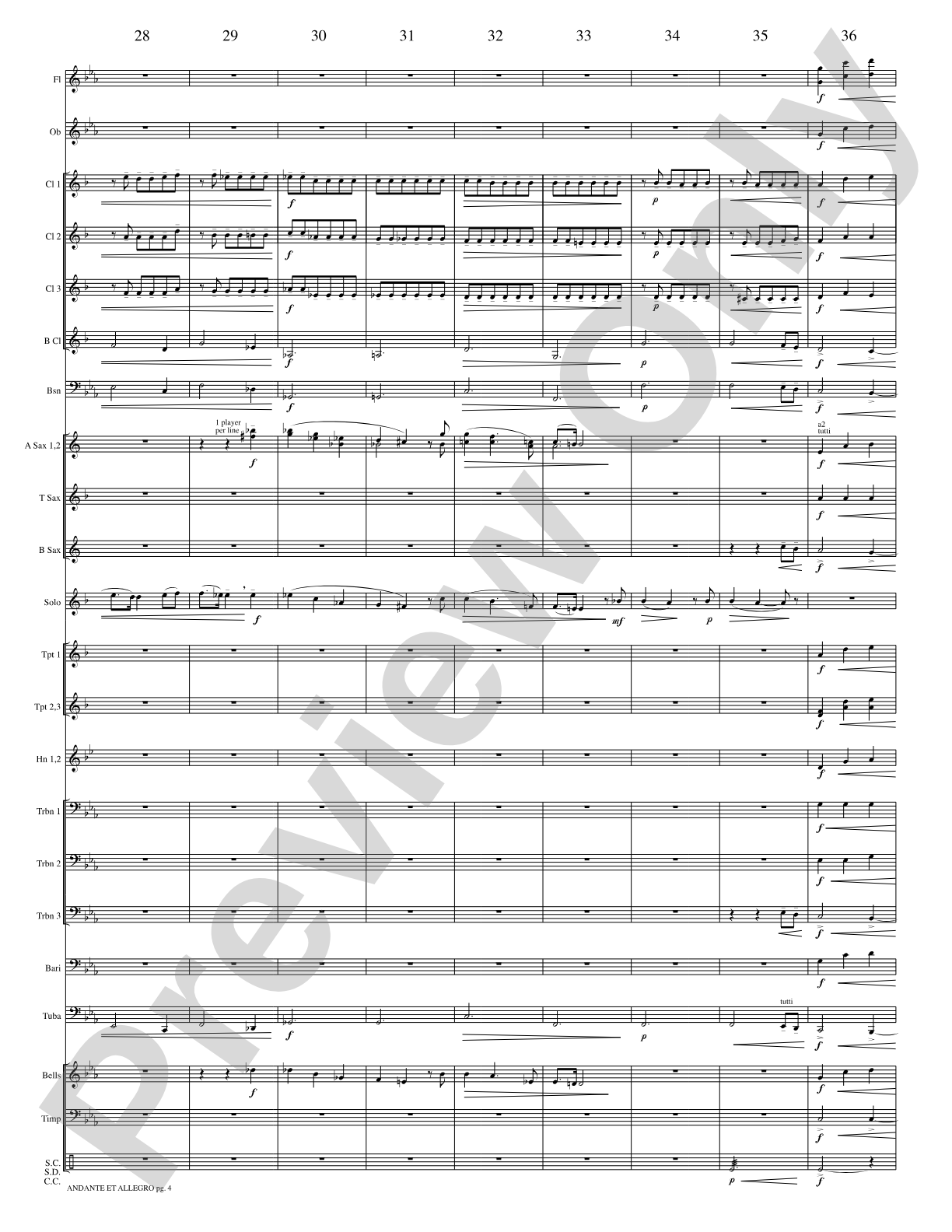
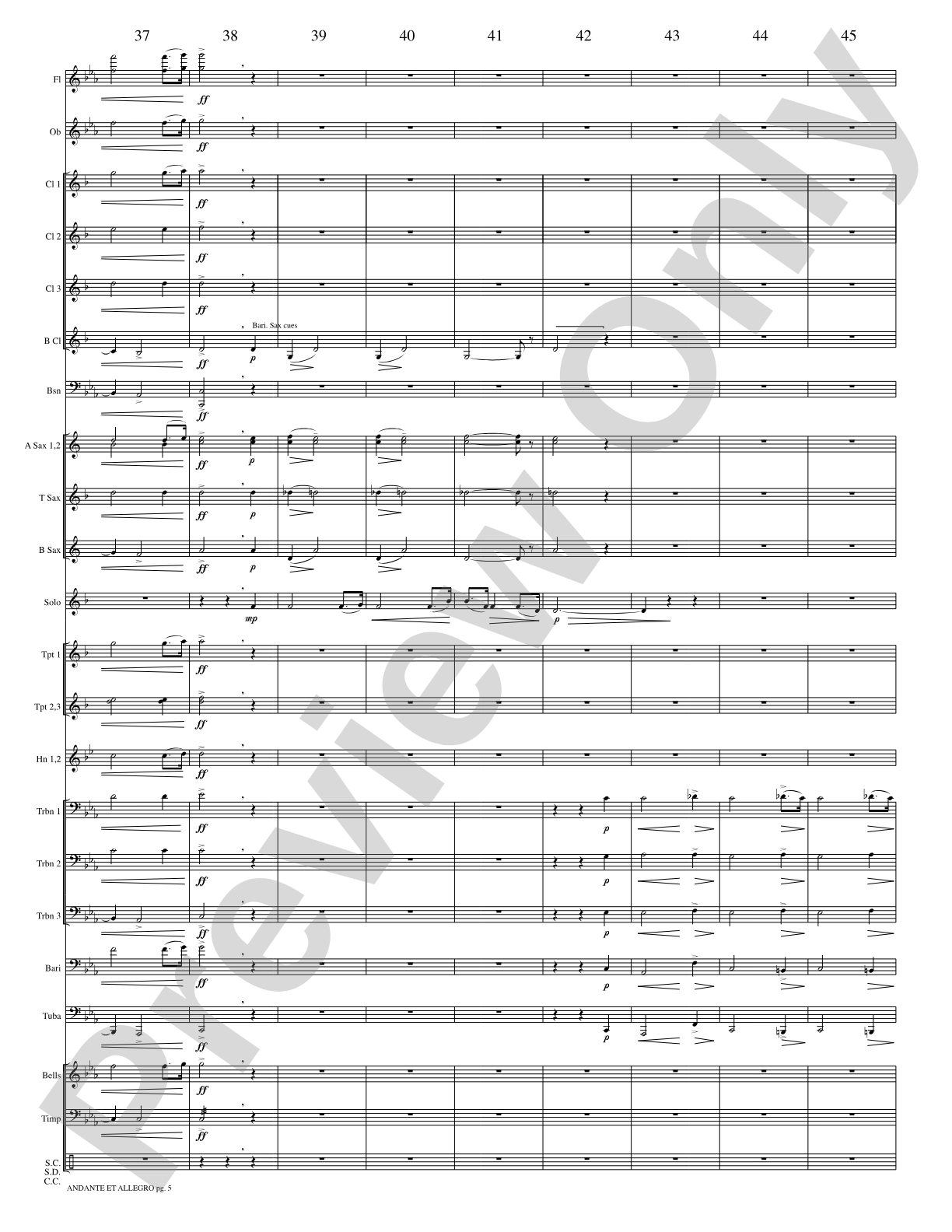
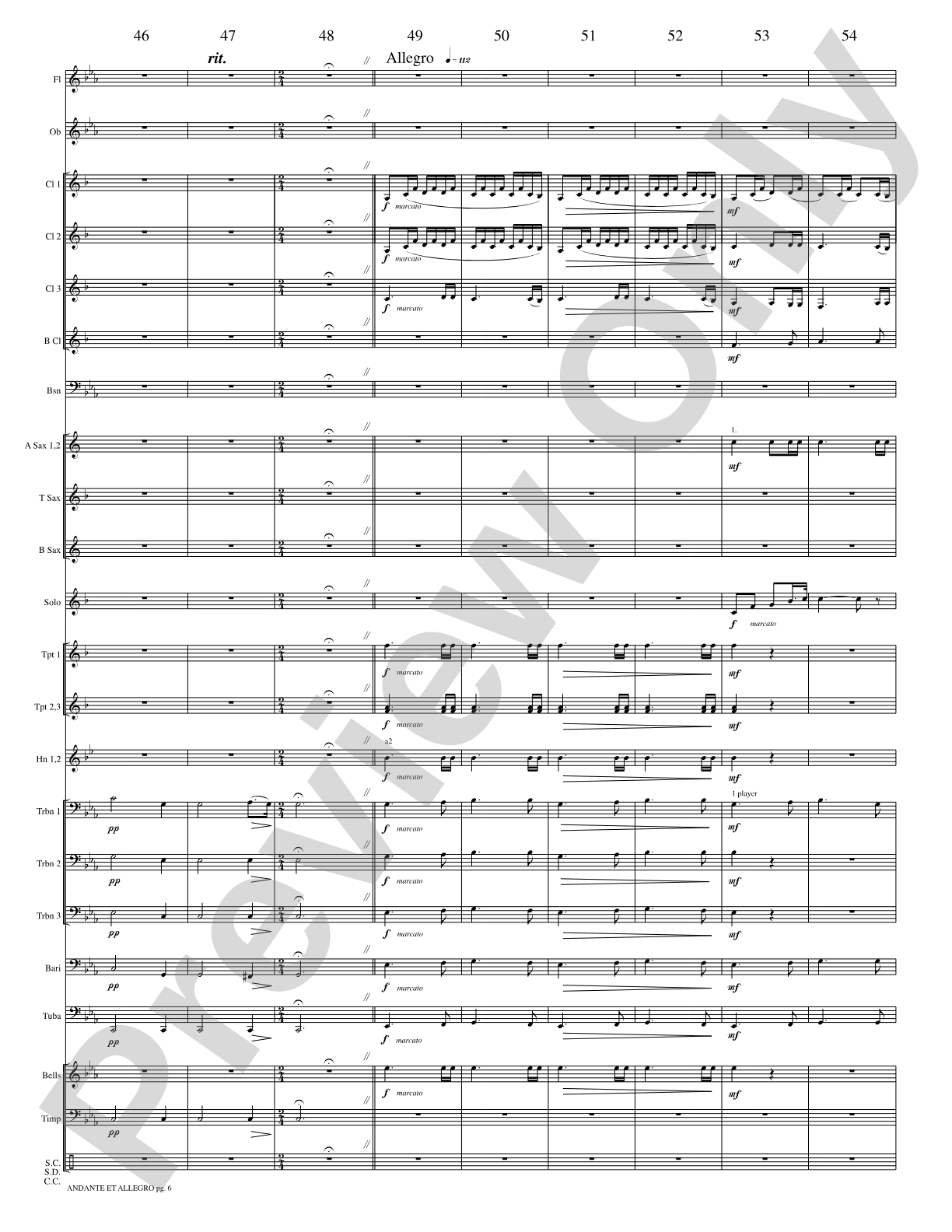
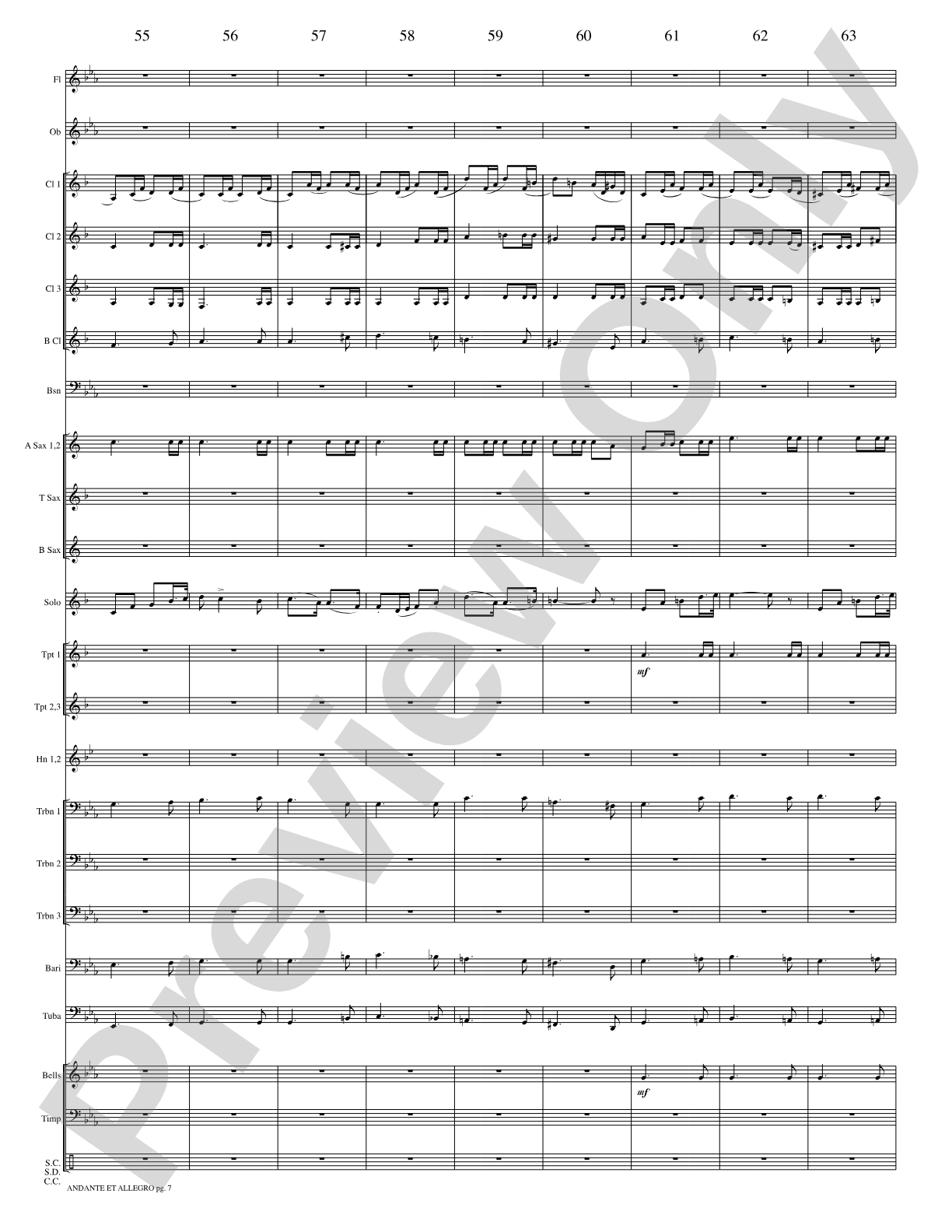
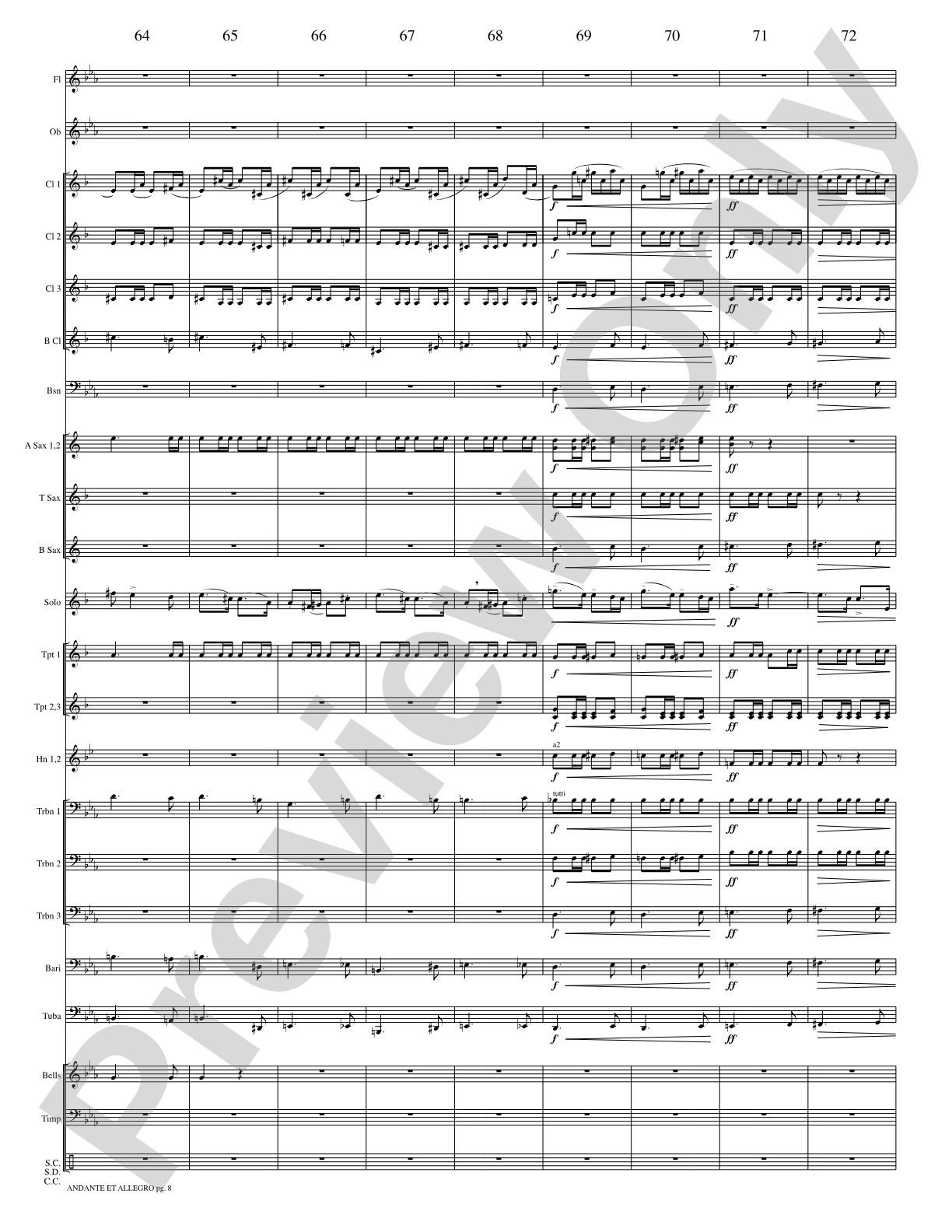
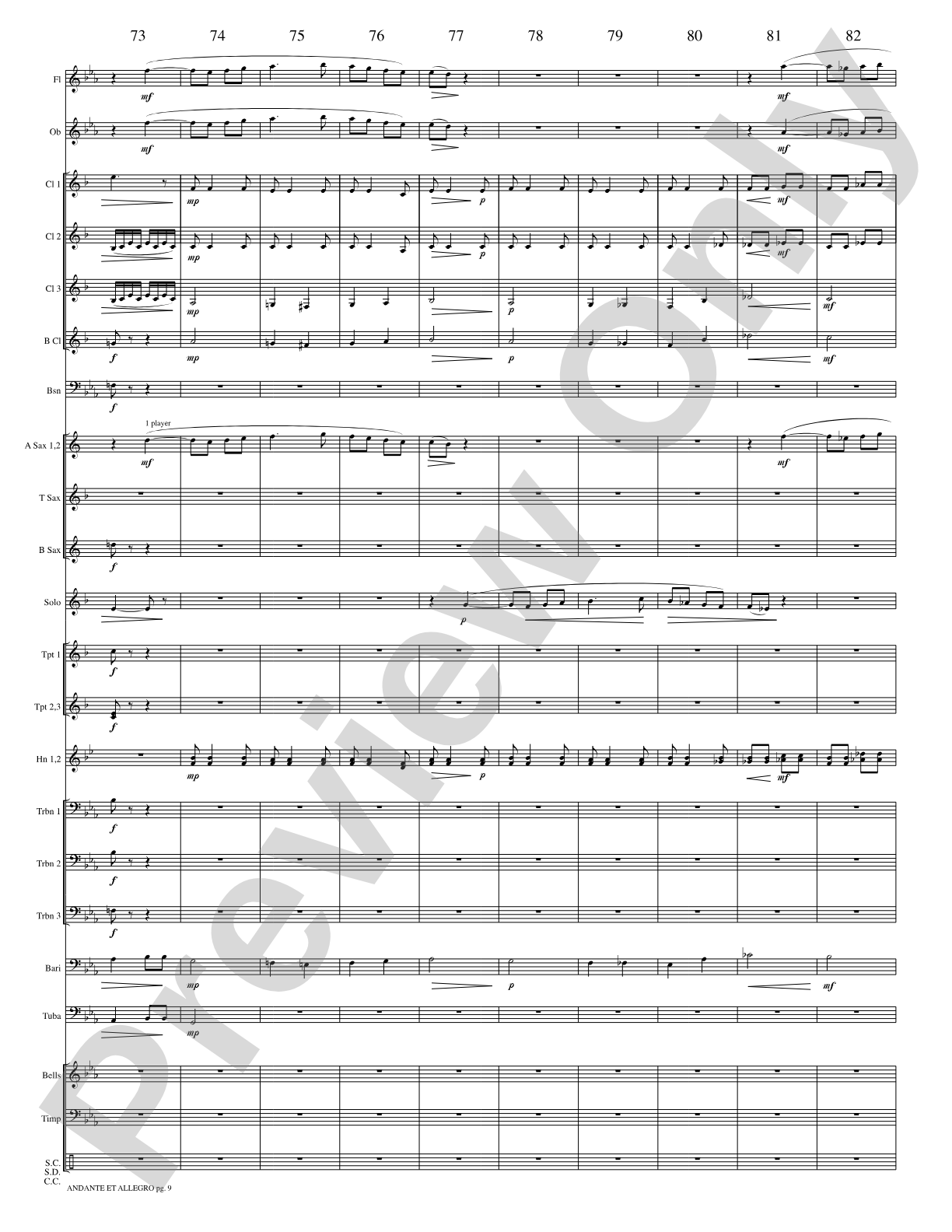
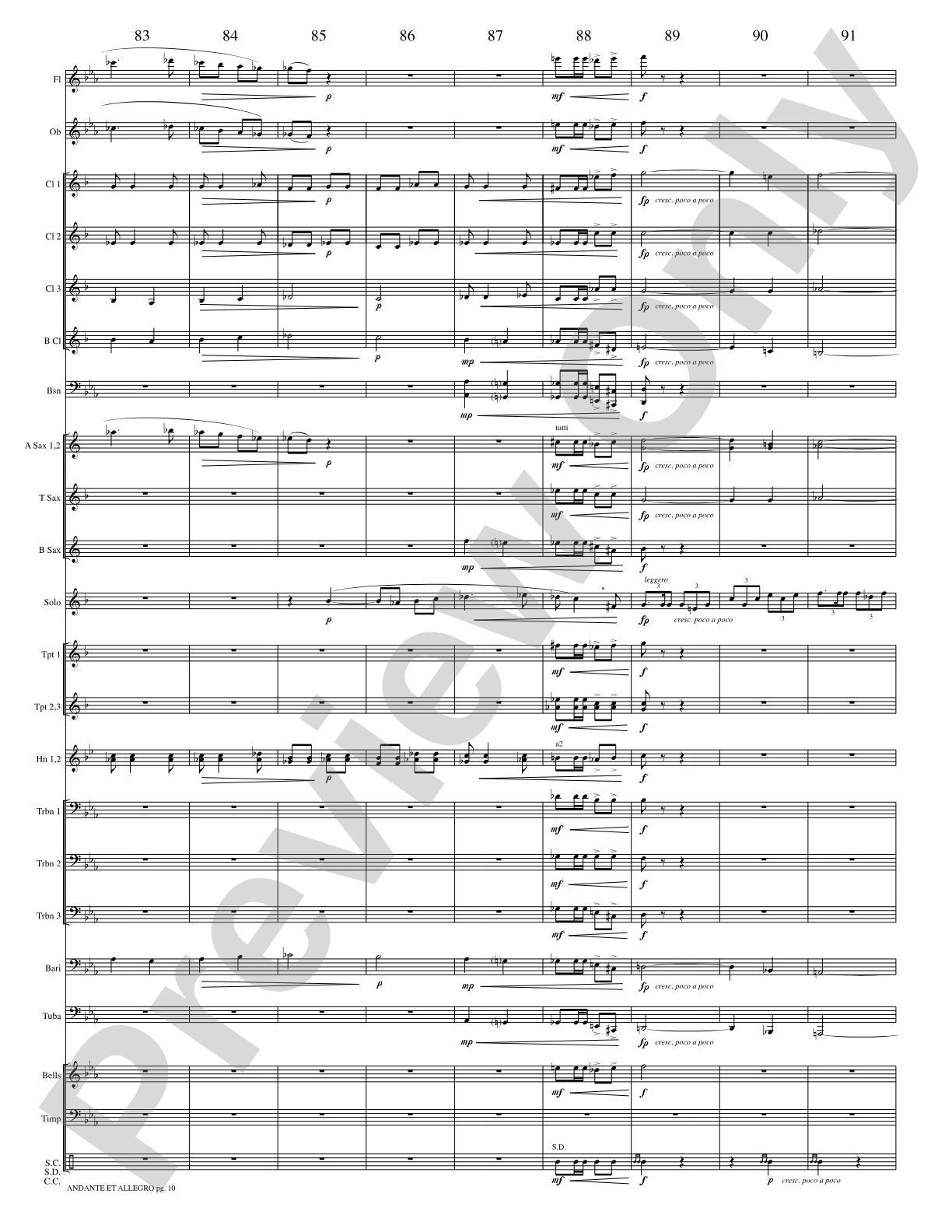
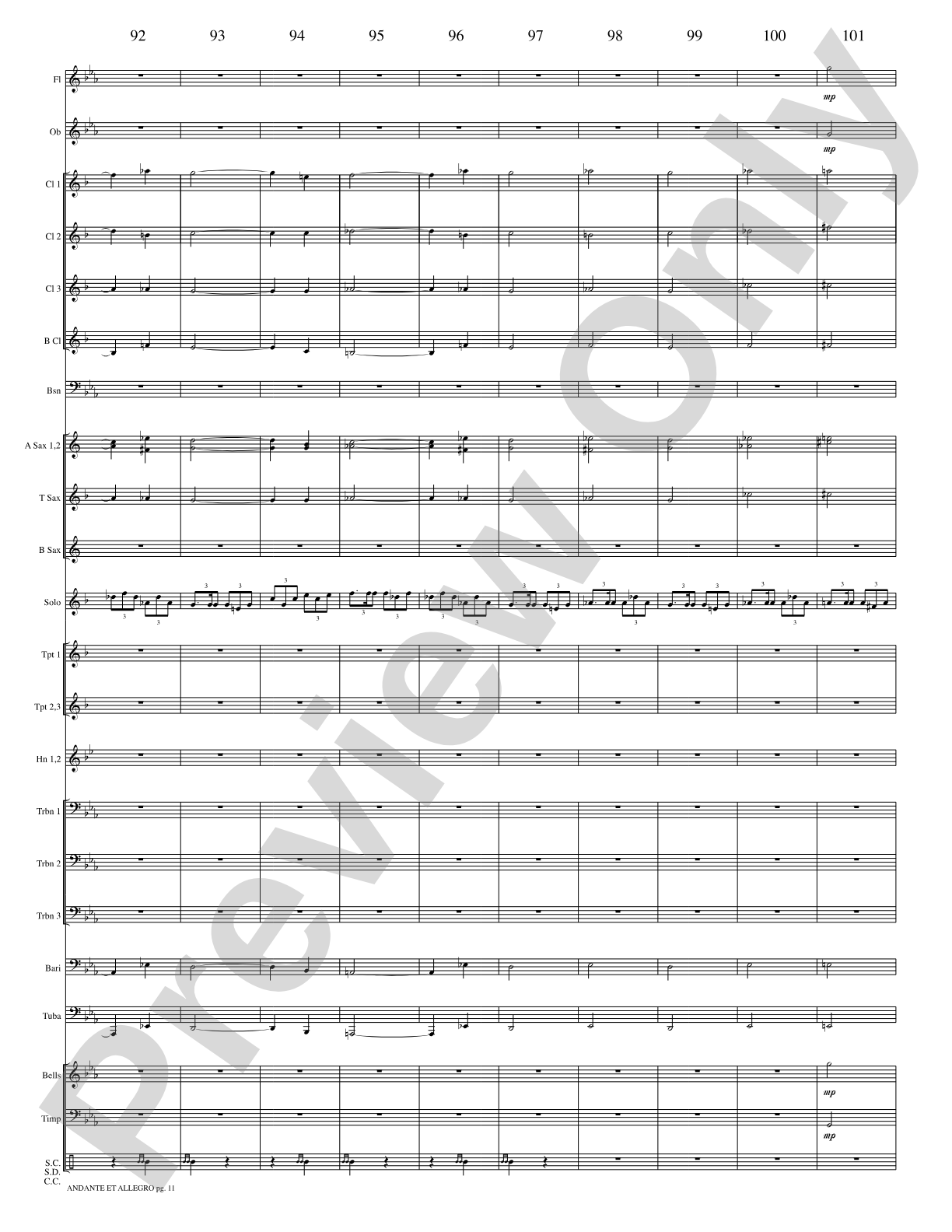
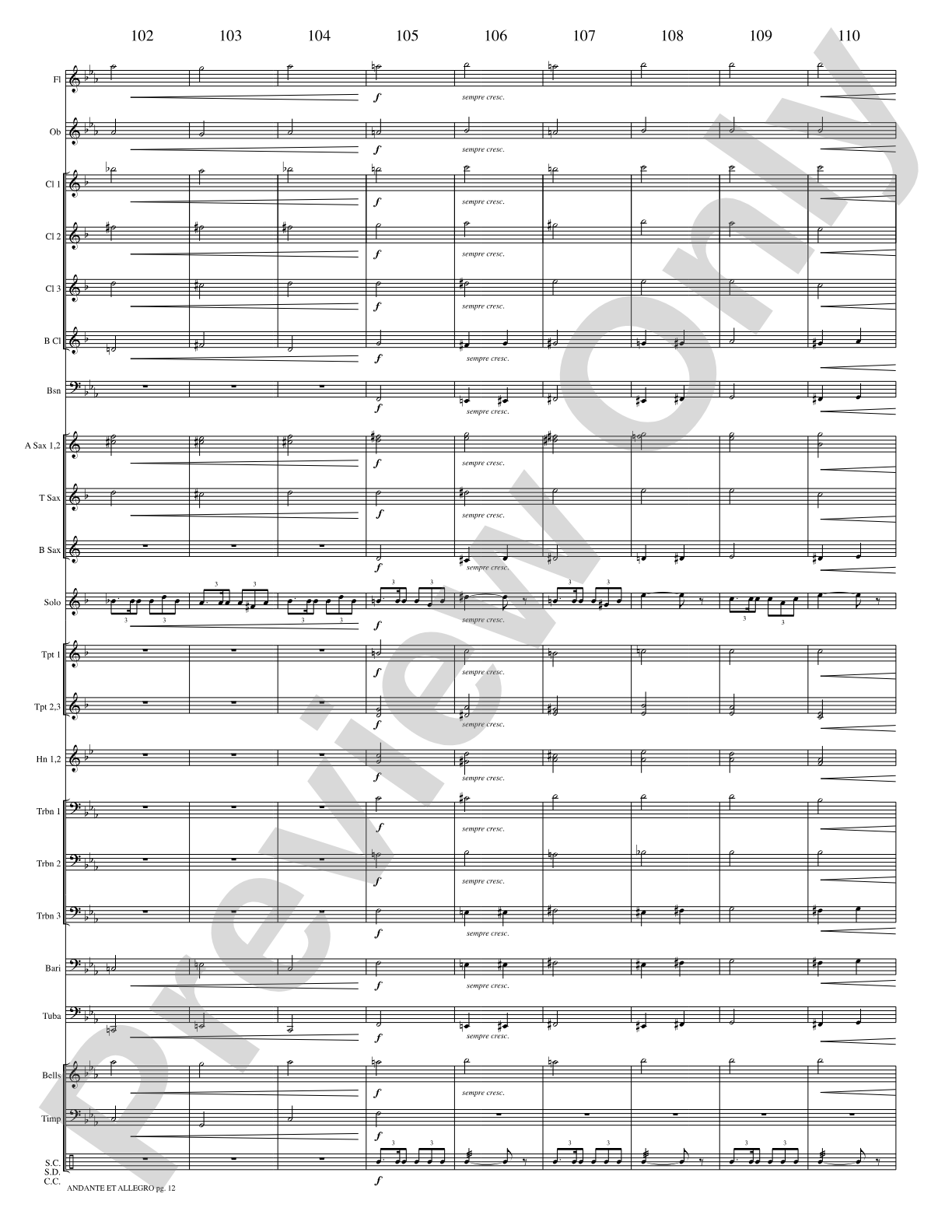
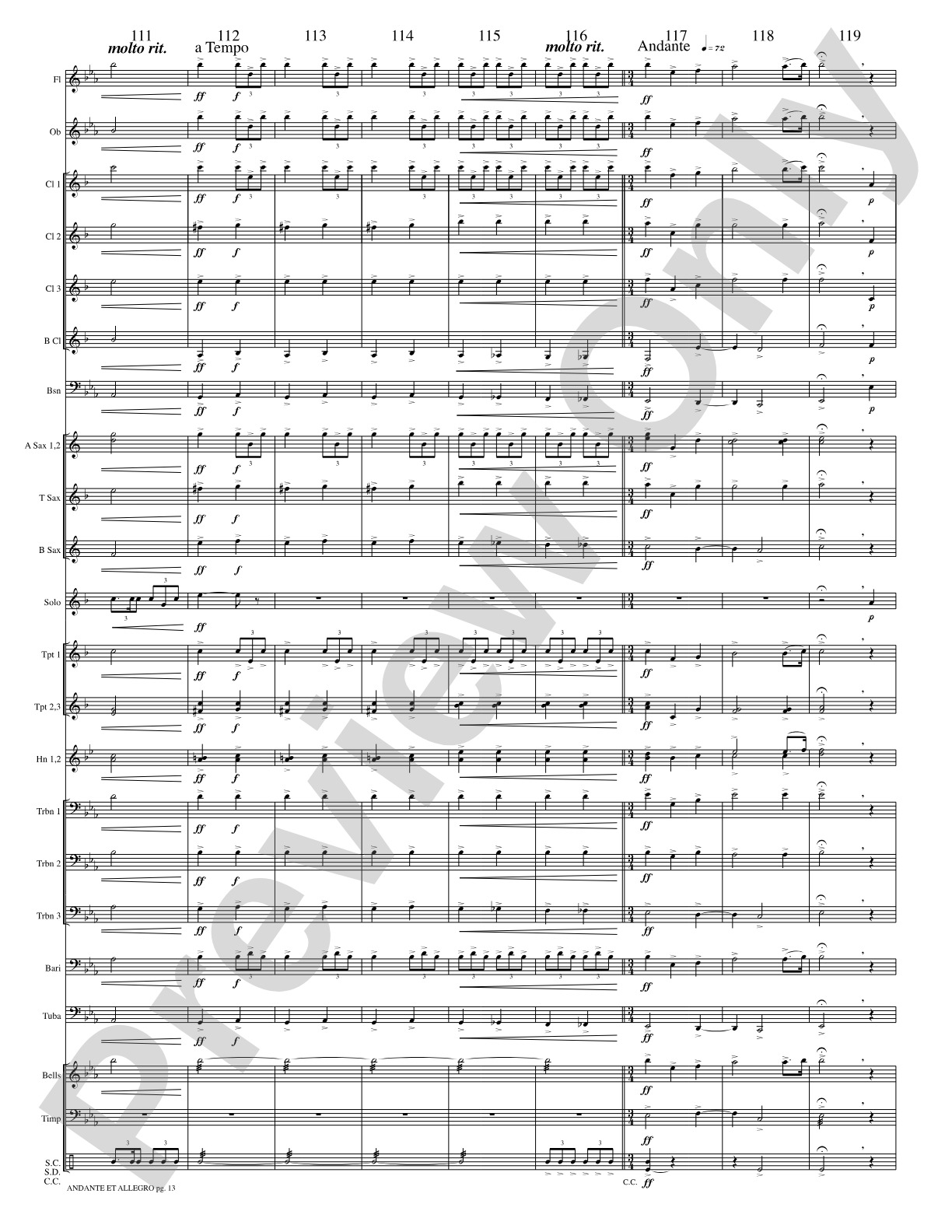
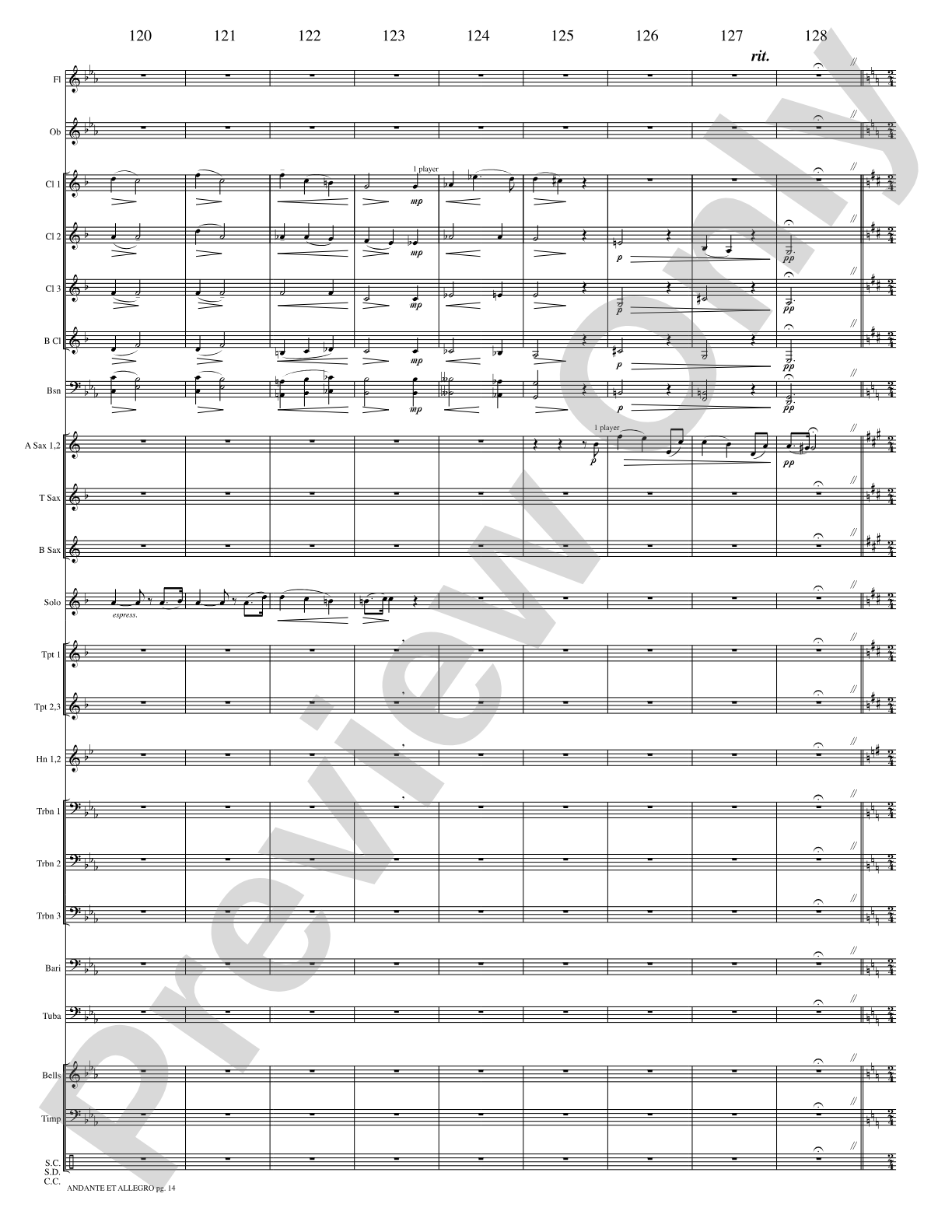
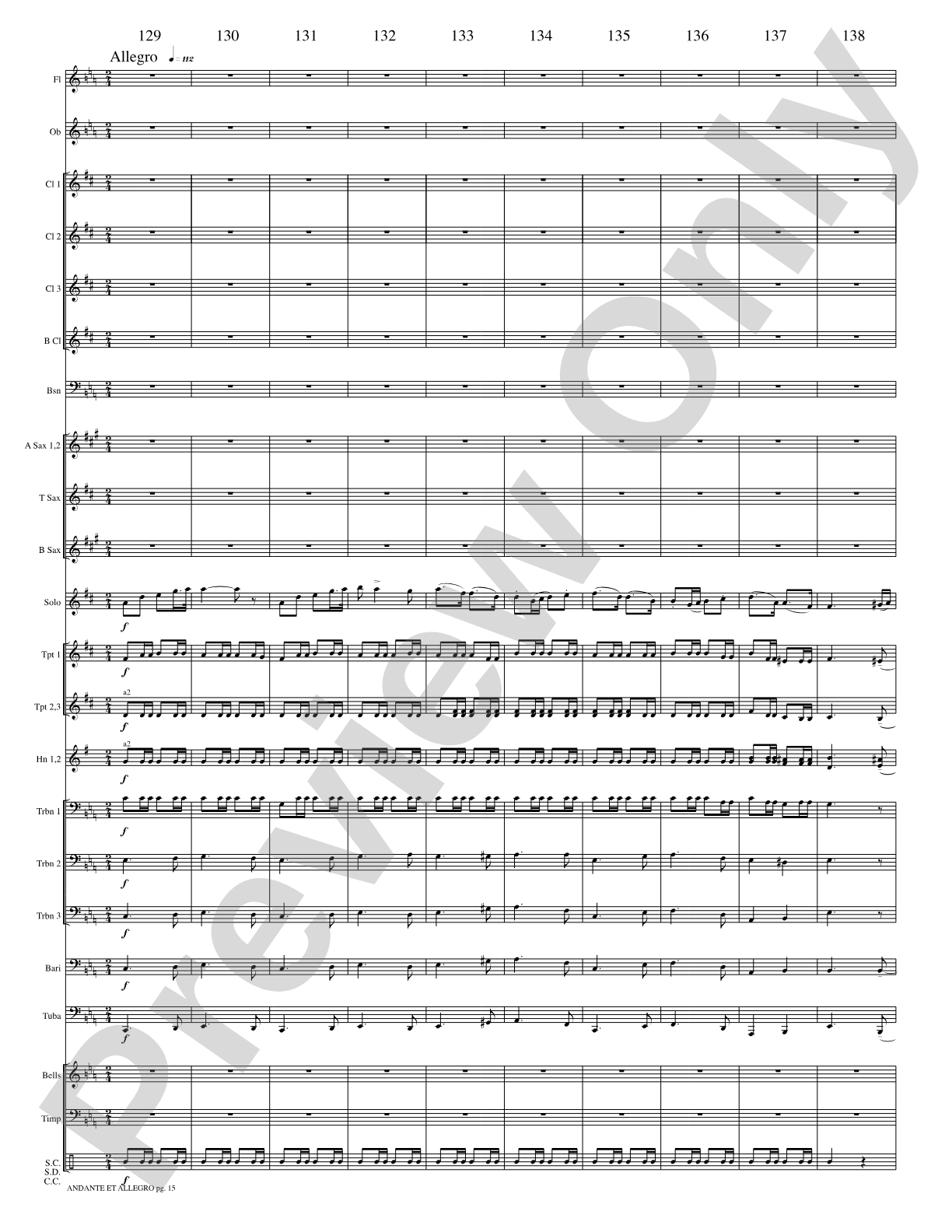
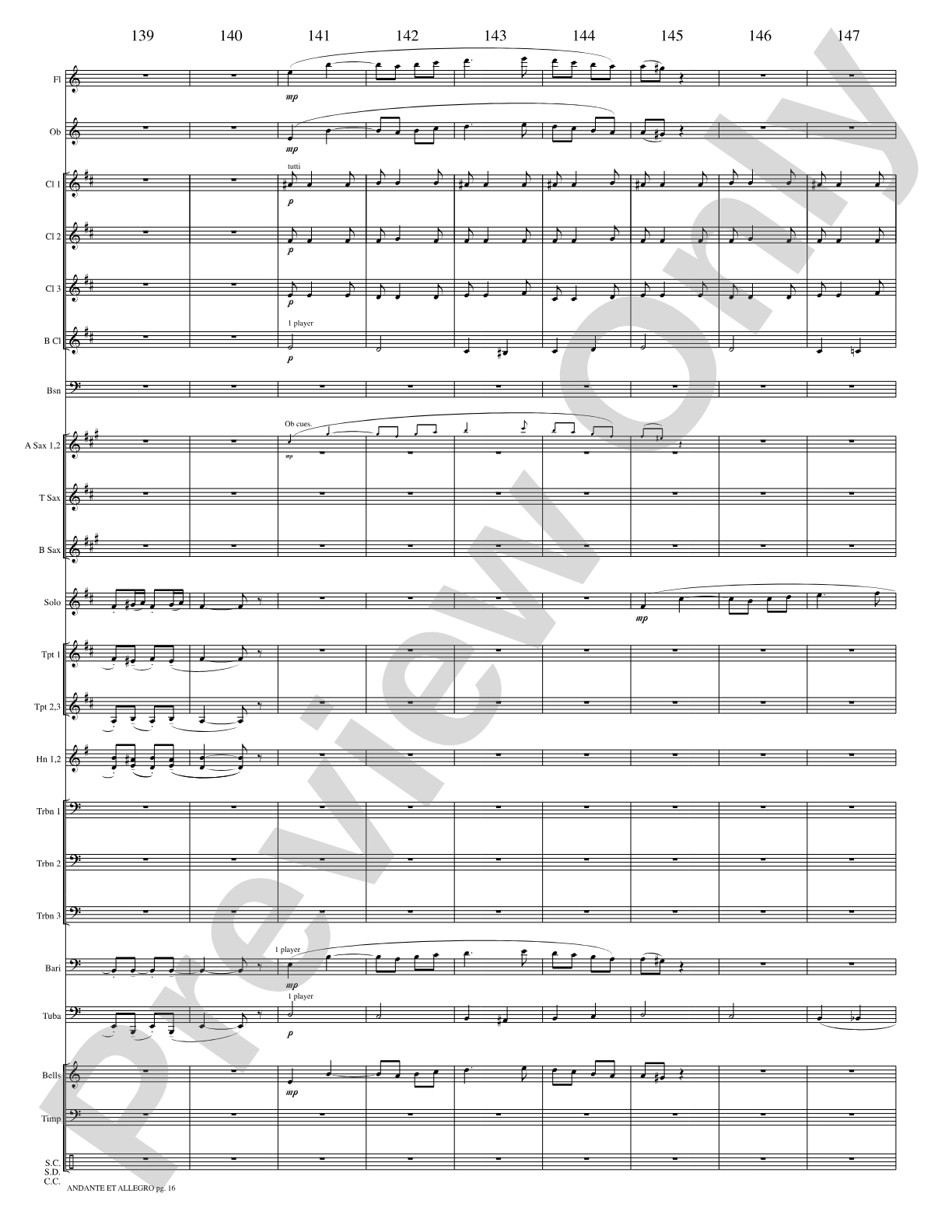
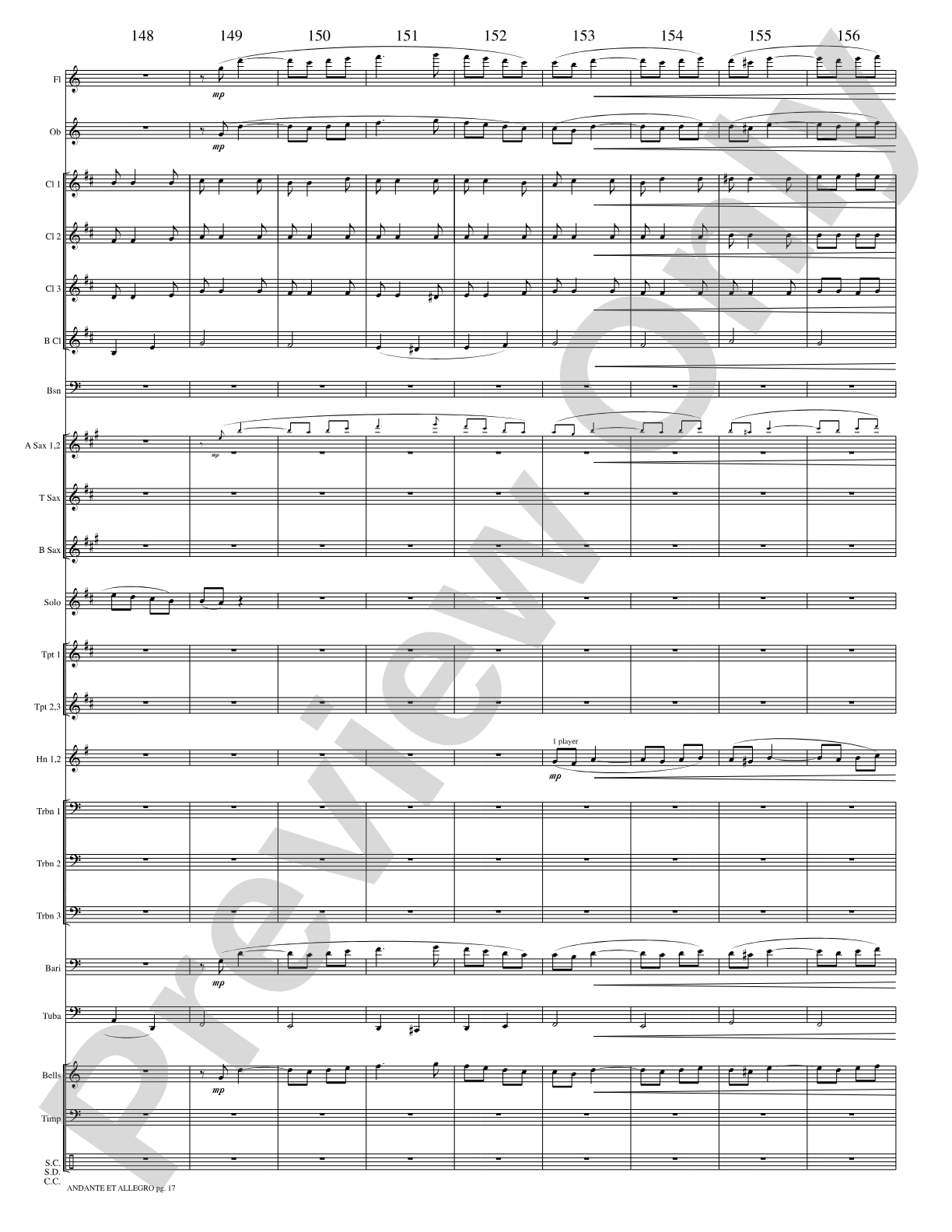
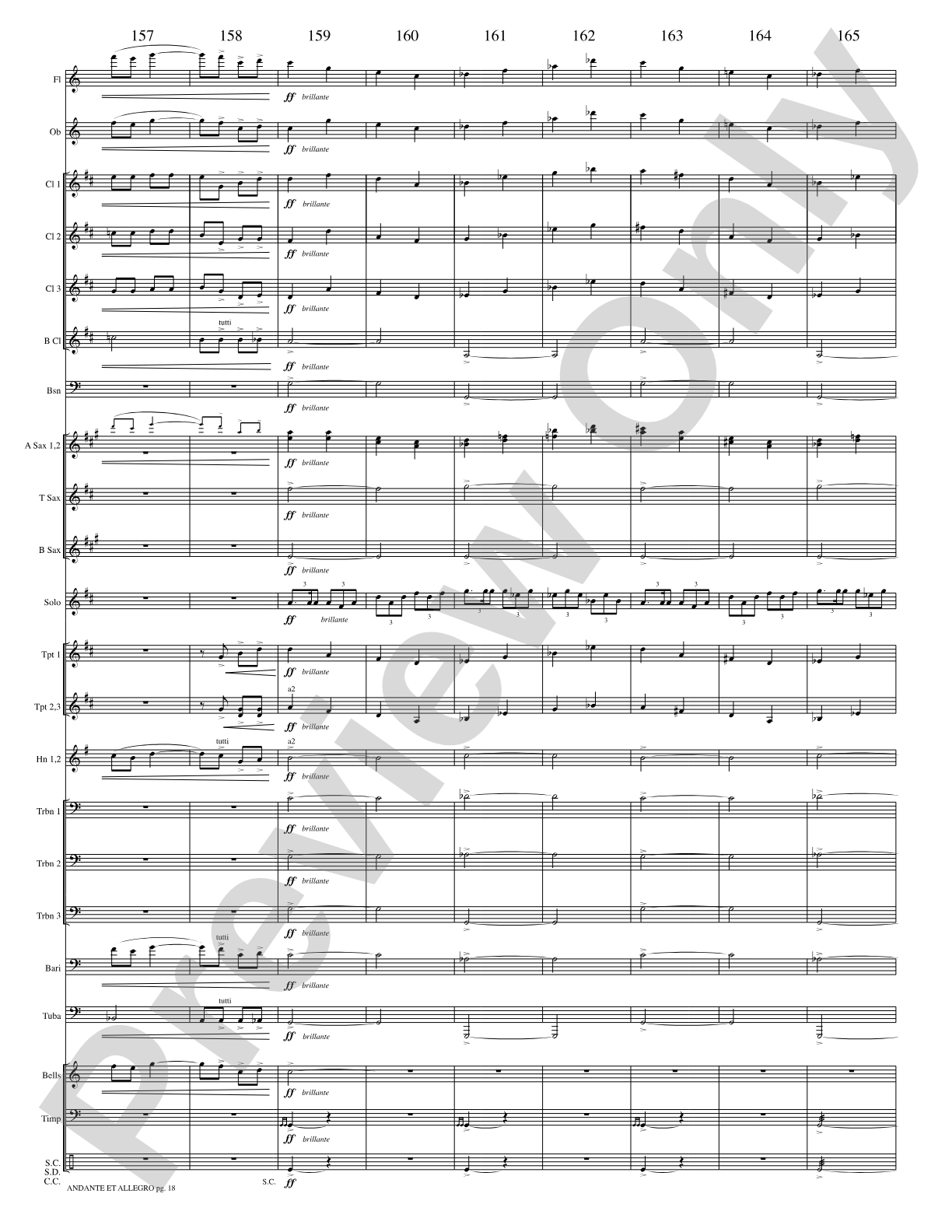
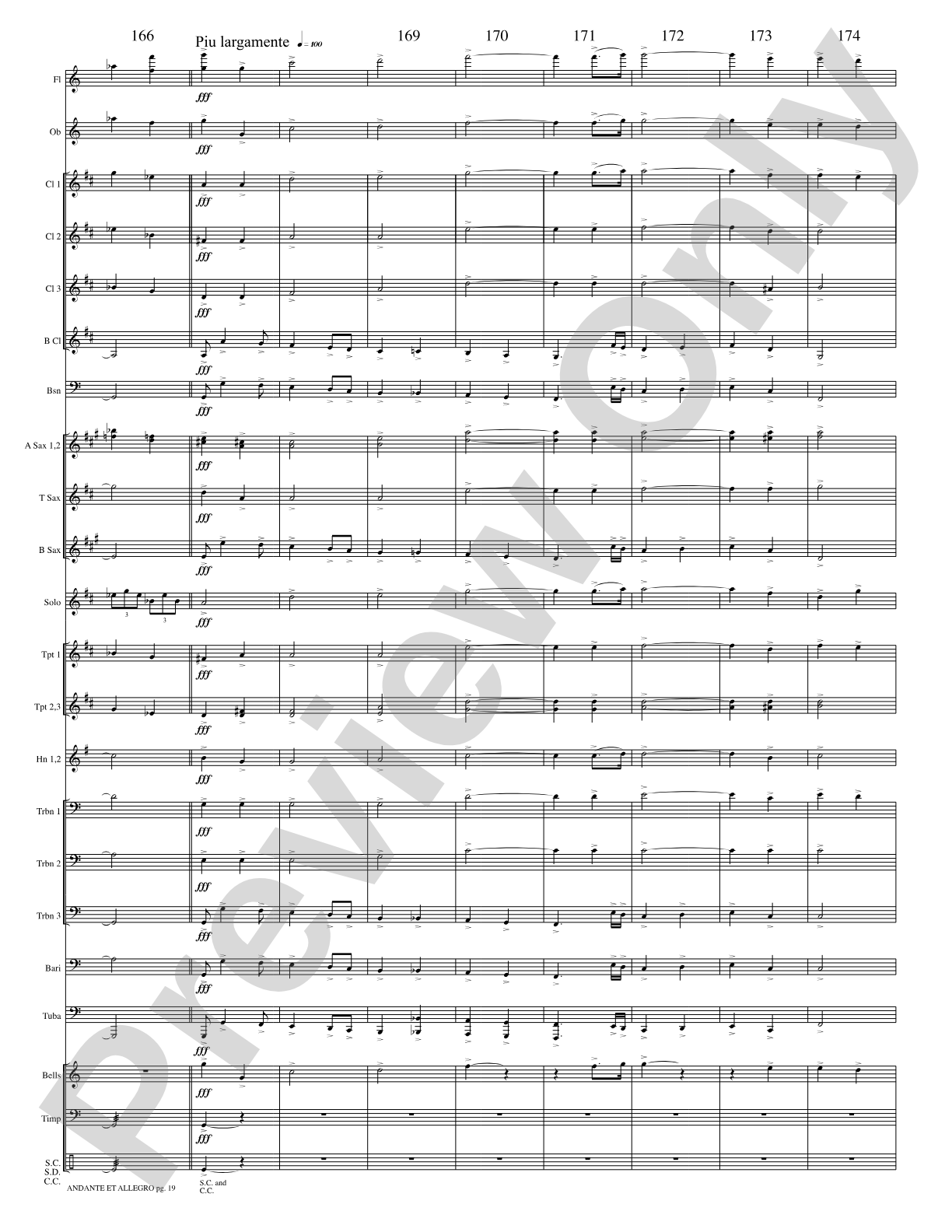
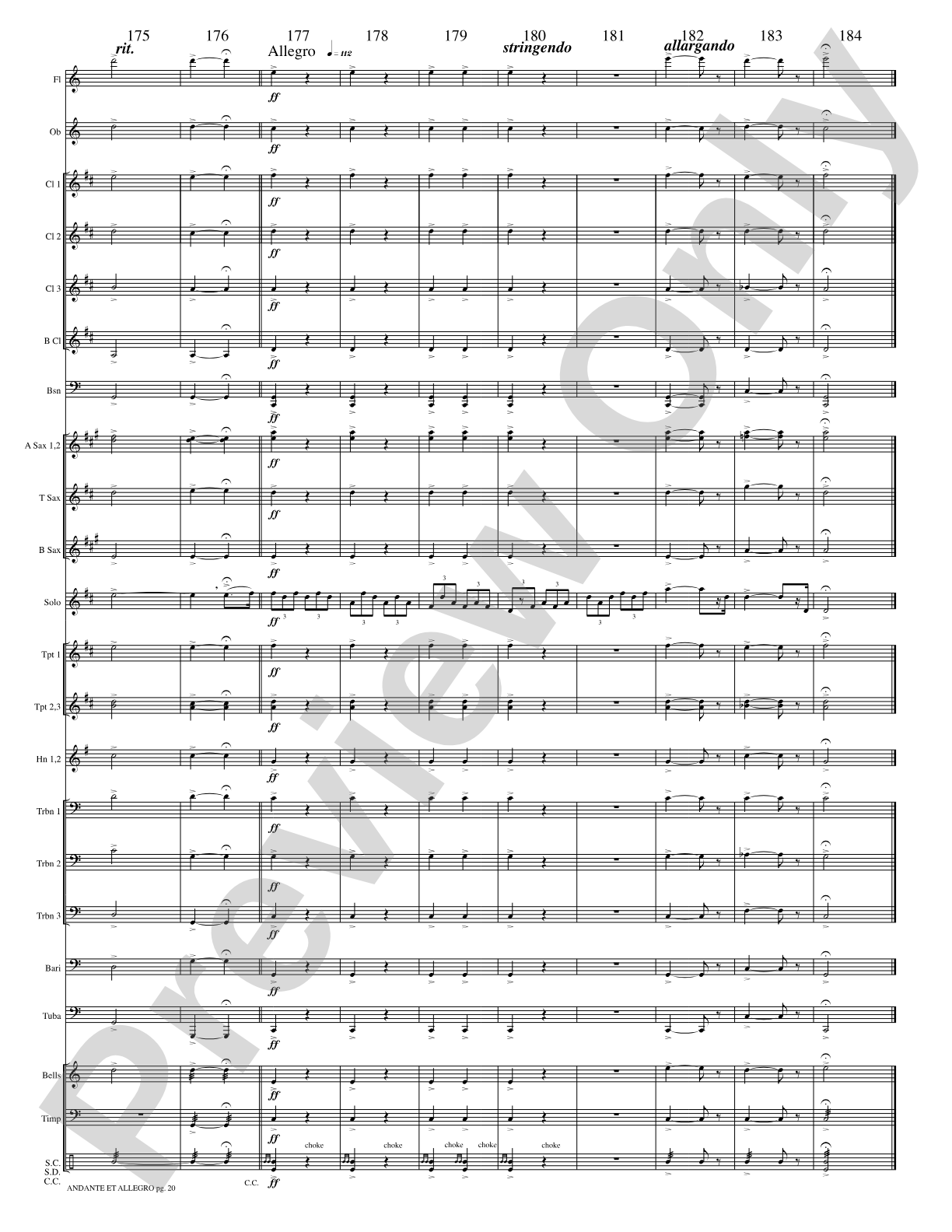

Andante et Allegro (Solo Trumpet and Concert Band): Concert Band Conductor Score & Parts
Solo Trumpet and Concert Band
By Joseph Guy Ropartz / arr. David Marlatt
Grade: 3
Item: 81-PK-0000008
$65.00
One moment…
Description
This is a standard piece in solo trumpet repertoire that is used on countless festivals and competitions. Ropartz was a French composer who studied with César Franck. The terrific contrast between the slow lyrical playing and the bright fanfares makes this piece a great one for demonstrating everything the trumpet can do.
The original was scored for cornet and piano and this arrangement for band allows for a wider range of timbres in the accompaniment.


The original was scored for cornet and piano and this arrangement for band allows for a wider range of timbres in the accompaniment.
Andante et Allegro (Solo Trumpet and Concert Band): Concert Band Conductor Score & Parts isn't in MakeMusic Cloud just yet...but it could be. Let us know you'd like to see it, and you'll help shape what comes next. In the meantime, start a free trial and dive into thousands of interactive titles your students can play along with today.
Request This Title
Tell us you want it.
Start Your Free Trial
Explore everything that's ready to play right now.
Sample Audio
1
Audio File
--:--
0:00
0:00
Sample Video
No sample videos found.
Additional Details
Series:
Eighth Note Publications
Publisher:
Eighth Note Publications
Page Count:
228
SKU:
81-PK-0000008
More about this title
About the Composer: Joseph Guy Ropartz
Joseph Guy Ropartz (1864-1955) was a French composer and conductor who studied composition with César Franck at the Paris Conservatory. His musical language bridges Romantic lyricism and early modernist clarity, evident in works that balance emotional depth with structural precision.
Ropartz held conducting positions throughout his career and composed prolifically across genres: orchestral works, chamber music, and pieces for wind band. His writing for brass instruments remains standard repertoire in competitions and festivals, valued for its technical demands and expressive range.
Why we love this
David Marlatt's arrangement expands the original cornet and piano texture into full concert band color without losing the piece's elegant shape. The Grade 3 setting keeps it accessible while the solo part remains genuinely demanding, making this an ideal vehicle for advanced trumpet players performing with peer musicians rather than a professional accompanist.
What to expect
The Andante opens with intimate, reflective character; the trumpet sings in a lyrical, almost vocal style over delicate band textures. The Allegro erupts into brilliant fanfare writing, celebrating the trumpet's brightness and agility before settling into a bright, confident conclusion.
Who it's for
Conductors programming a solo trumpet feature that showcases range and musicianship at the high school or early college level. Trumpet soloists preparing for festivals, competitions, or recitals who need substantial band accompaniment rather than piano support.
How to get the most out of it
- Balance the Andante's introspective character by having the band play with restrained dynamics; the trumpet should sing above the ensemble without the full volume that the Allegro demands.
- Establish the tempo relationship between sections clearly in rehearsal. The transition from slow to fast benefits from a marked tempo that feels inevitable rather than abrupt.
- Shape the fanfare passages with crisp articulation and unified ensemble attacks; brass balance becomes essential when the solo trumpet competes with the full complement of horns and lower brass.
- Mark the trumpet part for breathing opportunities, especially in the longer Andante lines. Conduct those phrases with attention to natural musical phrasing, not just note groupings.
How to use it
Position this as the centerpiece of a concert devoted to solo features, pairing it with contrasting repertoire (a slower ensemble piece, a vocal solo, or a comedic band work). It also works beautifully as the climax of a program that progresses from quieter to more brilliant textures.
Skills your students will build
- Sustained legato playing with controlled vibrato in the Andante
- Clear articulation and rhythmic precision in fanfare figures
- Dynamic control across a two-octave range
- Breath management in extended lyrical phrases
- Ensemble balance: projecting the solo line above full band texture