
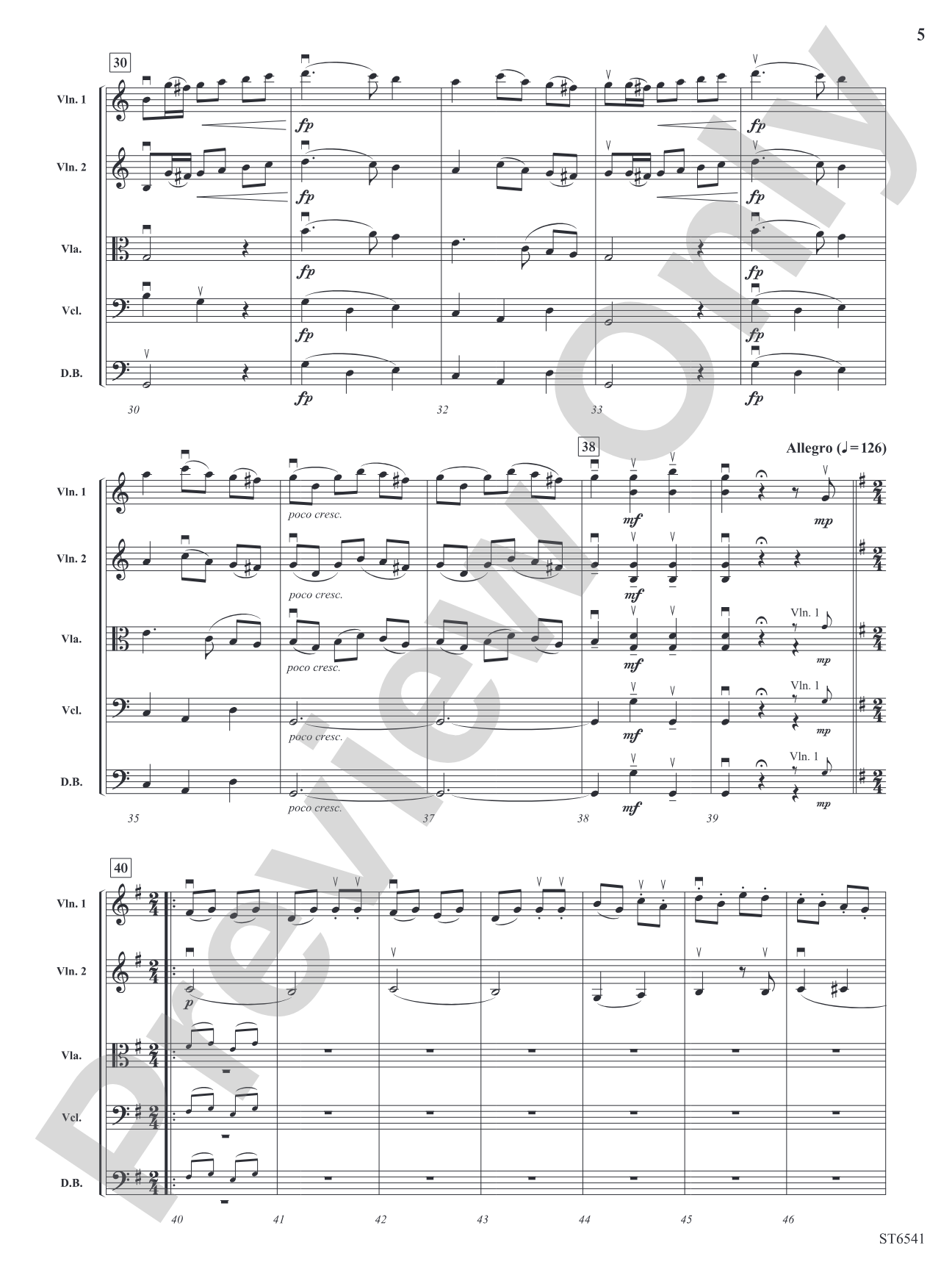
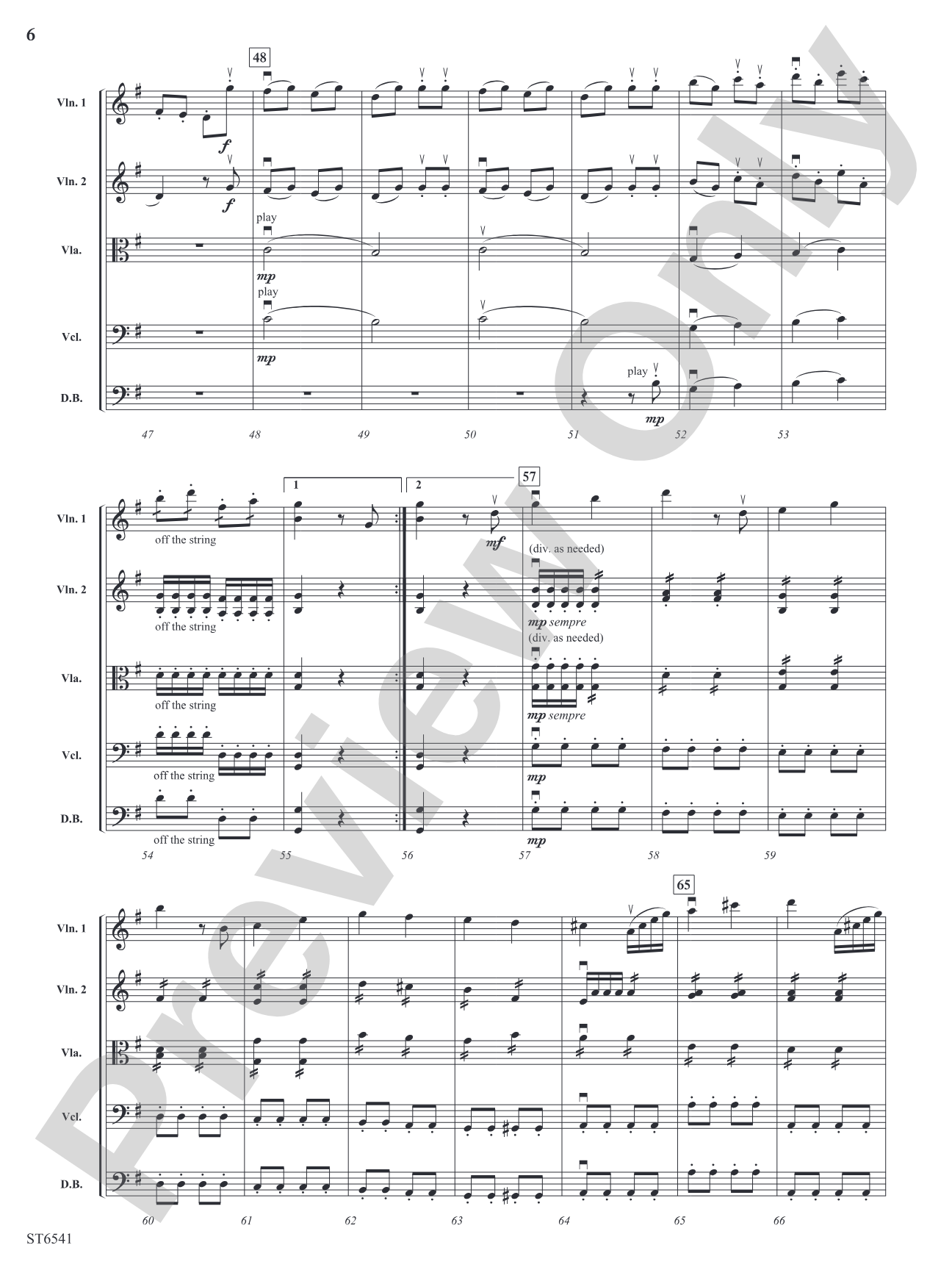
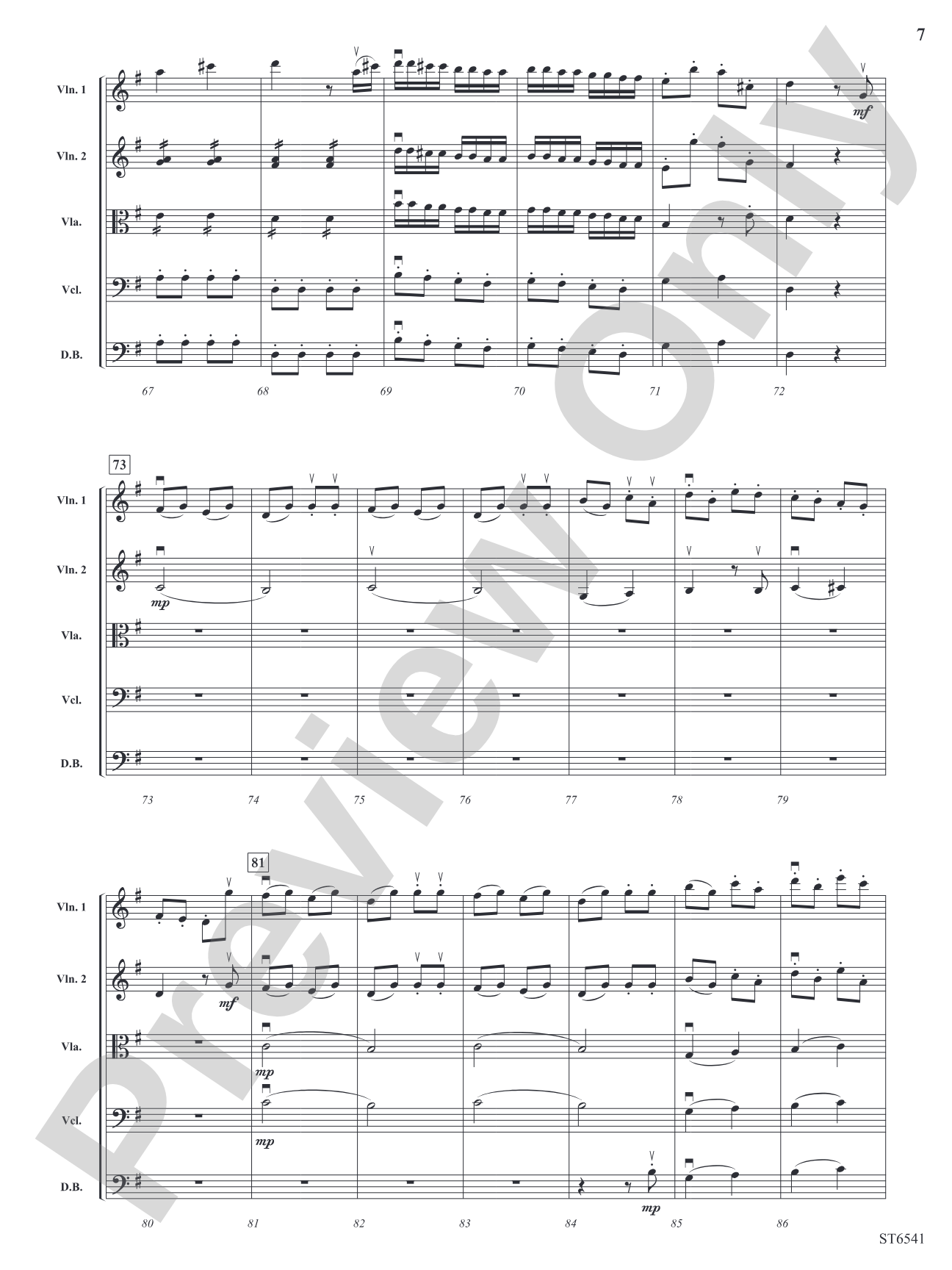
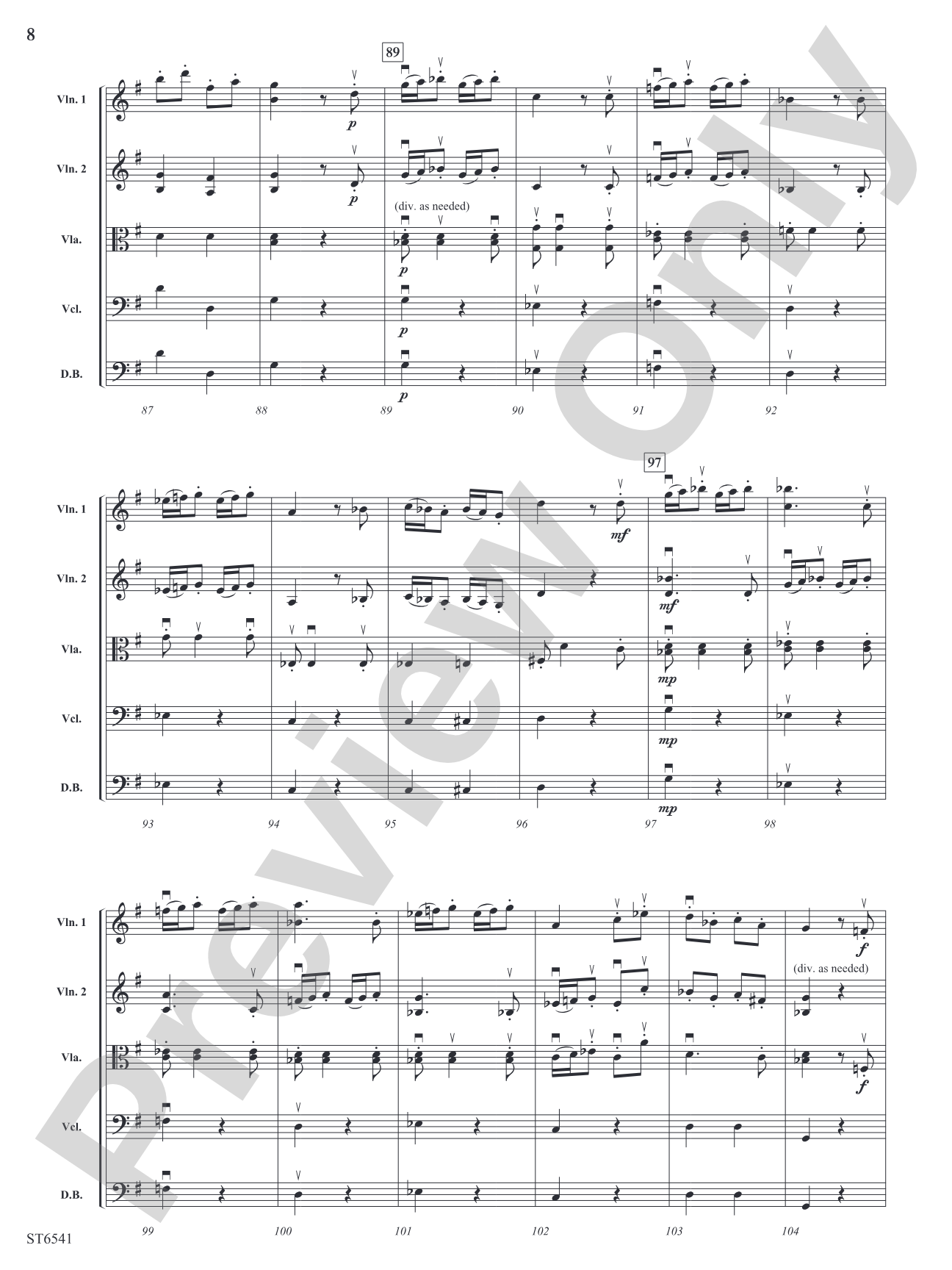
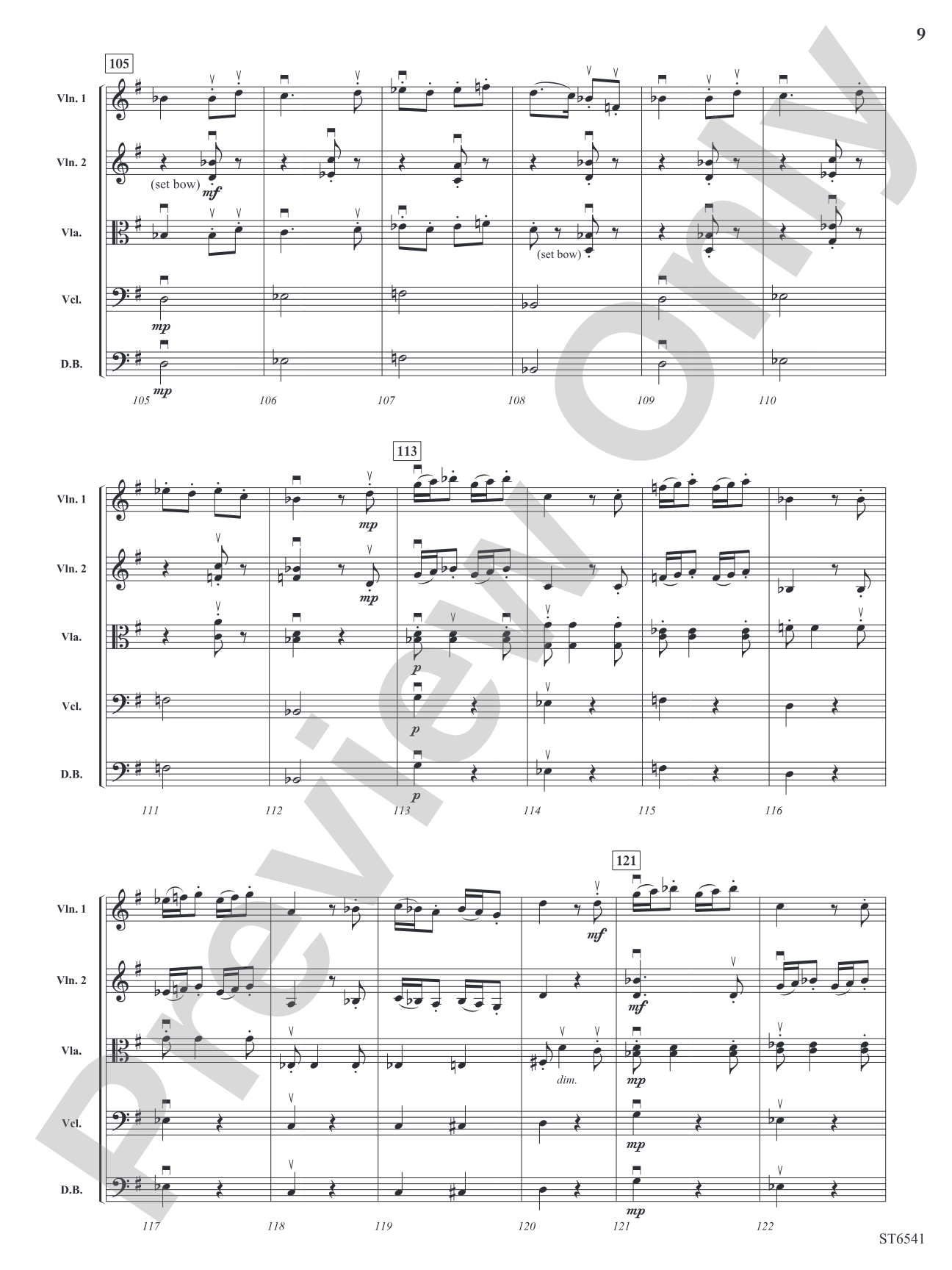
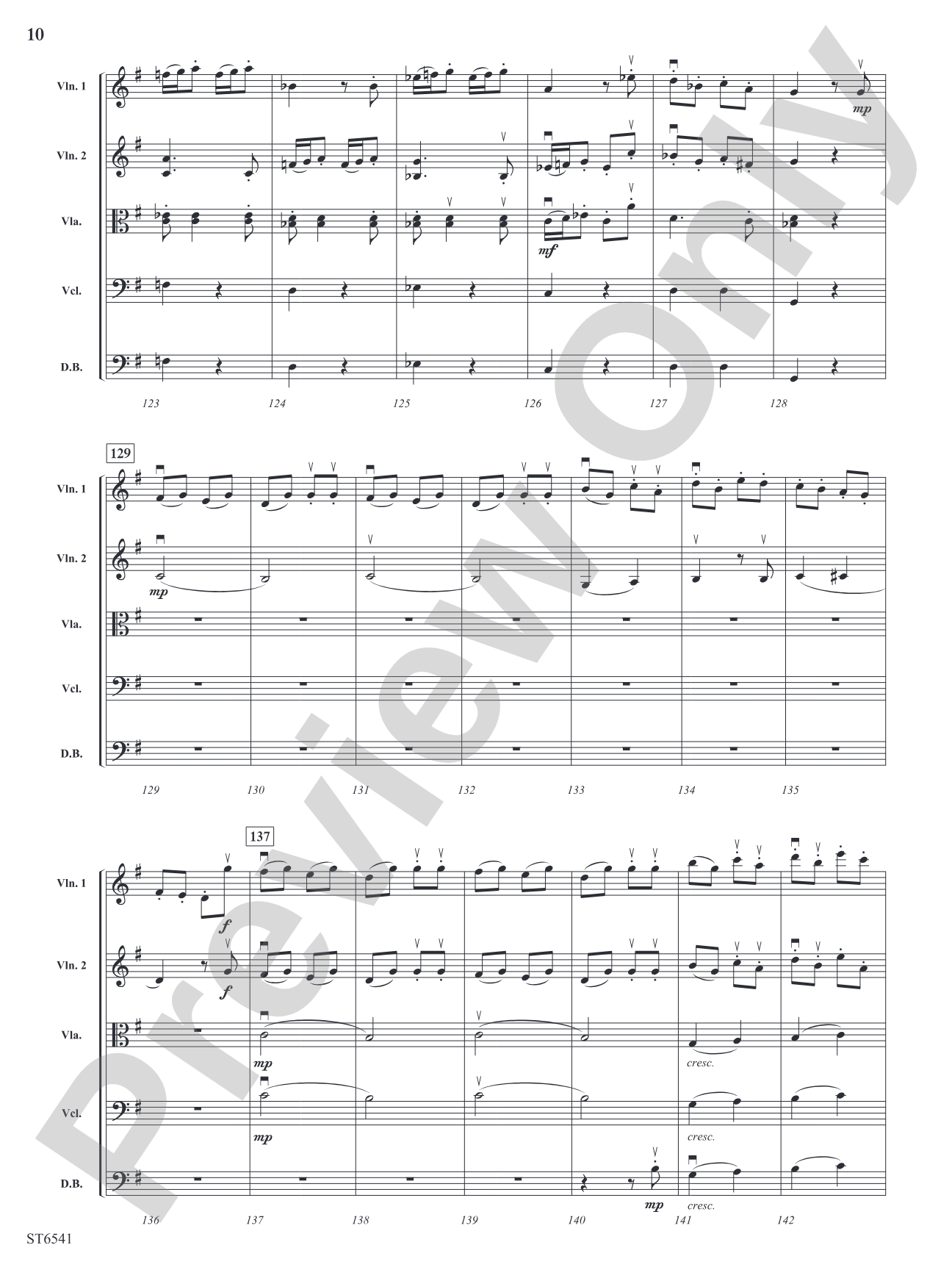
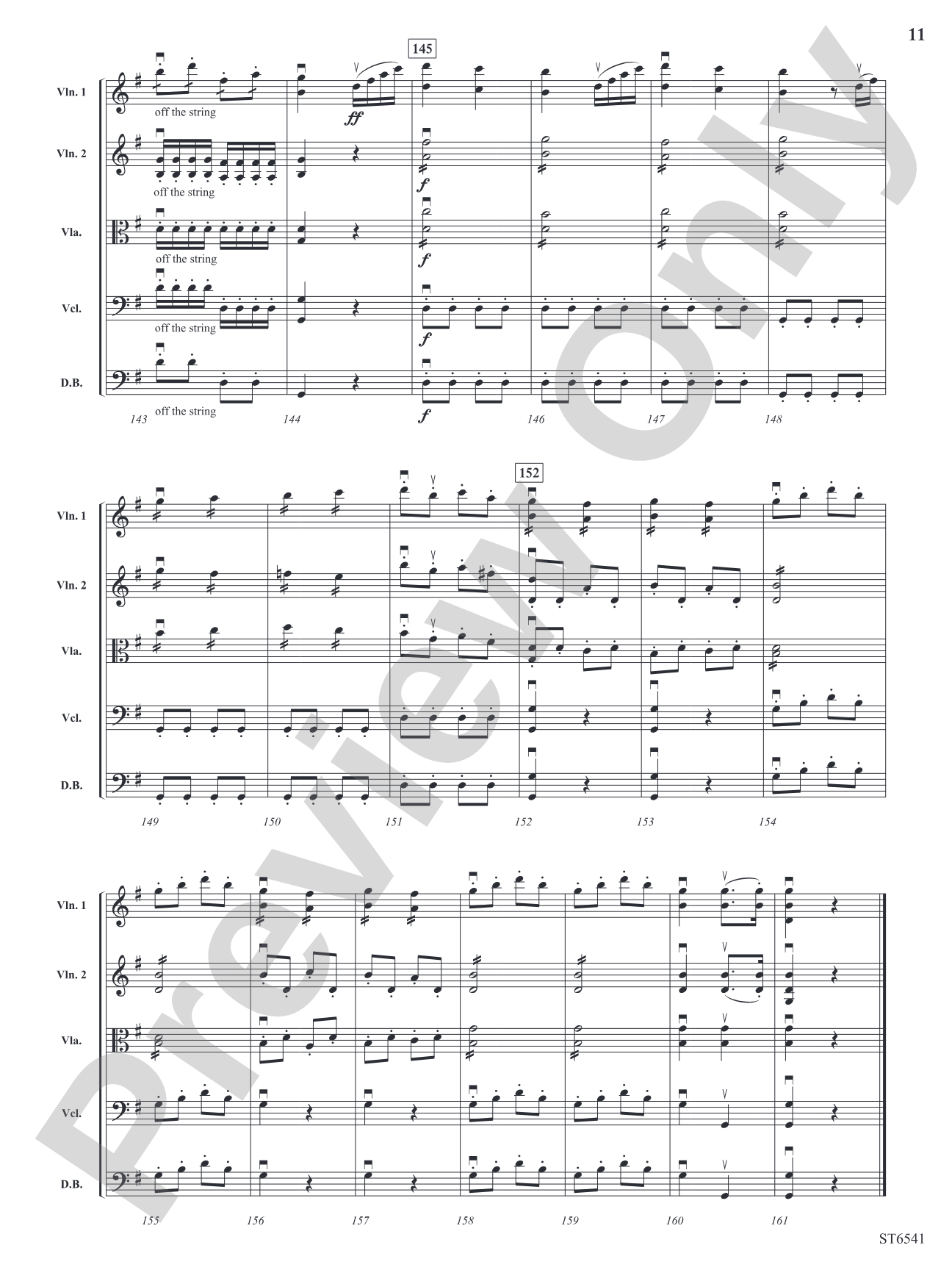

Andante and Allegro (From Symphony No. 10): Score
From Symphony No. 10
By Wolfgang Amadeus Mozart / arr. Robert D. McCashin
Grade: 3
Item: 98-DST6541S
$10.00
Pickup currently not available
Description
Written by Mozart during his first concert tour of Italy at age 14-15, this well-known work was written in the style of the Italian overture of the time. This noteworthy arrangement is extremely accessible to developing orchestras while remaining true to the sound of the original. Well suited for both large and chamber orchestras, this arrangement is ideal for the middle of your program. (3:45)


Don't just read it, hear it, play along with it, and watch your students grow with it. In MakeMusic Cloud, Andante and Allegro (From Symphony No. 10): Score comes alive with professional accompaniment, adjustable tempo, and built-in practice tools that turn solo practice into real progress.
Open in the Player
Jump straight in and assign it today.
Start Your Free Trial
Open this title and explore the full library in minutes.
Sample Audio
1
Audio File
--:--
0:00
0:00
Sample Video
Additional Details
Series:
FJH String Orchestra
Publisher:
The FJH Music Company, Inc.
SKU:
98-DST6541S
More about this title
About the Composer: Wolfgang Amadeus Mozart
Wolfgang Amadeus Mozart (1756-1791) composed across every major genre of his era and left a catalog of over 600 works despite his death at 35. Born in Salzburg, Austria, he began performing publicly as a child prodigy and spent formative years touring Europe, where he absorbed the musical languages of the regions he visited. His time in Italy as a teenager profoundly shaped his compositional voice, and he became fluent in the Italian operatic and instrumental styles that dominate works from this period.
Why we love this
This arrangement captures Mozart's gift for elegant, singable melody without demanding the virtuosity of the original score. Robert McCashin has scaled the orchestration thoughtfully so developing players can access a genuine masterwork without drowning in technical complexity. It reads as authentically Mozart, making it an excellent choice for students encountering his instrumental writing.
What to expect
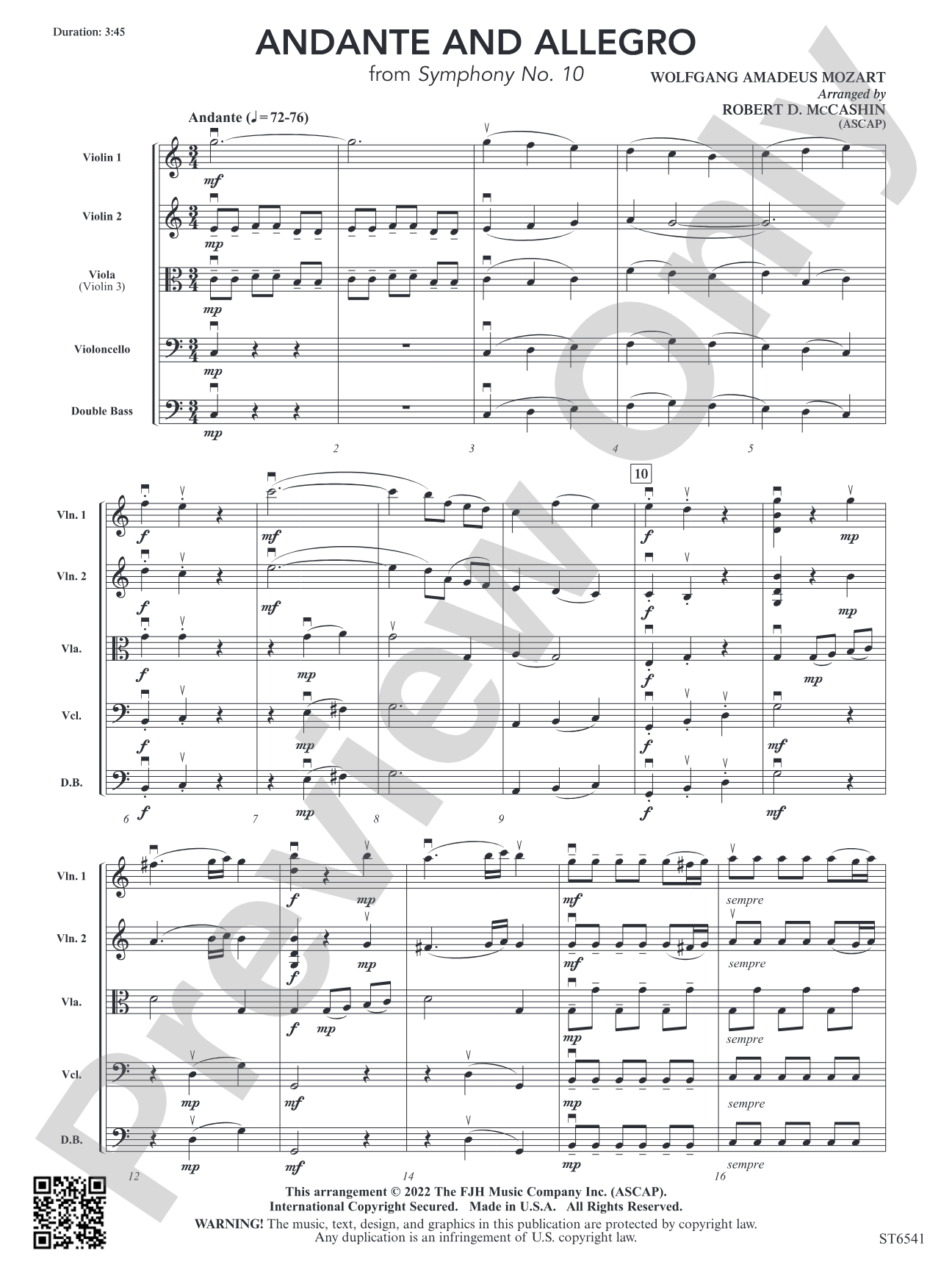
The Andante unfolds with the grace and balance you expect from Italian instrumental writing of the 1770s, its melody riding above gentle accompaniment with nowhere to hide. When the Allegro arrives, the energy shifts to bright, focused motion; underneath runs the sturdy harmonic foundation that keeps Mozart's proportions clear and inevitable.
Who it's for
Middle school and early high school string orchestras ready to step into standard repertoire will find this accessible entry point into Mozart. Directors programming Grade 3 ensembles can confidently assign this for festival or concert performance knowing it delivers musicianship and historical context without excessive technical burden.
How to get the most out of it
- Balance the opening theme across your first violins and violas; the melody moves between these voices, and clarity matters more than volume.
- Shape the phrasing in two and four-bar units rather than driving forward relentlessly; Mozart's lines breathe in short, elegant gestures.
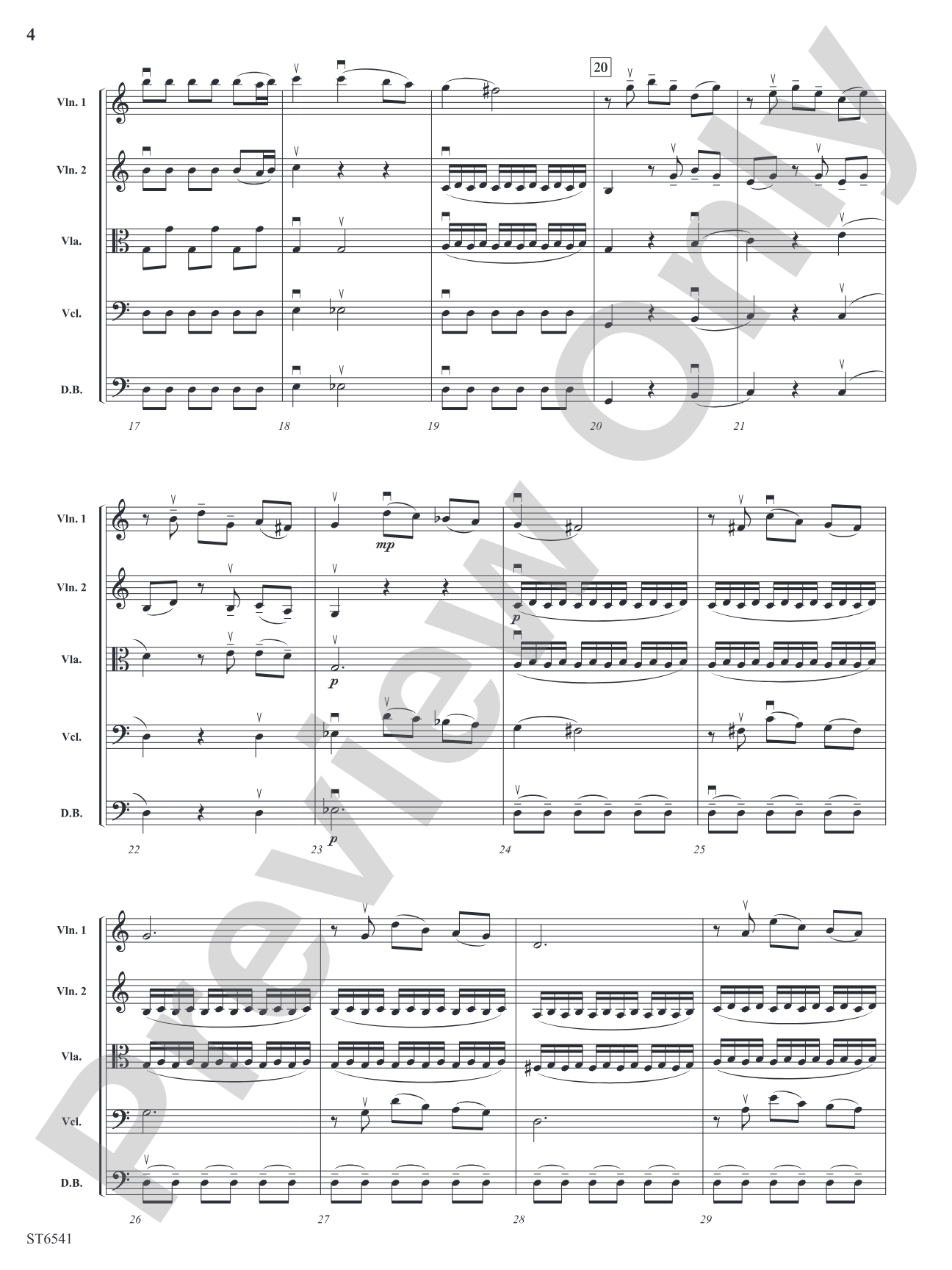
- In the Allegro, maintain rhythmic precision in the accompanying figures so the primary melodic line stands out without a conductor having to over-gesture.
- Approach the dynamic shifts as architectural markers rather than emotional peaks; Mozart uses contrast to build form, not drama.
How to use it
Use this midway through a concert to shift from lighter pedagogical pieces into standard orchestral literature without jarring your audience or your players. It pairs naturally with other Classical-era works and reads as substantial enough to anchor a program section without demanding the rehearsal time of a Grade 4 or 5 piece.
Skills your students will build
- Identifying and balancing transparent textures with multiple melodic voices
- Playing with period-appropriate phrasing and articulation in Classical style
- Reading and responding to subtle dynamic architecture in accompaniment parts
- Maintaining rhythmic stability in repeated figurations without sacrificing musicality