
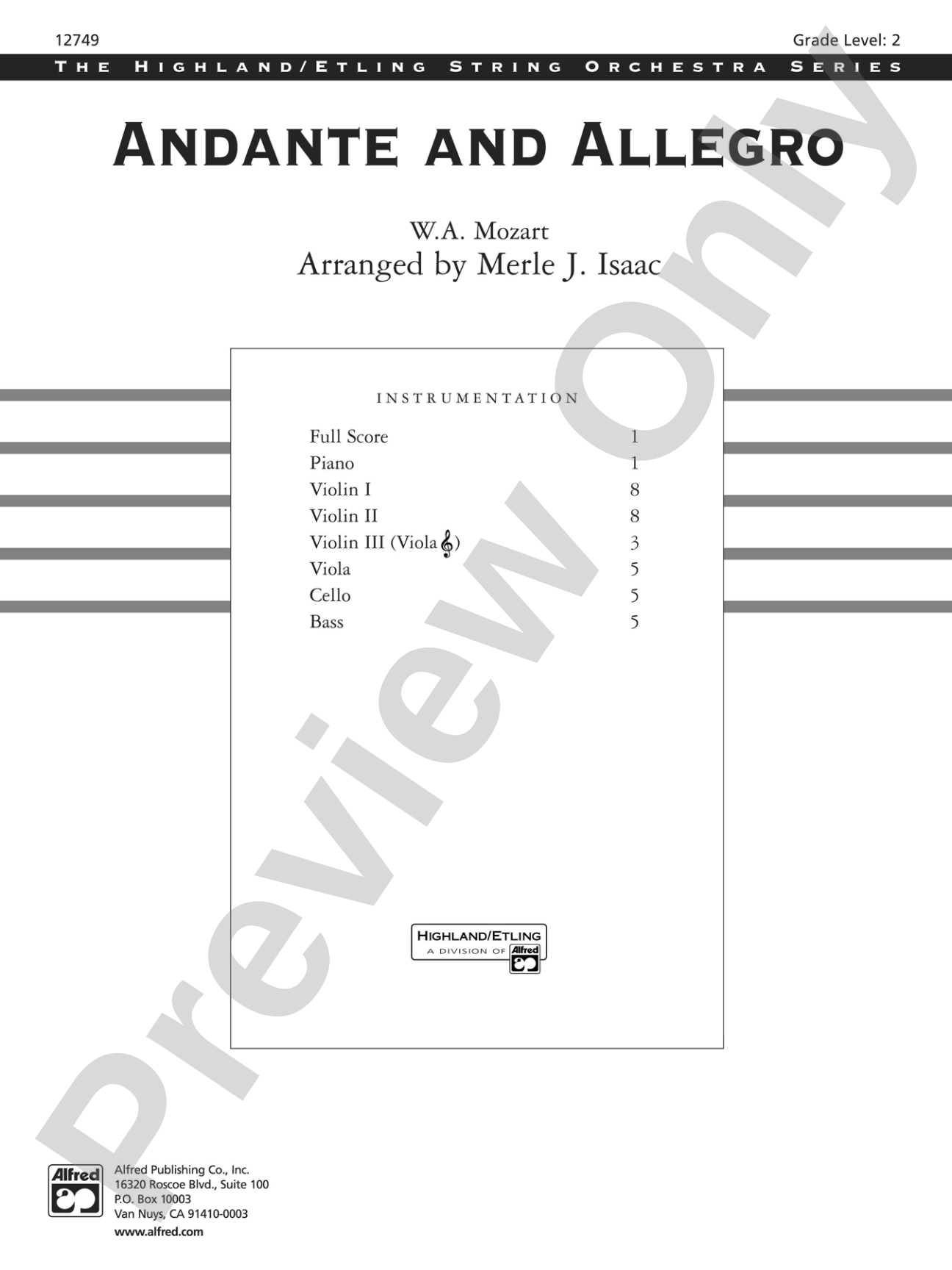

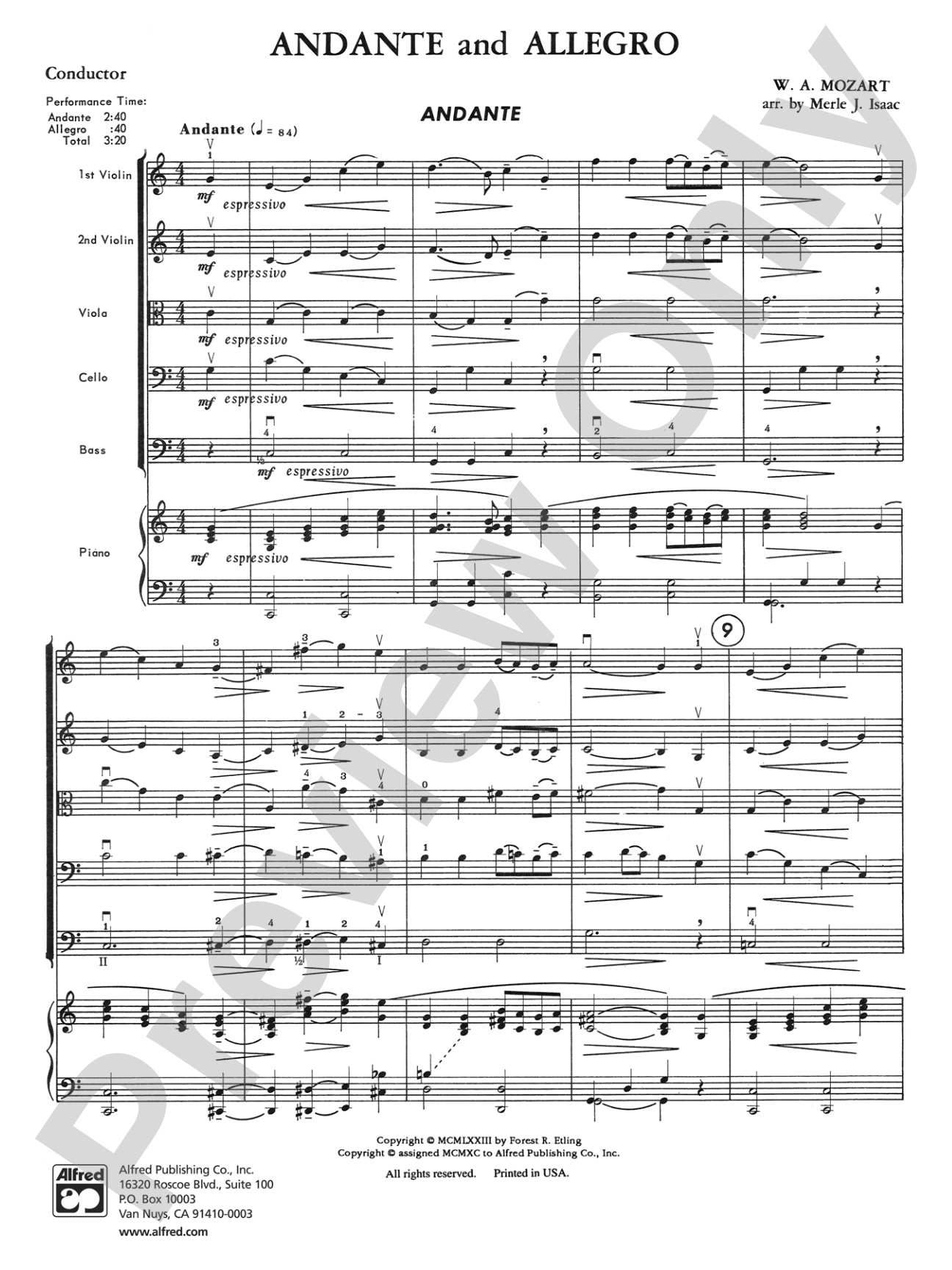
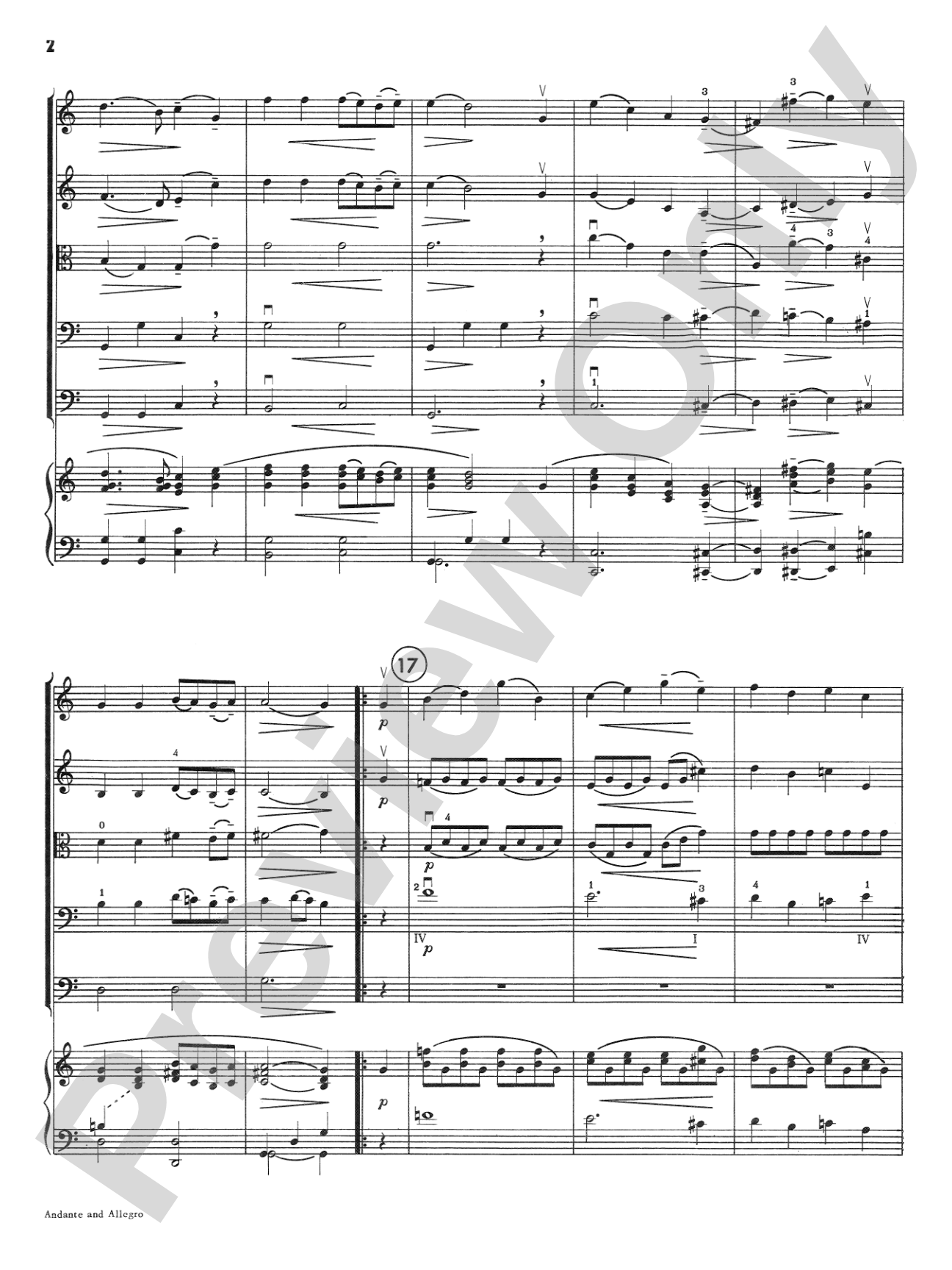
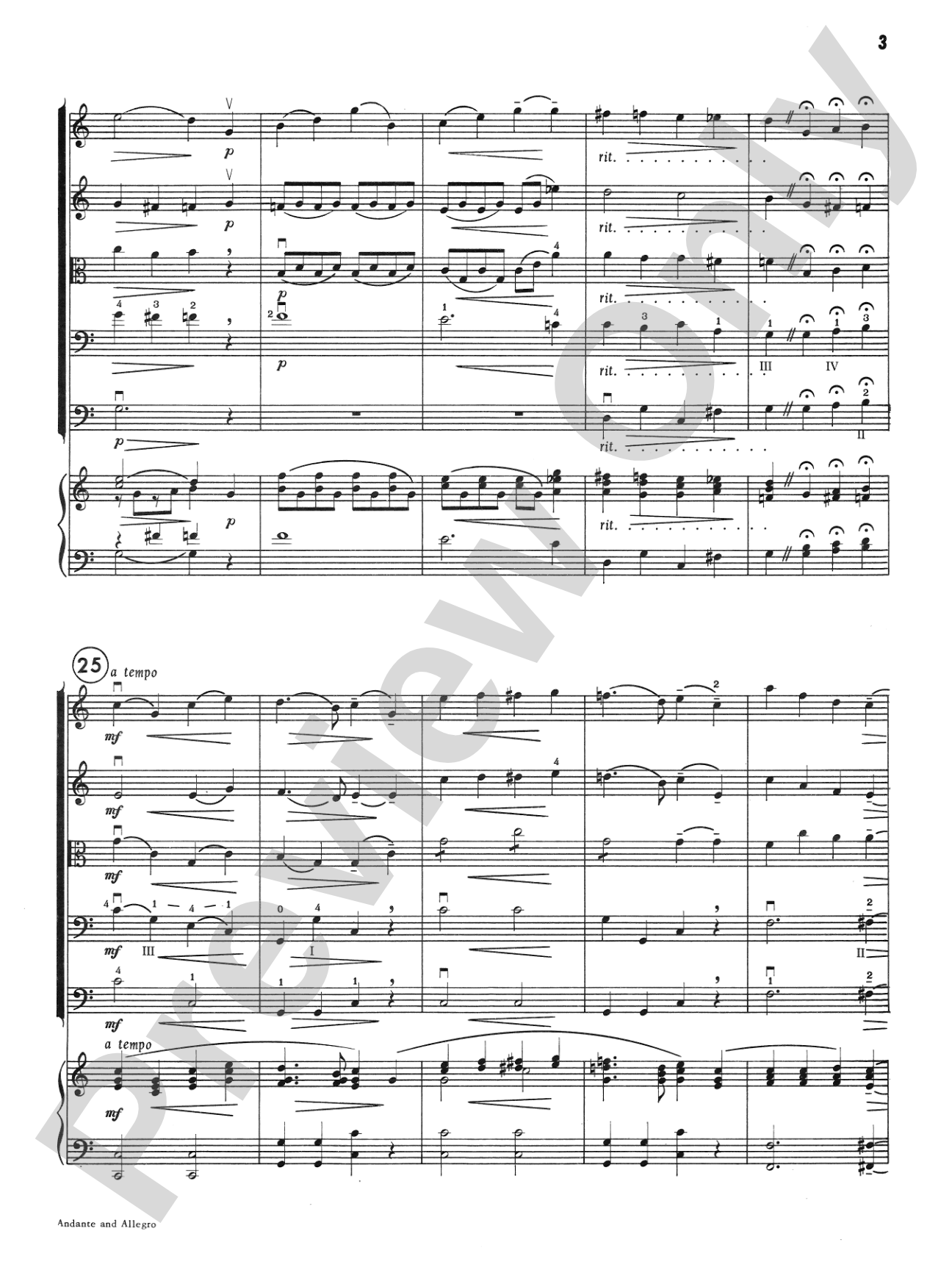
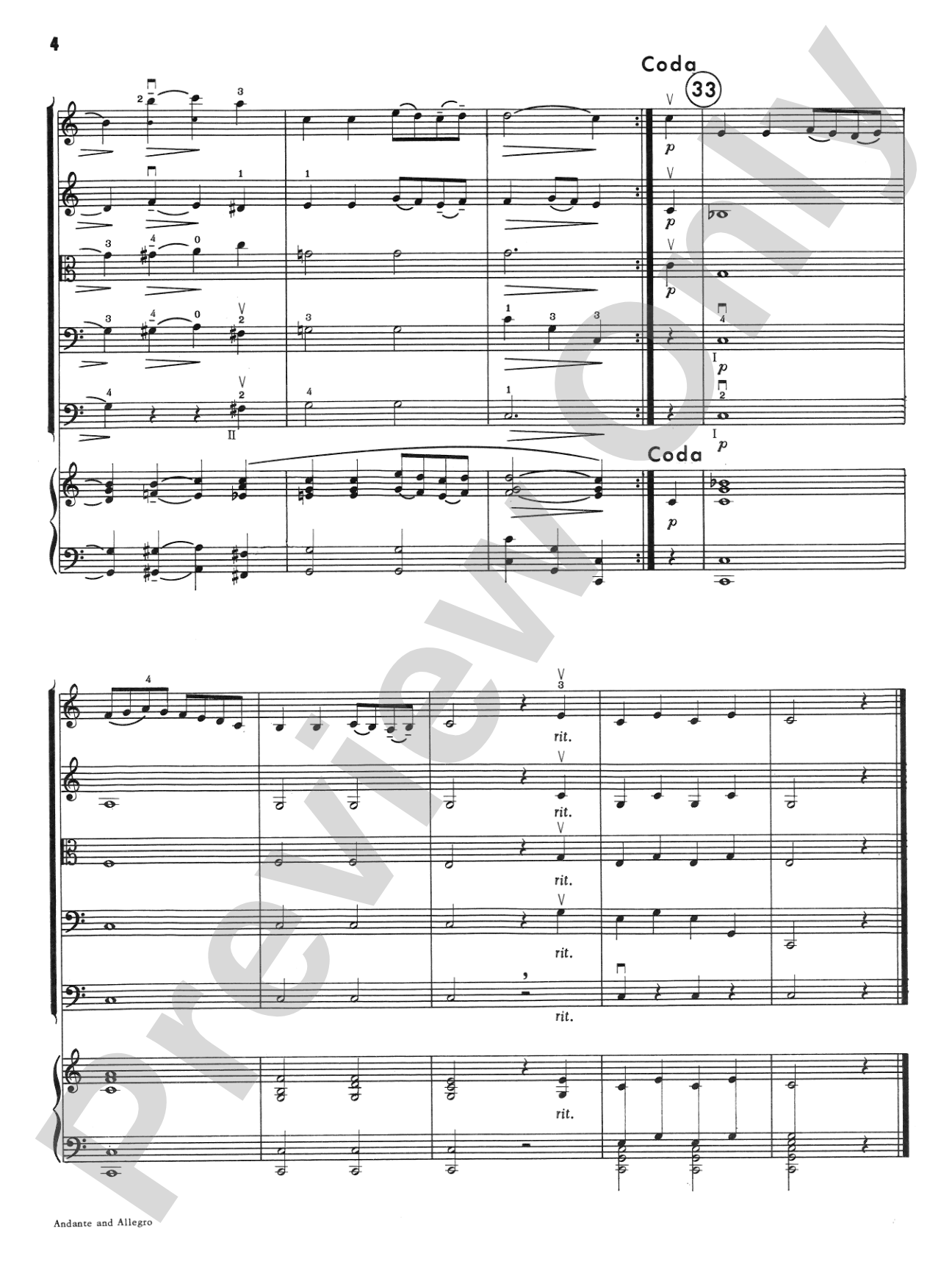
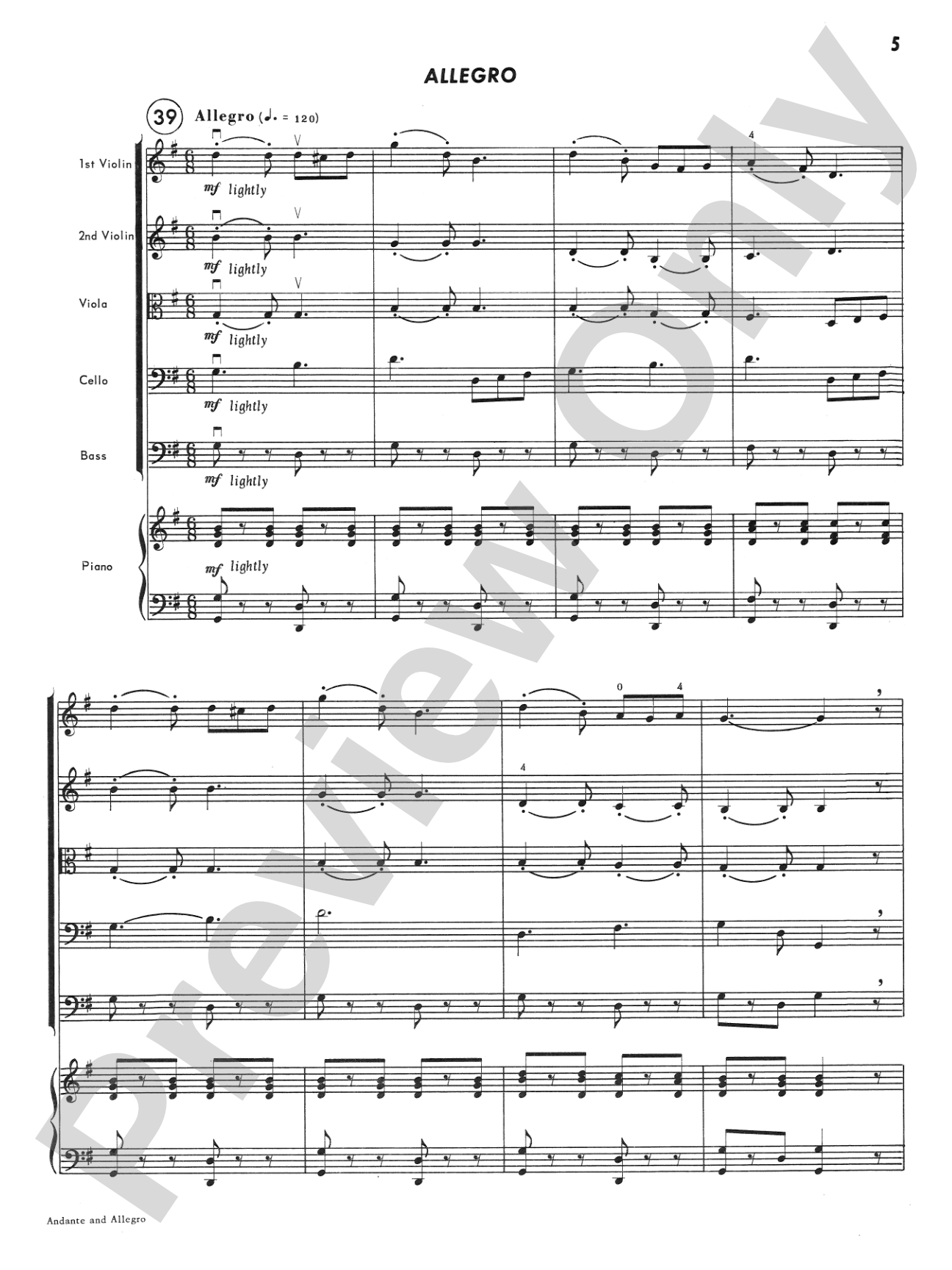
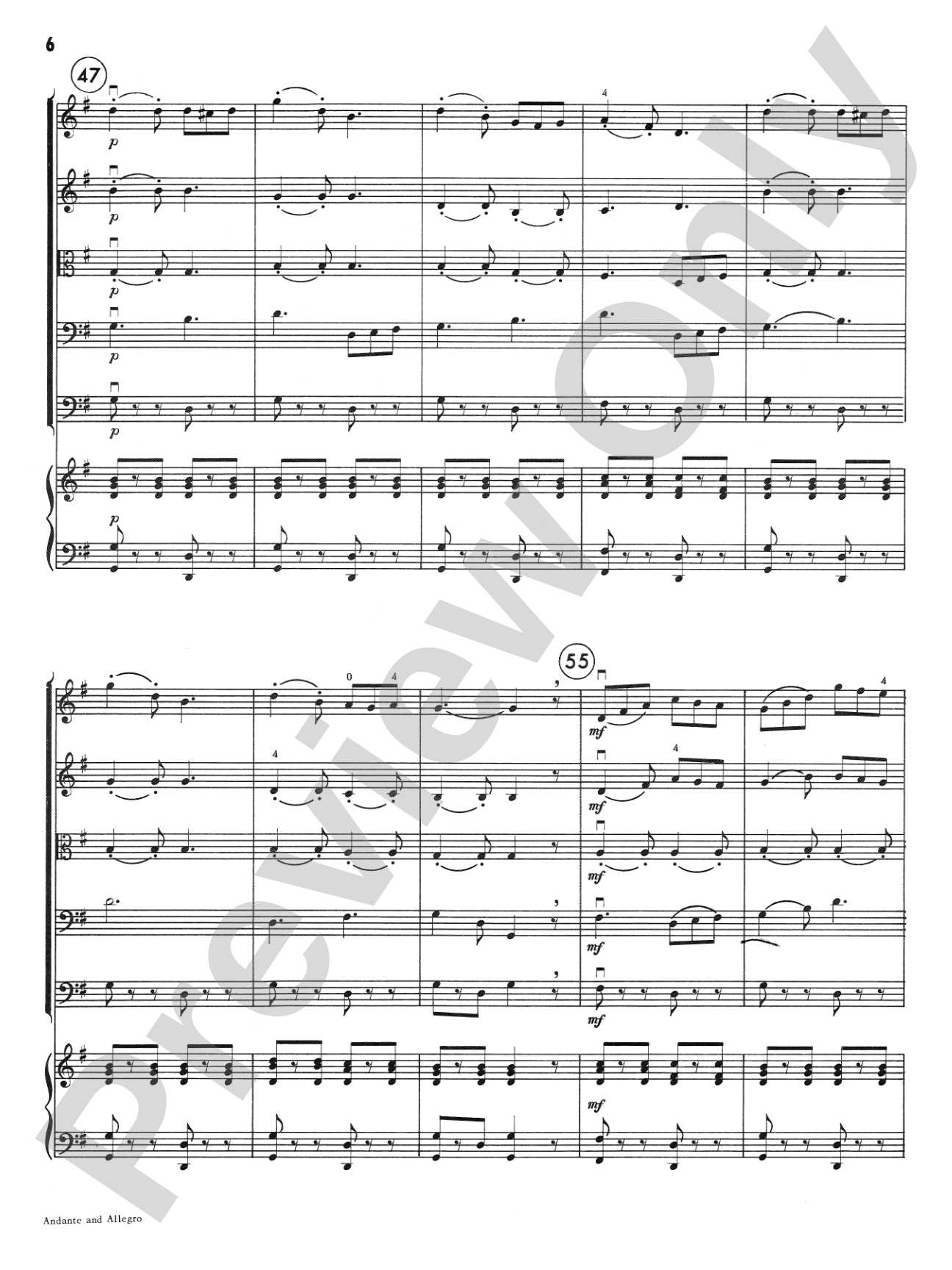
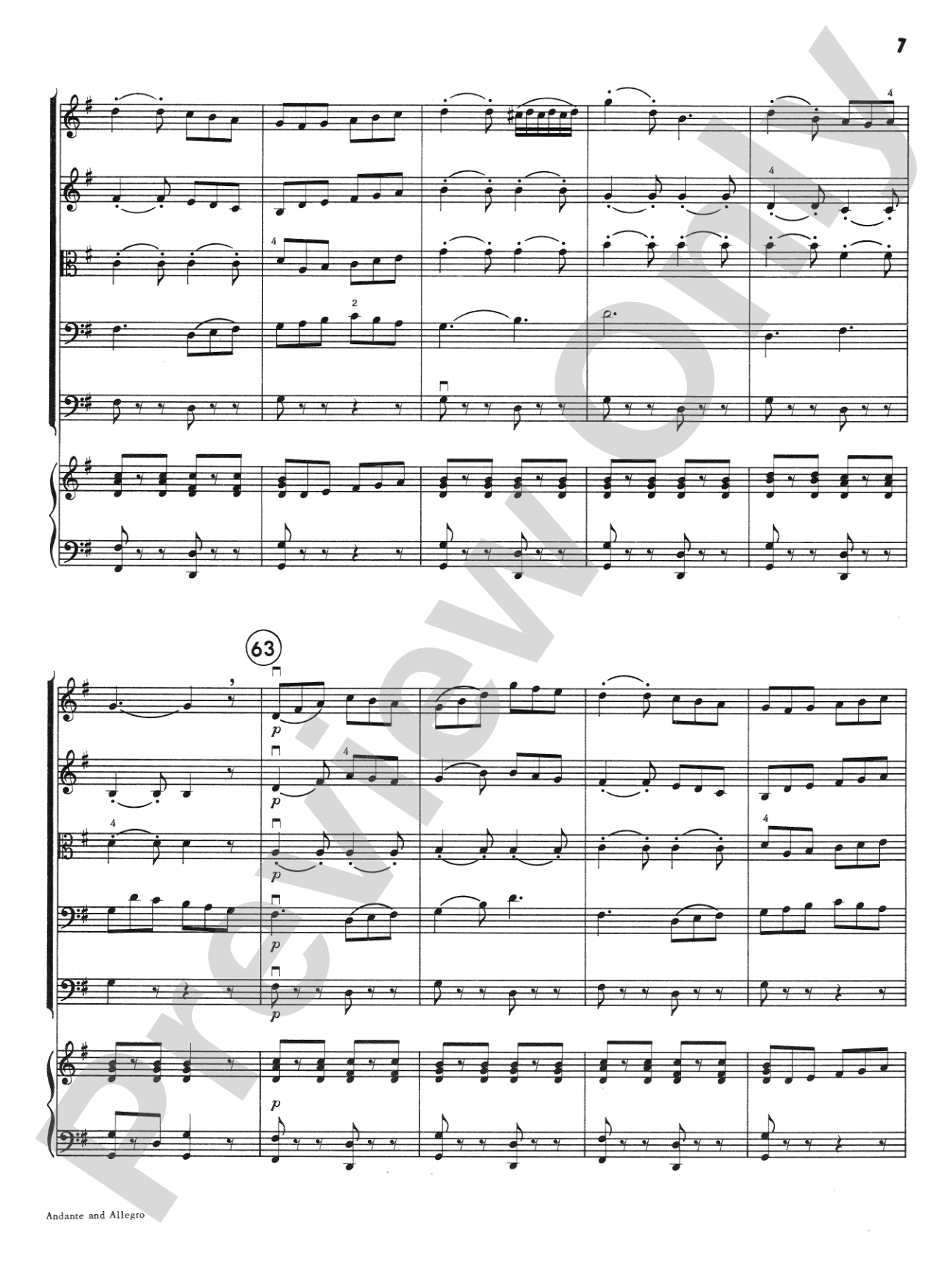
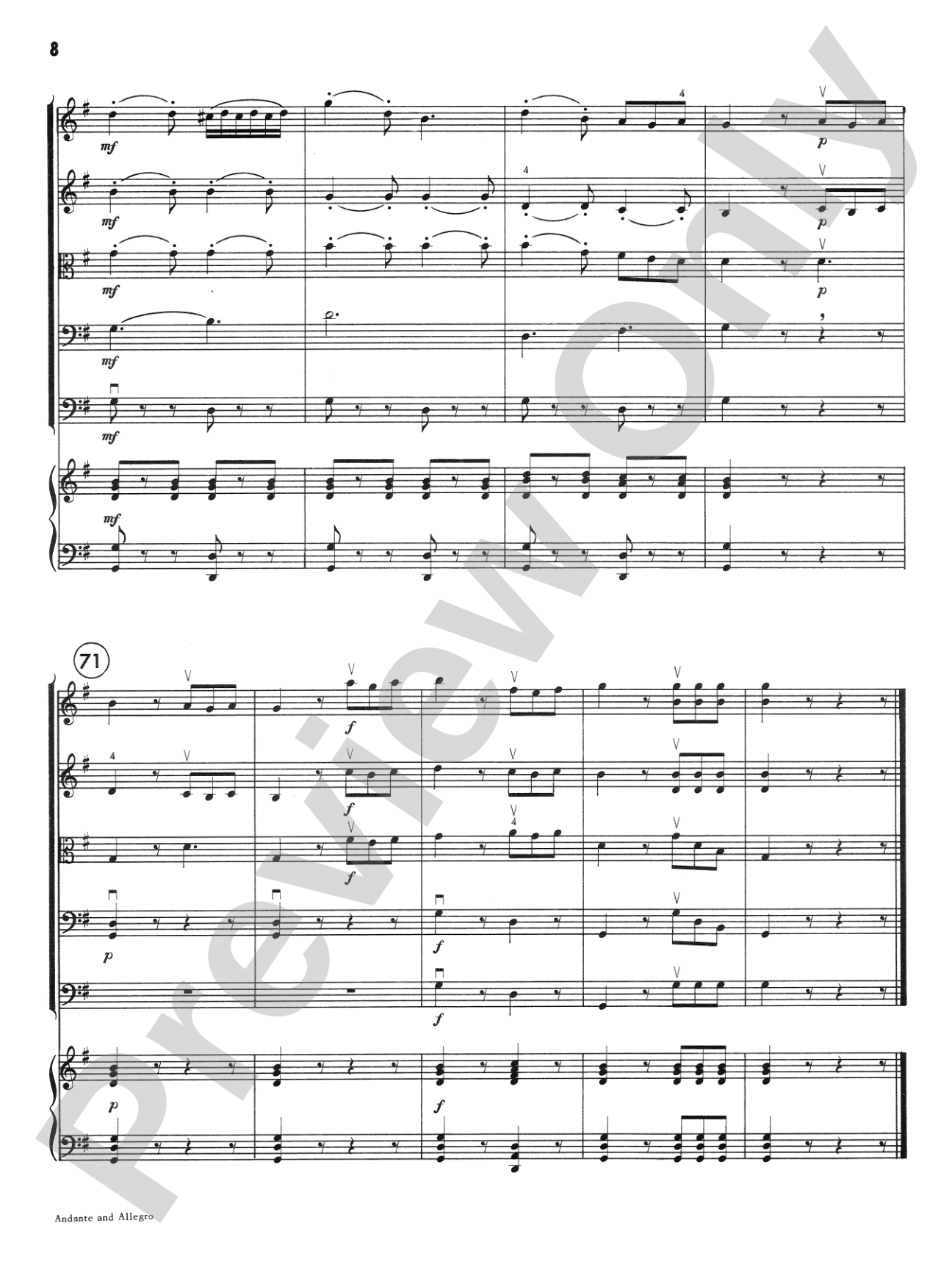



Andante and Allegro: String Orchestra Conductor Score & Parts
By Wolfgang Amadeus Mozart / arr. Merle J. Isaac
Grade: 2
Item: 00-PK-0000087

$62.00
Pickup currently not available
Buy Extra Parts (Digital PDF Download)
| Product | Price | Quantity |
|---|---|---|
| Andante and Allegro: Score | $9.00 | |
| Andante and Allegro: 1st Violin | $5.99 | |
| Andante and Allegro: 2nd Violin | $5.99 | |
| Andante and Allegro: 3rd Violin (Viola [TC]) | $5.99 | |
| Andante and Allegro: Viola | $5.99 | |
| Andante and Allegro: Cello | $5.99 | |
| Andante and Allegro: String Bass | $5.99 | |
| Andante and Allegro: Piano Accompaniment | $5.99 |
Parts Added to Cart!
Description


Don't just read it, hear it, play along with it, and watch your students grow with it. In MakeMusic Cloud, Andante and Allegro: String Orchestra Conductor Score & Parts comes alive with professional accompaniment, adjustable tempo, and built-in practice tools that turn solo practice into real progress.
Open in the Player
Jump straight in and assign it today.
Start Your Free Trial
Open this title and explore the full library in minutes.
Sample Audio
No sample audio found.
Sample Video
No sample videos found.
Additional Details
Series:
Highland/Etling String Orchestra
Publisher:
Alfred Music
Page Count:
144
SKU:
00-PK-0000087
More about this title
About the Composer: Wolfgang Amadeus Mozart
Wolfgang Amadeus Mozart (1756-1791) composed across every major genre of his time, writing over 600 works before his death at thirty-five. His string writing set the standard for clarity, elegance, and technical brilliance that defined Classical music. For string orchestra programs, Mozart's output offers an essential foundation in how to balance individual voices, shape phrases through texture, and achieve professional sound with modest forces.
Why we love this
Merle Isaac's Grade 2 arrangement makes Mozart's refined voice-leading and melodic gift accessible to developing orchestras without sacrificing the architecture of the original. This is repertoire that rewards attention to detail, where young musicians hear immediately how careful listening and rhythmic precision create elegance rather than complexity.
What to expect
The Andante moves with unhurried grace, inviting the ensemble to experience how restraint and simplicity create depth. The Allegro follows with rhythmic clarity and forward motion, maintaining the elegance of the slower section while offering a lighter character.
Who it's for
String orchestras in their second or third year of study benefit most from this arrangement. It suits festivals and competitions where Grade 2 repertoire is required, and it works equally well for concert performance.
How to get the most out of it
- Shape the Andante's opening melody with a natural rise and fall; resist the urge to play it straight. Young players often flatten beautiful lines, so model the arch in rehearsal.
- Balance the transition into Allegro carefully. The tempo shift happens quickly, and intonation can suffer if the ensemble rushes the modulation.
- Let the second violins and violas shine in their supporting passages. They carry harmonic warmth that defines Mozart's sound; underscore their importance in sectionals.
How to use it
This works beautifully as an opening work for a concert featuring other Classical repertoire, or as a refreshing contrast in a program mixing eras. Its modest demands on rehearsal time make it practical for festivals; its musical substance ensures it sits comfortably alongside more ambitious fare.
Skills your students will build
- Shaping phrases through dynamic restraint rather than volume
- Balancing multiple independent melodic lines
- Coordinating tempo changes between distinct sections
- Intonation in harmonic progressions typical of Classical voice-leading
- Precision in rhythmic ensemble entrances