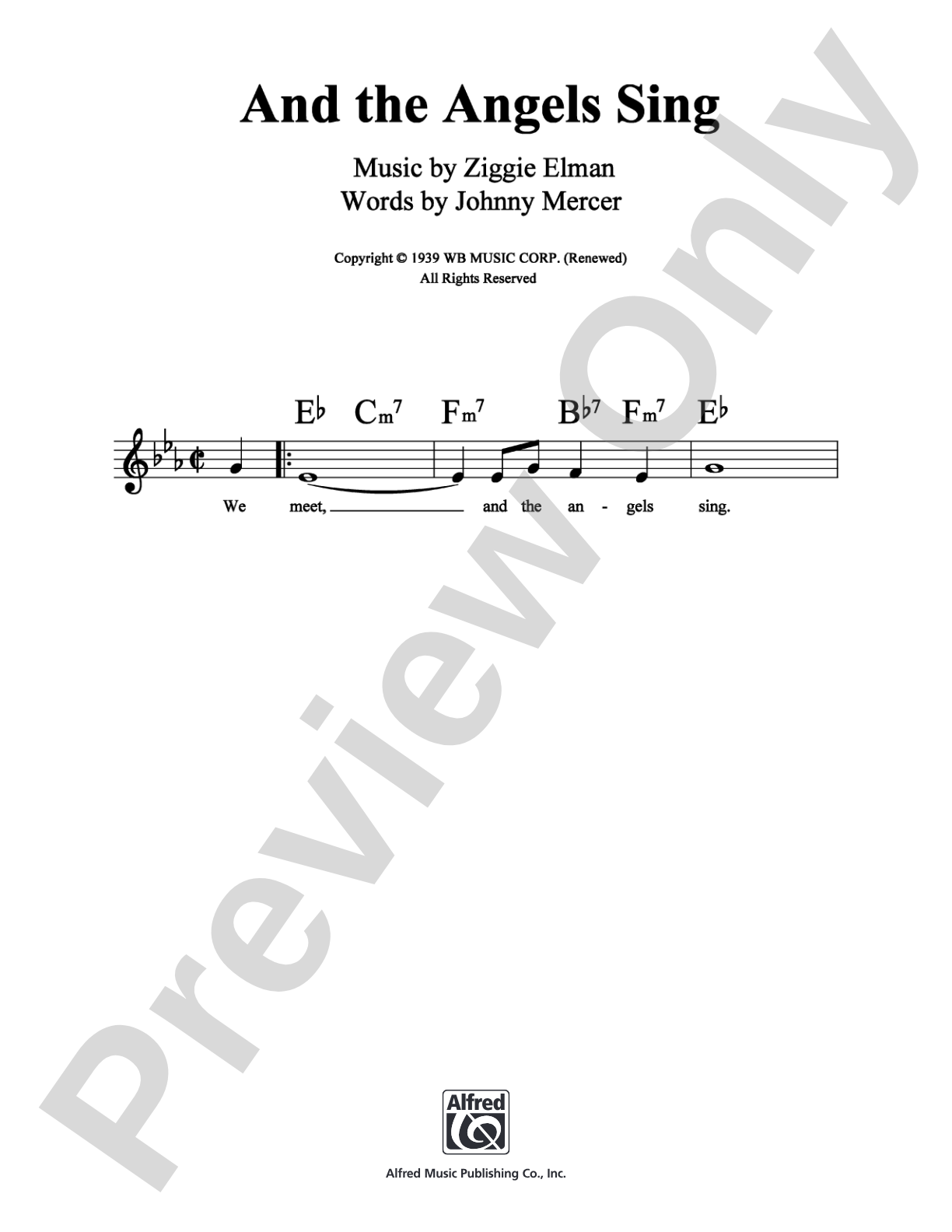
And the Angels Sing: Lead Sheet Digital Sheet Music

And the Angels Sing: Lead Sheet Digital Sheet Music

Bing Crosby, Benny Goodman, Ziggie Elman

Item: 00-PS-0006909

Digital Download
$1.99
Description

And the Angels Sing: Lead Sheet Digital Sheet Music isn't in MakeMusic Cloud just yet...but it could be. Let us know you'd like to see it, and you'll help shape what comes next. In the meantime, start a free trial and dive into thousands of interactive titles your students can play along with today.

Sample Audio
No sample audio found.
Sample Video
Additional Details
SKU: 00-PS-0006909

More about this title

About the Artist: Bing Crosby

Bing Crosby (1903-1977) shaped American popular music across radio, film, and recording. His smooth baritone and innovative phrasing influenced generations of singers and instrumentalists alike, making him essential listening for anyone studying jazz-inflected vocal style and the Great American Songbook.

Why we love this

This standard swings with genuine elegance and offers musicians a chance to work with the harmonic language that defined the swing era. The melody sits naturally for singers while remaining accessible to instrumentalists, and the chord changes reward both straightforward accompaniment and more adventurous harmonic reharmonization.

What to expect

Elegant and unhurried, with an optimistic brightness that swings naturally rather than forcing the rhythm. The melody floats gracefully over walking changes, inviting both intimate vocal delivery and ensemble interpretation.

Who it's for

Jazz musicians working on swing-era standards, vocalists building their Great American Songbook repertoire, and small jazz ensembles looking for accessible yet musically substantial material. Lead sheet users at any level will find room to grow here.

How to get the most out of it

  • Listen closely to how Crosby phrases across the bar line; his rhythmic flexibility teaches you where to breathe and when to push the tempo forward.
  • Explore the chord progression as a foundation for improvisation rather than a rigid harmonic roadmap, especially if you're comping or soloing.
  • Balance the lyrical quality of the melody with the underlying swing feel; neither should dominate.

How to use it

Pair this with other early swing standards in a jazz history concert or a standards-focused recital. It works equally well as a feature for a vocalist or as a vehicle for small group improvisation in a jazz ensemble setting.

Skills your students will build

  • Reading and interpreting chord symbols in a swing idiom
  • Phrasing jazz melody with attention to pick-up notes and lyrical shape
  • Understanding harmonic movement within a 32-bar song form
  • Building confidence with the vocabulary of 1930s-1940s jazz arranging

You May Also Like