
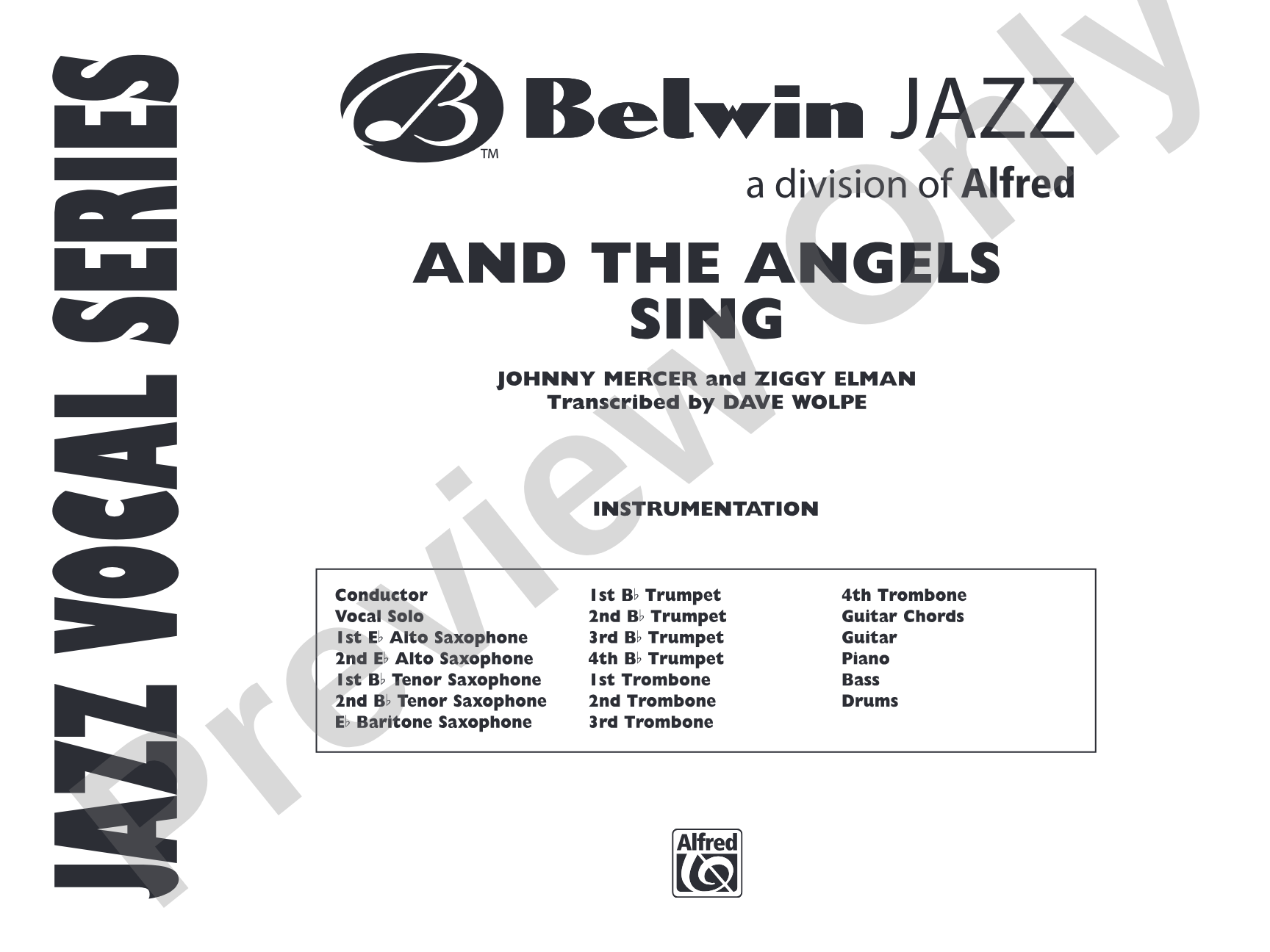

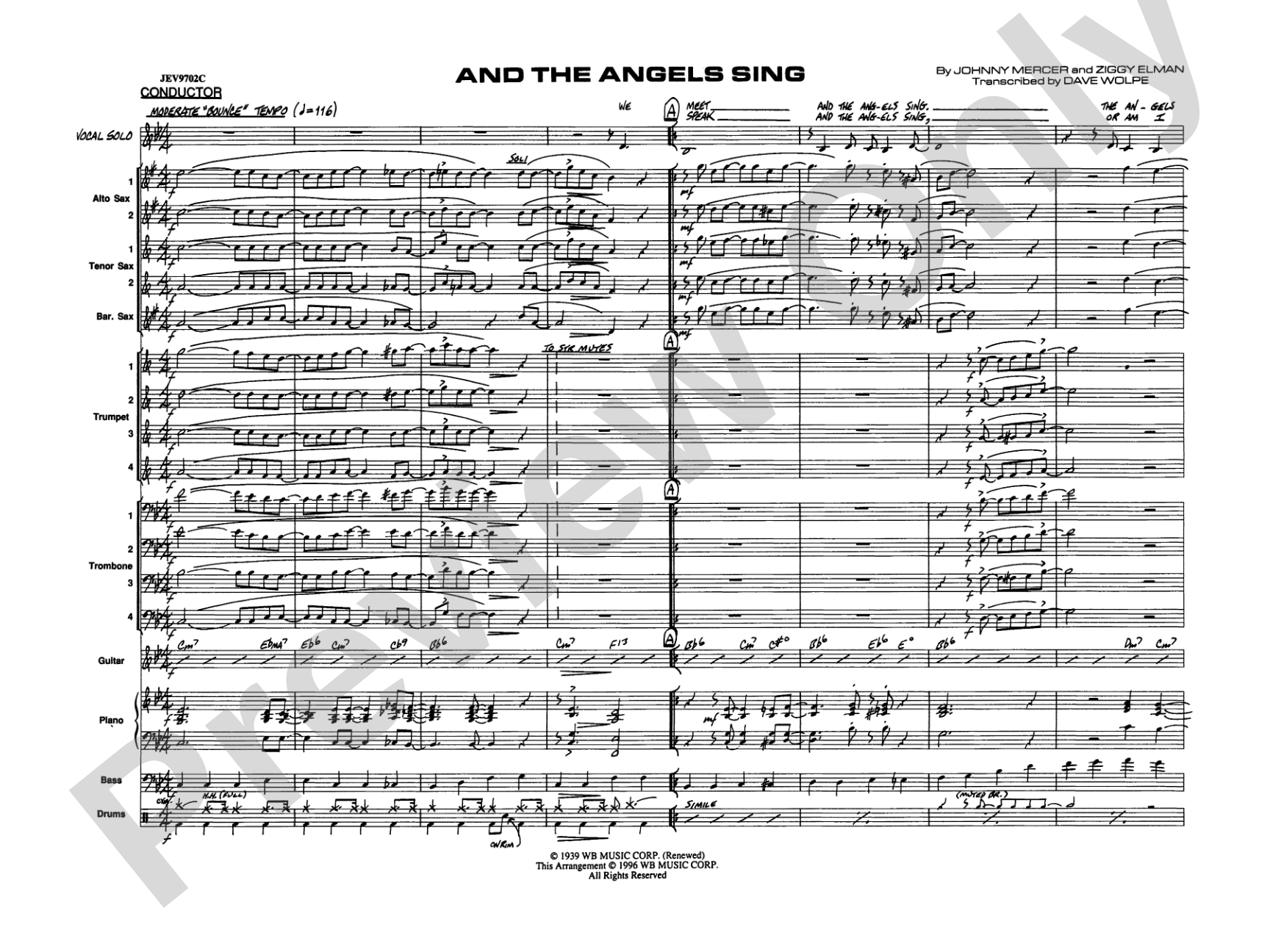
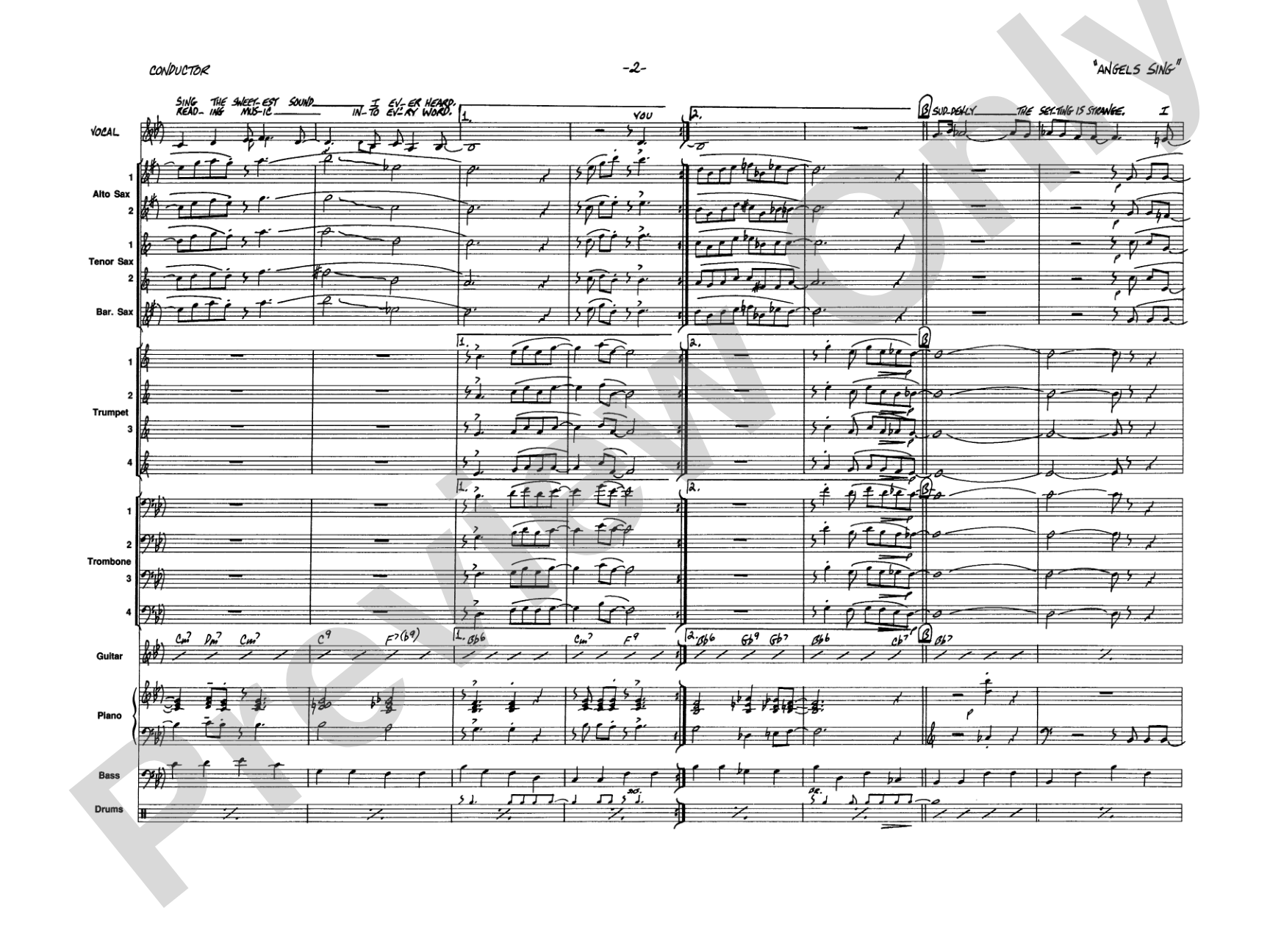
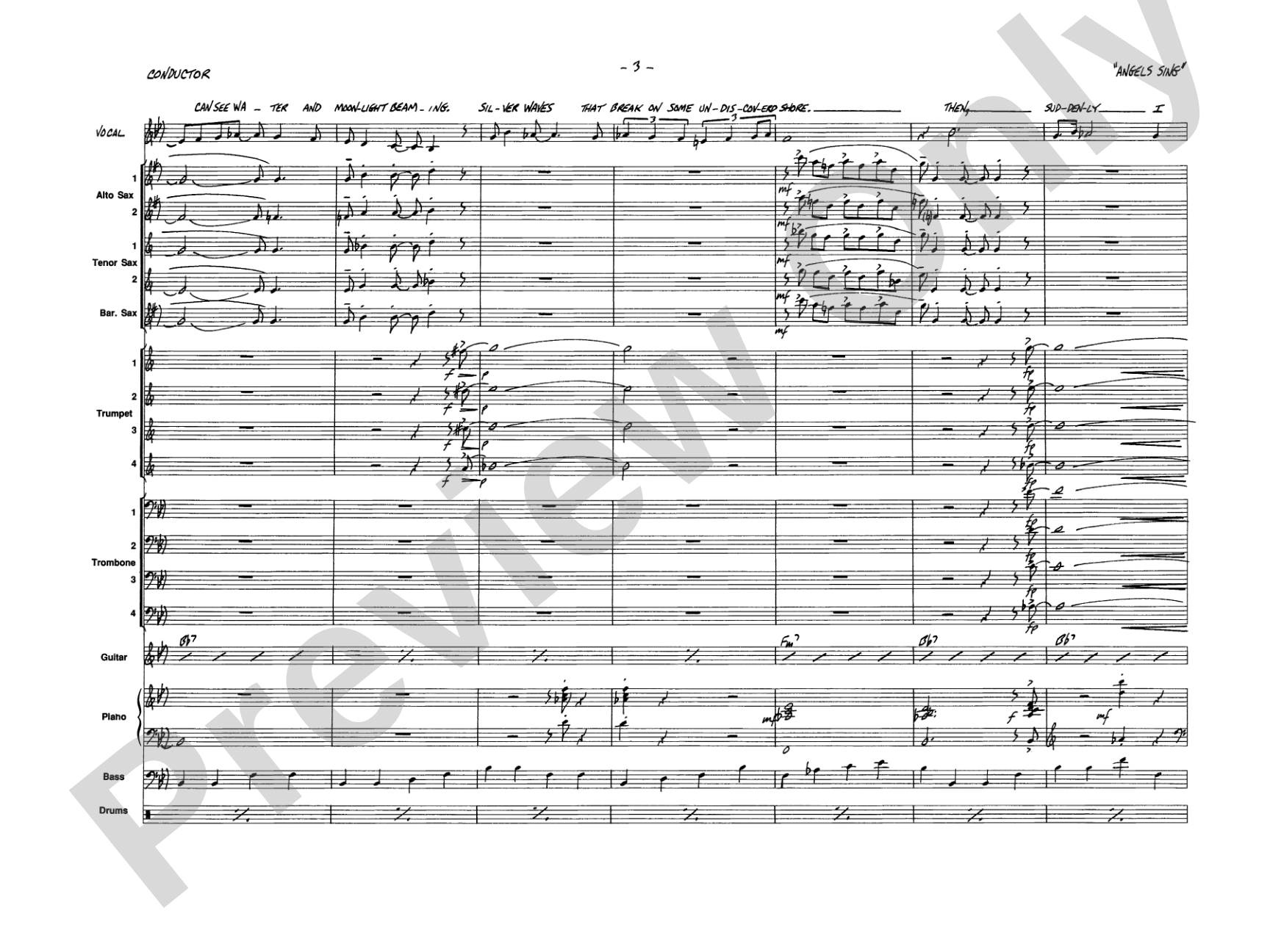
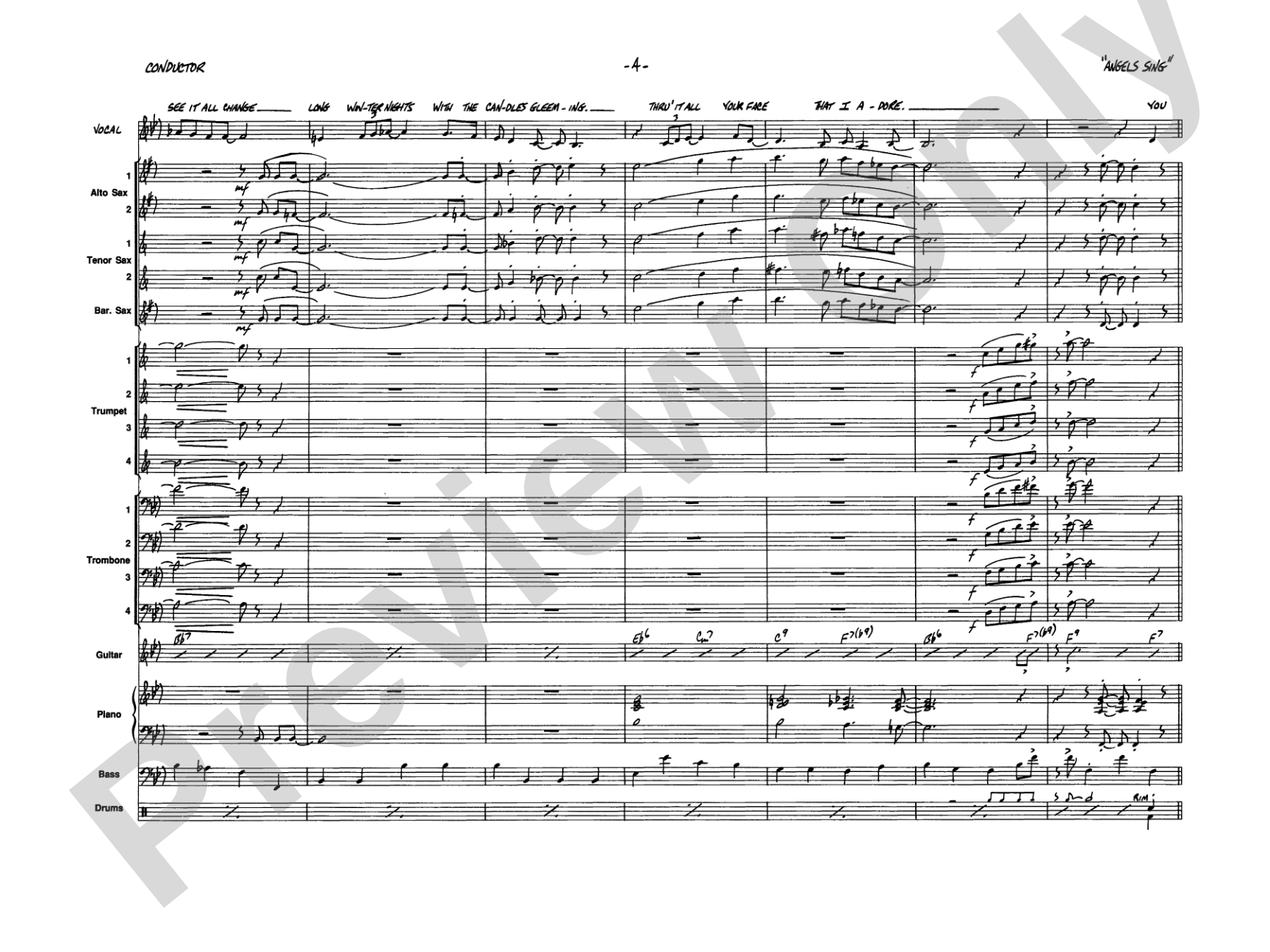
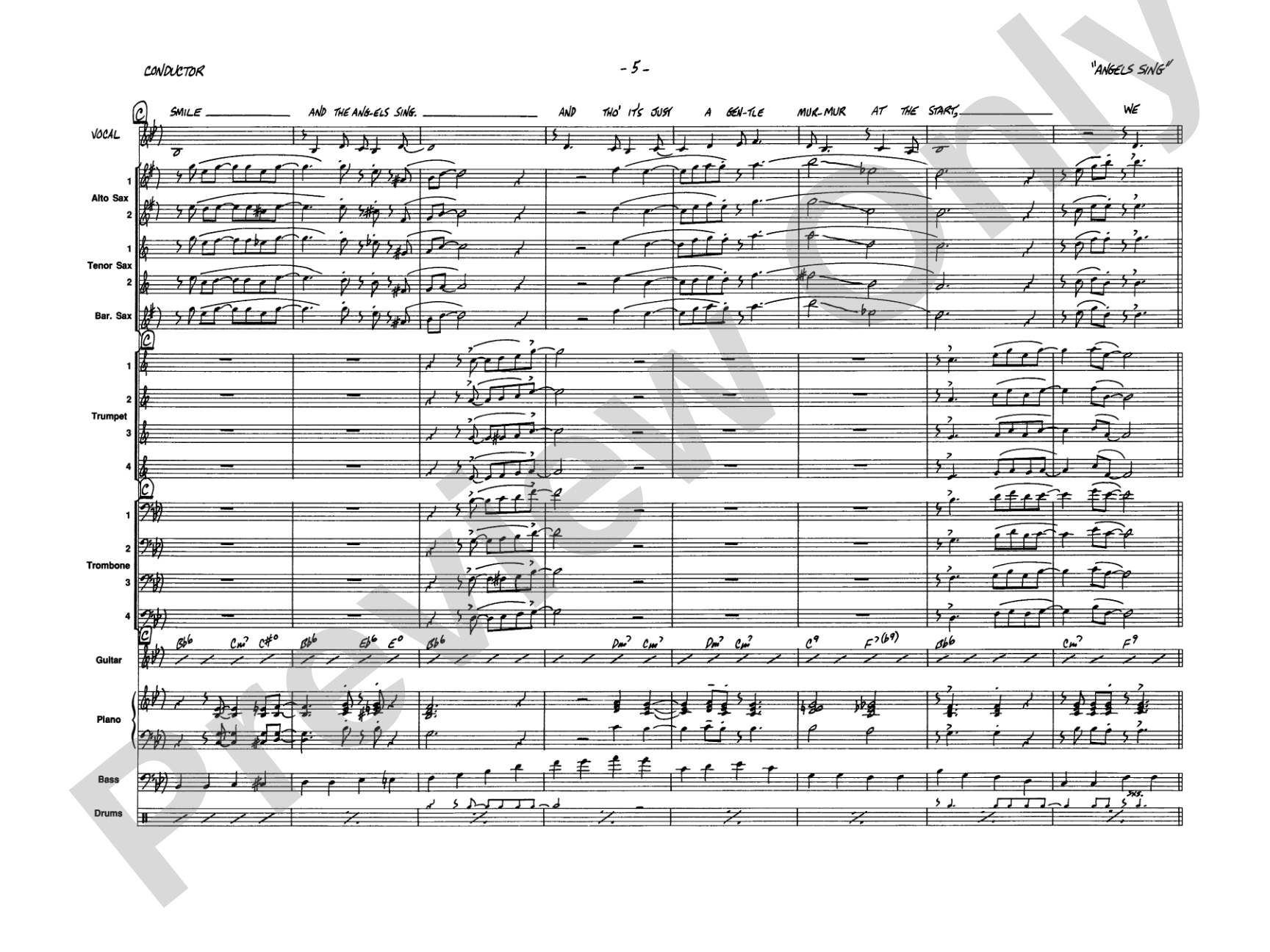
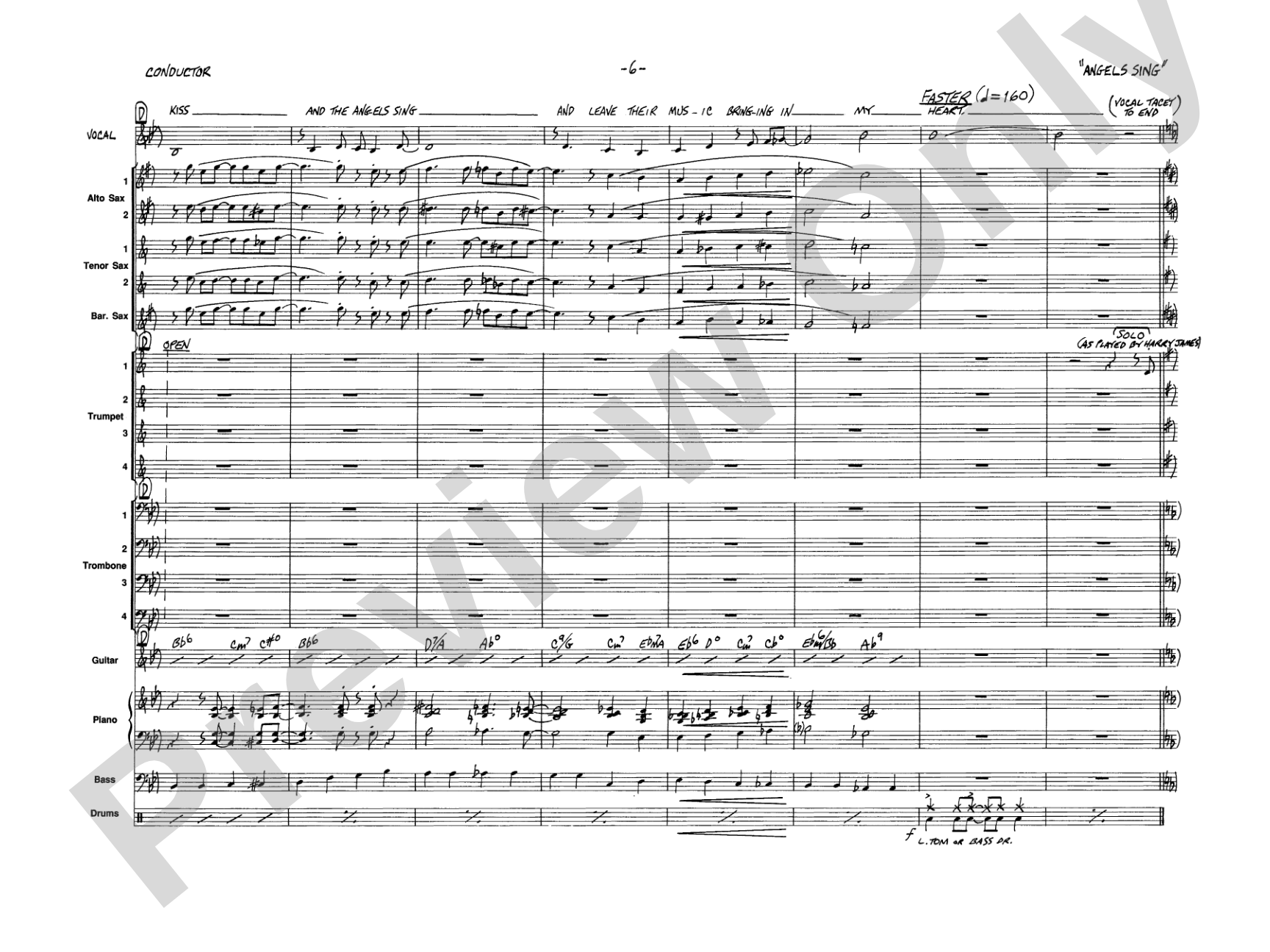
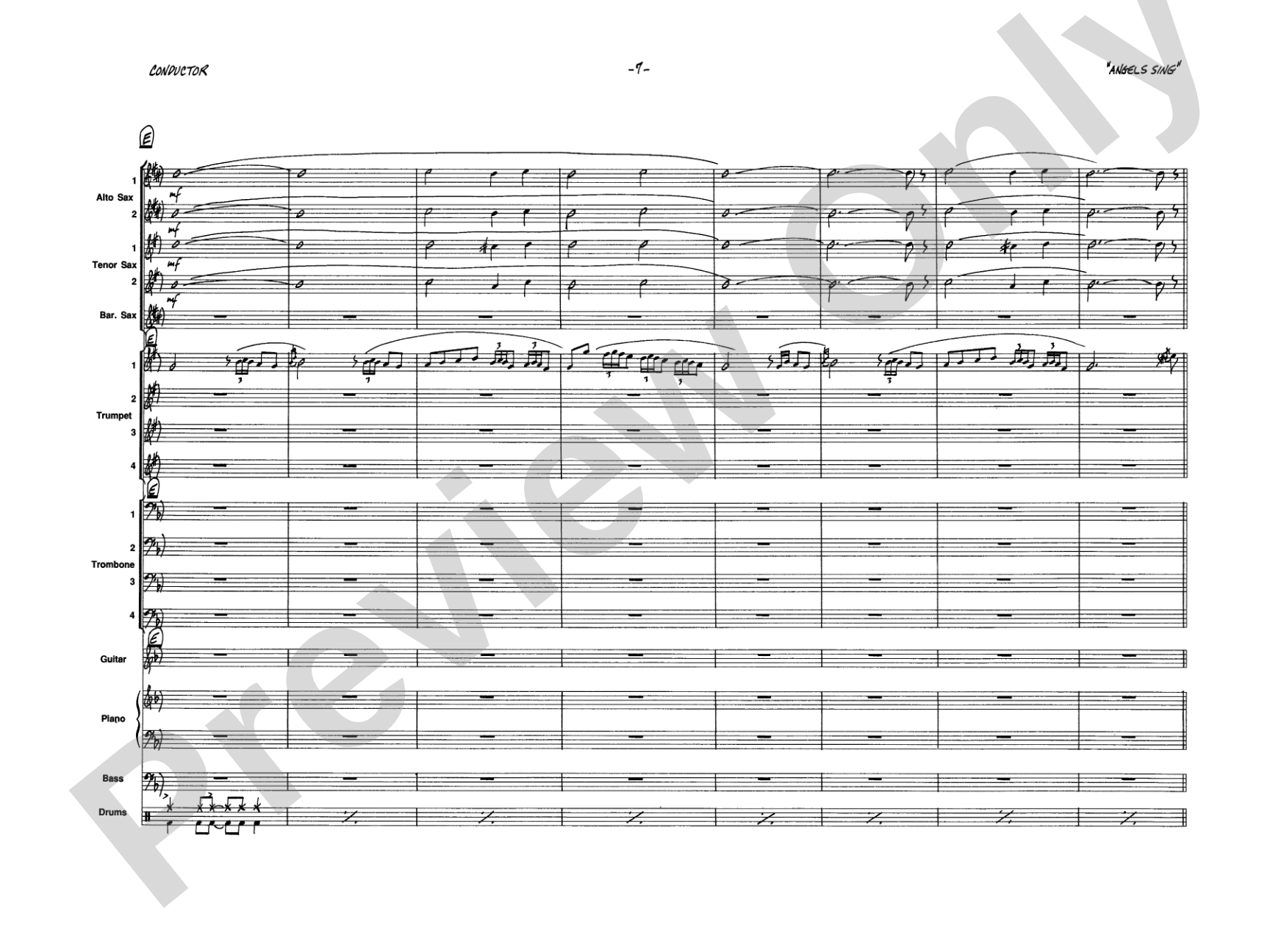
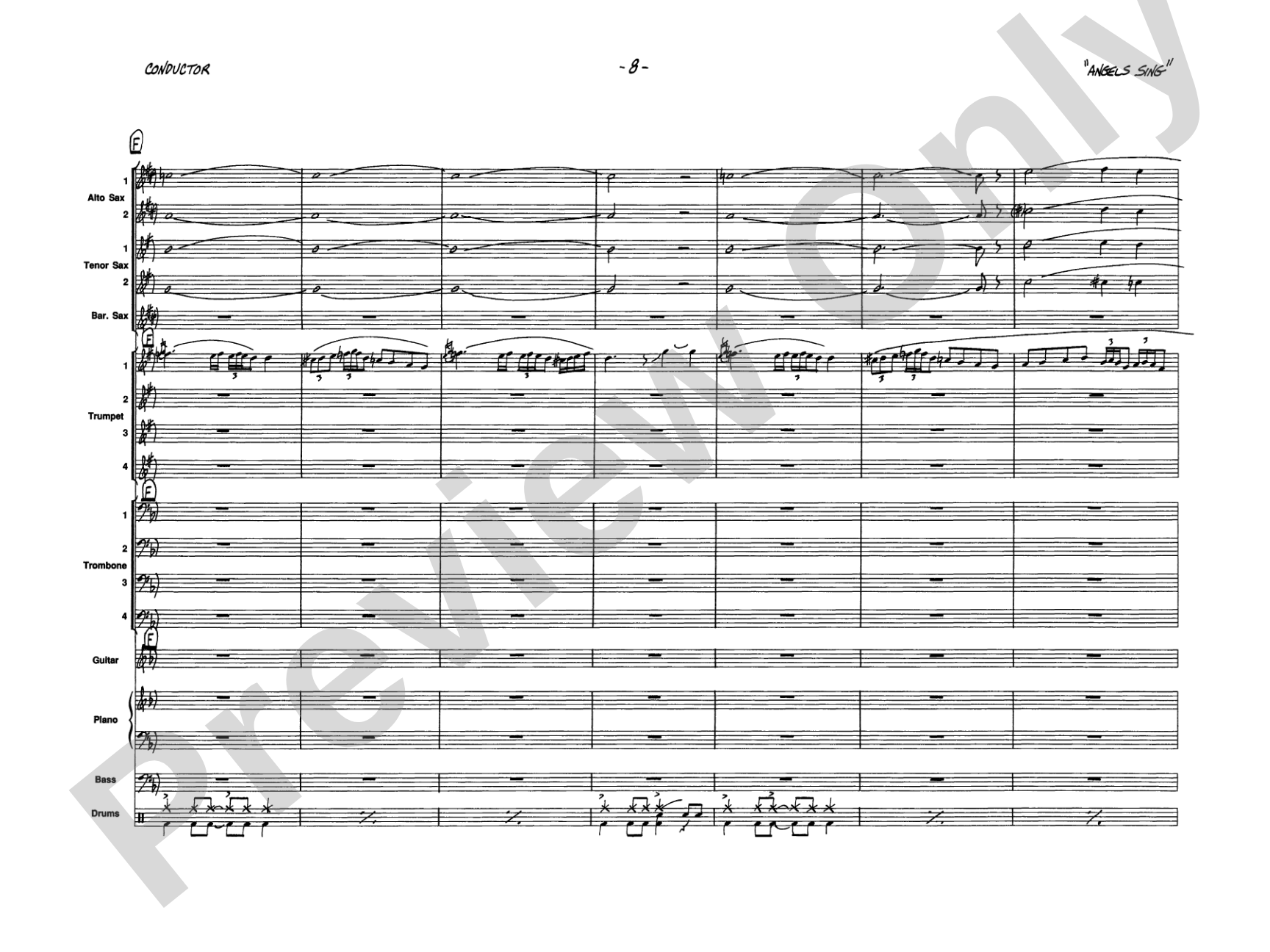
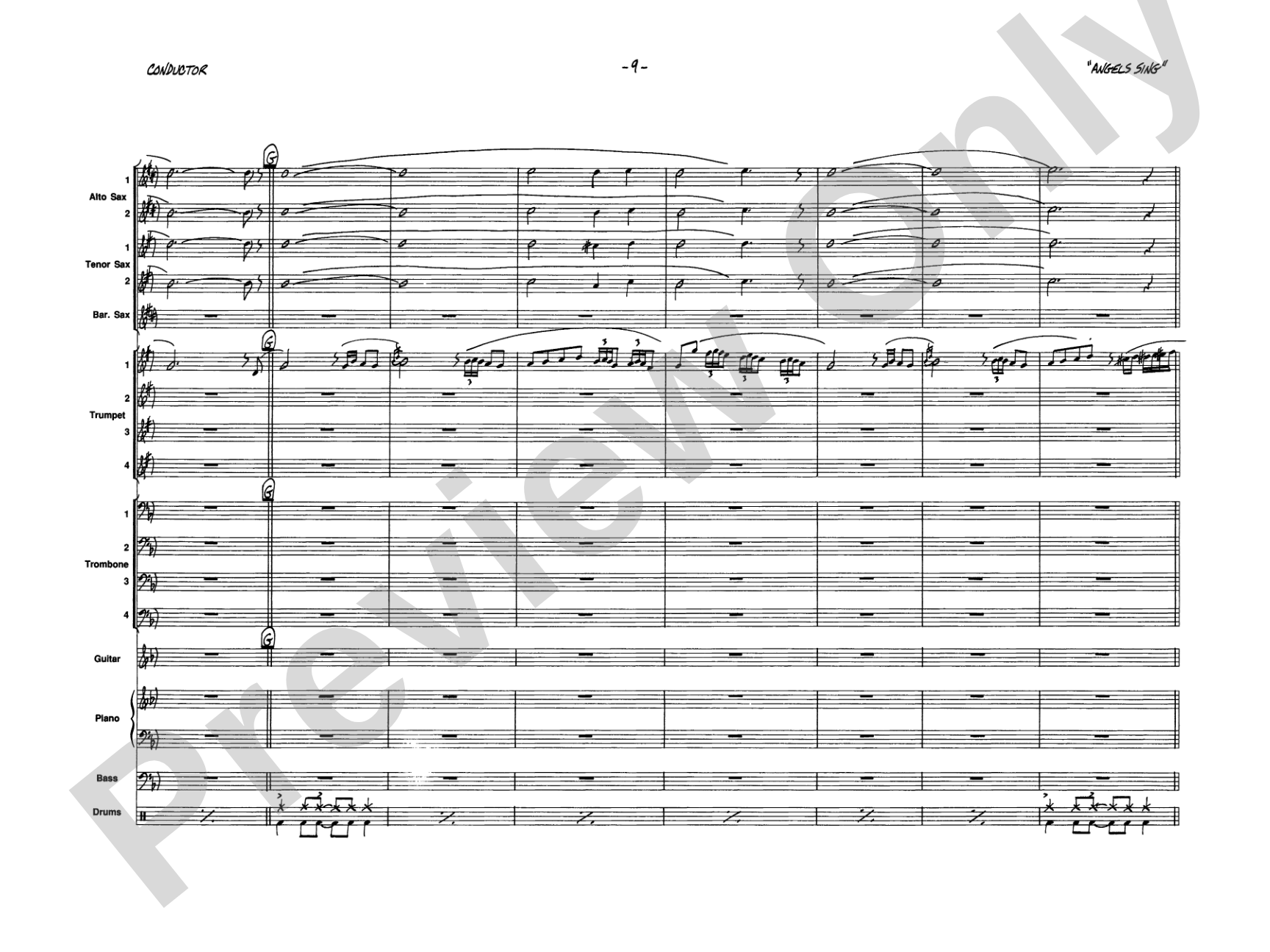
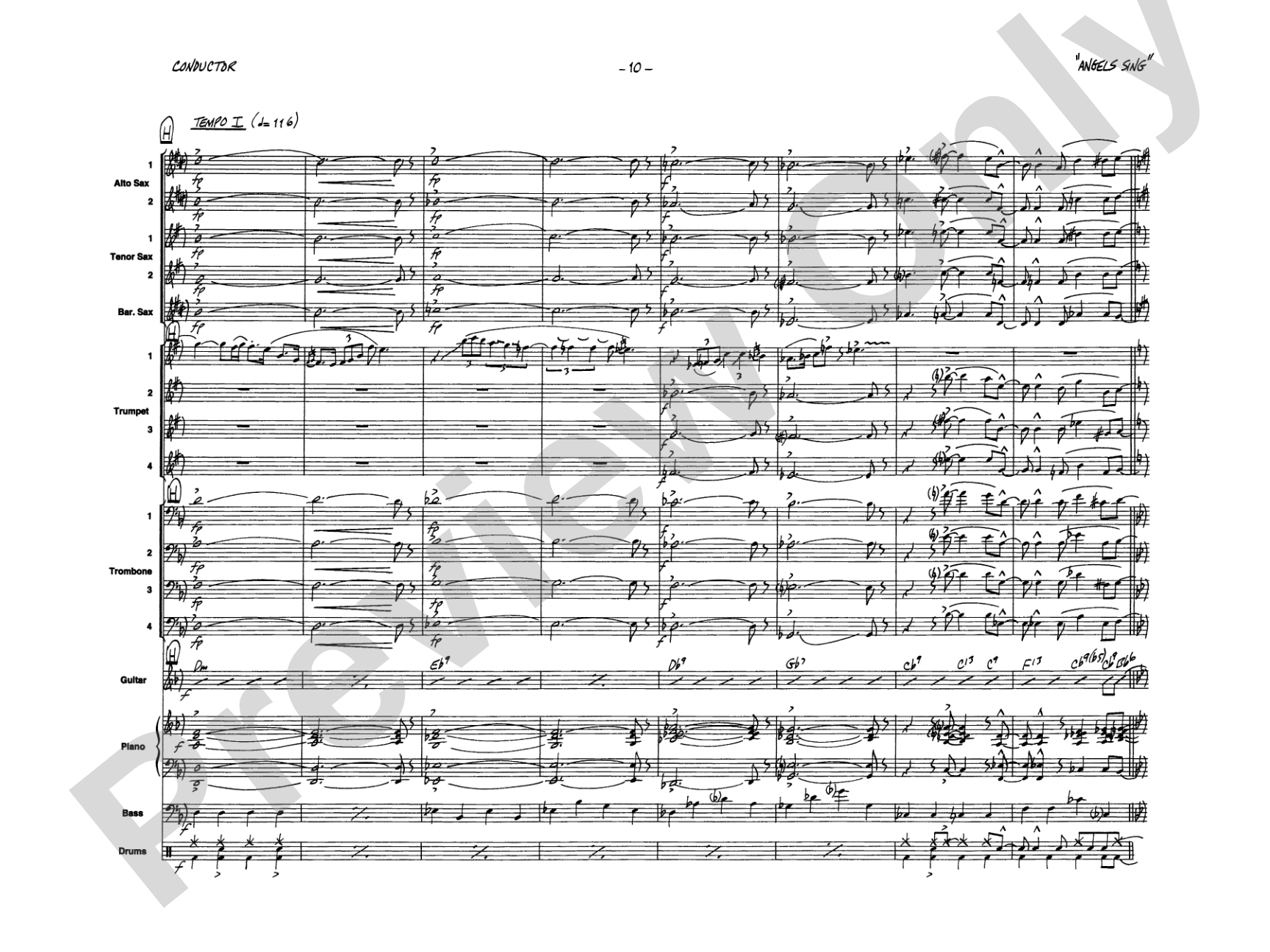
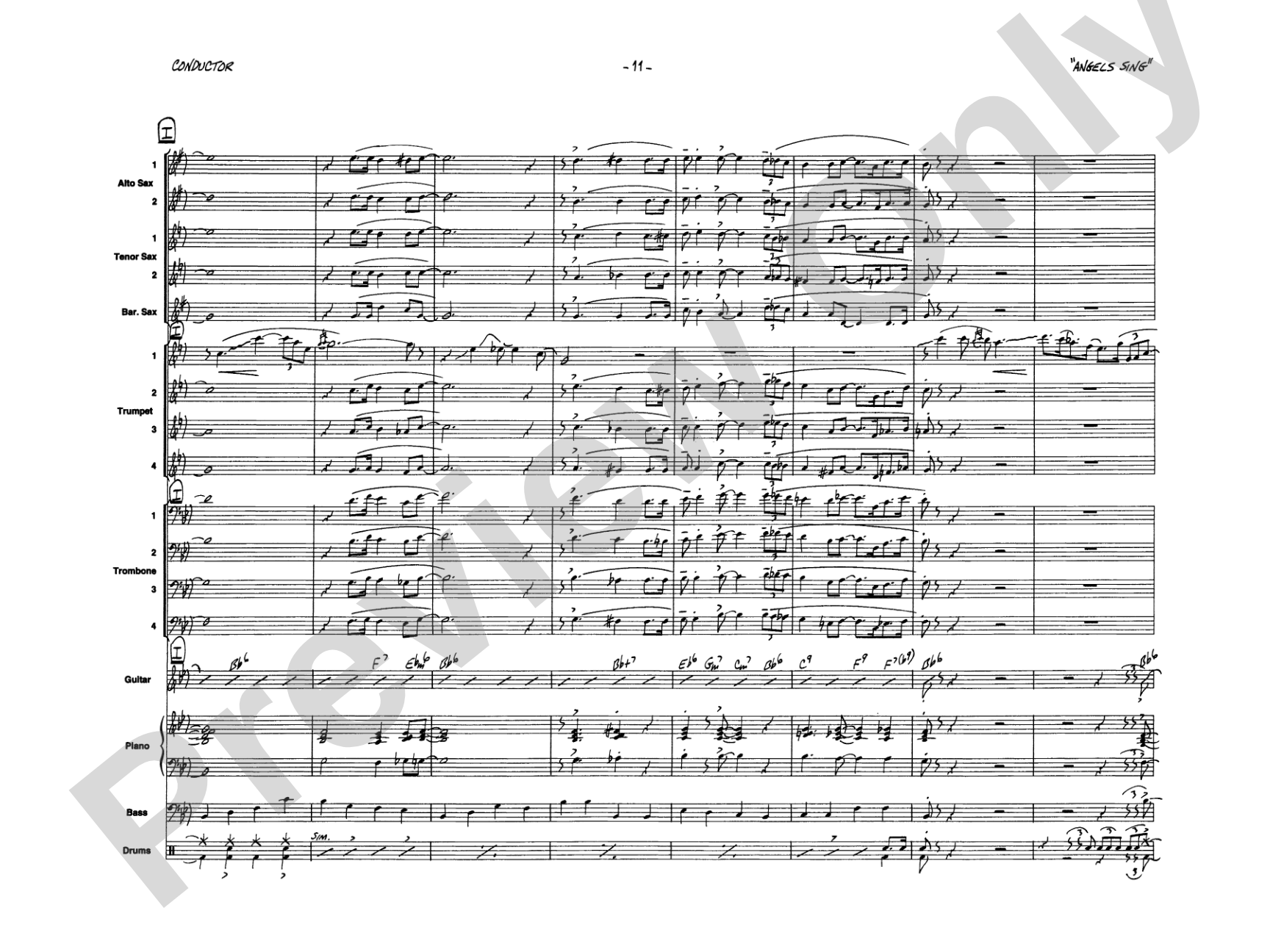
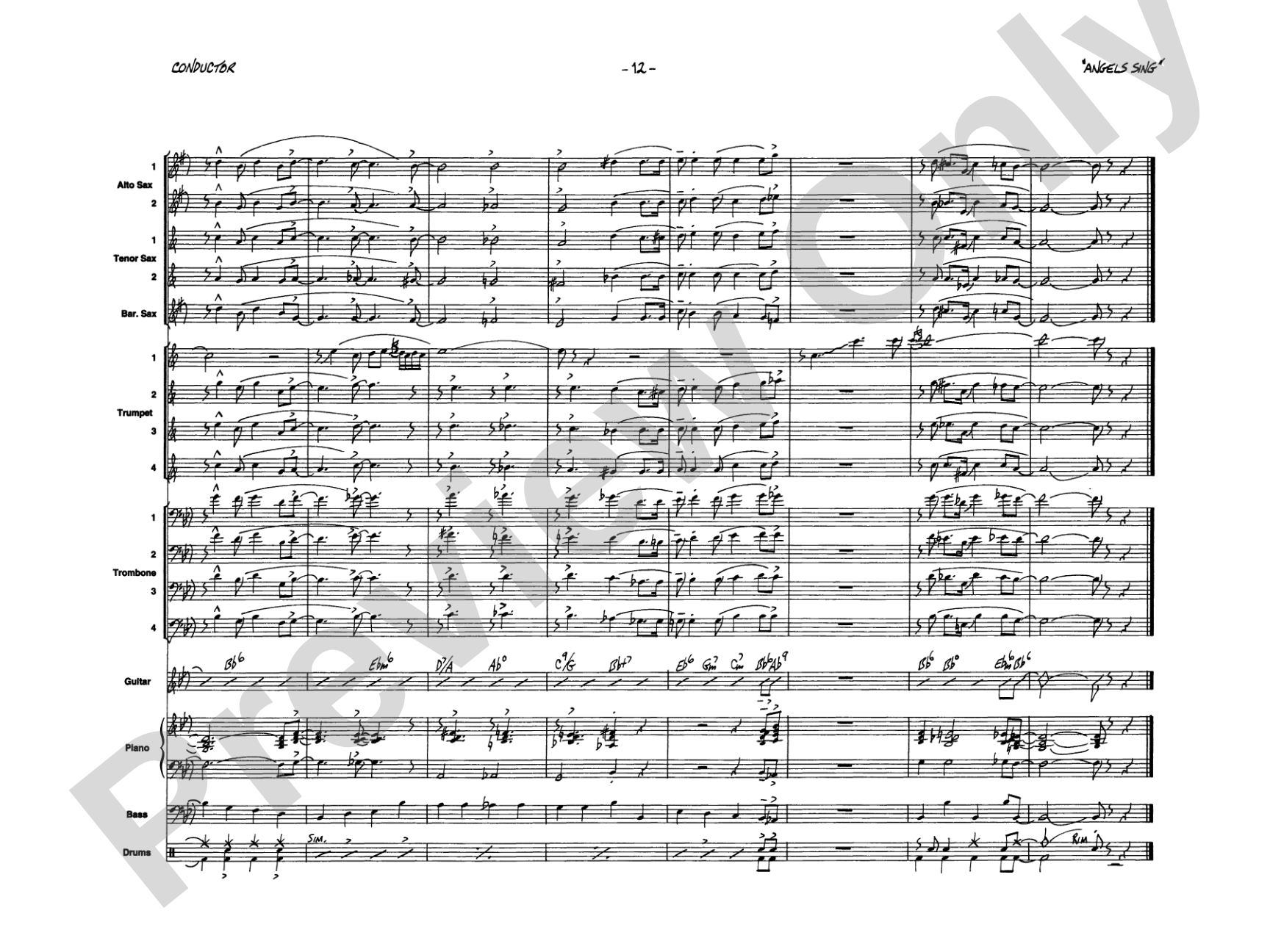



And the Angels Sing: Vocal Solo with Jazz Ensemble Conductor Score & Parts
Vocal Feature
By Johnny Mercer / arr. Dave Wolpe
Grade: 4 (Medium Advanced / Difficult)
Item: 00-PK-0002545

$54.00
One moment…
Description
The famous version by the Benny Goodman orchestra is faithfully transcribed from the original by Dave Wolpe. It includes the lush vocals of Martha Tilton as well as the improvised solo of famous trumpeter Harry James. A great standard that can teach your students a lot about the style of this famous band and its artists. (Vocal Solo range: A below staff to 3rd line B-flat) (3:14)


Don't just read it, hear it, play along with it, and watch your students grow with it. In MakeMusic Cloud, And the Angels Sing: Vocal Solo with Jazz Ensemble Conductor Score & Parts comes alive with professional accompaniment, adjustable tempo, and built-in practice tools that turn solo practice into real progress.
Open in the Player
Jump straight in and assign it today.
Start Your Free Trial
Open this title and explore the full library in minutes.
Sample Audio
No sample audio found.
Sample Video
No sample videos found.
Additional Details
Series:
Jazz Vocal Series
Publisher:
Alfred Music
Page Count:
39
SKU:
00-PK-0002545
More about this title
About the Composer: Johnny Mercer
Johnny Mercer (1909-1976) was one of America's greatest lyricists, crafting words for some of the most enduring standards in the American songbook. His ability to marry sophisticated, clever lyrics with memorable melodies made him a sought-after collaborator for composers across jazz, popular song, and film. Mercer's work with orchestras like Benny Goodman's brought jazz vocabulary into the mainstream while maintaining the elegance and wit that defined his best writing.
Beyond songwriting, Mercer was a performer and bandleader in his own right, recording extensively as a vocalist. His understanding of how words sit in the jazz idiom informed every lyric he wrote, making his standards deeply singable while remaining clever and precise. For music students, Mercer's catalog offers masterclasses in how language and melody interlock to create timeless songs.
Why we love this
This transcription captures the authentic sound of the Benny Goodman orchestra at its height, complete with Martha Tilton's gorgeous vocal performance and the brilliance of Harry James's trumpet solo. Dave Wolpe's arrangement preserves every nuance of the original recording, giving your students direct access to how jazz vocalists navigate ensemble texture and how soloists trade lines with the band. It's both a stylistic education and a genuinely beautiful piece to perform.
What to expect
Sophisticated and swinging, with the warmth of a 1940s ballroom orchestra behind the voice. The melody unfolds with classic elegance while the ensemble colors shift between lush chords and snappy rhythmic support, creating space for intimate phrasing alongside moments of full ensemble swell.
Who it's for
Jazz vocalists with solid ensemble experience and the vocal range to handle the A below staff to third line B-flat part comfortably. This also works well for advanced jazz ensembles seeking genuine big band repertoire that showcases both the vocalist and individual soloists in a historically grounded context.
How to get the most out of it
- Study the original Benny Goodman recording before rehearsal. Hearing how Martha Tilton shapes the melody and where she sits rhythmically in the ensemble will guide your vocalist's interpretation far better than notation alone.
- Balance the vocalist against the ensemble so the vocal line sings through without the band overwhelming it. The lush orchestration should support, not drown, the soloist.
- Work with your vocalist on rubato and phrasing in the verses. Jazz standards require flexibility with tempo and breath placement that differs from classical vocal technique.
- Give your trumpet soloist space to interpret Harry James's solo. The transcription provides the structure, but jazz tradition allows room for personal expression within that framework.
How to use it
Pair this with other Mercer compositions or other Benny Goodman era standards to create a concert segment that explores the intersection of vocal jazz and big band swing. It also works beautifully as a centerpiece in a program about American standards, particularly if you want to highlight how jazz traditions shaped American songwriting.
Skills your students will build
- Singing jazz phrasing and flexibility with rhythmic placement
- Balancing a solo voice against a full ensemble texture
- Understanding how improvised solos function within composed arrangements
- Reading and performing in swing style with authentic articulation and dynamics