
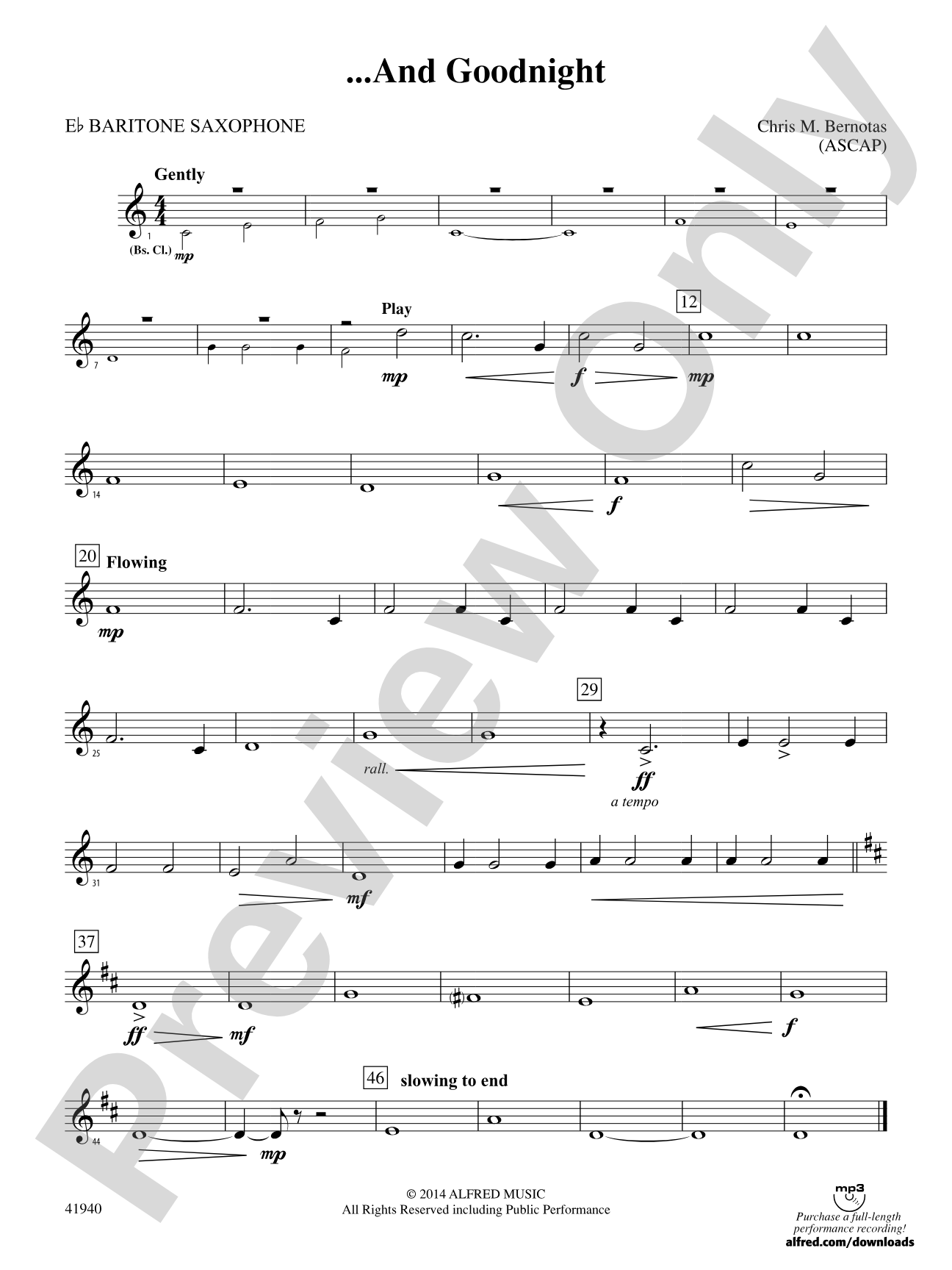

... And Goodnight: E-flat Baritone Saxophone
By Chris M. Bernotas
Grade: 2 (Medium Easy)
Item: 00-PC-0016422_BTX
$3.00
Pickup currently not available
Description
. . . And Goodnight is a grade 2 lyrical piece that would be a beautiful addition to any school music library. It was inspired by a Brahms lullaby; hints of it are heard throughout the piece and within the original melody. Ranges and rhythmic difficulties are modest which will allow for ample time in teaching the valuable musical concepts of phrasing, tuning, balance, dynamics, and most of all, expression. (2:30) This title is available in MakeMusic Cloud.


Don't just read it, hear it, play along with it, and watch your students grow with it. In MakeMusic Cloud, ... And Goodnight: E-flat Baritone Saxophone comes alive with professional accompaniment, adjustable tempo, and built-in practice tools that turn solo practice into real progress.
Open in the Player
Jump straight in and assign it today.
Start Your Free Trial
Open this title and explore the full library in minutes.
Sample Audio
1
Audio File
--:--
0:00
0:00
Sample Video
No sample videos found.
Additional Details
Series:
Young Symphonic
Publisher:
Alfred Music
Page Count:
128
SKU:
00-PC-0016422_BTX
More about this title
About the Composer: Chris M. Bernotas

Chris M. Bernotas brings over 25 years of music education experience to his work as a composer and conductor. As Director of Instrumental Publications at Alfred Music, he has shaped band and orchestra curricula used by programs worldwide, earning recognition for compositions that balance accessibility with genuine musical substance.
Bernotas draws his compositional voice from direct classroom experience. He understands the rhythmic and technical realities young musicians face, and he channels that insight into repertoire that teaches through engagement rather than artificial constraint. His guest conducting and clinician work keep him connected to the rehearsal room, where he continues to learn what directors actually need. He has co-authored foundational pedagogical texts including the Sound Innovations and Sound Artistry series, cementing his role as both creator and advocate for thoughtful music education.
Why we love this
Bernotas refuses to confuse Grade 2 with musically thin. The Brahms-inspired melodic gesture gives the piece genuine lyrical weight without requiring advanced technical facility, and the orchestration sits comfortably across all sections. Best of all, modest ranges and rhythmic demands leave your rehearsal time free for what matters most: teaching phrasing, balance, and expressive intention.
What to expect
A quiet moment of beauty. The piece unfolds with the gentle inevitability of a familiar lullaby, with just enough harmonic sophistication to reward careful listening. The Brahms DNA runs through the melodic DNA, creating something that feels both comforting and fresh.
Who it's for
Grade 2 concert bands seeking repertoire that teaches genuine musicianship without overwhelming younger or newer players. This works equally well for mixed-ability ensembles where phrasing and expression matter more than technical display.
How to get the most out of it
- Shape the melody with consistent air support through longer phrases. The lullaby character depends on smooth, singing lines rather than note-to-note articulation.
- Establish tuning priorities early in sectional rehearsals. The lyrical exposed writing amplifies intonation choices, so lock in unison passages before moving to fuller harmonies.
- Use the dynamic arc to communicate expression. Gradual crescendos and decrescendos will train ears to hear phrasing as a total musical idea, not measure-by-measure changes.
- Balance the Brahms references with your own musical voice. The hints are there for musicians who know the lullaby, but the piece stands completely on its own merits.
How to use it
Pair this with a contrasting second piece on a concert to showcase your band's range. It also works as an excellent opener for a longer program, settling the audience and establishing a tone of musical intention. Consider programming it near the end of your school year when your band has developed enough ensemble awareness to sustain lyricism.
Skills your students will build
- Sustained phrase shaping across multiple measures
- Ensemble balance and blend in four-part harmony
- Intonation adjustments in exposed harmonic contexts
- Dynamic control that serves musical intent rather than notation alone
- Listening for and responding to other parts while maintaining individual line integrity