
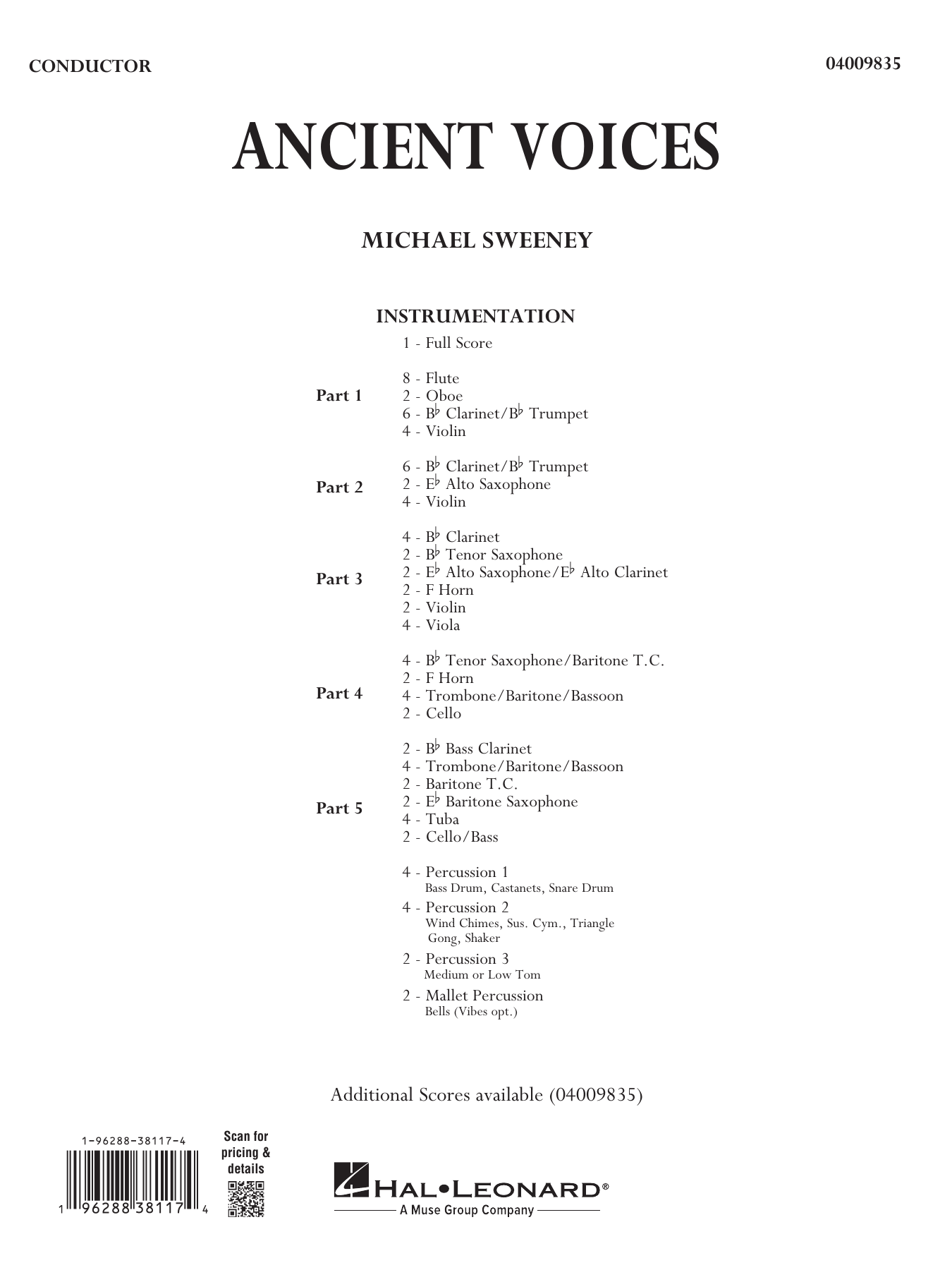

Ancient Voices: Flex Ensemble Conductor Score & Parts
By Michael Sweeney
Grade: 2
Item: 35-PK01898451
$60.00
Pickup currently not available
Buy Extra Parts (Digital PDF Download)
Parts Added to Cart!
Description
Rarely does any single publication have such an effect on band literature as this unique and striking composition from 1994. Individually, the parts are relatively simple. Yet the combined effect is sophisticated and impressive far beyond its easy level. Michael uses a wealth of contemporary devices (including tone clusters, recorders, singing, pencil tapping) to create an aura of prehistoric times. This flex edition is carefully scored for maximum playability even with low or unbalanced instrumentation.


Ancient Voices: Flex Ensemble Conductor Score & Parts isn't in MakeMusic Cloud just yet...but it could be. Let us know you'd like to see it, and you'll help shape what comes next. In the meantime, start a free trial and dive into thousands of interactive titles your students can play along with today.
Request This Title
Tell us you want it.
Start Your Free Trial
Explore everything that's ready to play right now.
Sample Audio
No sample audio found.
Sample Video
No sample videos found.
Additional Details
Publisher:
Hal Leonard
SKU:
35-PK01898451
More about this title
About the Composer: Michael Sweeney
Michael Sweeney stands as one of the most prolific and performed composers for wind ensembles in contemporary music education. His output spans from accessible Grade 1 pieces to sophisticated concert works, all marked by orchestral sensibility and genuine respect for the pedagogical process. Sweeney's gift for writing idiomatically for young musicians without sacrificing artistic depth has made his work a cornerstone of school band repertoire since the 1990s.
Why we love this
Ancient Voices demonstrates what separates a skilled composer from a merely competent one. The individual parts sit comfortably for Grade 2 players, yet the layering of tone clusters, recorder passages, singing, and body percussion creates an atmospheric sophistication that makes audiences forget they're hearing a beginner-level band. This is the kind of piece that reminds students why they play.
What to expect
Imagine sound emerging from shadows. Recorders call across sparse harmonic space; tapping and clusters create texture that feels ancient yet strangely modern. The piece unfolds like a narrative rather than a demonstration, with each section revealing something new about how sound itself can evoke time and place. It's contemplative without being static, exotic without being frivolous.
Who it's for
Directors of developing bands who need concert material that challenges students intellectually without overwhelming them technically. This works equally well for festival programming, all-state audition preparation, or the ensemble that's ready to move beyond standard march-and-chorale fare but isn't quite prepared for Grade 3 technical demands.
How to get the most out of it
- Prepare students for the unconventional sounds first. Have them practice the tone clusters and pencil tapping in sectionals so these extended techniques feel like normal musical expression rather than novelties.
- Balance the recorder and singing passages carefully against the harmonic foundation. These exposed melodic moments need clarity, which means the supporting parts must sit back without losing presence.
- Lean into the prehistoric mood by controlling dynamic release. Ending phrases with slight breath and space creates atmosphere; pushing through to the next entrance flattens the effect.
- Let the piece breathe at natural phrase boundaries. The contemporary devices work best when they emerge from silence or near silence, not when they're layered into constant texture.
How to use it
Place this early in a concert to set an experimental, artistic tone before moving into more traditional fare. It pairs beautifully with other contemporary works or can anchor a thematic program exploring non-Western musical traditions. The piece is also ideal for young musicians' concerts or district festivals where you want to demonstrate that a developing ensemble can tackle meaningful modern composition.
Skills your students will build
- Tone cluster production and intonation within dissonant harmonic contexts
- Extended instrumental techniques including recorder playing and pencil percussion
- Vocal integration with instrumental ensemble
- Ensemble balance with exposed melodic passages
- Shaping musical phrases without traditional metric signposts
- Listening and responding to atmospheric, non-narrative musical structures