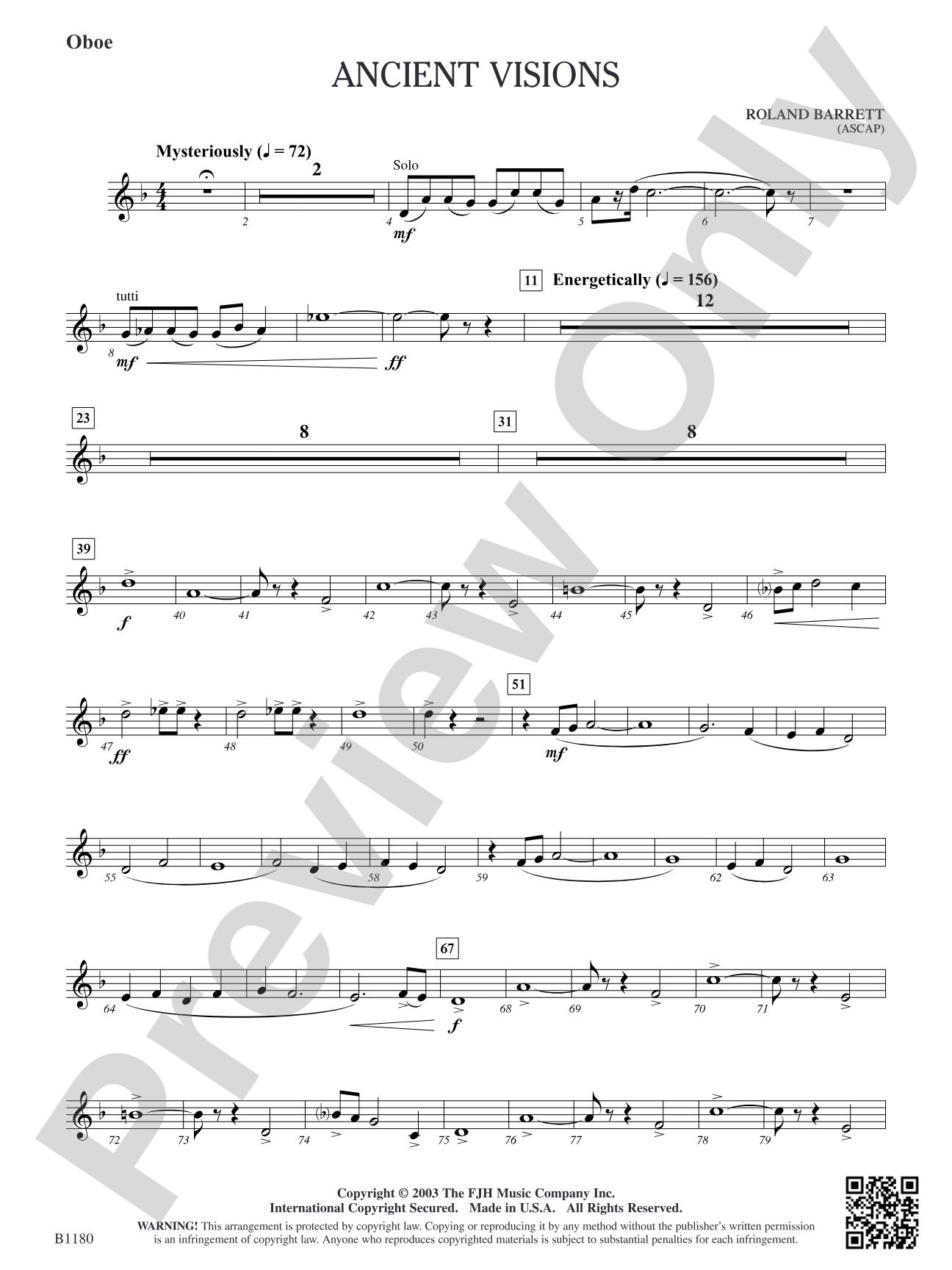
After a brief lyrical introduction, Roland Barrett begins a rhythmic ostinato that sets the stage for the heroic statements made by the brass. Open 5ths become very effective in the simple contrapuntal writing that adds to the overall energy. Brief solo trumpet is used in the lyrical middle section before a climax presented by full band. The final section brings back material from the opening with a key change that adds even more intensity to the exciting conclusion. An easy, yet effective contest or festival work.
Discover MakeMusic Cloud: thousands of interactive titles your students can play along with today.
Roland Barrett has been shaping young musicians and advancing the wind band repertoire for decades. After fifteen years leading the University of Oklahoma's band program as Assistant Director, he joined the composition and music theory faculty in 2001, where he teaches 20th-century topics to both undergraduate and graduate students while continuing as arranger for the Pride of Oklahoma marching band.
With over two hundred published works for symphonic band, chamber ensembles, and marching band, Barrett has established himself as a nationally recognized composer whose music reaches far beyond the university. His pieces appear regularly on All-State and All-Region programs, have been performed by the Dallas Wind Symphony, and have been broadcast on NPR and featured at major conferences including the Midwest Band & Orchestra Convention. He is a multiple ASCAPlus award recipient and brings both scholarly rigor and practical understanding of what works in rehearsal to everything he writes.
Why we love this
Barrett knows exactly how to build energy across a Grade 2.5 work without overstuffing the score. The ostinato foundation lets your ensemble lock in rhythmically while the brass gets room to play with heroic material, and that solo trumpet moment in the middle section gives you a chance to spotlight an advancing player. The structural arc from lyrical opening through climax and back again teaches shape and pacing in a way students actually hear and feel.
What to expect
The piece opens with a quiet reflection before igniting into purposeful, almost martial energy. Heroic brass writing drives the middle section forward while open harmonies keep things from feeling cluttered, then a solo trumpet brings the mood inward briefly. The finale returns to familiar material but transformed by a key change that makes the familiar feel urgent and new.
Who it's for
Grade 2.5 concert bands preparing for contests, festivals, or concert programs. This works especially well for ensembles with players solid enough to handle rhythmic independence but still developing their ability to balance harmonic density.
How to get the most out of it
Establish the rhythmic ostinato as the heartbeat of the piece before bringing in the brass statements. Have the rhythm section and lower woodwinds nail the pattern in isolation first; everything else builds from that foundation.
Balance the open 5ths carefully during the contrapuntal writing. These intervals can sound thin if the inner voices don't have enough presence; don't be afraid to check that your second trumpet and French horns are playing with full tone.
Use the key change in the final section as a psychological moment. Even if it's just moving up a whole step, that shift signals to the ensemble that you're heading somewhere new. Lean into the renewed intensity it provides.
Give the solo trumpet player in the middle section room to breathe and shape the line. This isn't a moment to rush; let it be a genuine lyrical statement that connects the energy shifts in the piece.
How to use it
Program this as a strong opener or early-concert work that showcases your band's rhythmic precision and dynamic range without demanding the stamina a longer opening number requires. It pairs well on a mixed concert with a lyrical piece that follows; the structural clarity makes it an ideal transition into more complex repertoire.
Skills your students will build
Maintaining rhythmic ostinato while melodic voices move independently
Balance and blend across open harmonic intervals
Reading and executing key signature changes within a single piece
Phrasing and shaping a solo line with accompaniment support
Dynamic contrast across a full-band architecture
You May Also Like
Scan to Complete Your Purchase
Use your phone's camera to scan the code below
You'll log in on your phone and the order will be added to your account