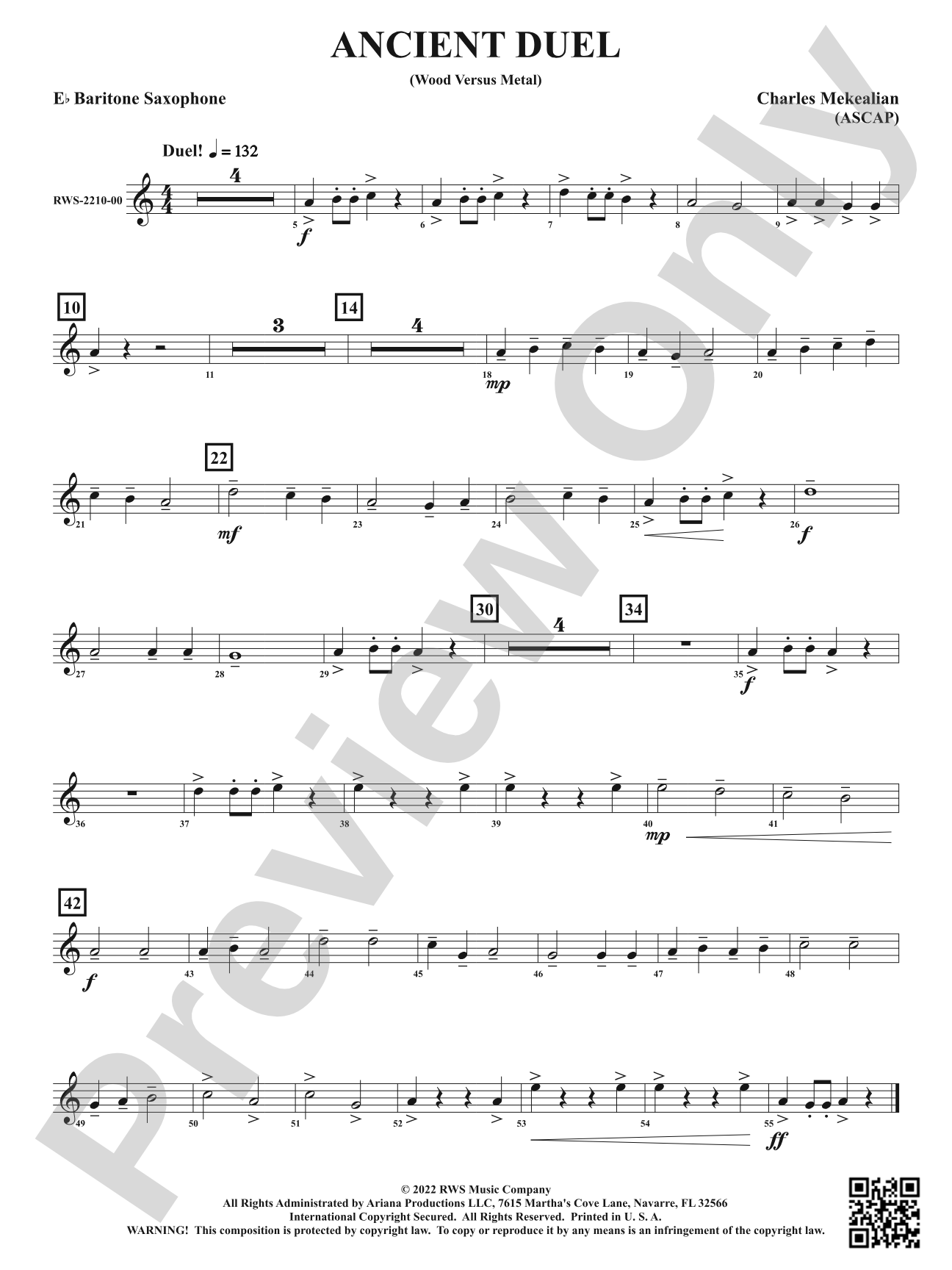
Prepare for musical combat! The competitors? Metal instruments vs. wooden instruments. Sounds of wooden swords battling metal and stone set the scene of an epic battle. The contrasting musical elements work together to create a musical melee that draws the audience into the fray. Call and response sections provide a fun and exciting method for reinforcing rhythmic accuracy and tempo discipline.
Original Item#: RWS-2210-00
Discover MakeMusic Cloud: thousands of interactive titles your students can play along with today.
The call and response structure gives beginning band directors a built-in pedagogical tool for drilling rhythm and tempo without resorting to exercises. Mekealian's concept of pitting wood against metal creates natural section-vs-section dynamics that engage students in listening to what their colleagues are playing, not just their own part.
What to expect
An animated duel unfolds with sparks flying. Wooden instruments clash and ring out; metal instruments answer back with brightness and weight. The energy is playful rather than ominous, with enough rhythmic drive to keep both players and listeners leaning forward.
Who it's for
Beginning band directors introducing very young or newly formed ensembles to concert repertoire that combines musicality with immediate gratification. Students who respond to programmatic titles and dramatic scenarios will find the metal-versus-wood battle engaging, while the straightforward level ensures accessibility for players still building fundamental skills.
How to get the most out of it
Balance the wooden and metal instrument groups so each family projects equally. Woodwinds and timpani often need help cutting through the brass, so consider slight dynamic adjustments in rehearsal.
Use the call and response sections to lock in ensemble precision. Have one section complete their phrase before the other enters; this teaches students to listen for their cue.
Maintain steady tempo throughout the battle. Even at this level, slight rushing during excitement undermines the intended effect, so anchor the pulse with a clear conducting beat.
Let students hear how the percussion sounds (wooden sticks on various surfaces) interact with pitched instruments. This trains ears for timbre contrast and keeps younger players invested in the storytelling.
How to use it
Program this early in a concert or as a family concert opener, where the novelty and humor land well with mixed audiences. The short length and engaging concept also work nicely at pep assemblies or as a transition piece between longer works.
Skills your students will build
Responding to section entrances and cues
Maintaining steady tempo during rhythmically active passages
Balancing dynamic contrast between contrasting instrumental families
Listening to another section's phrasing and matching articulation and phrasing
Tracking a simple program or narrative while playing
You May Also Like
Scan to Complete Your Purchase
Use your phone's camera to scan the code below
You'll log in on your phone and the order will be added to your account
Start Over?
This will clear your cart and reset the kiosk for the next customer.