Anchors Aweigh Sheet Music Preview

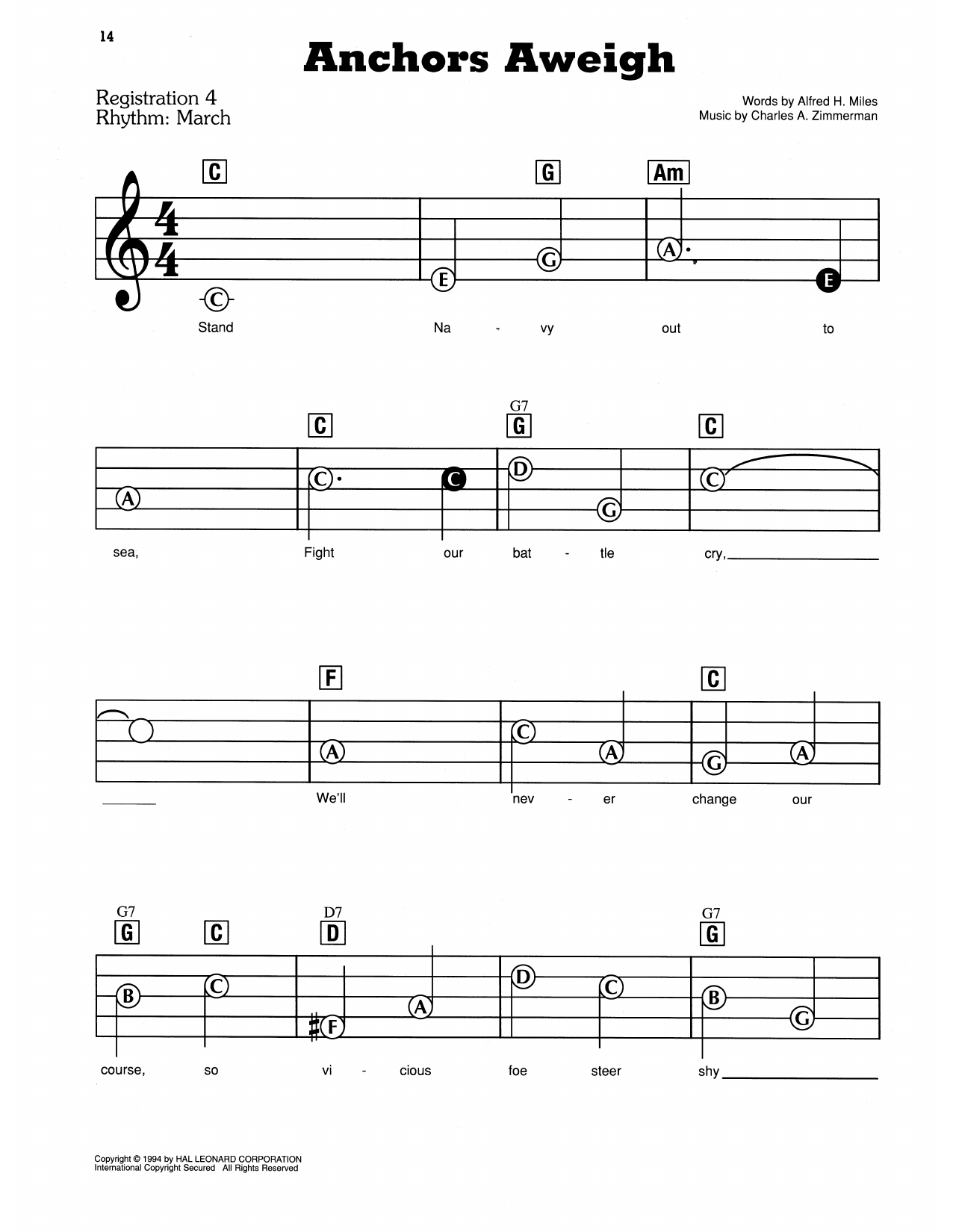
Anchors Aweigh: E-Z Play Today

As performed by Charles Zimmerman

Item: 35-DS01867832

Digital Download
$4.99
Description

Anchors Aweigh: E-Z Play Today isn't in MakeMusic Cloud just yet...but it could be. Let us know you'd like to see it, and you'll help shape what comes next. In the meantime, start a free trial and dive into thousands of interactive titles your students can play along with today.

Sample Audio
No sample audio found.
Sample Video
Additional Details
Publisher: Hal Leonard
Page Count: 2
SKU: 35-DS01867832

More about this title

About the Artist: Charles Zimmerman

Charles Zimmerman composed "Anchors Aweigh" in 1906 as the official march of the United States Navy. His gift for creating memorable, singable melodies made this piece an enduring standard that generations of musicians have learned and performed. Zimmerman's compositions for military and patriotic occasions demonstrated how effective melody and straightforward harmonic language could create music that resonates far beyond its original context.

Why we love this

This E-Z Play arrangement strips away nothing essential. Piano students encounter a genuine American standard without unnecessary simplification, and the two-page format makes it approachable for mid-level players. Programming it connects your students to the actual music that defines Naval tradition, not a watered-down approximation.

What to expect

Confident and purposeful. "Anchors Aweigh" has the straightforward dignity of a military march combined with an infectious, buoyant melody that invites forward motion. Playing it creates a sense of participating in something larger than oneself.

Who it's for

Piano students working at the intermediate level who are ready for pieces with real historical weight. This works for students preparing for recitals, school concerts, or anyone exploring American standards and patriotic music.

How to get the most out of it

  • Maintain a steady march tempo throughout; this piece lives in its rhythmic clarity and forward momentum rather than expressive rubato
  • Balance the melody line against supporting voices so the tune emerges naturally without forcing it
  • Accent the characteristic syncopated figures that give this march its distinctive character

How to use it

Include this in a patriotic or American history themed concert, pair it with other Zimmerman pieces or early twentieth-century marches, or use it as a transition piece that brings energy and tradition into a mixed repertoire program.

Skills your students will build

  • Maintaining steady tempo in march style
  • Balancing melody with accompaniment texture
  • Interpreting syncopated rhythmic figures
  • Connecting to American musical heritage through performance

You May Also Like