Ancestors Cover Image

Ancestors: String Orchestra Conductor Score

$6.00 USD
Sale price  $6.00 USD Regular price 
Skip to product information
Ancestors Cover Image

Ancestors: String Orchestra Conductor Score

By Shirl Jae Atwell

Grade: 3.5

Item: 36-52255350

$6.00
Shipped

One moment…

Description
With ancestors of Ireland as the inspiration, this work is a case of "jig meets the modern string orchestra". Interesting harmonies and rugged rhythms propel this music forward. Your students will love playing this one.

Ancestors: String Orchestra Conductor Score isn't in MakeMusic Cloud just yet...but it could be. Let us know you'd like to see it, and you'll help shape what comes next. In the meantime, start a free trial and dive into thousands of interactive titles your students can play along with today.

Sample Pages

No sample pages found.

Sample Audio
No sample audio found.
Sample Video
Additional Details
Series: Latham Music - LudwigMasters
Publisher: Keiser Productions, Inc.
ISBN10: 1-62-876928-9
ISBN13: 978-1-62-876928-9
UPC: 654690644510
SKU: 36-52255350
Instrumentation: String Orchestra

More about this title

About the Composer: Shirl Jae Atwell
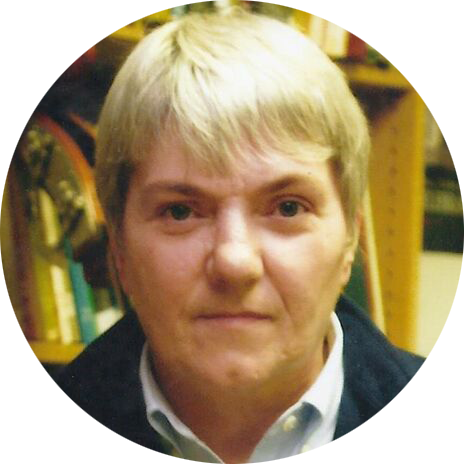
Shirl Jae Atwell

Shirl Jae Atwell holds degrees from Kansas State Teachers College and the University of Louisville (Master of Music Theory and Composition), along with four years of advanced study in composition at the University of South Carolina. Her work has earned national recognition, including the 1984 Clifford Shaw Memorial Award for Kentucky Composers, the 1996 National School Orchestra Association composition contest award, and the 1997 Texas Orchestra Directors Association contest award. Her string orchestra pieces have premiered across major venues, from university orchestras to regional ensembles, and several of her scores were selected for inclusion in the Paris Bibliothèque Internationale de Musique Contemporaine.

Beyond instrumental works, Atwell has composed operas including Sagegrass (New York City debut in 1984) and Esta Hargis (1991), and collaborated with choreographer Alun Jones on the ballet Lucy, which premiered with the Louisville Ballet in 1999. The televised production of Lucy earned an Emmy Award for Arts and Culture from the Ohio Valley Chapter of the National Academy of Television Arts and Sciences, reflecting her broader engagement with music across multiple genres and media.

Why we love this

Atwell grounds this piece in genuine folk tradition while working with modern harmonic language, creating something that feels both rooted and fresh. The rhythmic energy of Irish jigs drives the piece forward without sacrificing the lyrical possibilities of a full string orchestra, and students respond immediately to music that has genuine character. Programming this rewards both the orchestra and the audience with an engaging, character-filled work that sits squarely in the sweet spot of Grade 3.5 difficulty.

What to expect

Ancestors captures the energy and swagger of traditional Irish dance music filtered through modern string writing. The result is buoyant and rhythmically propulsive, with rugged harmonies that give the familiar jig form unexpected depth and sophistication.

Who it's for

String orchestras at the upper intermediate level (Grade 3.5) will find a piece that challenges without overwhelming. Directors looking to program something with genuine personality that still fits the skill level of a developing ensemble will connect with this work immediately.

How to get the most out of it

  • Balance the rhythmic momentum in your ensemble by anchoring the violas and cellos; they carry much of the harmonic drive and should never be buried under the upper strings.
  • Let the Irish rhythmic inflections shape your phrasing naturally rather than overemphasizing them. The jig character works best when it emerges organically from how the players breathe and shape their lines.
  • Attend closely to intonation in the interesting harmonies. Atwell's harmonic language occasionally sits outside traditional major/minor territory, so isolated sectional work on tricky chord changes pays dividends.

How to use it

This sits naturally on a concert focused on folk traditions or cultural music exploration, where it can anchor a set or open a section. The piece is engaging enough for general audience programming yet substantive enough to satisfy musician colleagues, making it useful either as a crowd-pleaser or as a serious mid-program shift in energy.

Skills your students will build

  • Rhythmic precision in dotted and syncopated figures characteristic of jig form
  • Balancing individual voice motion within interesting harmonic progressions
  • Ensemble unity across multiple simultaneous rhythmic patterns
  • Stylistic inflection and phrasing in folk-inspired material

You May Also Like