Anagram (For Mongo): Piano/Vocal/Chords Digital Sheet Music

Anagram (For Mongo): Piano/Vocal/Chords Digital Sheet Music

Rush, Geddy Lee, Alex Lifeson

Item: 00-PS-0002805

Digital Download
$3.99
Description

Anagram (For Mongo): Piano/Vocal/Chords Digital Sheet Music isn't in MakeMusic Cloud just yet...but it could be. Let us know you'd like to see it, and you'll help shape what comes next. In the meantime, start a free trial and dive into thousands of interactive titles your students can play along with today.

Sample Audio
No sample audio found.
Sample Video
Additional Details
SKU: 00-PS-0002805

More about this title

About the Artist: Rush

Rush stands as one of rock's most technically ambitious and intellectually restless bands. Formed in Toronto in 1968, the trio of Geddy Lee, Alex Lifeson, and Neil Peart built a legacy on complex time signatures, philosophical lyrics, and uncompromising musicianship that influenced generations of progressive rock musicians and serious students across all instruments.

Peart's songwriting combined science fiction themes, literary references, and introspective observations with compositions that demanded precision from every band member. For music students and educators, Rush's catalog represents a masterclass in how rock music can sustain intellectual depth while remaining viscerally engaging.

Why we love this

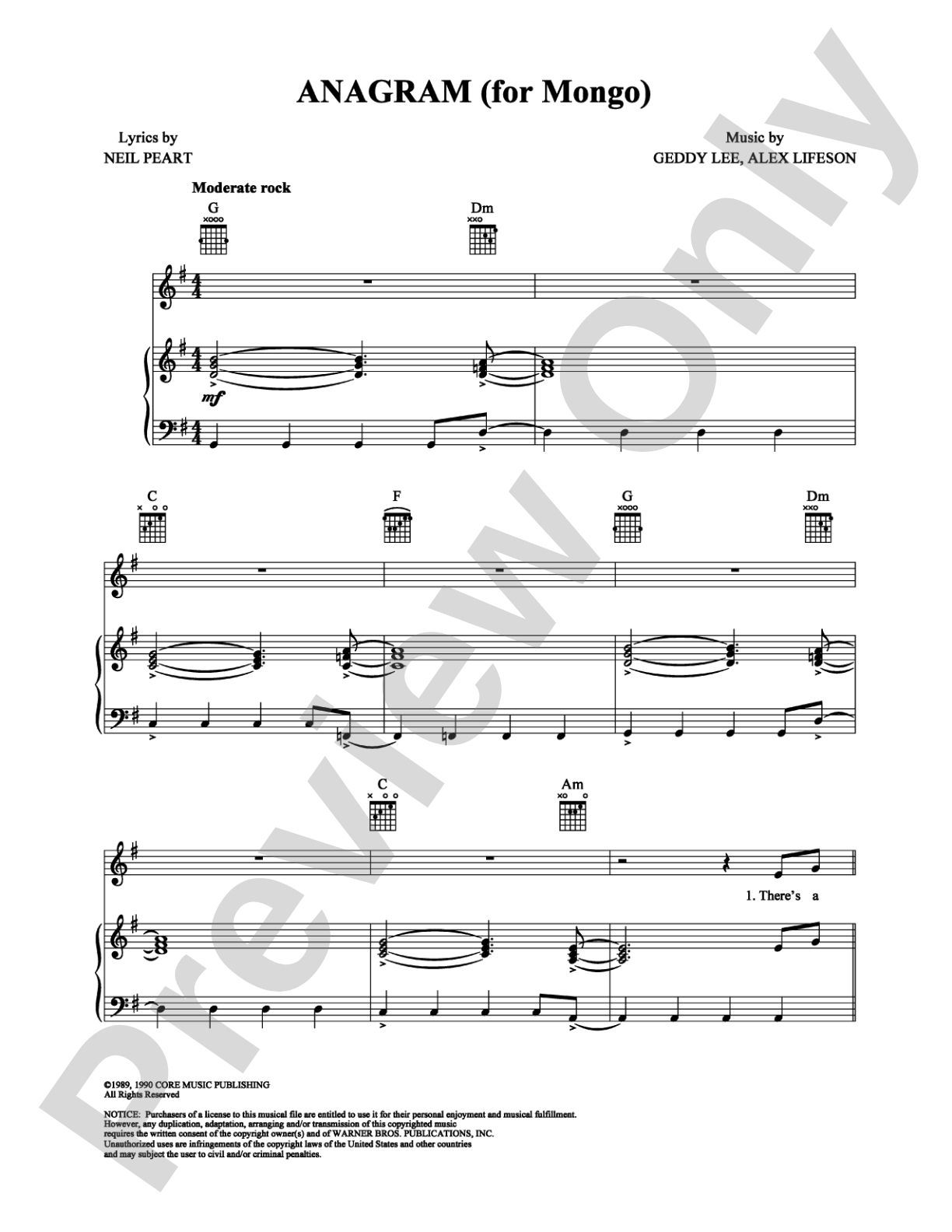
Anagram (For Mongo) gives vocalists and pianists access to Rush's sophisticated harmonic language in an arrangement that's singable without sacrificing the song's complexity. The piano/vocal format opens this material to students who might not encounter it through traditional rock ensemble routes, and the interplay between voice and keyboard reflects the band's core strength: making intricate musical ideas feel inevitable rather than showy.

What to expect

Intellectually engaging and rhythmically propulsive. The song balances melodic accessibility with harmonic intrigue, creating momentum that feels earned rather than gratuitous. The piano/vocal combination emphasizes the song's thoughtful architecture while maintaining the energy that defines Rush's best work.

Who it's for

Pianists and vocalists preparing music for auditions, recitals, or ensemble performances will find this useful for exploring contemporary rock literature with serious compositional depth. Advanced high school and college vocalists benefit from the harmonic sophistication and rhythmic demands, while pianists gain insight into how to support a vocal line over complex harmonic territory.

How to get the most out of it

  • Balance rhythmic precision with legit phrasing. The piano part locks into specific rhythmic cells, but the vocal line needs space to breathe through Rush's characteristically dense lyrical passages.
  • Pay attention to how the chord voicings support the melody. This arrangement likely uses extended and altered harmonies; hearing the harmonic movement will clarify your phrasing choices.
  • Mark section transitions clearly in your score. Rush's structural surprises happen often, and knowing exactly where key and tempo shifts occur prevents rehearsal confusion.

How to use it

Feature this in a recital exploring 1980s progressive rock or contemporary songwriting across genres. It works well paired with other art rock or progressive pop selections, offering audiences a gateway into Rush's musical world through the intimacy of a smaller ensemble format. Consider it for vocal recitals aiming to showcase students' range and interpretive maturity.

Skills your students will build

  • Reading and performing complex rhythmic figures in a vocal context
  • Interpreting extended and altered harmonic progressions
  • Coordinating vocal phrasing with intricate piano accompaniment patterns
  • Sustaining pitch control across wide intervallic leaps

You May Also Like