
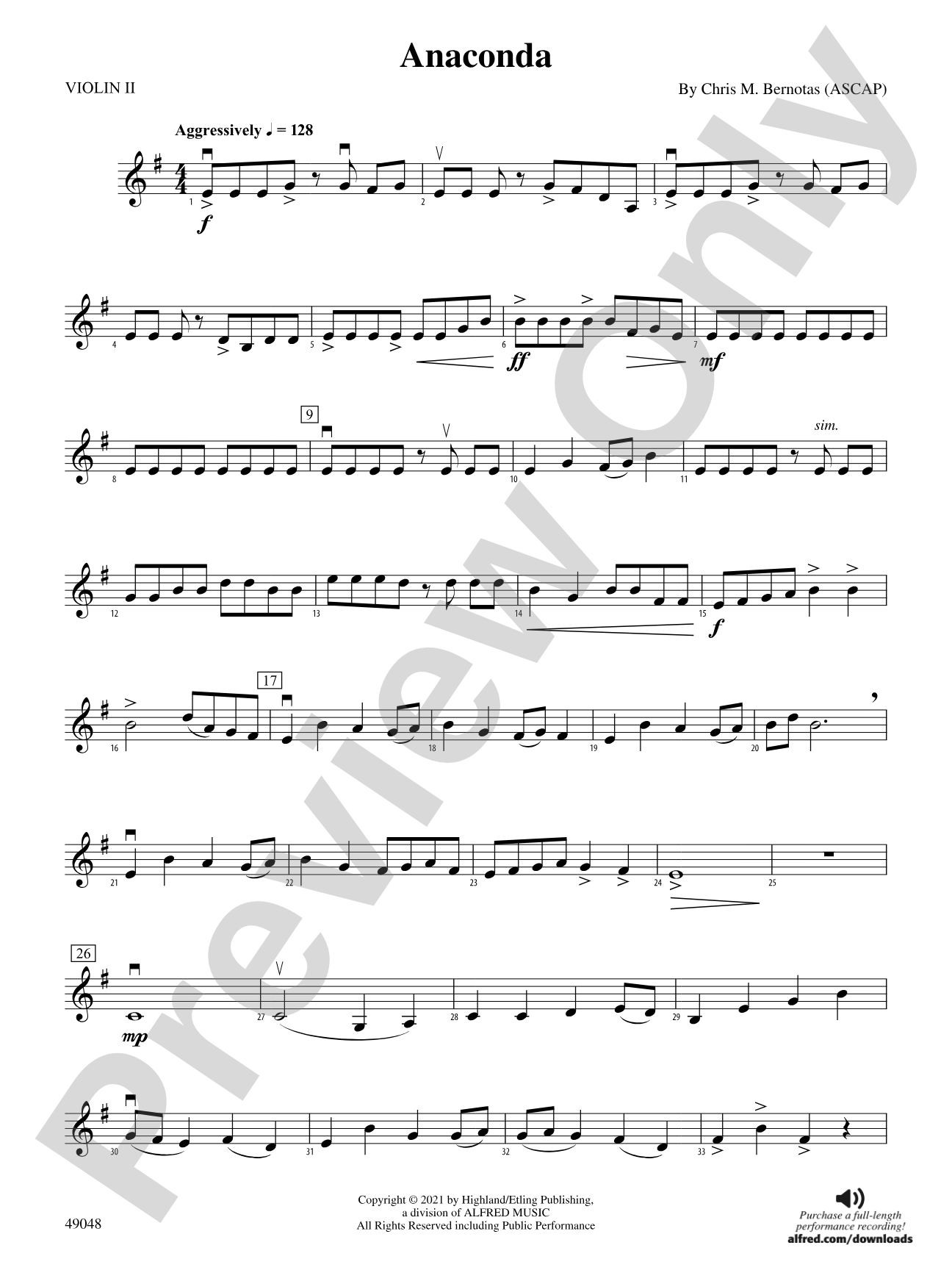

Anaconda: 2nd Violin
By Chris M. Bernotas
Grade: 1.5
Item: 00-PC-0018648_VN2
$3.00
Pickup currently not available
Description
This title features Alfred Music's String Orchestra FLEX options. That means that every part in this set is now transposed into every other part, so you can play this title with any combination of like- or mixed-string ensemble. After purchasing this set, decide what additional parts you need to meet the unique needs of your ensemble, then download and print them for free at alfred.com/supplemental---free of charge.
The most common anaconda snake is the Green Anaconda, and it is the most massive snake in the world! Anaconda by Chris Bernotas reflects that powerful snake in musical form. The rhythms drive forward with an intense melody characterizing the strength of the enormous creature. The pizzicato section is reflective of the anaconda as it stealthily makes its way through a swamp or river---be on guard! Correlated to Sound Innovations for String Orchestra, Book 1, Level 5. (2:15)


The most common anaconda snake is the Green Anaconda, and it is the most massive snake in the world! Anaconda by Chris Bernotas reflects that powerful snake in musical form. The rhythms drive forward with an intense melody characterizing the strength of the enormous creature. The pizzicato section is reflective of the anaconda as it stealthily makes its way through a swamp or river---be on guard! Correlated to Sound Innovations for String Orchestra, Book 1, Level 5. (2:15)
Don't just read it, hear it, play along with it, and watch your students grow with it. In MakeMusic Cloud, Anaconda: 2nd Violin comes alive with professional accompaniment, adjustable tempo, and built-in practice tools that turn solo practice into real progress.
Open in the Player
Jump straight in and assign it today.
Start Your Free Trial
Open this title and explore the full library in minutes.
Sample Audio
1
Audio File
--:--
0:00
0:00
Sample Video
Additional Details
Series:
Sound Innovations for String Orchestra
Publisher:
Alfred Music
Page Count:
95
SKU:
00-PC-0018648_VN2
More about this title
About the Composer: Chris M. Bernotas

Chris M. Bernotas directs instrumental publications at Alfred Music, where he shapes curriculum and repertoire for band and orchestra programs. With over 25 years in music education, he brings classroom experience directly into his compositional work, creating pieces that balance musical integrity with pedagogical purpose. His works span from accessible student repertoire to concert-quality compositions performed by ensembles worldwide.
Beyond the page, Bernotas serves as guest conductor and clinician for honor groups and workshops, and has co-authored several significant resources including the Sound Innovations series and Sound Artistry. His dual commitment to composition and teaching informs every piece he writes, ensuring that students and directors encounter music that challenges them musically while remaining true to their developmental level.
Why we love this
The flexible instrumentation system lets you build parts on the fly rather than begging violists to double on viola. Bernotas's programmatic writing gives young players a genuine story to sink their teeth into, and the pizzicato section delivers that balance between technical interest and musical character that keeps rehearsals engaging rather than mechanical.
What to expect
Raw power and coiled tension wrapped in a bite-sized package. The opening pushes forward with muscular rhythmic drive, then shifts into something quieter and more sinister as the narrative moves into the swamp. It's descriptive without being precious, giving young string players permission to play with character and intent.
Who it's for
String orchestras at the early-intermediate level, particularly those building confidence in rhythm reading and sectional independence. This works equally well for school orchestras, community youth ensembles, and flexible studio programs where mixed or unbalanced instrumentation is the norm.
How to get the most out of it
- Balance the intense, driving rhythms in the main melody by anchoring them in a solid pizzicato accompaniment during that section. Articulation clarity matters more than volume here.
- Shape the stealth and tension of the pizzicato passage with dynamics that gradually shift from cautious to predatory. Let the players feel the narrative shift from swimming to hunting.
- Lock the ensemble's rhythmic drive by having the section leaders practice the main melody line separately before blending it with accompaniment parts.
How to use it
This fits naturally into a concert built around animal or nature themes, or as a high-interest opener that captures audience attention within the first 30 seconds. At just over two minutes, it's an ideal piece for festivals where you need impact without eating up rehearsal time for a longer work.
Skills your students will build
- Rhythmic precision and sustained pulse in fast-moving passages
- Pizzicato technique and rhythmic clarity in plucked accompaniment
- Dynamic contrast and musical characterization through programmatic narrative
- Part independence and sectional balance in flexible instrumentation configurations
- Reading and executing rhythm at Level 5 of Sound Innovations Book 1