An Irish Tale: Baritone T.C. Sheet Music Preview

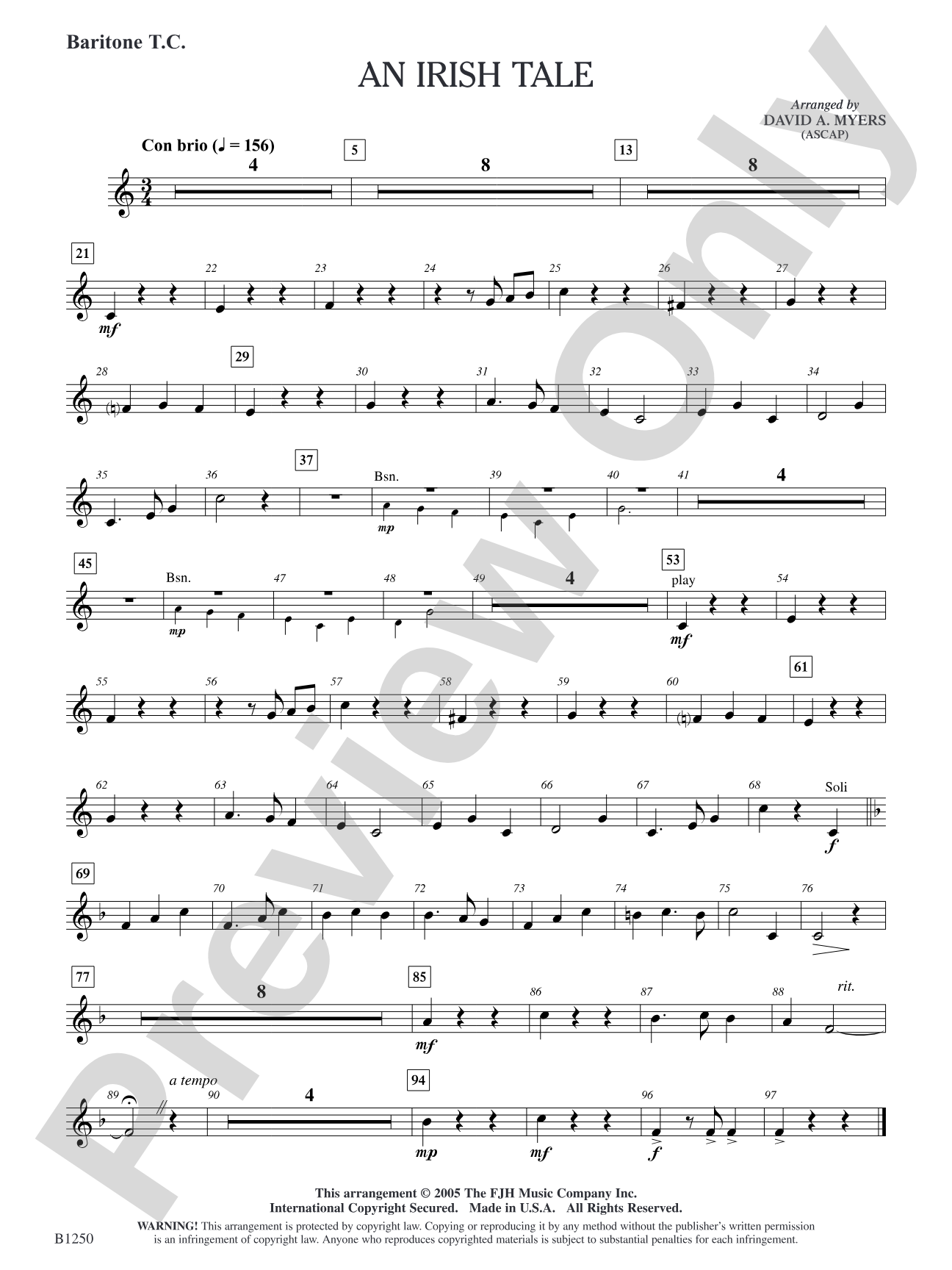
An Irish Tale: Baritone T.C.

Arranged by David A. Myers

Grade: 1.5

Item: 98-PC-DB1250_BTC1

Digital Download
$7.00
Description
Based on the folk song While History's Muse, this delightful arrangement in 3/4 has all the characteristics of a lighthearted Irish dance. A tambourine and clarinet drone set the stage for the flute melody that is eventually passed throughout the ensemble. A key change to E builds until the piece returns to the lighthearted style of the opening one last time. Great writing for young bands!

An Irish Tale: Baritone T.C. isn't in MakeMusic Cloud just yet...but it could be. Let us know you'd like to see it, and you'll help shape what comes next. In the meantime, start a free trial and dive into thousands of interactive titles your students can play along with today.

Sample Audio
0:00
0:00
Sample Video
Additional Details
Series: FJH Developing Band
Publisher: The FJH Music Company, Inc.
SKU: 98-PC-DB1250_BTC1

More about this title

About the Composer: David A. Myers

David A. Myers is a prolific arranger and composer whose work appears regularly in the Developing Band series and across educational publishing. His arrangements consistently balance accessibility with musical substance, giving young musicians genuine musicianship challenges without overwhelming their technical skills.

Myers has a gift for orchestrating folk material in ways that highlight ensemble color and movement. His attention to voice leading and his strategic use of instrumental combinations make pieces that are as instructive to conduct as they are engaging to play.

Why we love this

The tambourine and clarinet drone creates an immediate sense of place without requiring advanced rhythmic coordination, leaving room for your band to focus on blend and intonation in the ensemble texture. The key change to E provides genuine forward momentum and gives the piece architectural shape rather than feeling like a simple theme-and-repeat, which matters for keeping young musicians engaged during rehearsal.

What to expect

You get the infectious rhythm of an Irish dance hall without the rhythmic complexity that would bog down a young band. The piece bounces with character, then opens up into something a little grander before returning home with a wink.

Who it's for

This works beautifully for beginning bands working on tuning and blend within a modal, folk-based texture. Young musicians benefit from playing a piece rooted in a real tradition while learning how folk material translates to concert band voicing.

How to get the most out of it

  • Balance the clarinet drone so it sits underneath the flute melody; if it's too prominent, the whole piece loses its lightness and becomes muddy.
  • Shape the tambourine part with dynamics that follow the phrasing of the melody, even though it's rhythmically static. This prevents it from becoming a mere ornament.
  • Let the key change breathe. Rather than pushing tempo as you modulate to E, maintain the same pulse but allow the new key center to feel like a natural lift in energy.
  • Pass the melody around the ensemble with slight crescendos as each new section enters, so the audience hears the distributed ownership rather than a solo stealing the spotlight.

How to use it

This pairs naturally with other multicultural folk arrangements in a concert that celebrates world music traditions. It also works as a solid opening number for a spring concert where you want to establish energy and mood before moving into more substantial repertoire.

Skills your students will build

  • Playing sustained drone parts without letting pitch or tone flatten over time
  • Recognizing and executing modulation between closely related keys (A to E)
  • Balancing a primary melodic line with supporting harmonic layers
  • Shaping phrasing within a straightforward rhythmic context using dynamics alone
  • Maintaining ensemble cohesion through tempo and pulse while passing a melody across sections

You May Also Like