
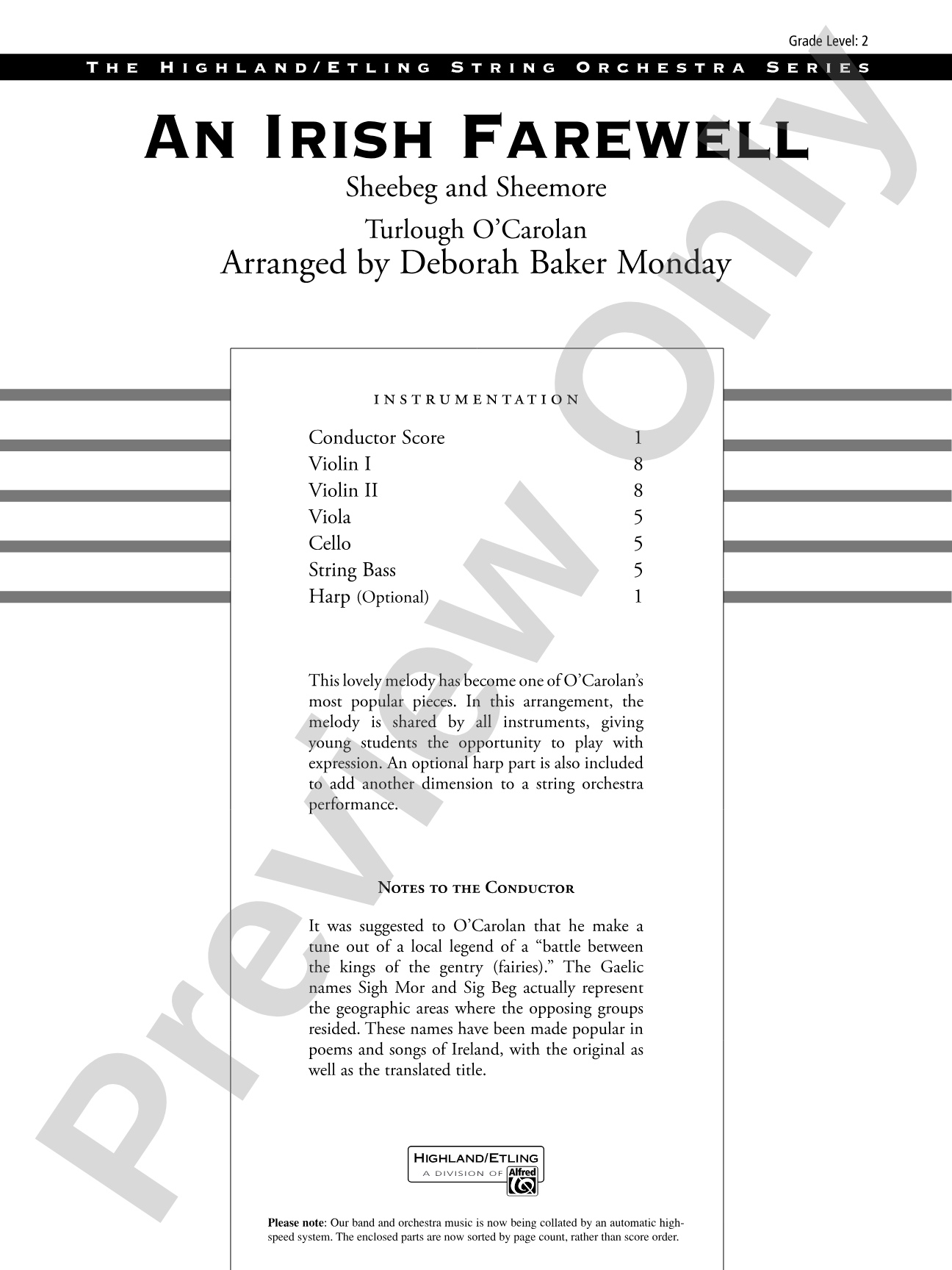

An Irish Farewell: String Orchestra Conductor Score & Parts
Sheebeg and Sheemore
By Turlough O'Carolan / arr. Deborah Baker Monday
Grade: 2
Item: 00-PK-0006200

$46.00
Pickup currently not available
Buy Extra Parts (Digital PDF Download)
| Product | Price | Quantity |
|---|---|---|
| An Irish Farewell: Score | $9.00 | |
| An Irish Farewell: 1st Violin | $5.99 | |
| An Irish Farewell: 2nd Violin | $5.99 | |
| An Irish Farewell: Viola | $5.99 | |
| An Irish Farewell: Cello | $5.99 | |
| An Irish Farewell: String Bass | $5.99 | |
| An Irish Farewell: Harp | $5.99 |
Parts Added to Cart!
Description
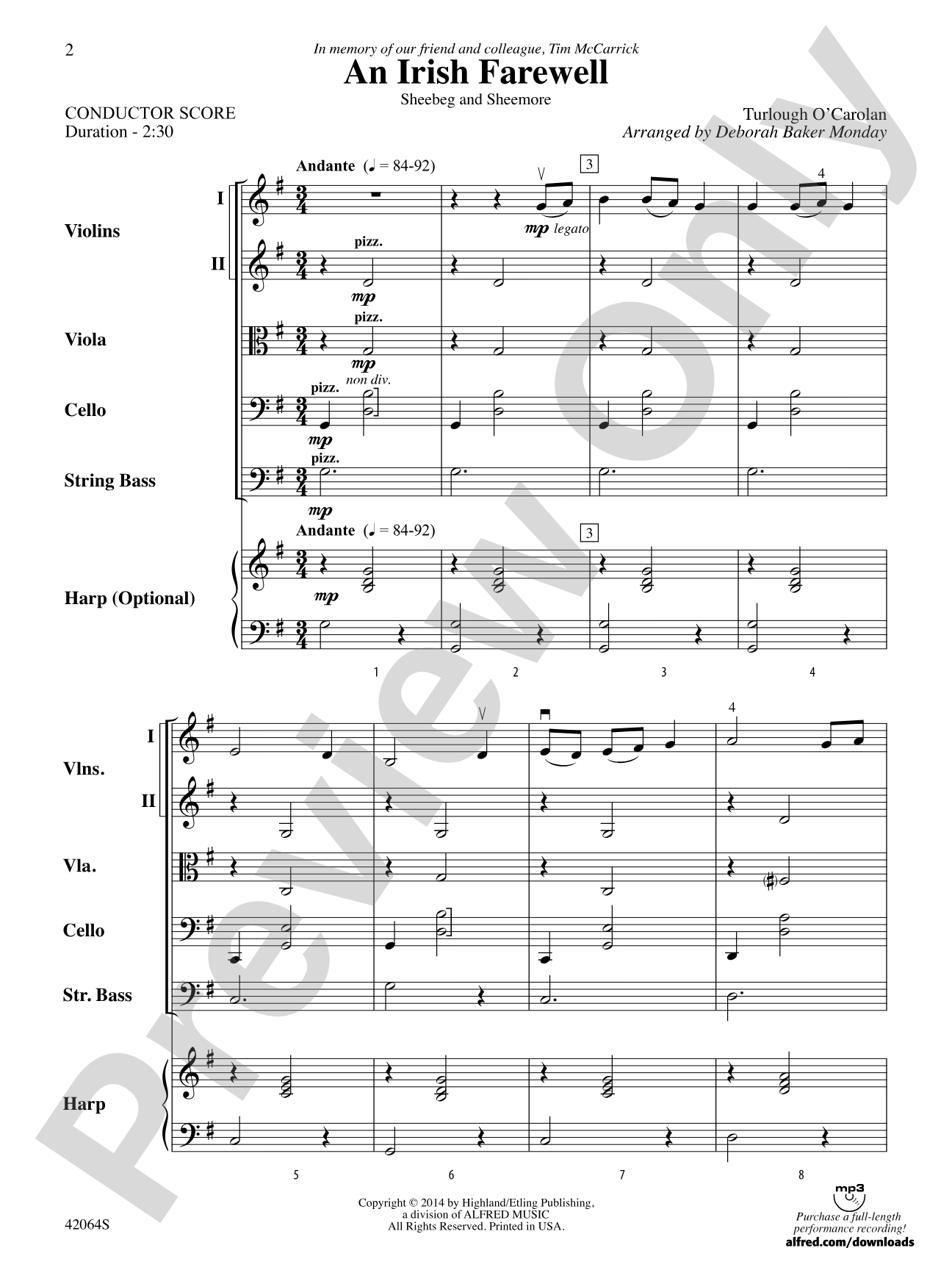
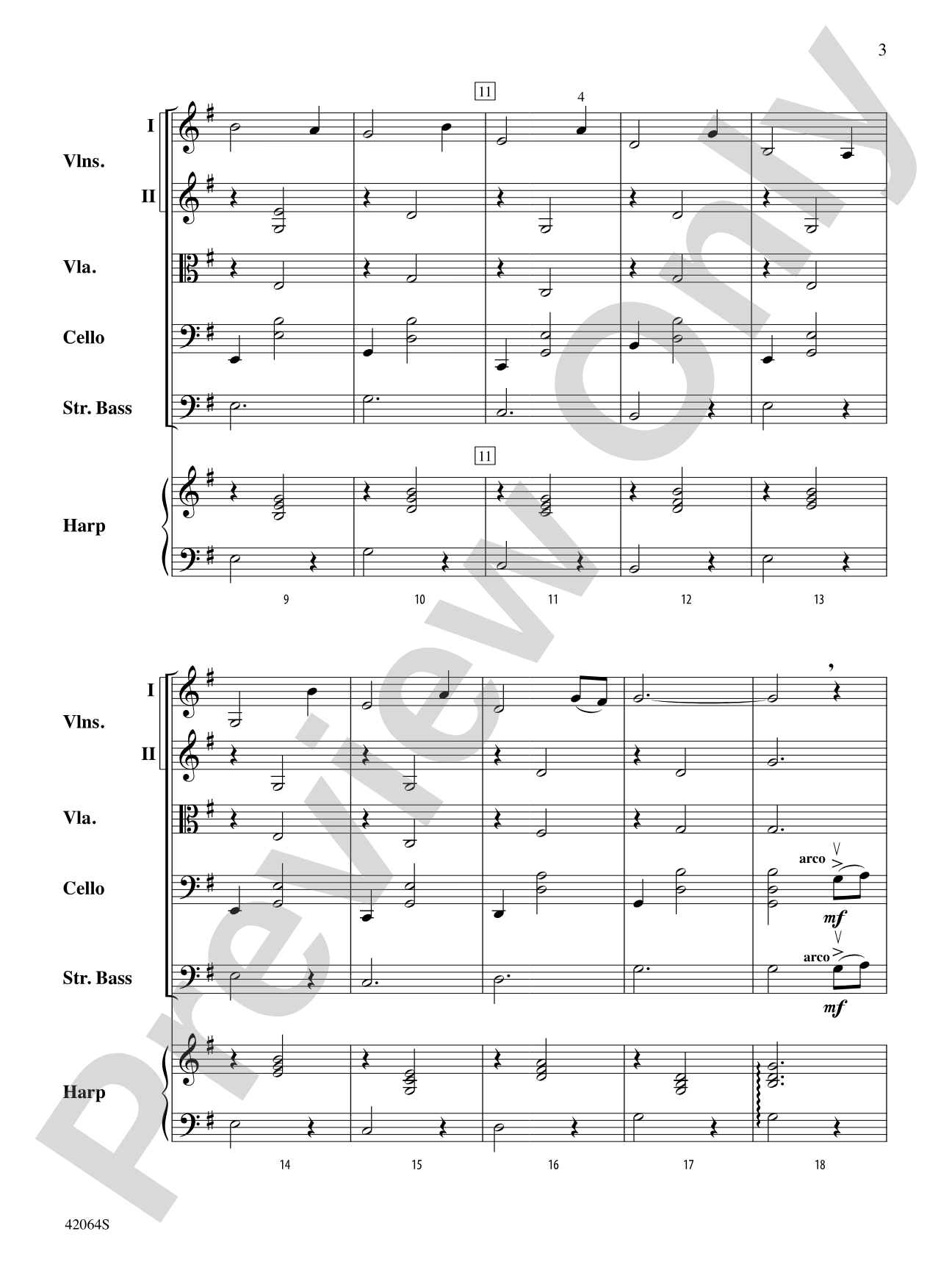
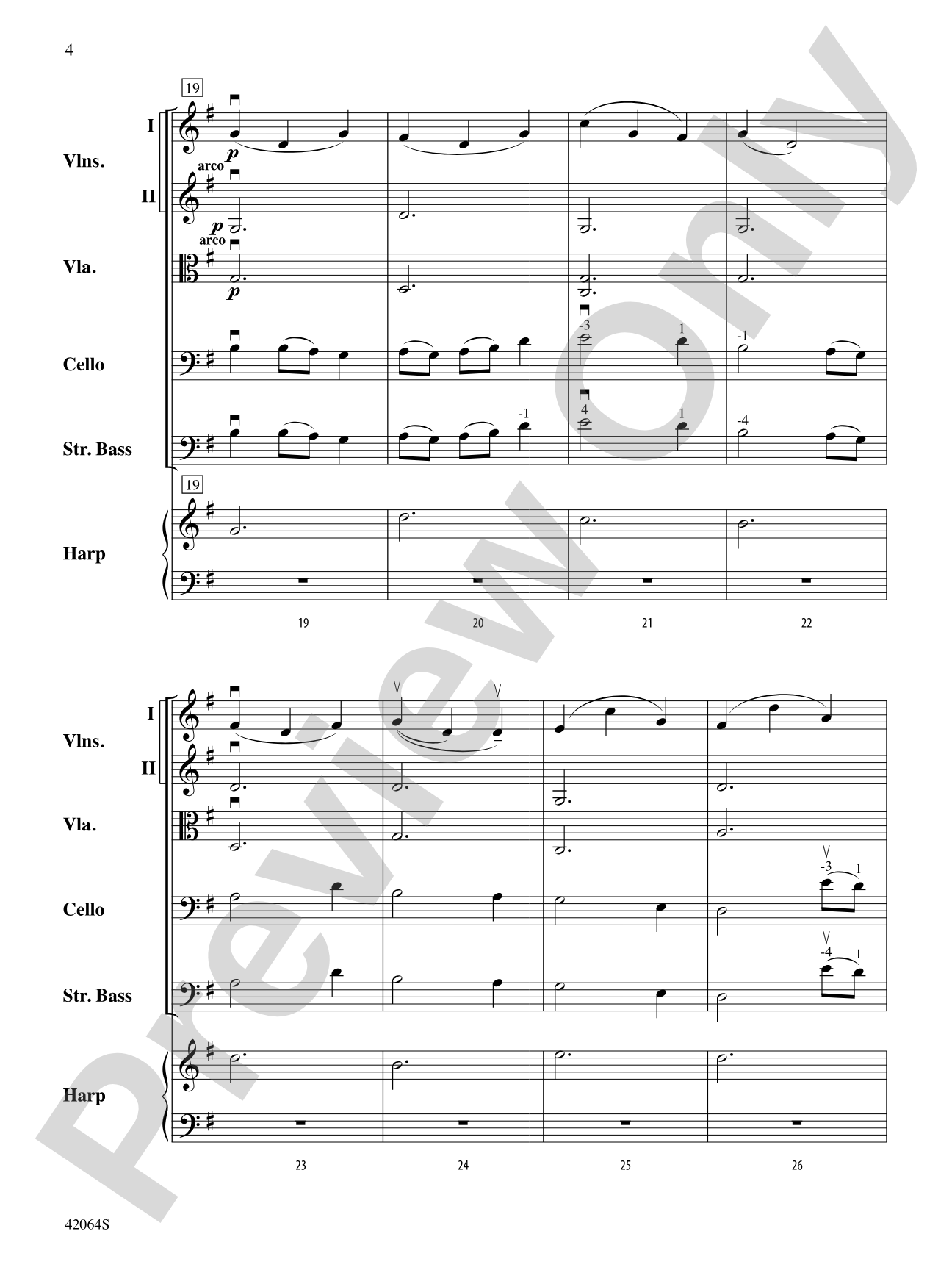
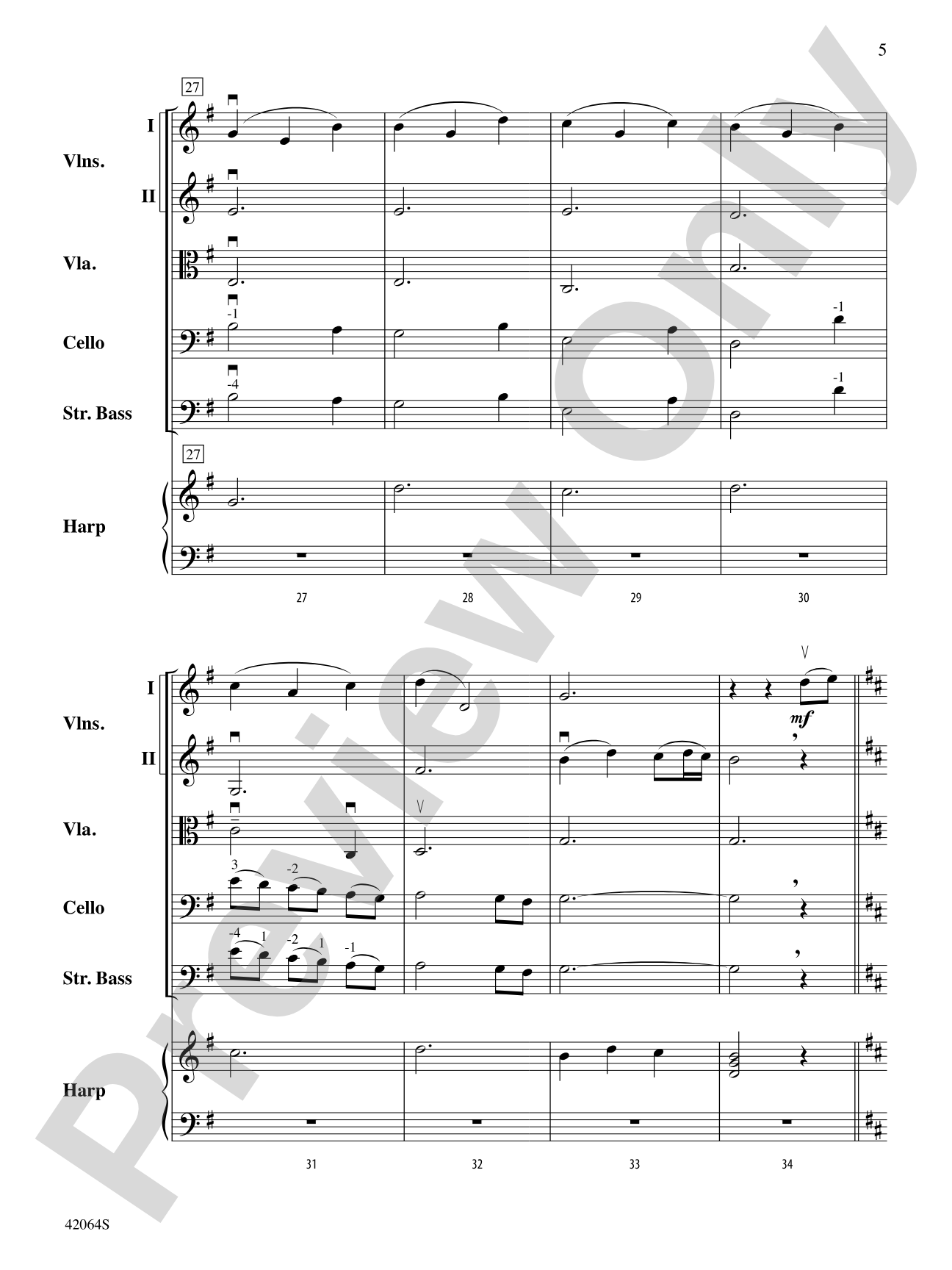
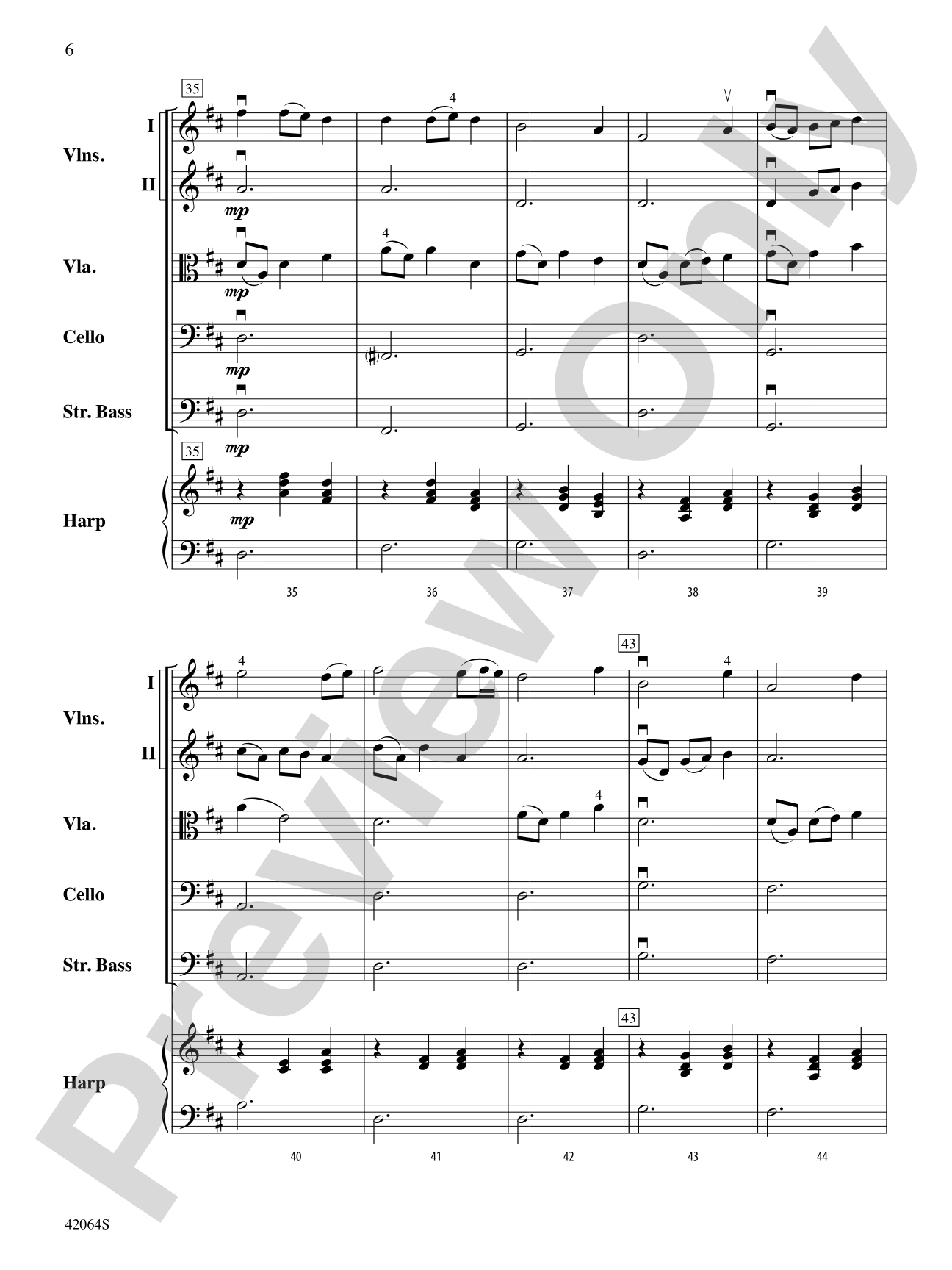
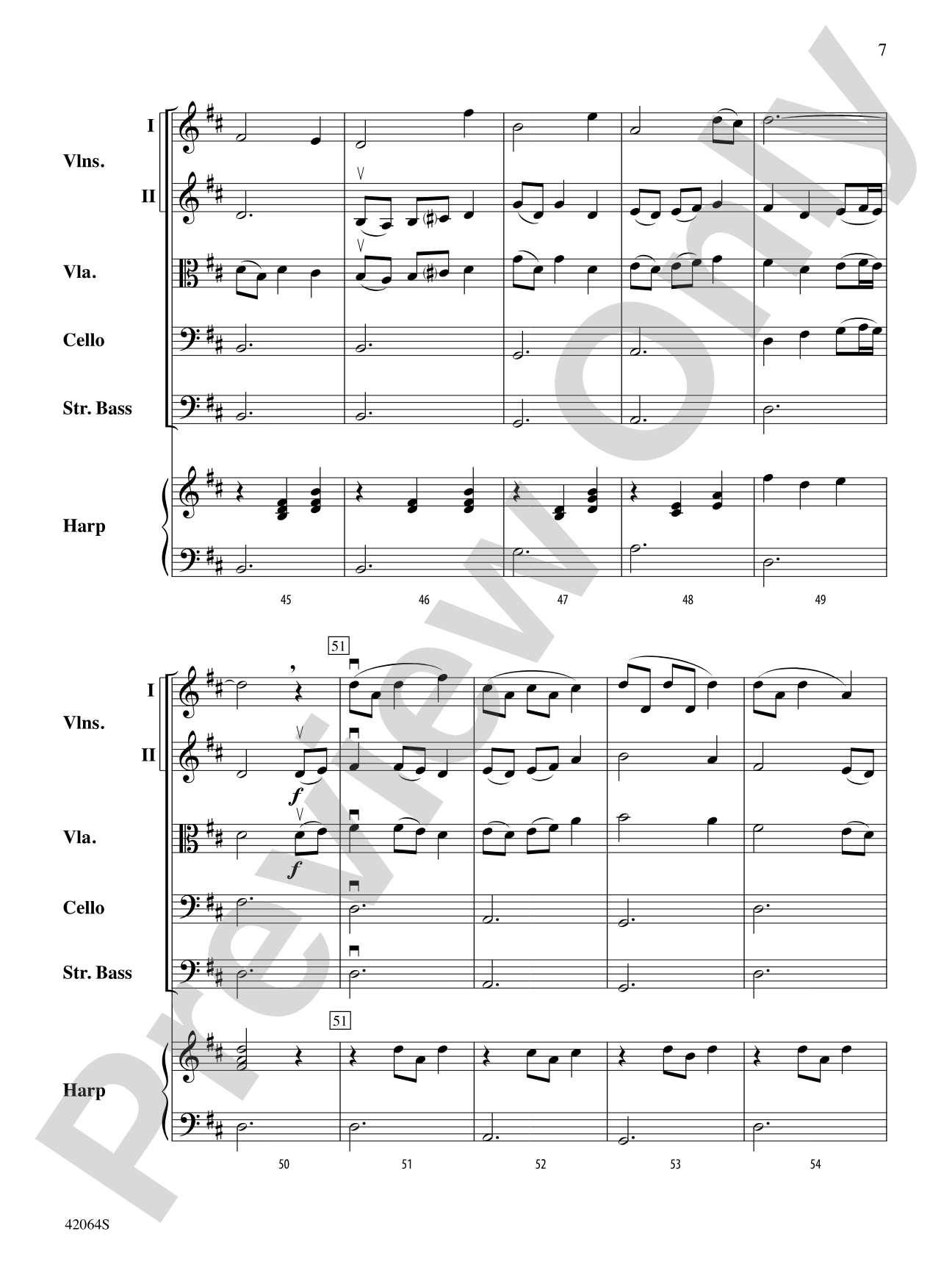
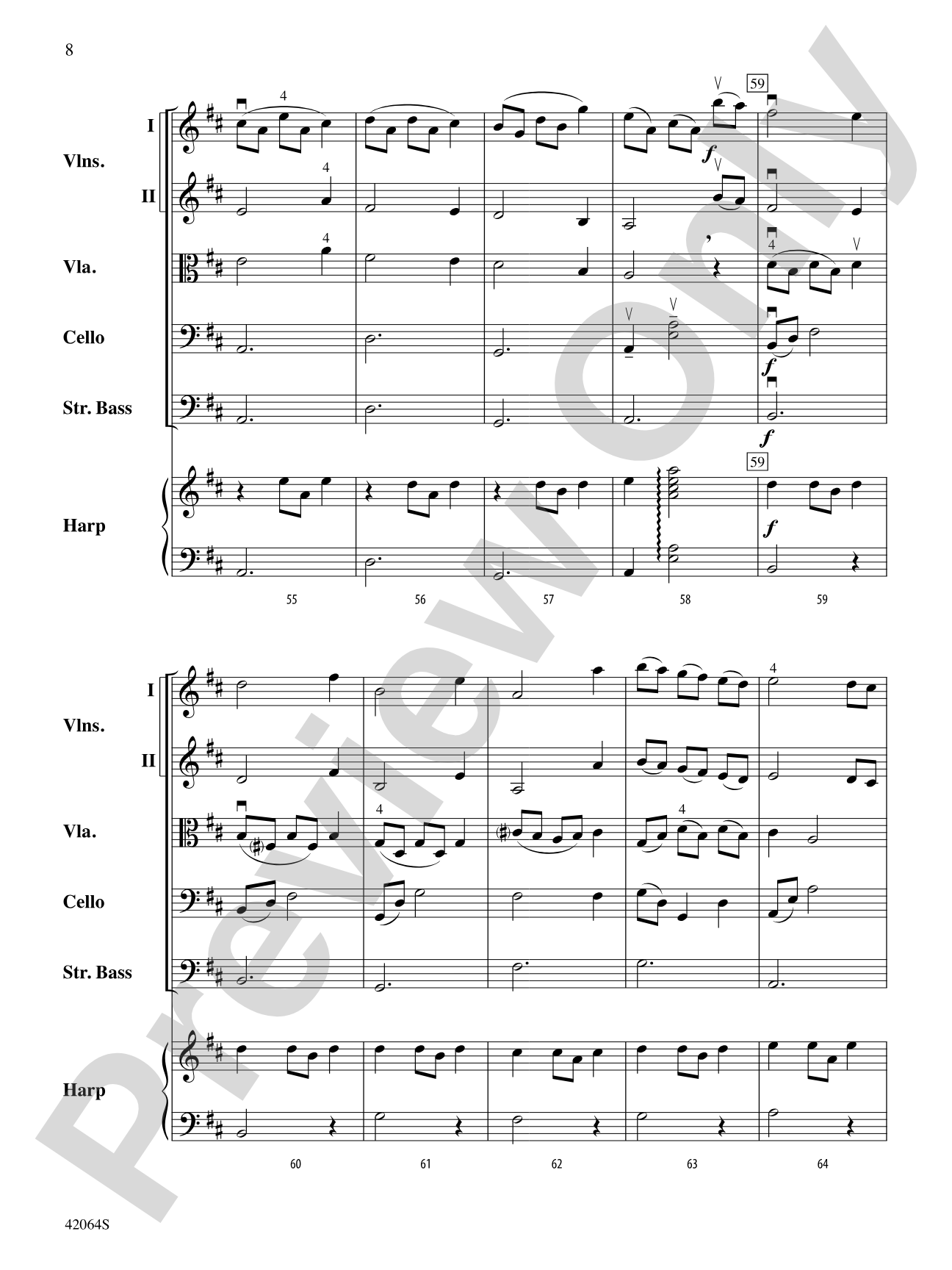
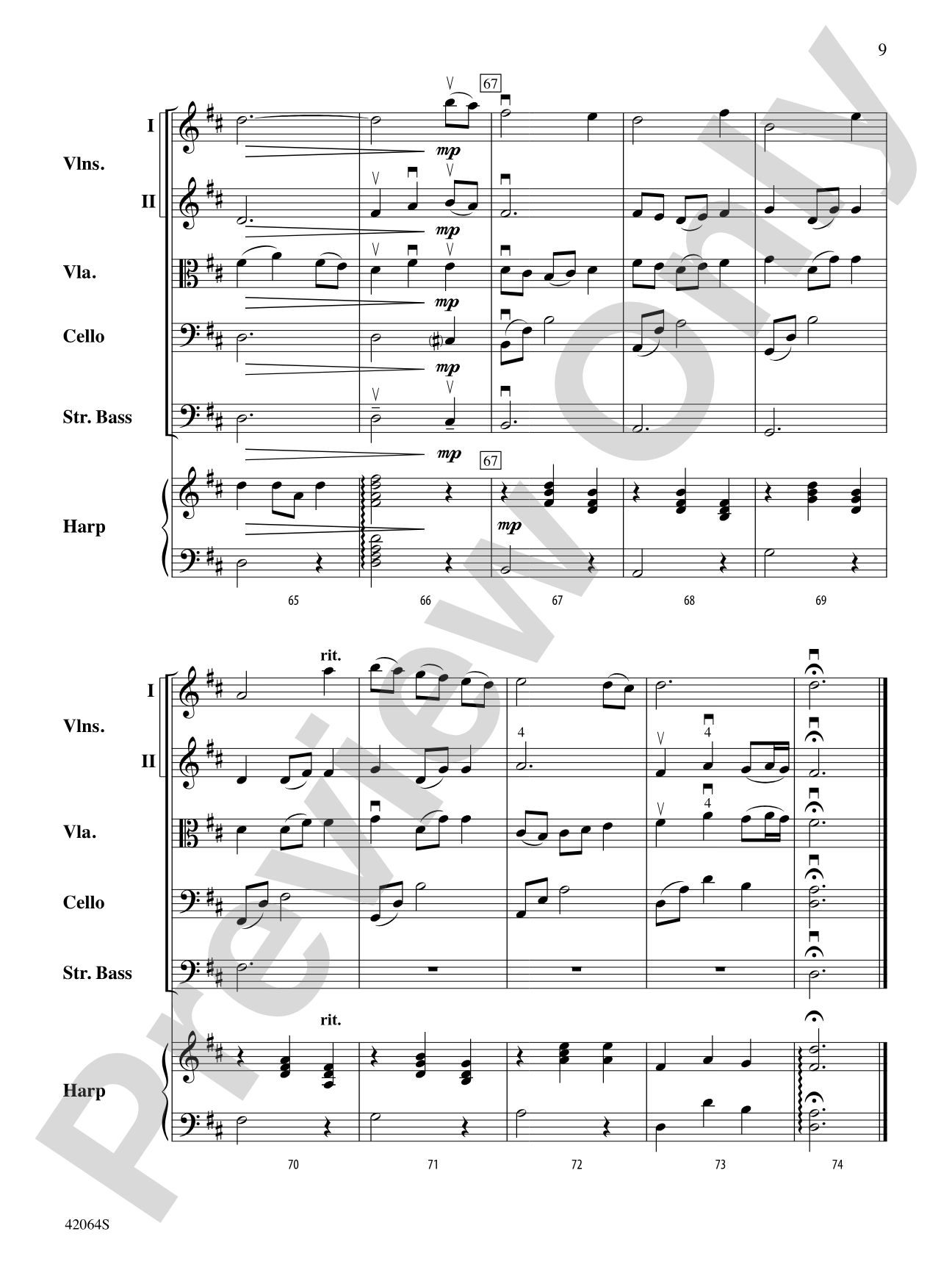
This lovely melody has become one of O'Carolan's most popular pieces. In this arrangement the melody is shared by all instruments giving young students the opportunity to play with expression. An optional harp part is also included to add another dimension to a string orchestra performance. (2:30) This title is available in MakeMusic Cloud.


Don't just read it, hear it, play along with it, and watch your students grow with it. In MakeMusic Cloud, An Irish Farewell: String Orchestra Conductor Score & Parts comes alive with professional accompaniment, adjustable tempo, and built-in practice tools that turn solo practice into real progress.
Open in the Player
Jump straight in and assign it today.
Start Your Free Trial
Open this title and explore the full library in minutes.
Sample Audio
1
Audio File
--:--
0:00
0:00
Sample Video
No sample videos found.
Additional Details
Series:
Highland/Etling String Orchestra
Publisher:
Alfred Music
Page Count:
66
SKU:
00-PK-0006200
More about this title
About the Composer: Turlough O'Carolan
Turlough O'Carolan (1670-1738) was an Irish harper and composer whose works bridged the Gaelic and Anglo-Irish musical traditions of his time. Blind from childhood, he became one of the most celebrated musicians in Ireland, traveling throughout the country as a sought-after performer and composer for the Irish gentry. His melodies remain central to the Irish traditional music repertoire and continue to be arranged for ensembles of all kinds.
O'Carolan's gift for writing memorable, singable melodies has made his works enduring favorites in music education. His pieces balance accessibility with genuine musical substance, offering students the chance to engage with music rooted in a living folk tradition.
Why we love this
This arrangement distributes O'Carolan's signature melody across your entire string section, which means every student gets time in the spotlight while remaining engaged throughout. The optional harp part is a genuine compositional flourish that transforms a simple folk melody into something that feels concert-ready without inflating the technical demands.
What to expect
Graceful and contemplative, with the gentle dignity of an old melody that has traveled centuries and countless voices. The shared melodic writing creates a sense of collective storytelling rather than solo display, and the optional harp adds a hint of Irish parlor music tradition to the modern string orchestra sound.
Who it's for
Grade 2 string orchestras ready to tackle music beyond unison exercises but not yet working with complex rhythms or multiple independent lines. This works beautifully for ensembles where you want every student to feel like a soloist while reinforcing sectional listening and balance skills.
How to get the most out of it
- Shape each phrase through the bow with a singing tone in mind, even though the melody passes between instruments. Young players often rush folk melodies; steady pulse with expressive phrasing will distinguish your performance.
- Balance your string sections carefully when the melody moves between first violins, second violins, violas, and cellos. Mark dynamic adjustments in each part so passing the tune stays transparent and doesn't disappear.
- If you include the optional harp part, allow it space to be heard during both the melody and accompaniment figures. The harp lifts the texture without requiring advanced technique from your harp player.
How to use it
Place this on a multicultural concert or folk music showcase where it can stand alongside other traditional arrangements without feeling out of place. Its modest runtime (2:30) makes it ideal as a palate-cleansing piece between larger works, and the optional harp adds visual interest that engages audiences without requiring a specialist performer.
Skills your students will build
- Phrase shaping across instrument changes and sections
- Listening for balance when melody passes between string parts
- Expressive playing of folk melody with steady pulse
- Reading parts in four string voices simultaneously
- Understanding arrangement as a pedagogical tool for melody distribution