
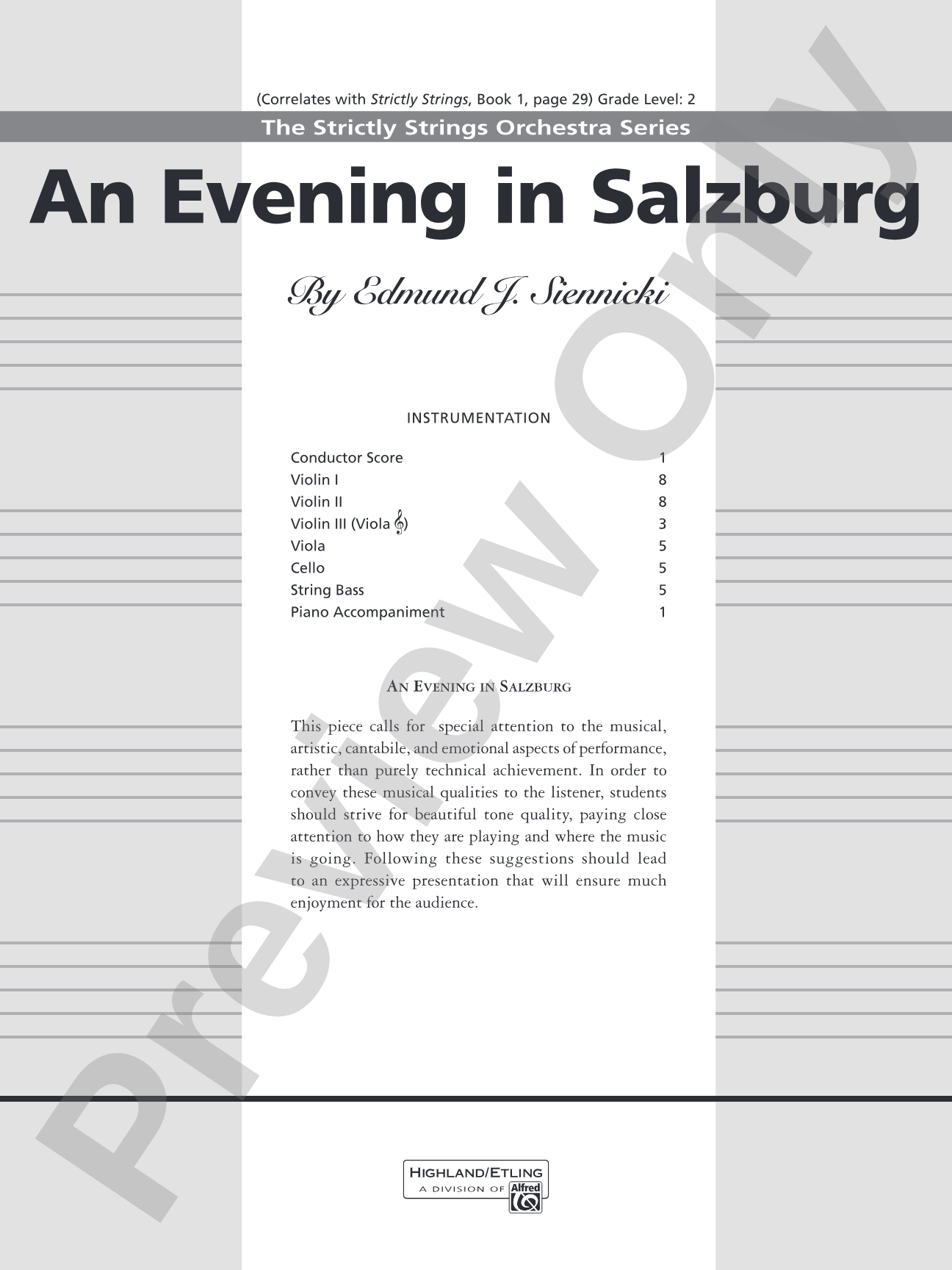
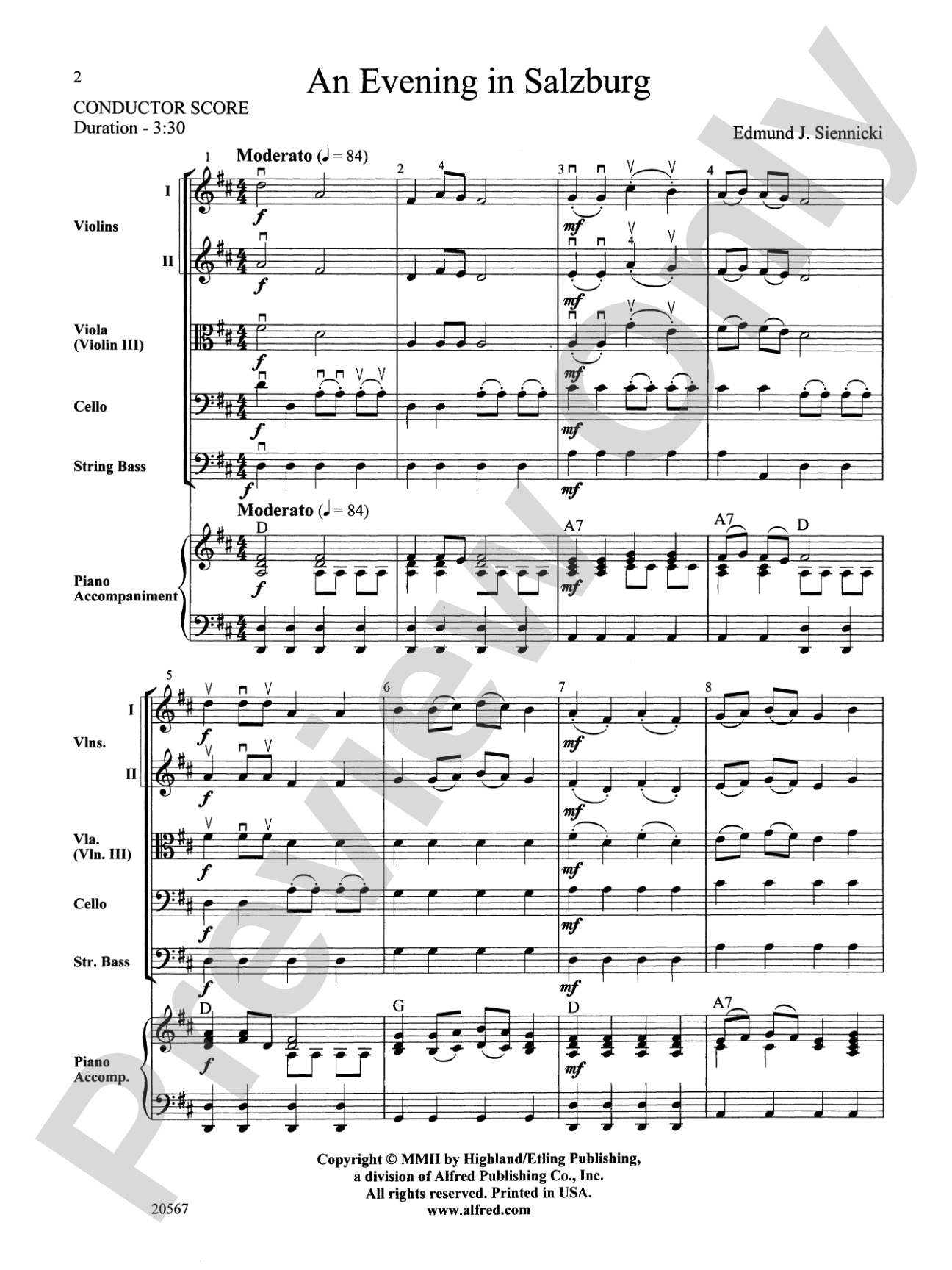
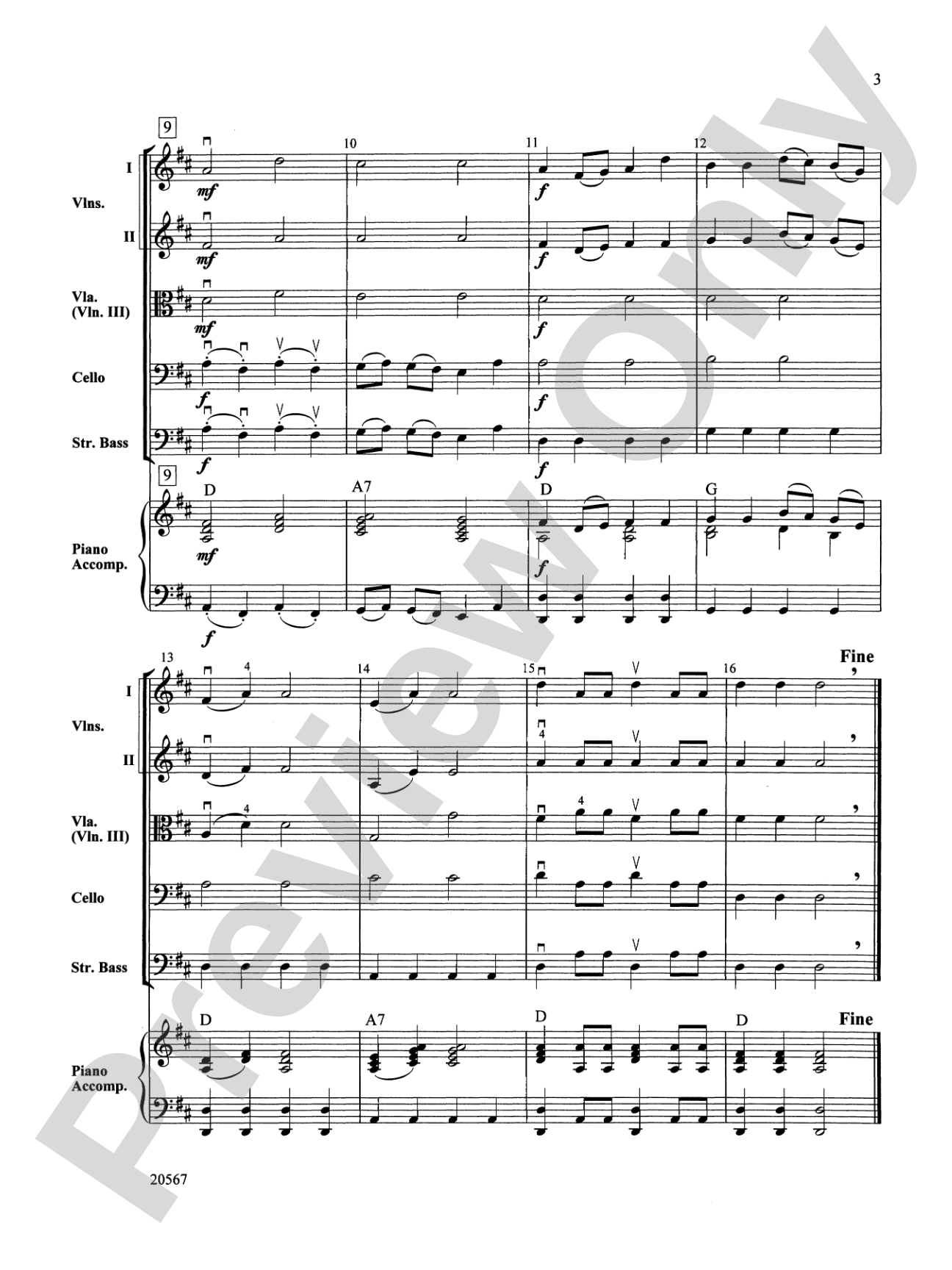
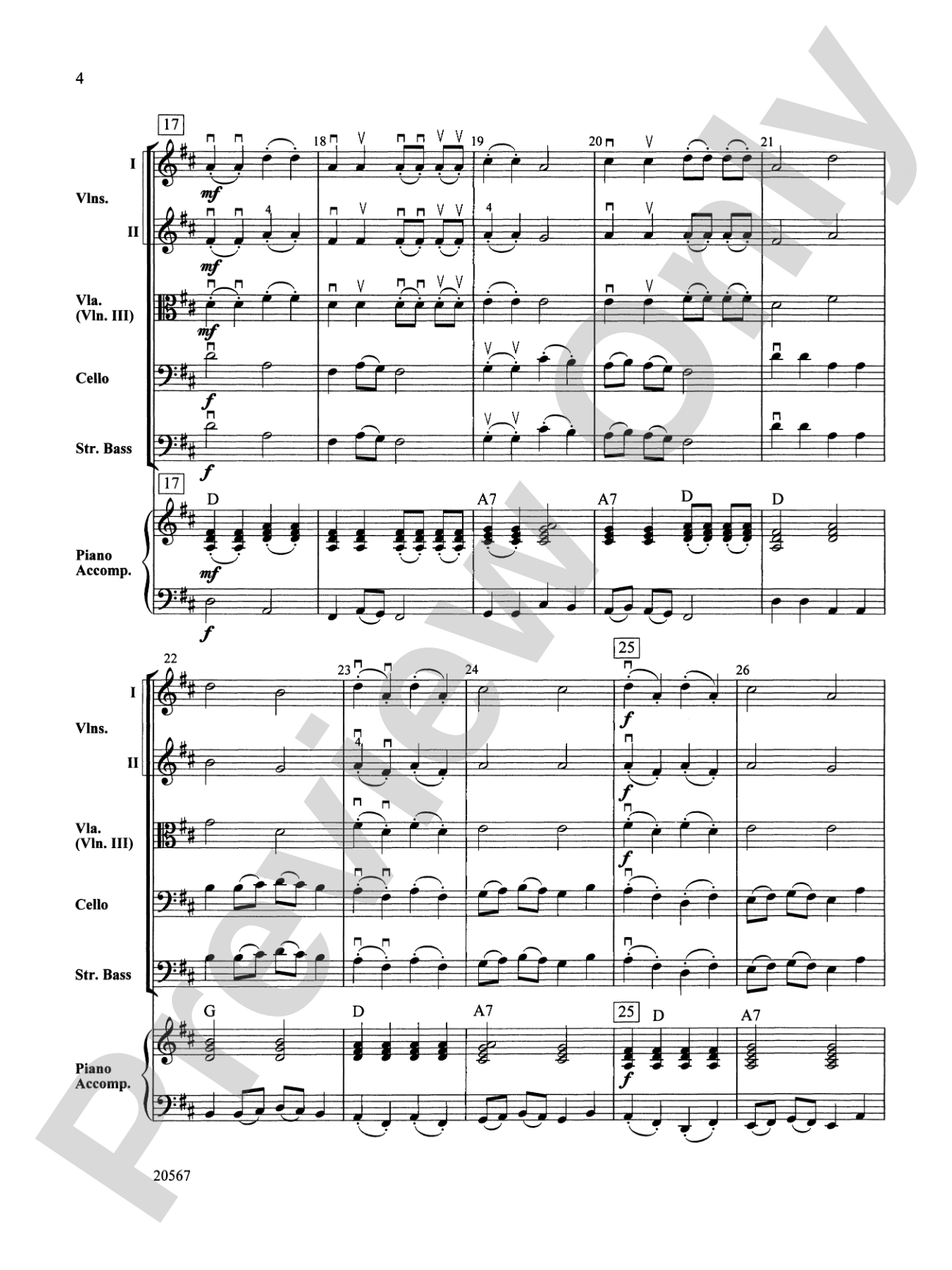
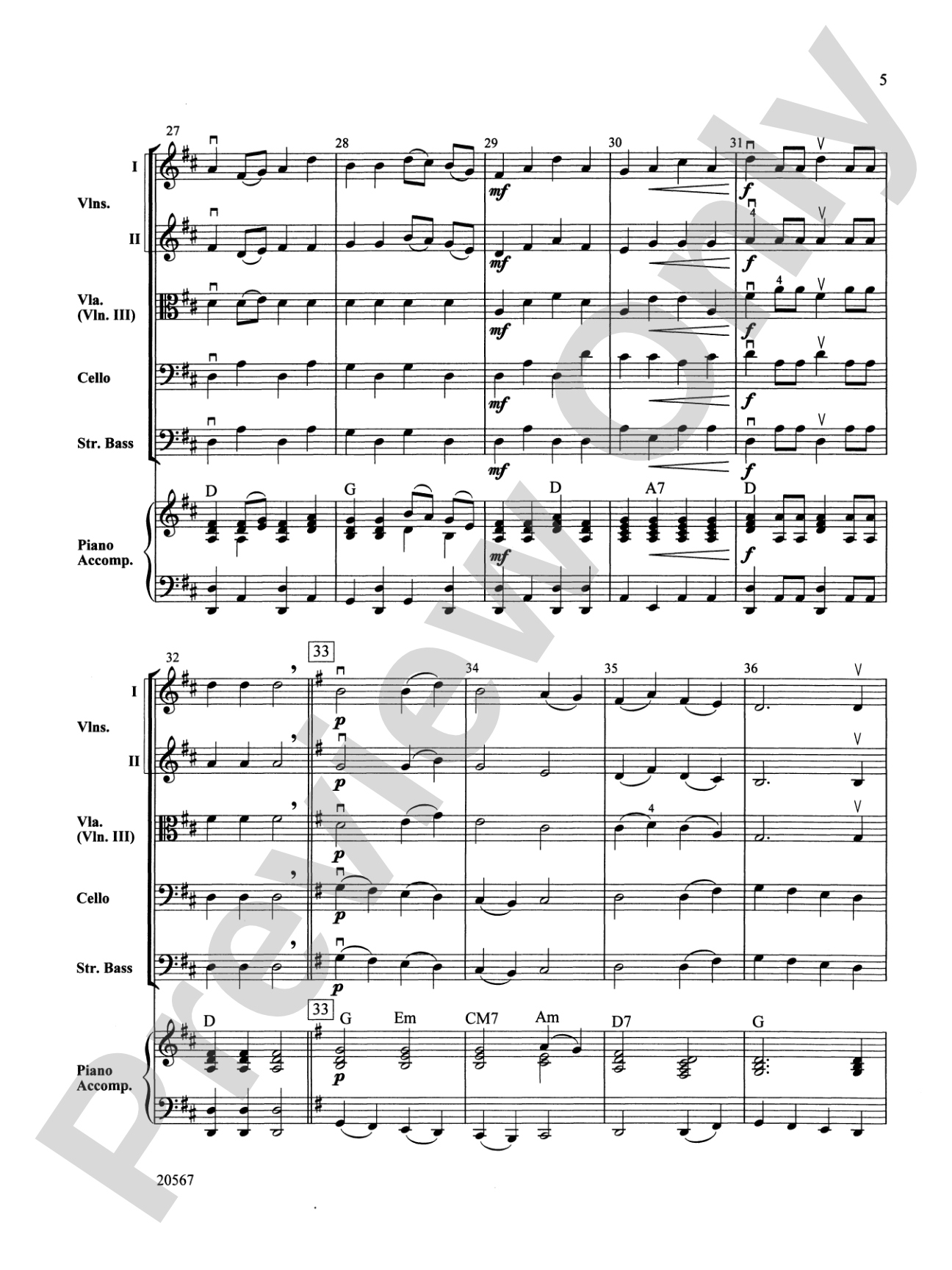
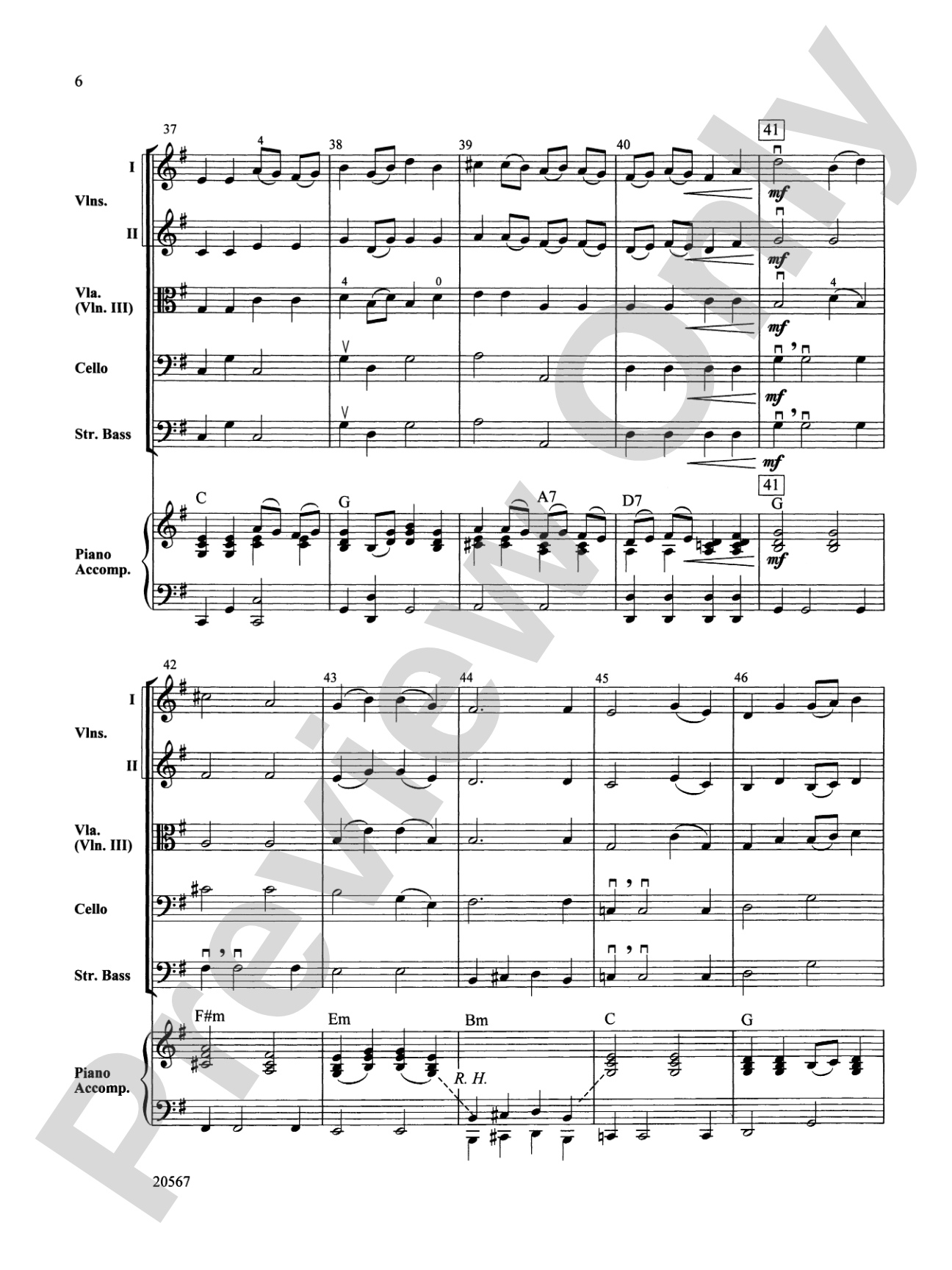
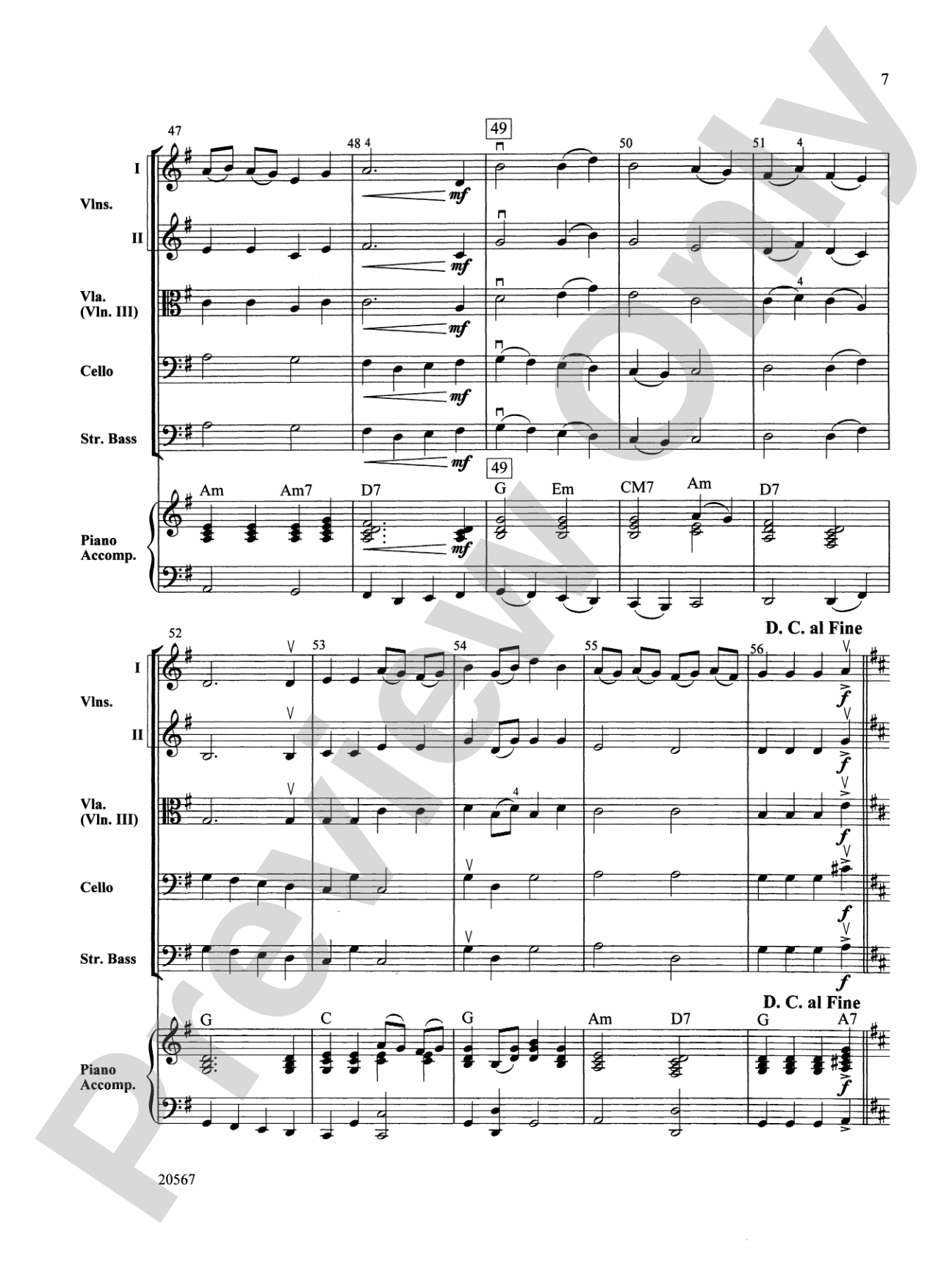


An Evening in Salzburg: String Orchestra Conductor Score & Parts
By Edmund J. Siennicki
Grade: 2
Item: 00-PK-0003969

$42.00
Pickup currently not available
Buy Extra Parts (Digital PDF Download)
| Product | Price | Quantity |
|---|---|---|
| An Evening in Salzburg: Score | $6.00 | |
| An Evening in Salzburg: 1st Violin | $5.99 | |
| An Evening in Salzburg: 2nd Violin | $5.99 | |
| An Evening in Salzburg: 3rd Violin (Viola [TC]) | $5.99 | |
| An Evening in Salzburg: Viola | $5.99 | |
| An Evening in Salzburg: Cello | $5.99 | |
| An Evening in Salzburg: String Bass | $5.99 | |
| An Evening in Salzburg: Piano Accompaniment | $5.99 |
Parts Added to Cart!
Description
Pack your suitcase and get ready to spend An Evening in Salzburg. Not technically demanding, this piece is a great choice for your first string concert. Correlated with Strictly Strings, Book 1, page 29.


Don't just read it, hear it, play along with it, and watch your students grow with it. In MakeMusic Cloud, An Evening in Salzburg: String Orchestra Conductor Score & Parts comes alive with professional accompaniment, adjustable tempo, and built-in practice tools that turn solo practice into real progress.
Open in the Player
Jump straight in and assign it today.
Start Your Free Trial
Open this title and explore the full library in minutes.
Sample Audio
1
Audio File
--:--
0:00
0:00
Sample Video
No sample videos found.
Additional Details
Series:
Highland/Etling Strictly Strings
Publisher:
Alfred Music
Page Count:
72
SKU:
00-PK-0003969
More about this title
About the Composer: Edmund J. Siennicki
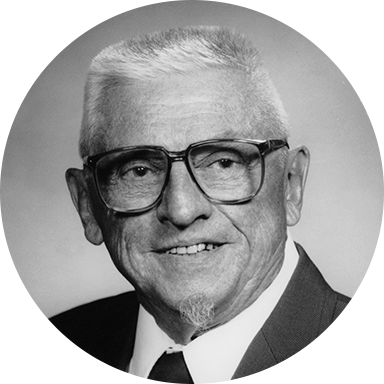
Edmund J. Siennicki grew up in Cleveland, Ohio, and at age twelve encountered the legendary pianist Ignacy Jan Paderewski, a meeting that shaped his artistic direction. He earned his Bachelor's degree from Kent State University, where he composed the school's fight song, still performed at football games today. His graduate training at Teachers College, Columbia University, included composition studies with Herbert Elwell and electronic music work with Sergio Barroso, alongside consultation with Vincent Persichetti.
Siennicki's career balanced composition with performance on bassoon and piano, and he taught in Cleveland's junior high schools while also serving on the faculties at Michigan and Kent State University. His works have won prizes in National School Orchestra composition contests, and he was named composer in residence at the MacDowell Colony twice. With nearly 200 compositions published and consistent ASCAP recognition for two decades, he continues composing, visiting schools, and leading clinics.
Why we love this
Siennicki writes with a clear understanding of what young orchestras can accomplish at Grade 2 level, and this piece proves it. The musical content feels complete and rewarding rather than a mere technical exercise, giving your students a concert experience that genuinely showcases their developing skills. Programming An Evening in Salzburg gives first-time string orchestra directors a piece that builds confidence while staying musically satisfying.
What to expect
An Evening in Salzburg captures the charm and gentle vitality of its namesake city through tuneful, accessible writing. The piece unfolds without technical pretense, inviting young musicians to experience the satisfaction of ensemble playing while musical ideas flow naturally across the string sections.
Who it's for
This work is designed for beginning string orchestras making their concert debut. Teachers and conductors will find it an ideal fit for Grade 2 ensembles, especially those working through the Strictly Strings curriculum.
How to get the most out of it
- Establish a steady pulse before rehearsals begin and keep it consistent throughout. This piece lives on rhythmic security, so anchor the ensemble in time early.
- Balance the melodic lines between sections as your students navigate the dialogue. With all parts relatively equal in prominence, clarity matters more than volume.
- Listen for intonation at section transitions, particularly where one part picks up the melody from another. Mark potential trouble spots in your score during preparation.
- Allow adequate rehearsal time for string crossings and position shifts, which appear frequently but present no technical barrier at this level with proper attention.
How to use it
Open your first string orchestra concert with this piece to set an encouraging, confident tone for the ensemble and audience alike. Its moderate length and approachable character make it an excellent anchor for a program of early-level string repertoire, with room to program contrasting works before or after.
Skills your students will build
- maintaining steady pulse in an ensemble setting
- tracking and executing melodic transitions between string sections
- ensemble balance and intonation across a full orchestra
- string crossings and basic position changes
- reading conductor cues and score coordination