
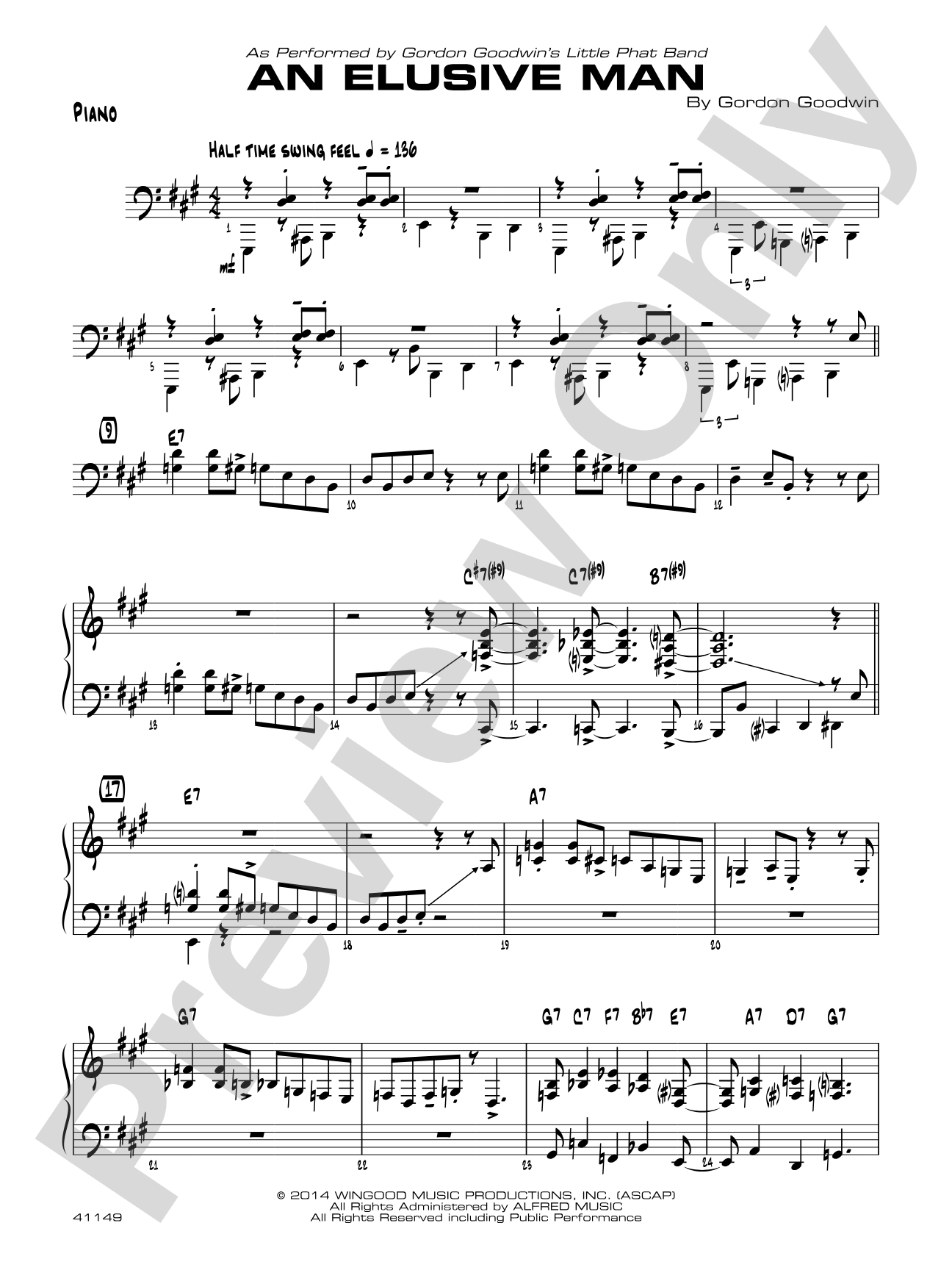
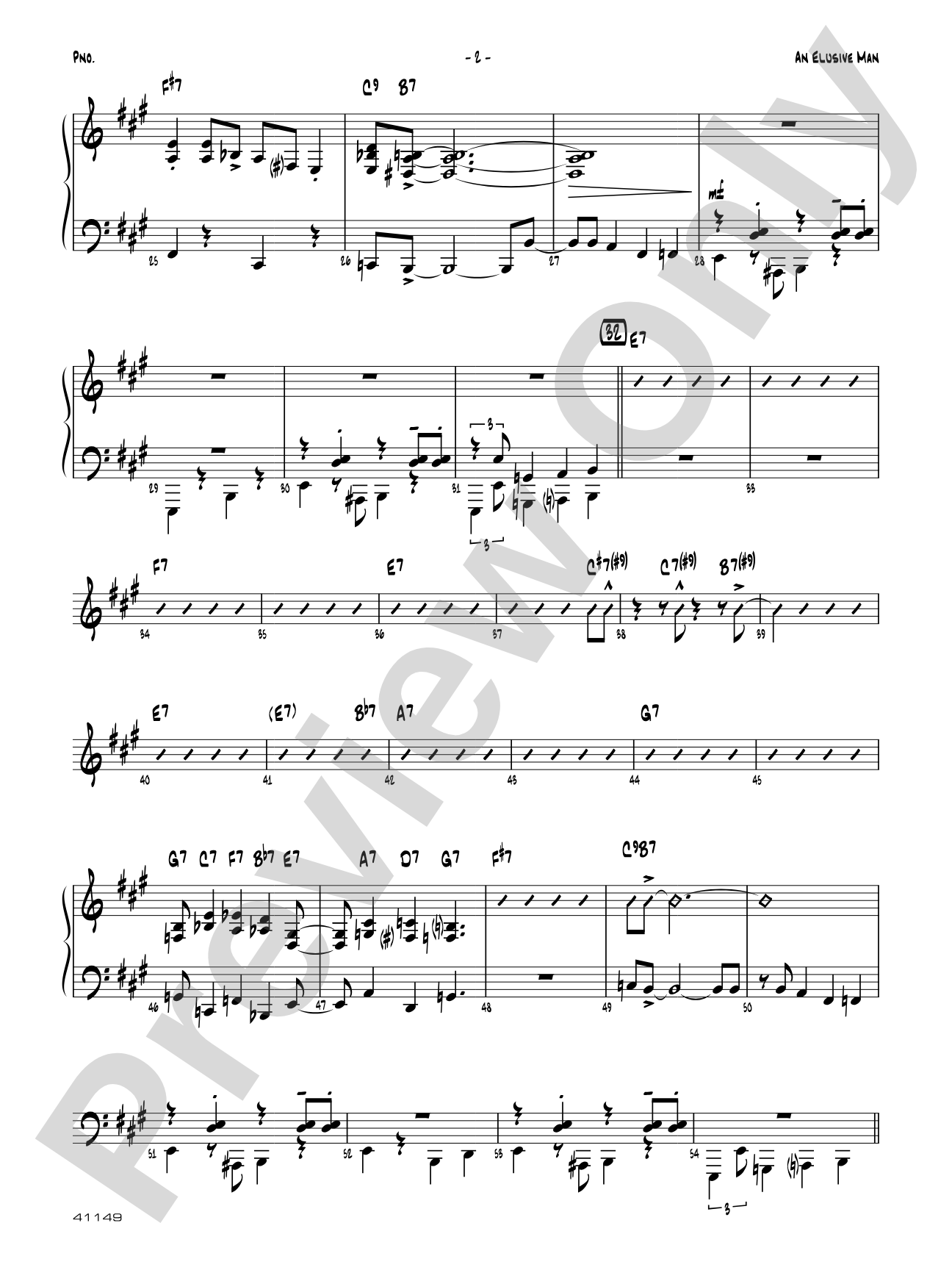

An Elusive Man: Piano Accompaniment
As Performed by Gordon Goodwin's Little Phat Band
By Gordon Goodwin
Grade: 5 (Advanced / Difficult)
Item: 00-PC-0016285_K
$3.00
Pickup currently not available
Description
A medium swing chart at 136 BPM for a smaller band consisting of tenor, trumpet, trombone, piano, bass, guitar, and drums. Includes solo space for all. This title is available in MakeMusic Cloud.


Don't just read it, hear it, play along with it, and watch your students grow with it. In MakeMusic Cloud, An Elusive Man: Piano Accompaniment comes alive with professional accompaniment, adjustable tempo, and built-in practice tools that turn solo practice into real progress.
Open in the Player
Jump straight in and assign it today.
Start Your Free Trial
Open this title and explore the full library in minutes.
Sample Audio
1
Audio File
--:--
0:00
0:00
Sample Video
No sample videos found.
Additional Details
Series:
Gordon Goodwin Little Phat Band Series
Publisher:
Alfred Music
Page Count:
30
SKU:
00-PC-0016285_K
More about this title
About the Composer: Gordon Goodwin
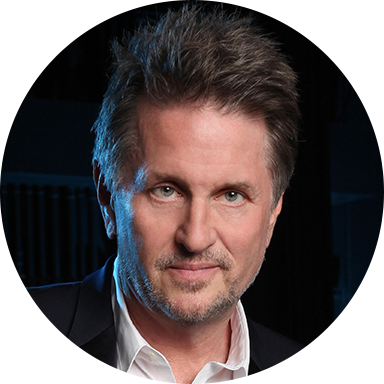
Gordon Goodwin's compositional voice emerged early and fully formed. By age five he was transcribing complete works from his imagination onto paper, and at thirteen he had already written his first big band chart, Hang Loose. This precocious talent caught the attention of film and television producers, launching a career that has earned him three Emmy Awards and multiple Grammy nominations for his orchestrations on films including Bad Boys II, Con Air, Remember the Titans, and Star Trek: Nemesis.
Beyond his screen work, Goodwin has composed and arranged for an extraordinary roster of artists spanning generations: Christina Aguilera, Quincy Jones, Ray Charles, Sarah Vaughan, and Johnny Mathis among them. He has conducted world-class symphony orchestras in Atlanta, Dallas, Utah, Seattle, Toronto, and London. In 2000, Goodwin founded Gordon Goodwin's Big Phat Band, whose debut album Swingin' for the Fences made history as the first commercially released DVD audio recording and earned two Grammy nominations. His subsequent album XXL garnered three Grammy nominations, cementing his status as one of contemporary jazz's most decorated and prolific voices.
Why we love this
Goodwin's writing for smaller ensembles retains the sophistication and rhythmic vitality of his big band work without demanding a full instrumentation. An Elusive Man swings hard at a tempo that's accessible but never lazy, and the solo spaces for every player mean nobody sits idle. A chart like this shows your ensemble that jazz writing at the highest level doesn't require twenty instruments to deliver impact.
What to expect
A medium-tempo swing that moves with purpose and conversational ease. The melody has elegance without affectation, and the ensemble voicings shimmer with the kind of harmonic sophistication you hear on a professional recording. When it lands right, the band feels less like it's playing a chart and more like it's in the room having a real dialogue.
Who it's for
Grade 5 jazz ensembles with solid ensemble cohesion and players who have some soloing experience under their belts. This is ideal for groups ready to tackle charts with genuine professional polish, where the focus can shift from basic swing mechanics to the interpretation and interplay that separate competent reading from compelling music-making.
How to get the most out of it
- Lock the rhythm section early in rehearsal. The piano, bass, guitar, and drums need to lock in on the swing feel at 136 BPM before the horns layer on their solos and ensemble figures.
- Give the tenor saxophonist and trumpet player time to develop their approaches to the solo sections. Goodwin's voicings set up the conversation; the soloists need room to respond authentically.
- Mark dynamics in each part during the first read-through. Goodwin's charts rely on clarity and punch in the horn lines, and inconsistent dynamics will muddy the ensemble sound.
- Have the trombone double-check voice-leading passages with the guitar and piano. These voices often weave together in his writing, and any hesitation throws off the groove.
How to use it
Position this as a centerpiece of a jazz concert or hybrid program. Its accessibility at mid-tempo works well sandwiched between a faster opener and a ballad, and it's sophisticated enough to program on a concert that includes classical or contemporary works without feeling out of place. The strong solo opportunities also make it ideal for a recital or showcase where you want to feature individual player voices within an ensemble context.
Skills your students will build
- Swing phrasing and interpretation at a driving medium tempo
- Solo development over a jazz harmonic progression
- Ensemble balance and voicing clarity with horn, piano, and rhythm section roles clearly defined
- Reading complex jazz charts with chord symbols, rhythmic syncopation, and arranged figures
- Responsiveness between soloists and the rhythm section during unwritten moments