

An Ellington Jazz Trio: SATB, a cappella Choral Octavo
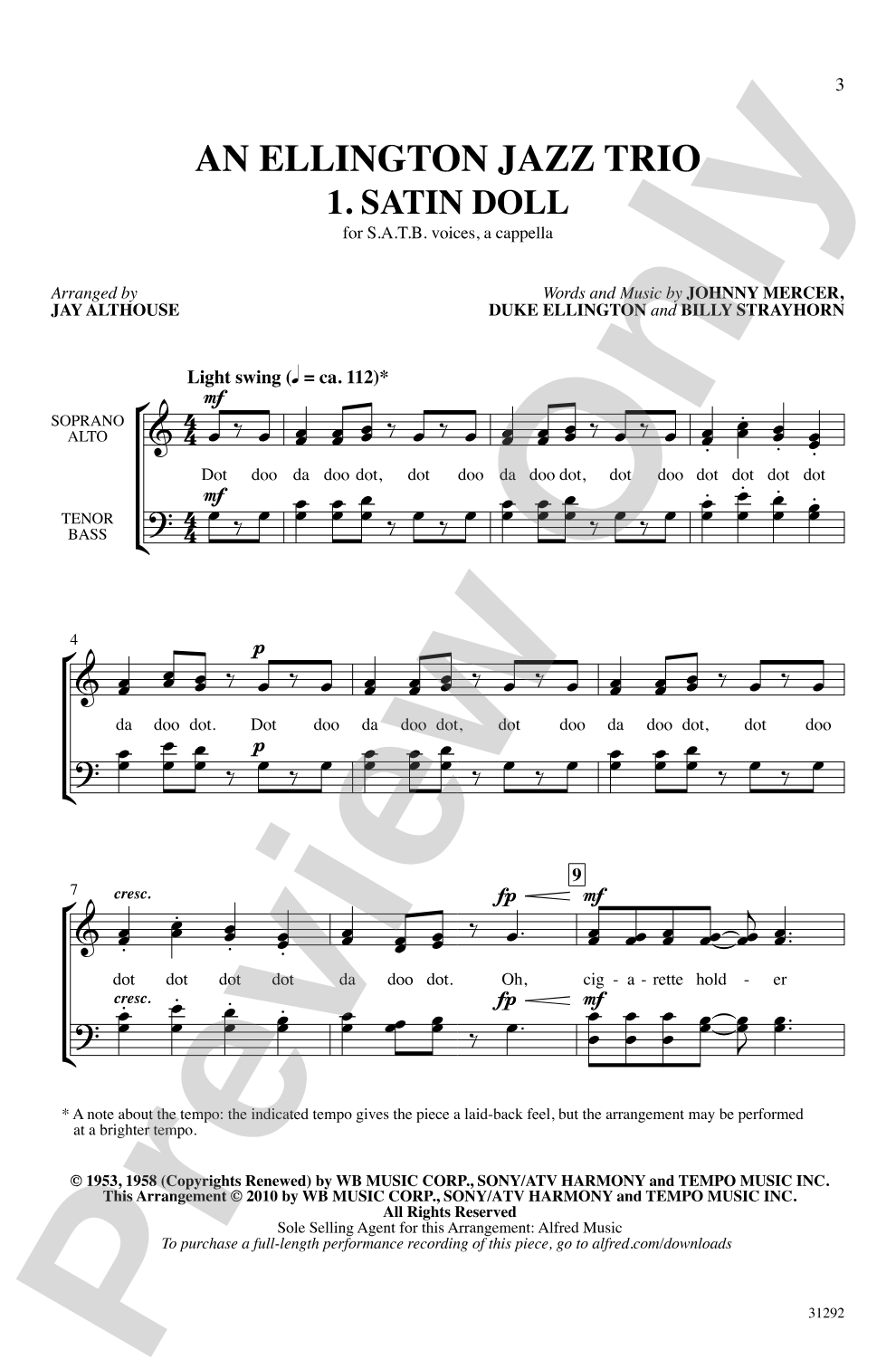
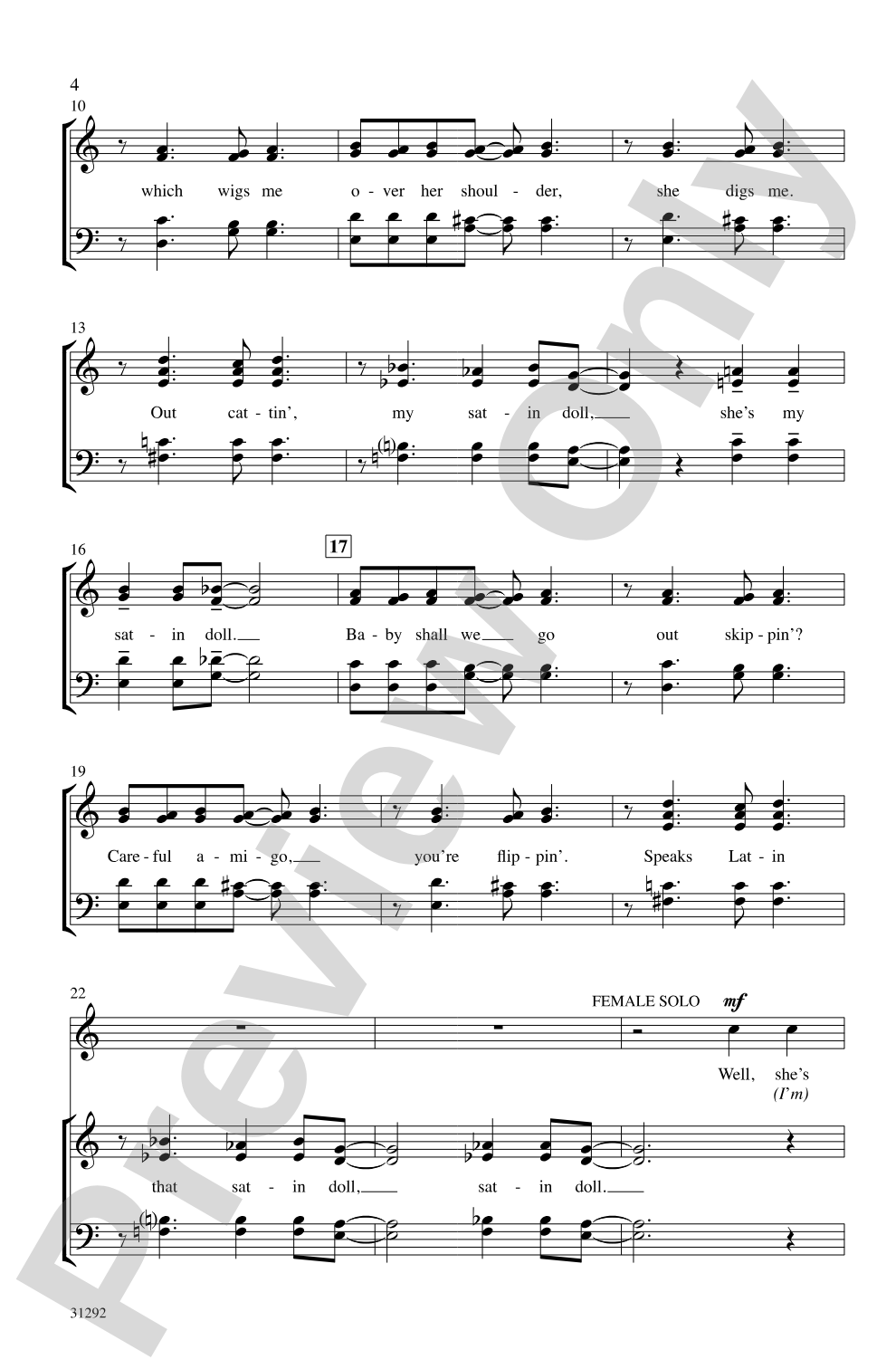
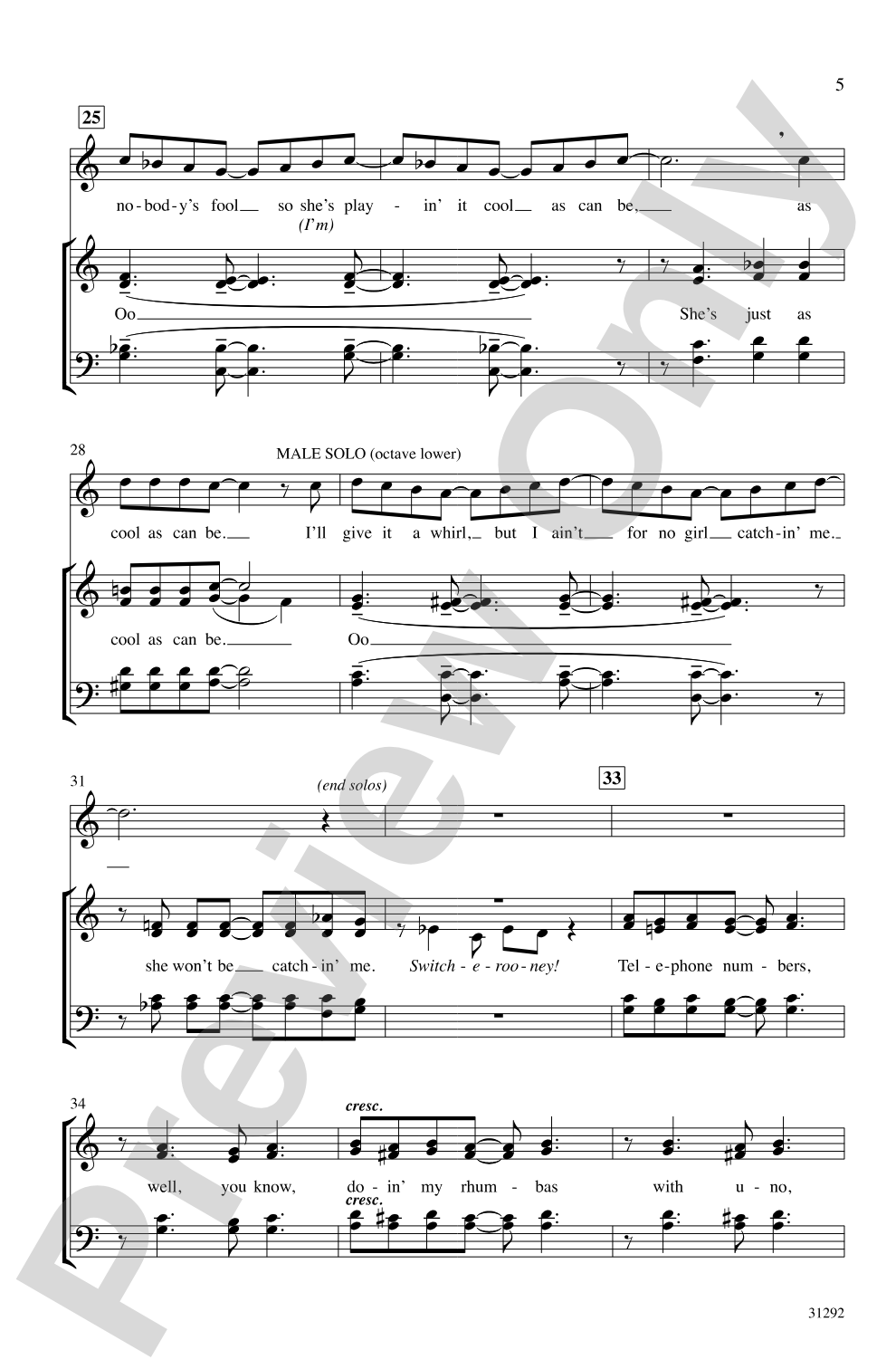
Satin Doll / Solitude / It Don't Mean a Thing (If It Ain't Got That Swing)
Duke Ellington / arr. Jay Althouse
Item: 00-PO-0004393
$2.95
Minimum order quantity: 20 copies
One moment…
Related Items
An Ellington Jazz Trio: SATB, a cappella Choral Octavo |
$2.95
|
View |
Description
Considered one of the founding fathers of jazz music, Duke Ellington was one of the most popular and prolific composers of the 20th century. This varied trio of a cappella charts offers stunning, tight, and tasty harmonies.


An Ellington Jazz Trio: SATB, a cappella Choral Octavo isn't in MakeMusic Cloud just yet...but it could be. Let us know you'd like to see it, and you'll help shape what comes next. In the meantime, start a free trial and dive into thousands of interactive titles your students can play along with today.
Request This Title
Tell us you want it.
Start Your Free Trial
Explore everything that's ready to play right now.
Sample Audio
1
Audio File
--:--
0:00
0:00
Sample Video
No sample videos found.
Additional Details
Series:
Alfred Archive Edition: Alfred Choral Designs
Publisher:
Alfred Music
Page Count:
16
SKU:
00-PO-0004393
More about this title
About the Composer: Duke Ellington
Duke Ellington (1899-1974) shaped American music across seven decades as a composer, bandleader, and pianist whose influence extended far beyond jazz. His command of harmony, orchestration, and form set him apart from his contemporaries; he composed over a thousand works ranging from three-minute pop standards to extended concert pieces, each one marked by sophisticated harmonic thinking and melodic invention.
Ellington's approach to composition emphasized individual voices within ensemble textures. His legacy in choral music comes not from his own vocal writing but from the distinctive harmonic language he developed for big band, which arrangers like Jay Althouse have successfully adapted for voices. For choral directors, Ellington's music offers a direct line to the harmonic vocabulary that defined American popular music in the twentieth century.
Why we love this
Jay Althouse captures Ellington's harmonic sophistication in voicings that sit naturally on the voice while maintaining the sophistication of the originals. Choirs at this level rarely encounter jazz harmonies this elegant without feeling overwrought; these arrangements prove that taste and technical skill can coexist. Programming three Ellington pieces together gives you a complete statement about American compositional genius in one coherent set.
What to expect
Sophisticated without pretension, these arrangements swing with restraint and charm. The harmonies feel natural to the ear even as they surprise you with their color and movement; there's an ease to them that belies their harmonic complexity. You hear Ellington's wit and elegance distilled into three vocal pieces that sit comfortably in the middle range of difficulty while delivering the sound of a much more advanced ensemble.
Who it's for
SATB choirs with solid intonation and the ability to sustain vowel quality through jazz harmonies. This works for upper high school through adult community and college ensembles; the harmonic language requires singers who can hear and adjust complex sonorities without written reference tones. Choirs drawn to popular music, standards, or American songwriting will find this repertoire immediately engaging.
How to get the most out of it
- Treat the jazz harmonies as the foundation of interpretation, not an overlay. These voicings should sound inevitable, not decorated. Have singers hear how each chord functions before worrying about style.
- Work the blend within each section relentlessly. SATB jazz voicings expose every crack; unmatched vowels or vibrato styles will break the sound apart. Lock the harmonic color first, then layer in interpretation.
- Let the rhythm breathe with a light touch. Ellington writing tends toward sophistication rather than swing; resist the urge to overstate the groove. Precision in rhythm will give you more style than exaggeration.
- Use the harmonic movement as your rehearsal map. Because these are a cappella, the voice parts often outline chord changes rather than double melodies. Teaching singers to hear their role in the harmonic progression makes learning faster and interpretation deeper.
How to use it
Three pieces allow you to build a complete Ellington set as a concert segment, framing American jazz composition within a single cohesive block. Pair these with other twentieth-century American standards or contemporary jazz-influenced choral literature to create a concert exploring jazz harmony across generations. They also work as a stylistic opener to draw audiences in before moving to other repertoire.
Skills your students will build
- Hearing and sustaining jazz harmonies and chromatic voice leading
- Balancing individual voice independence with collective harmonic blend
- Interpreting rhythm with precision and style in a cappella settings
- Understanding Ellington's harmonic language and its influence on American music