
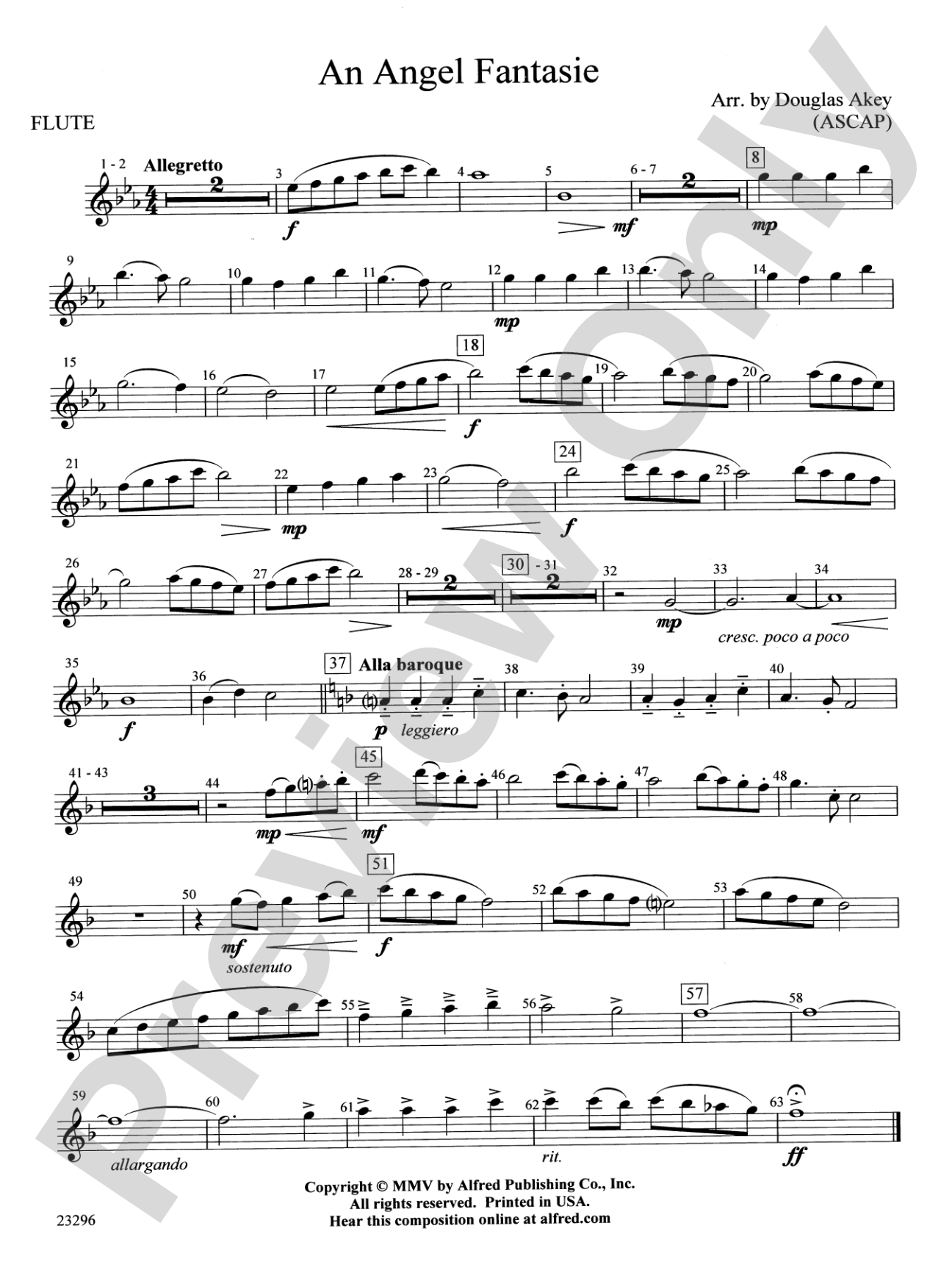

An Angel Fantasie: Flute
By Douglas Akey
Grade: 1.5 (Easy)
Item: 00-PC-0000646_F1
$3.00
Pickup currently not available
Description
Here is an outstanding opportunity to both ring in the season and help your students to develop the important skills of rhythmic independence and stylized articulations. An Angel Fantasie is a creative treatment of the well-known Christmas carol Angels We Have Heard On High. This arrangement forgoes the usual melody/harmony scoring in favor of introducing the young musician to simple contrapuntal writing. The theme is treated lyrically for the first half of the arrangement before introducing lighter articulations "alla baroque."


Don't just read it, hear it, play along with it, and watch your students grow with it. In MakeMusic Cloud, An Angel Fantasie: Flute comes alive with professional accompaniment, adjustable tempo, and built-in practice tools that turn solo practice into real progress.
Open in the Player
Jump straight in and assign it today.
Start Your Free Trial
Open this title and explore the full library in minutes.
Sample Audio
1
Audio File
--:--
0:00
0:00
Sample Video
No sample videos found.
Additional Details
Series:
Alfred Debut Series
Publisher:
Alfred Music
Page Count:
126
SKU:
00-PC-0000646_F1
More about this title
About the Composer: Douglas Akey

Douglas Akey earned his bachelor's degree in Instrumental Music and master's degree in Solo Performance from Arizona State University, where he studied on a performance scholarship. For over three decades, he has served as Director of Bands and Music Department Chairperson at Hendrix Junior High School in Chandler, Arizona, bringing two decades of junior high band teaching experience in the Phoenix area.
Akey's compositions have secured positions on state contest lists across the country and are performed by concert bands worldwide. His contributions to music education have earned him recognition including the Stanbury Award from the American School Band Directors Association and the National Federation of Secondary Schools Music Educator of the Year Award.
Why we love this
This arrangement introduces Grade 1.5 musicians to contrapuntal thinking without sacrificing accessibility or seasonal relevance. The shift from lyrical opening to "alla baroque" lighter articulations gives your band a genuinely musical arc to develop, and the focus on rhythmic independence means students engage with the harmonic structure rather than simply following a melody.
What to expect
The opening floats with lyrical warmth, honoring the familiar carol while establishing new harmonic context. As the arrangement progresses into its baroque character, the texture brightens with articulated accompaniment and independent voices that dance around each other with clarity and elegance.
Who it's for
Concert band directors seeking substantial repertoire that fits the winter concert calendar while building genuine musicianship. Grade 1.5 ensembles benefit most from this piece, though strong Grade 1 bands and solid Grade 2 ensembles will both find musical value in Akey's contrapuntal approach.
How to get the most out of it
- Balance the independent rhythmic lines by identifying each voice's role during sectional rehearsals; some players will carry harmonic content while others articulate accompaniment figures, and clarity depends on each student understanding their specific function.
- Shape the transition from the lyrical first half to the baroque section intentionally. Mark tempo and articulation cues clearly in parts so the shift feels purposeful rather than abrupt.
- Rehearse the stylized baroque articulations separately before combining them with the full ensemble. Light tonguing and clean releases require focused ensemble work on a smaller scale first.
- Use the conductor score to trace the thematic material as it moves through different voices, helping students hear how the carol melody transforms rather than remains static.
How to use it
This works perfectly as a centerpiece for a winter concert, particularly if you're programming other sacred or seasonal works. The manageable length and difficulty level allow it to anchor the second half of a program while demonstrating to audiences how your young musicians handle more complex musical thinking.
Skills your students will build
- Rhythmic independence across multiple instrumental lines
- Understanding of simple contrapuntal writing and voice leading
- Stylized articulation techniques (baroque articulation and lighter tonguing)
- Harmonic awareness beyond melody-driven arrangements
- Reading and executing thematic material as it moves between instrumental sections