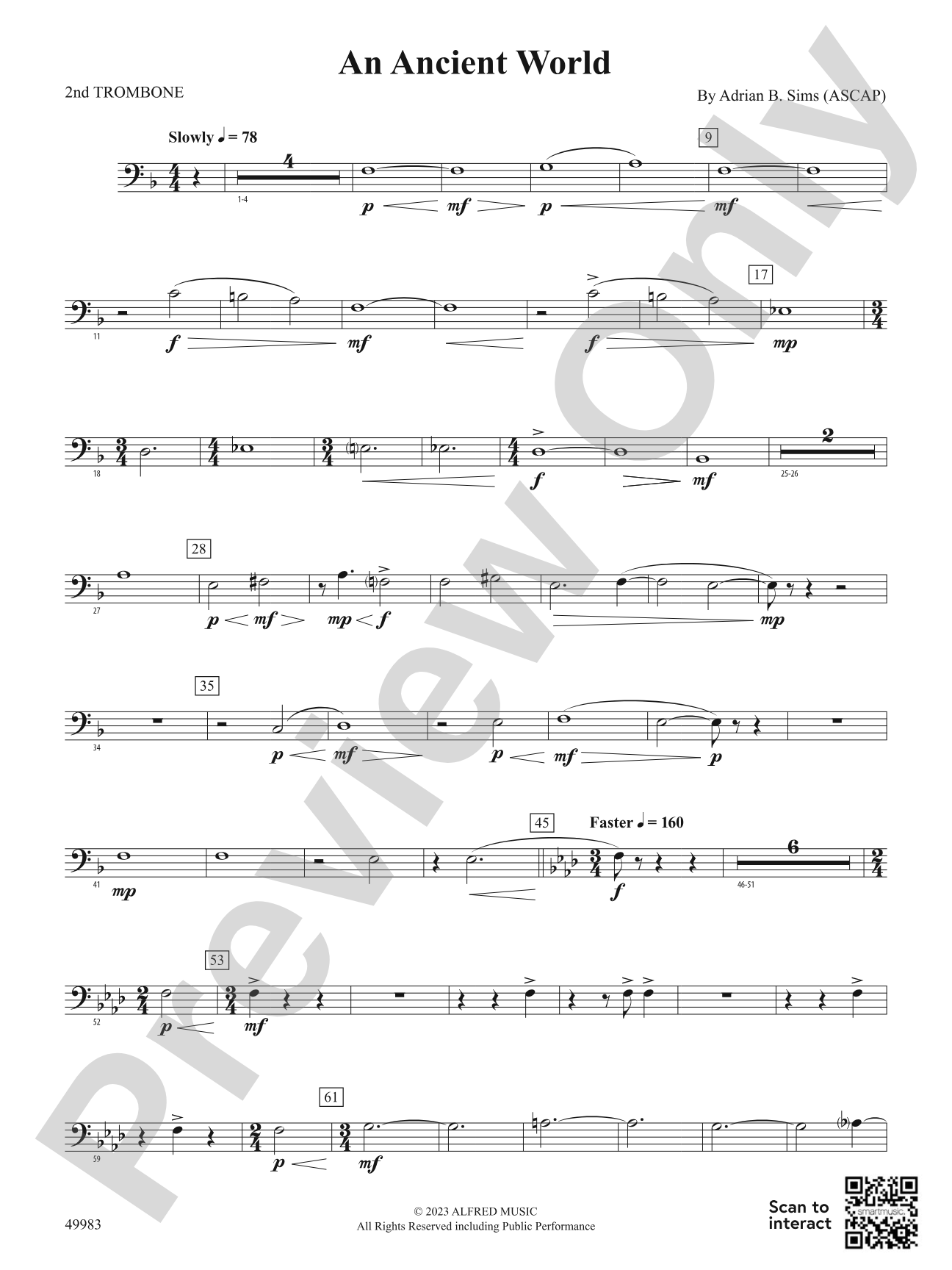
An Ancient World: 2nd Trombone Sheet Music Preview

An Ancient World: 2nd Trombone

By Adrian B. Sims

Grade: 4

Item: 00-PC-0018973_TN2

Digital Download
$3.00
Description
An Ancient World, by Adrian B. Sims, imagines the ruins of a past civilization. The work explores the mysterious and fascinating landscapes that were once so beautiful. Reawakened in a new light, the world reignites with energy. After a final mourning of that which was lost and can never be restored, (measures 95--130), the work lives out the essence of ancient royalty with one last celebratory musical statement. (7:00)

Don't just read it, hear it, play along with it, and watch your students grow with it. In MakeMusic Cloud, An Ancient World: 2nd Trombone comes alive with professional accompaniment, adjustable tempo, and built-in practice tools that turn solo practice into real progress.

Sample Audio
0:00
0:00
Sample Video
Additional Details
Series: Alfred Concert Band
Publisher: Alfred Music
SKU: 00-PC-0018973_TN2

More about this title

About the Composer: Adrian B. Sims

Adrian B. Sims

Adrian B. Sims (born 2000) is a Seattle-born composer, conductor, educator, and trombonist currently pursuing a dual degree in Music Education and Composition at the University of Maryland. His works have been performed at The Midwest Band and Orchestra Clinic and recognized on the Bandworld Top 100 List, and he has won multiple composition competitions including the Maryland Music Educators Association Young Composers Project and the Make Music Young Composers Contest.

As a trombonist, Sims has performed across numerous ensembles, from pit and symphony orchestras to jazz and concert bands. He was a multiple-time participant in the Maryland All-State Band and has performed alongside the Baltimore Symphony Orchestra. He studies composition with Dr. Robert Gibson at the University of Maryland and credits world-renowned composer Brian Balmages for his compositional development.

Why we love this

An Ancient World delivers programmatic storytelling with genuine emotional weight. The arc from ruins through mourning to triumphant celebration gives conductors and students a cohesive dramatic experience, and the Grade 4 scoring ensures accessibility without sacrificing orchestration that sounds full and colorful.

What to expect

An Ancient World unfolds like an archaeological discovery, beginning in hushed contemplation of forgotten beauty before awakening into vibrant, energetic light. The final section captures the pageantry and pride of ancient civilizations, creating a bittersweet celebration of what once was.

Who it's for

This work suits concert bands at the Grade 4 level seeking meaningful repertoire with structural and dramatic sophistication. Directors programming contests or festivals will find a piece that engages both performers and audiences through its narrative arc.

How to get the most out of it

  • Shape the mysterious opening section with careful dynamic control and deliberate phrasing to establish the contemplative mood before energy builds.
  • Balance the brass choir during the final celebratory statement so it projects confidence without overwhelming the ensemble texture.
  • Rehearse the measures 95-130 funeral march section with attention to rhythmic precision and tonal unity across sections; this passage anchors the emotional trajectory.
  • Use the tempo relationships between sections to guide students through the journey: mark clear tempo changes in rehearsal to reinforce the programmatic narrative.

How to use it

Program this as a centerpiece that stands on its own thematic strength, allowing it to anchor a concert around historical or cultural themes. The seven-minute duration and dramatic scope make it equally effective as a festival selection or a program highlight at a spring concert.

Skills your students will build

  • Shaping extended dynamic arcs over multiple phrases
  • Executing tempo transitions that support programmatic storytelling
  • Balancing homophonic texture with independent section blend
  • Sustaining expressive quality through contrasting moods and tempos
  • Interpreting compositional intent from program notes and structure

You May Also Like