
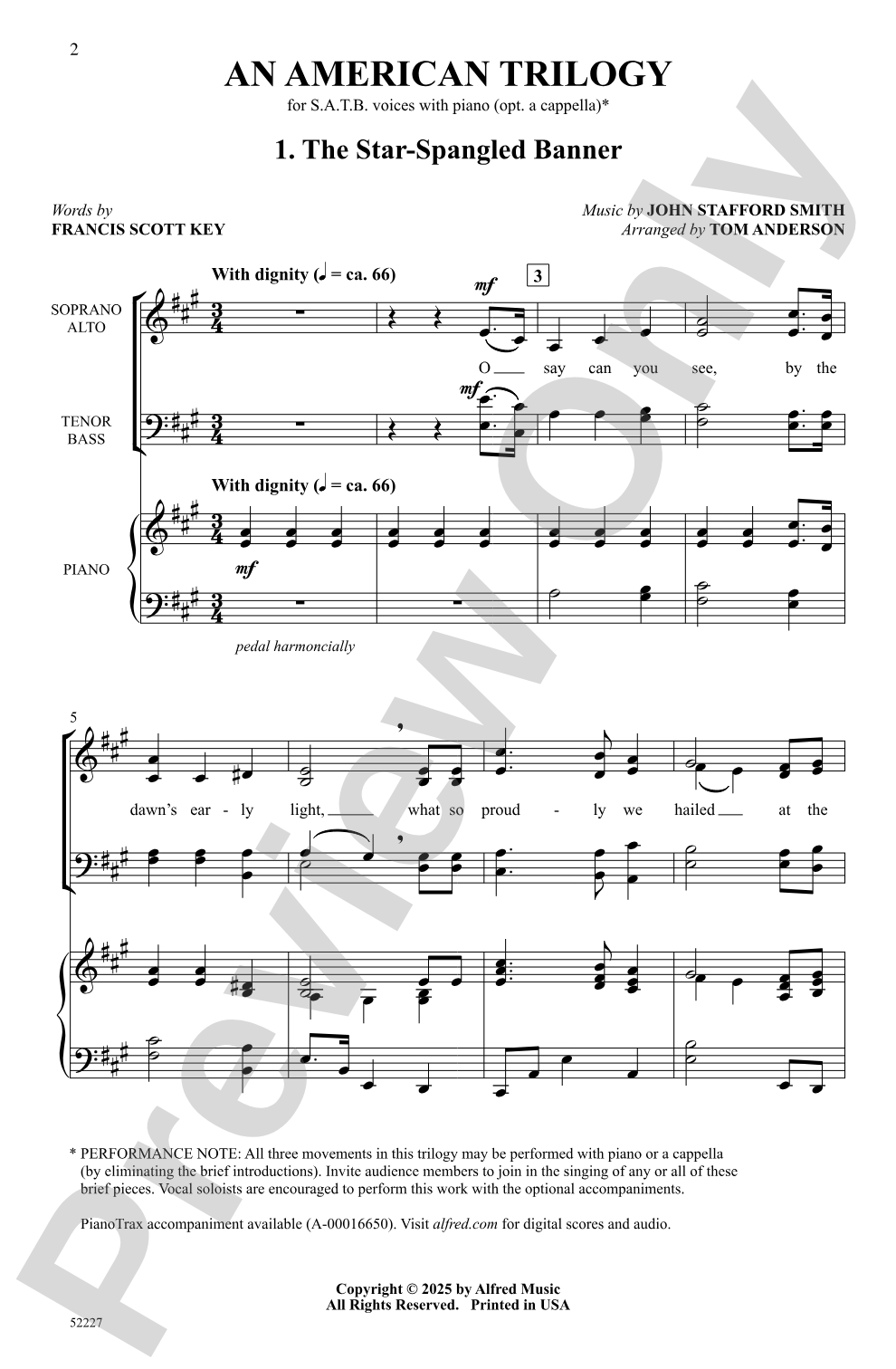
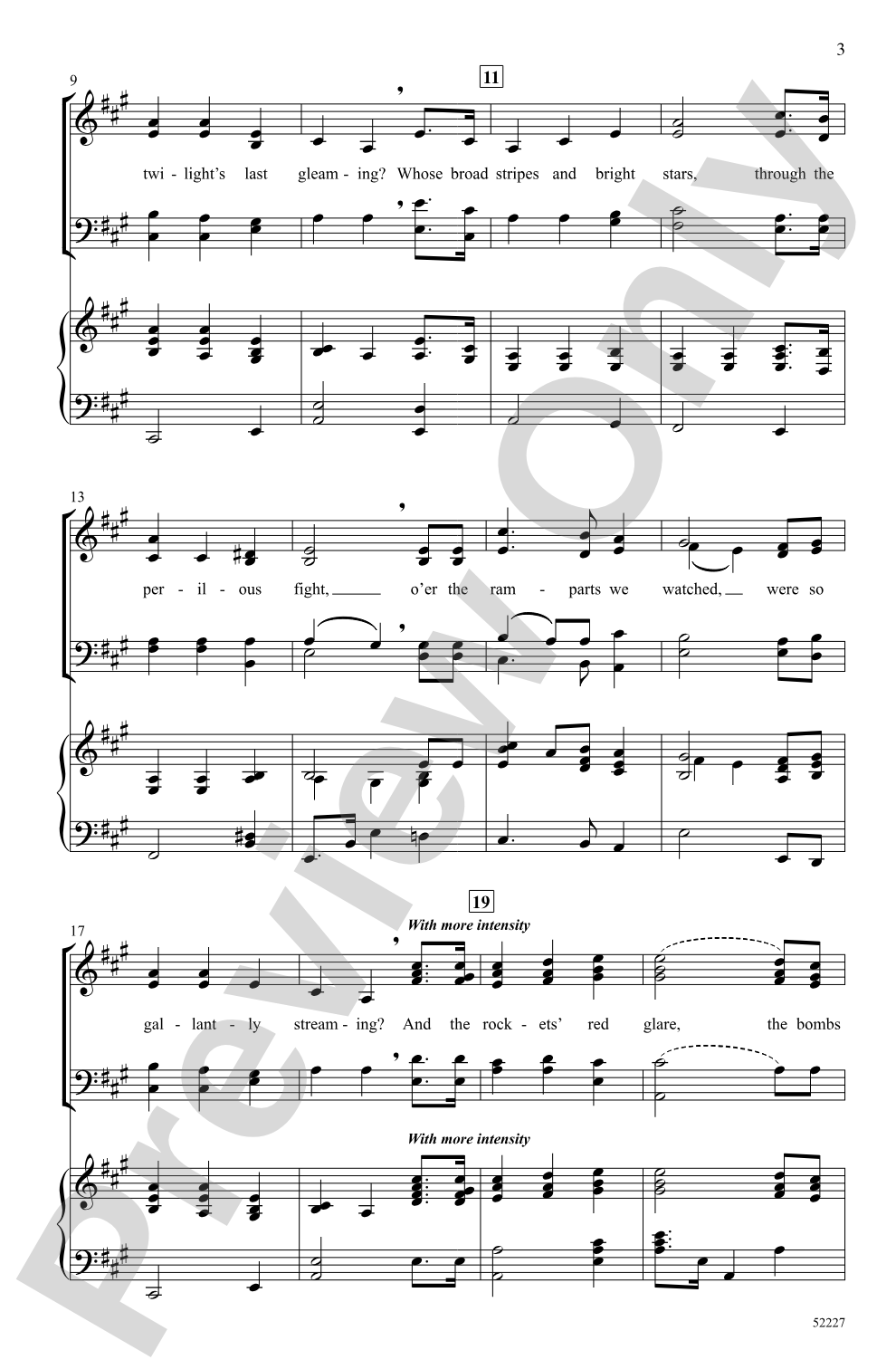

An American Trilogy: SATB, opt. a cappella Choral Octavo
1. The Star-Spangled Banner * 2. My Country, 'Tis of Thee * 3. America the Beautiful
Words by Francis Scott Key, Samuel Francis Smith, and Katharine Lee Bates / music by John Stafford Smith and Samuel A. Ward / arr. Tom Anderson
Item: 00-PO-0007601
$2.30
Minimum order quantity: 20 copies
Pickup currently not available
Description
Three short patriotic staples are included in this flexible must-have for concerts, community events, holidays, and games. Perform each brief arrangement separately or combine them into a set, a cappella or accompanied. These no-nonsense treatments have just enough contemporary flair to sound relevant today, yet remain tasteful and effective for years to come. Includes The Star-Spangled Banner, My Country 'Tis of Thee, and America the Beautiful.


An American Trilogy: SATB, opt. a cappella Choral Octavo isn't in MakeMusic Cloud just yet...but it could be. Let us know you'd like to see it, and you'll help shape what comes next. In the meantime, start a free trial and dive into thousands of interactive titles your students can play along with today.
Request This Title
Tell us you want it.
Start Your Free Trial
Explore everything that's ready to play right now.
Sample Audio
1
An American Trilogy-America the Beautiful
--:--
2
An American Trilogy-My Country, Tis of Thee
--:--
3
An American Trilogy-The Star Spangled Banner
--:--
An American Trilogy-America the Beautiful
0:00
0:00
Sample Video
Additional Details
Series:
Alfred Choral Designs
Publisher:
Alfred Music
Page Count:
12
SKU:
00-PO-0007601
More about this title
About the Composer: John Stafford Smith
John Stafford Smith (1750-1836) was an English composer and organist whose melodic gift transcended his era. Though he composed prolifically across sacred and secular genres, his enduring legacy rests almost entirely on a single tune: the melody now known as "The Star-Spangled Banner." Smith originally paired this melody with the patriotic poem "To Anacreon in Heaven," and its architectural elegance and singability ensured its survival long after his other works faded.
Smith's training in counterpoint and harmonic writing is evident in the structural clarity of his melodies. For music educators, his work demonstrates how a strong, well-proportioned tune can transcend centuries and national boundaries, becoming woven into cultural identity itself. His compositions remain valuable teaching tools precisely because they prove that musical longevity flows from craft, not fashion.
Why we love this
These arrangements handle three iconic melodies without sentimentality or oversimplification. The flexibility to perform them a cappella or accompanied, separately or as a suite, means you can deploy this octavo across dozens of programming situations throughout the year without feeling repetitive. The contemporary harmonic language keeps these familiar tunes fresh while preserving their dignity.
What to expect
These arrangements balance reverence with accessibility. Each melody unfolds with clear harmonic support that feels modern without sacrificing the quiet authority these songs carry. Singing them creates a sense of collective belonging, whether performed a cappella in close harmony or supported by accompaniment.
Who it's for
This octavo serves choirs performing at concerts, community patriotic celebrations, holiday events, and contests. High school and college choirs benefit from the flexible voicing and contemporary arrangement style, while community and church choirs appreciate the familiar melodies and straightforward musical language.
How to get the most out of it
- Balance the melody distribution across all four parts during sectional rehearsals; highlight which voice carries the tune in each phrase so ensemble singers understand how their part supports the overall shape.
- When performing a cappella, establish pitch security by rehearsing the opening unison or unison-plus-octave passages first, then layer in the remaining voices once that foundation is rock solid.
- If using recorded accompaniment, bring it into rehearsals early enough that singers can internalize the harmonic rhythm without becoming dependent on it; aim for confident a cappella performance even if the recording supports a concert performance.
- Shape each of the three pieces independently even when performing them as a medley; give yourself a full breath and slight reset between arrangements so the program feels like three statements, not one continuous piece.
How to use it
Build a standalone patriotic concert around these three staples, or weave individual arrangements into broader programs during the Fourth of July, Veterans Day, or civic events. The a cappella option makes them ideal for processional moments or acapella-focused concerts, while the accompaniment flexibility allows them to anchor programs with varied instrumentation.
Skills your students will build
- Singing melodically familiar material with sophisticated harmonic accompaniment
- Balancing ensemble blend when multiple voices carry thematic material simultaneously
- Adjusting intonation and vibrato for a cappella versus accompanied performance contexts
- Interpreting patriotic music with musical authenticity rather than bombast