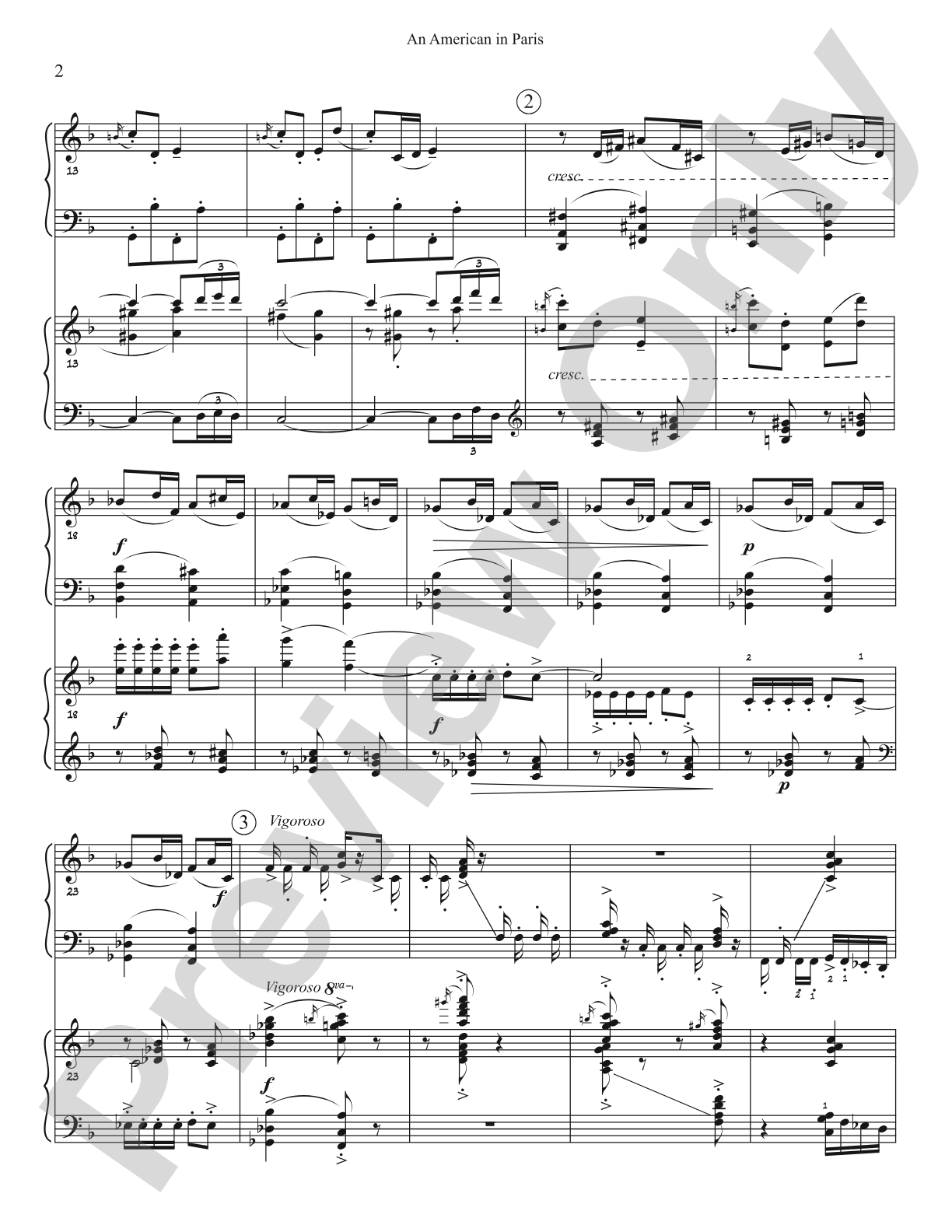
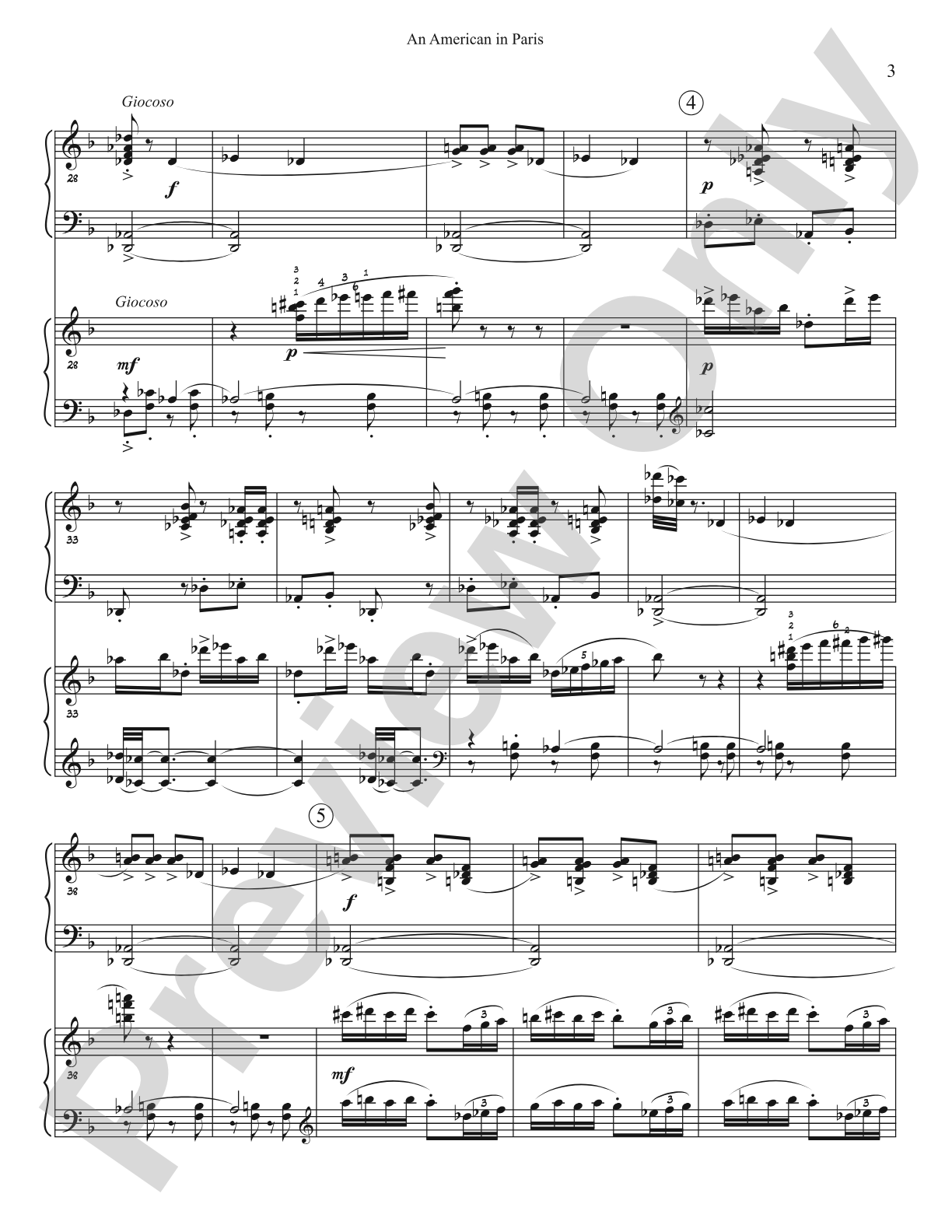
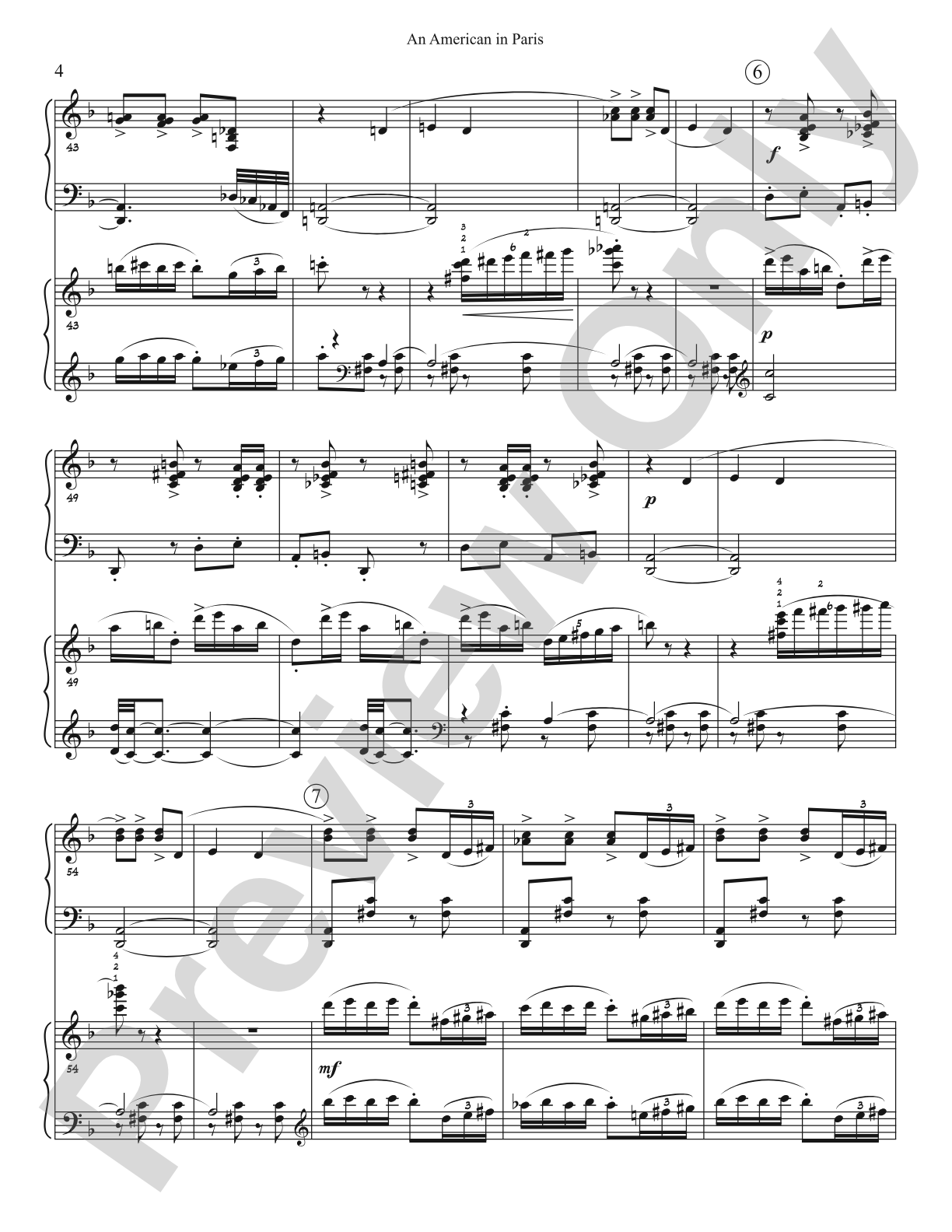
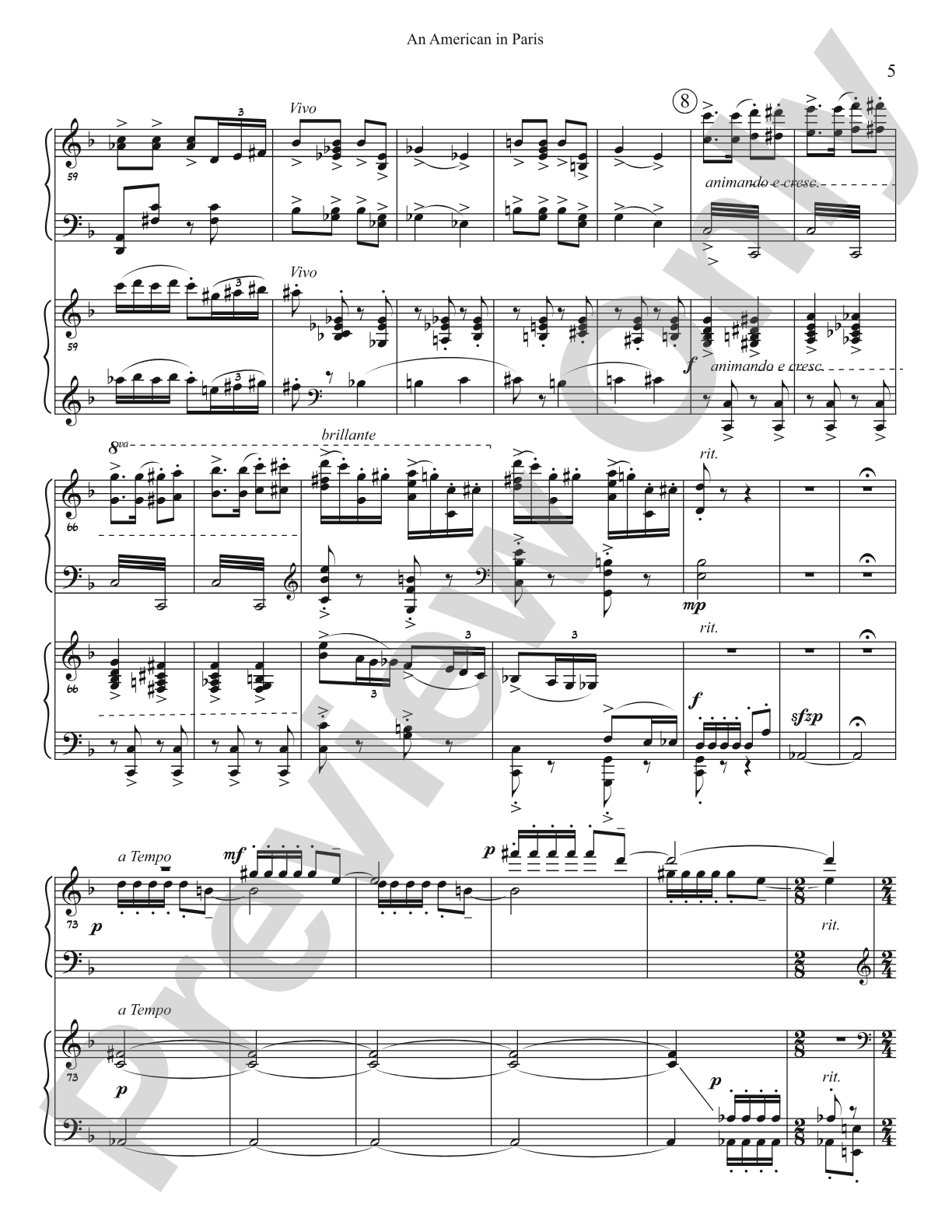
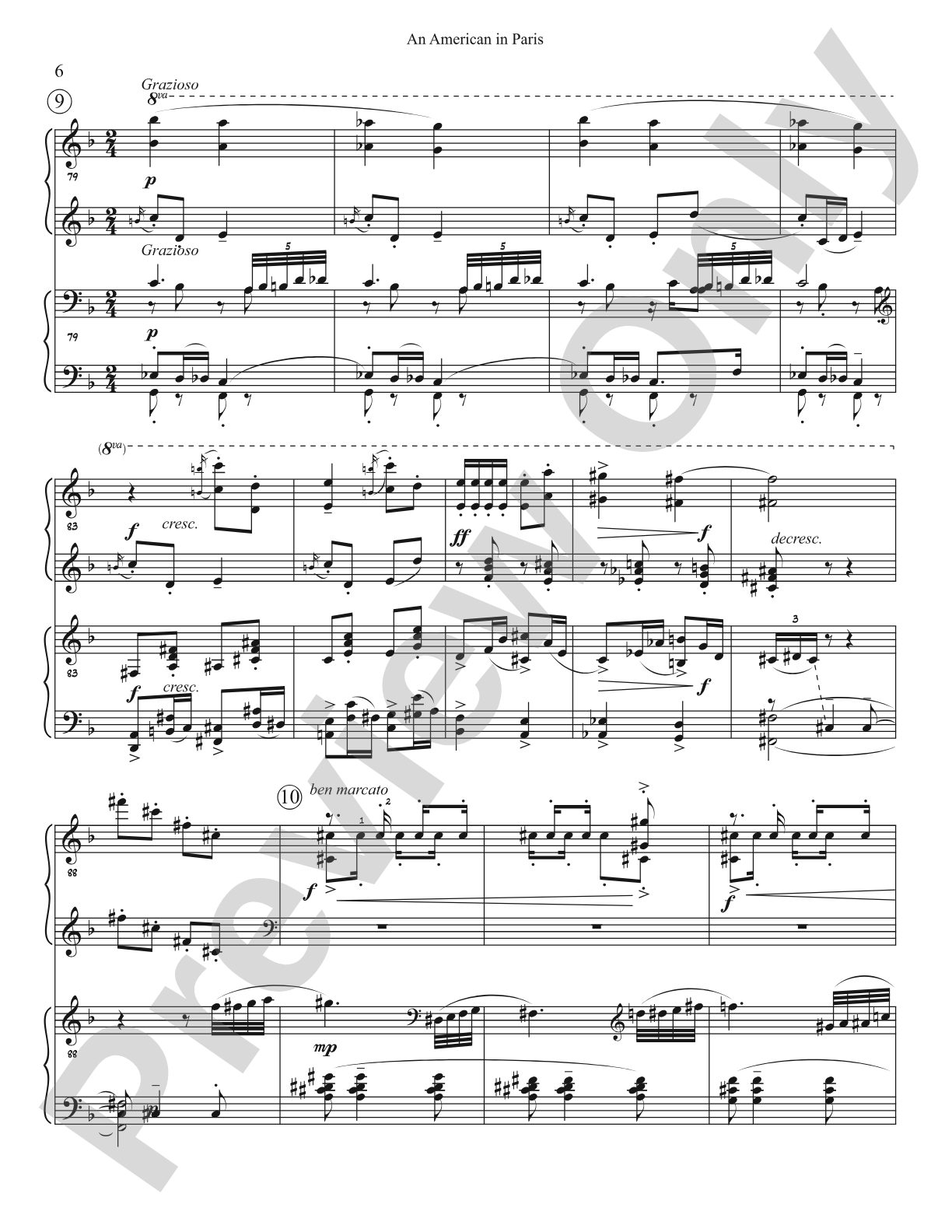
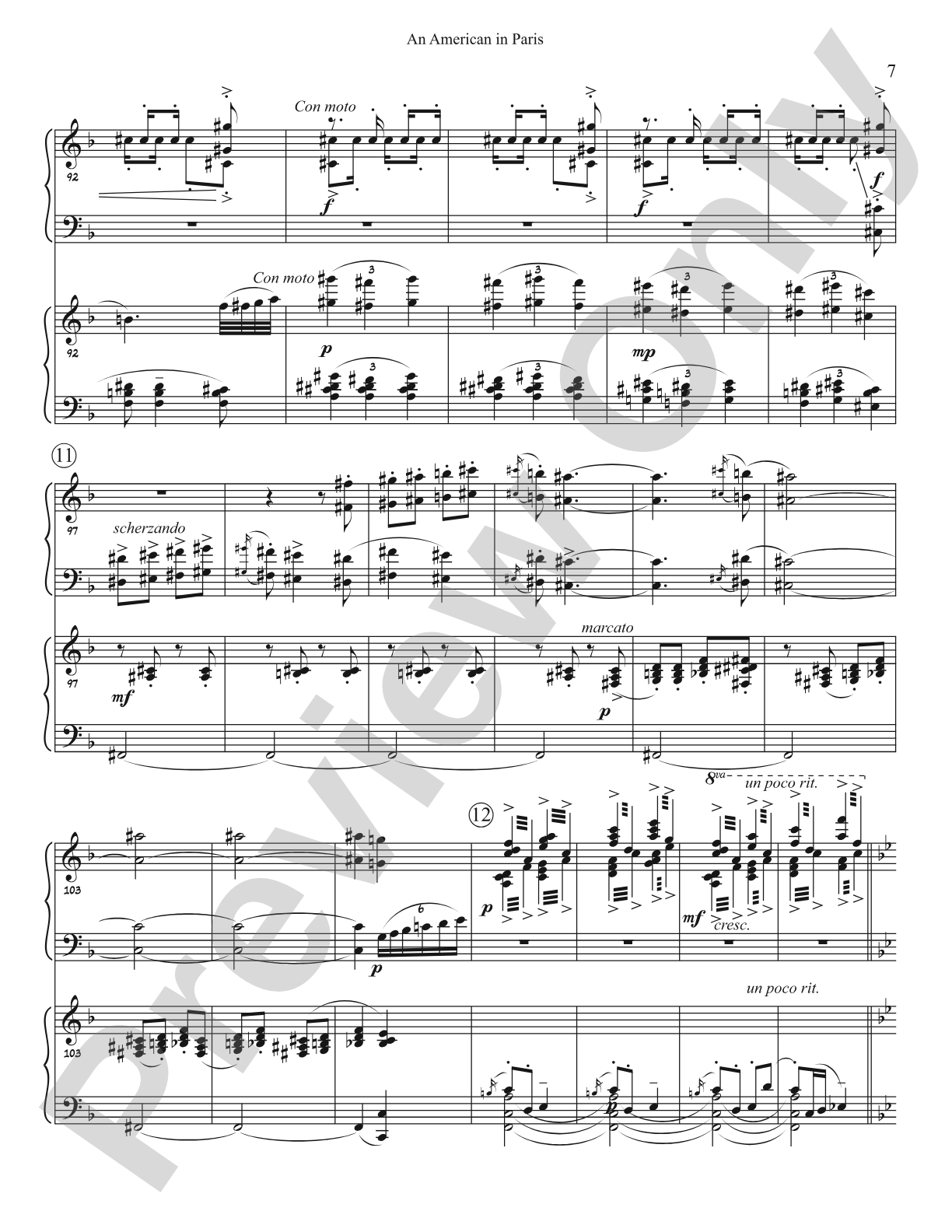
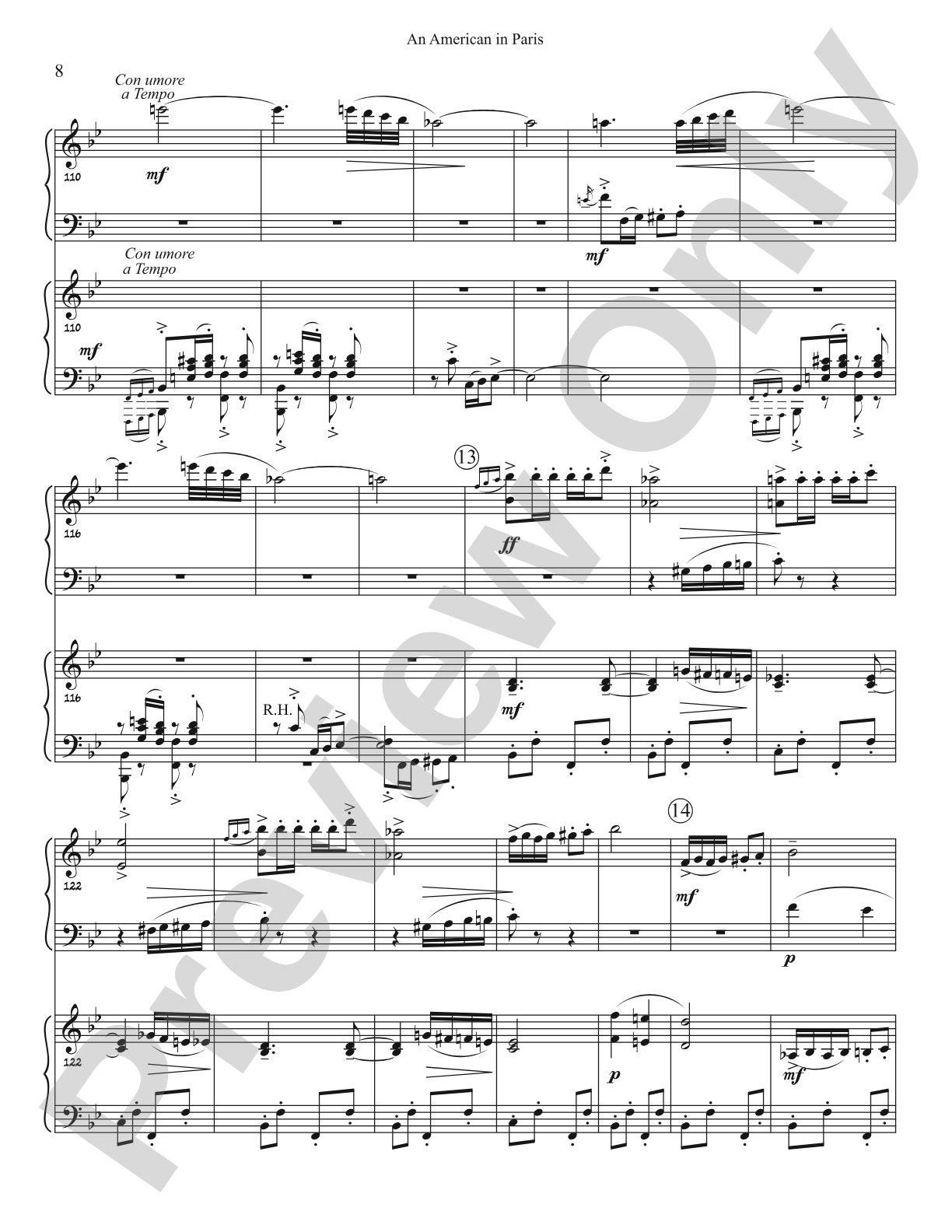
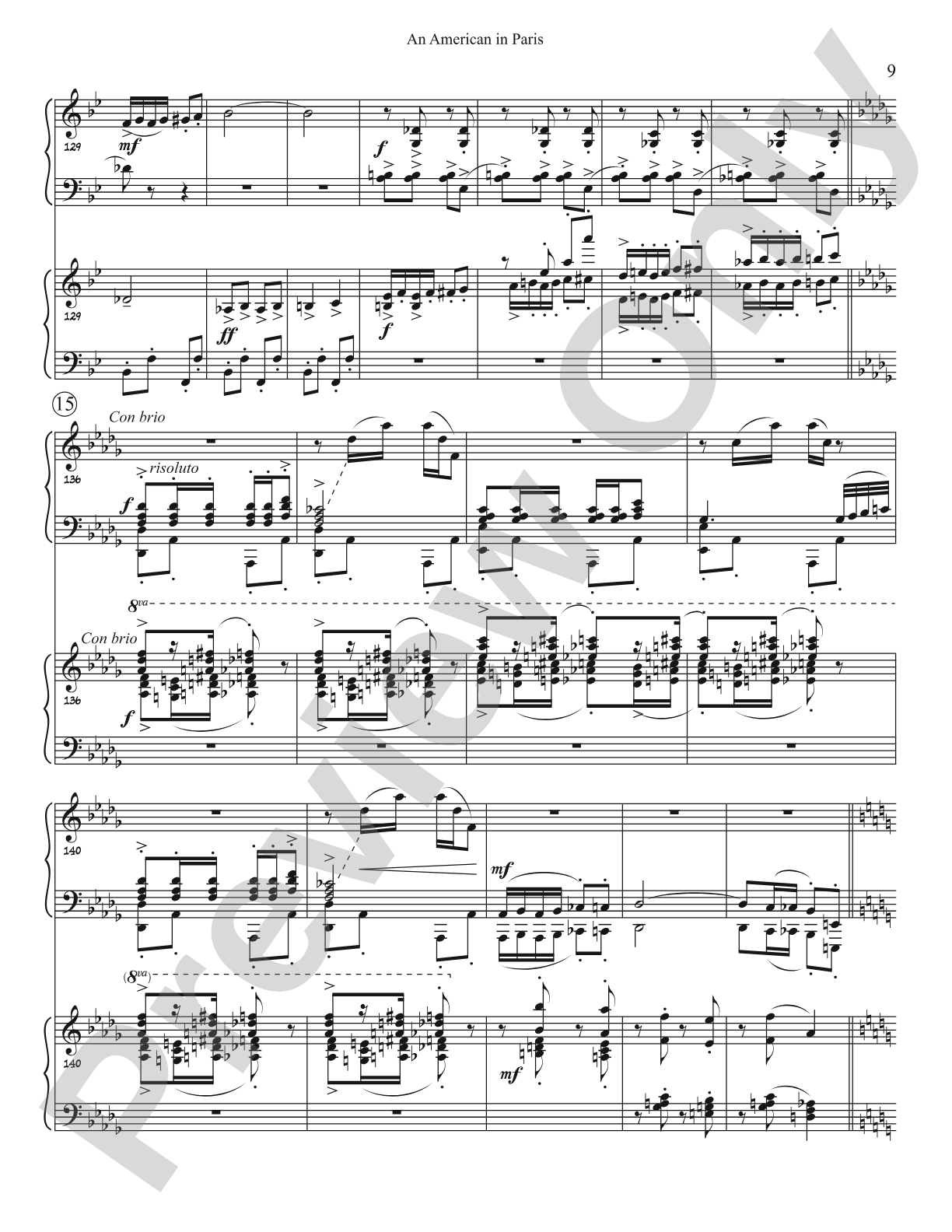
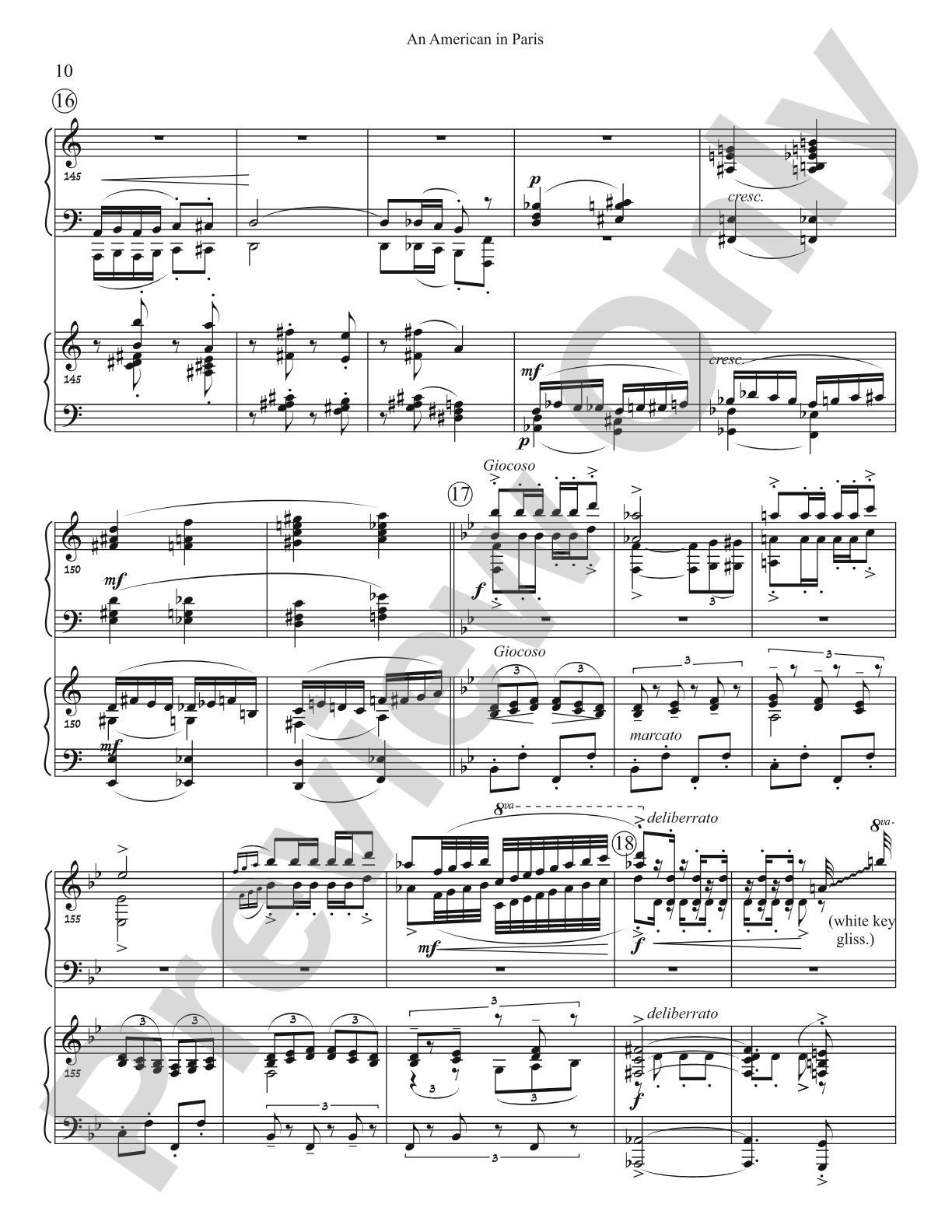
An American In Paris (Two Piano Arr.) Sheet Music Preview

An American In Paris (Two Piano Arr.): Piano

By George Gershwin / arr. John Scott Lavender

Item: 00-PS-0016385

Digital Download
$24.99
Description
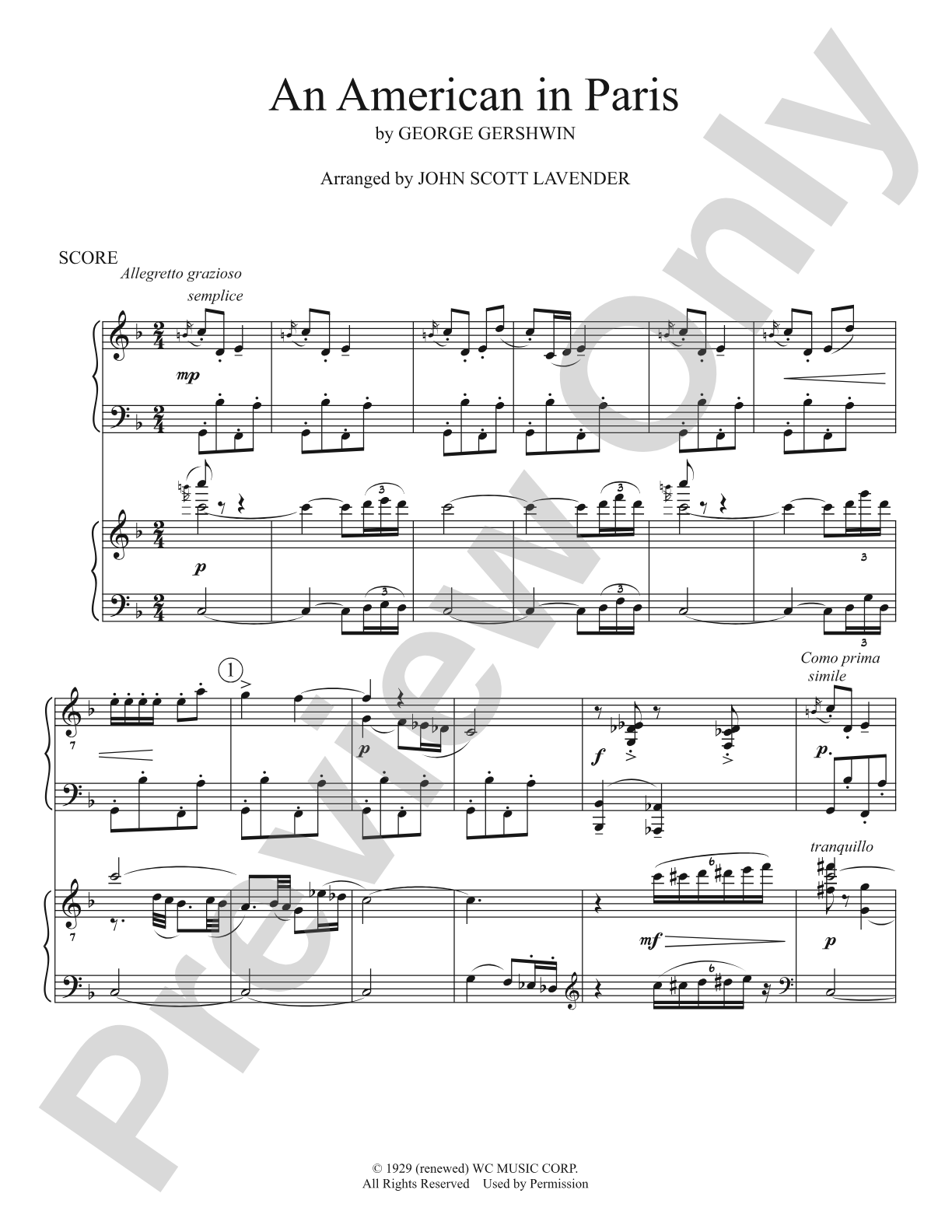
An authentic two-piano version of Gershwin's An American In Paris that is now musically complete, including material that was added to the orchestration for the premier in 1928 by the composer himself.

An American In Paris (Two Piano Arr.): Piano isn't in MakeMusic Cloud just yet...but it could be. Let us know you'd like to see it, and you'll help shape what comes next. In the meantime, start a free trial and dive into thousands of interactive titles your students can play along with today.

Sample Audio
No sample audio found.
Sample Video
Additional Details
SKU: 00-PS-0016385

More about this title

About the Composer: George Gershwin

George Gershwin (1898-1937) bridged concert music and popular song with a confidence that few composers have matched. His gift for melody, harmonic sophistication, and orchestral color made him a defining voice of American modernism in the 1920s and 1930s. Gershwin's willingness to draw from jazz idioms and vernacular music elevated both forms and created works that remain central to the American repertoire.

An American In Paris stands as one of his most ambitious concert pieces. Premiered in 1928, it captures the energy and sophistication of Paris in the Jazz Age through music that is both intellectually crafted and immediately engaging. The work showcases Gershwin's skill at weaving popular melody with symphonic development, making it a touchstone for understanding twentieth-century American concert music.

Why we love this

This two-piano arrangement brings An American In Paris into reach for pianists and duet partnerships who would otherwise encounter only the orchestral version. John Scott Lavender's transcription preserves the harmonic richness and textural variety of Gershwin's orchestration while remaining idiomatic to the two-piano medium. The inclusion of material Gershwin added for the 1928 premiere makes this edition musically complete in a way that many arrangements are not.

What to expect

Gershwin captures the cosmopolitan energy and restless sophistication of 1920s Paris, where American jazz and European classical traditions collide and dance together. The music swings between wistful melody and exuberant rhythmic drive, painting scenes of street life, cafés, and the intoxication of being young and far from home. Throughout, there's a sense of sophistication laced with genuine joy.

Who it's for

Advanced pianists and accomplished duet partnerships looking for substantial repertoire that showcases both technical skill and musicianship. This arrangement serves concert pianists, music festival participants, and piano duet ensembles who want access to one of American music's most celebrated concert works without requiring an orchestra.

How to get the most out of it

  • Balance the melodic lines between the two pianos carefully; often one pianist carries the tune while the other provides harmonic or rhythmic support. Adjust volume and touch to keep the primary voice singing through.
  • Pay attention to jazz-inflected rhythms and syncopations, which require precision but also a relaxed, flexible approach to rhythm. Rhythmic cooperation between the two pianos is essential.
  • Use the score's dynamic markings to shape phrases and create momentum through the piece. The climactic sections demand full sonority from both instruments working in concert.
  • Pedaling becomes a shared responsibility; coordinate changes between pianos to maintain harmonic clarity while allowing resonance in thick passages.

How to use it

This work makes an ideal centerpiece for a concert celebrating twentieth-century American composers or the intersection of concert music and jazz idioms. It can anchor a program of American duet repertoire or stand alongside other Gershwin works as part of a themed recital. Consider programming it in a season that explores modernism and popular music's influence on the concert hall.

Skills your students will build

  • Reading and executing jazz-influenced rhythms and syncopations
  • Balancing independent melodic lines between two instruments
  • Ensemble coordination at the keyboard level
  • Dynamic shaping and phrase architecture in multi-part textures
  • Interpreting twentieth-century American concert music idiom

You May Also Like