
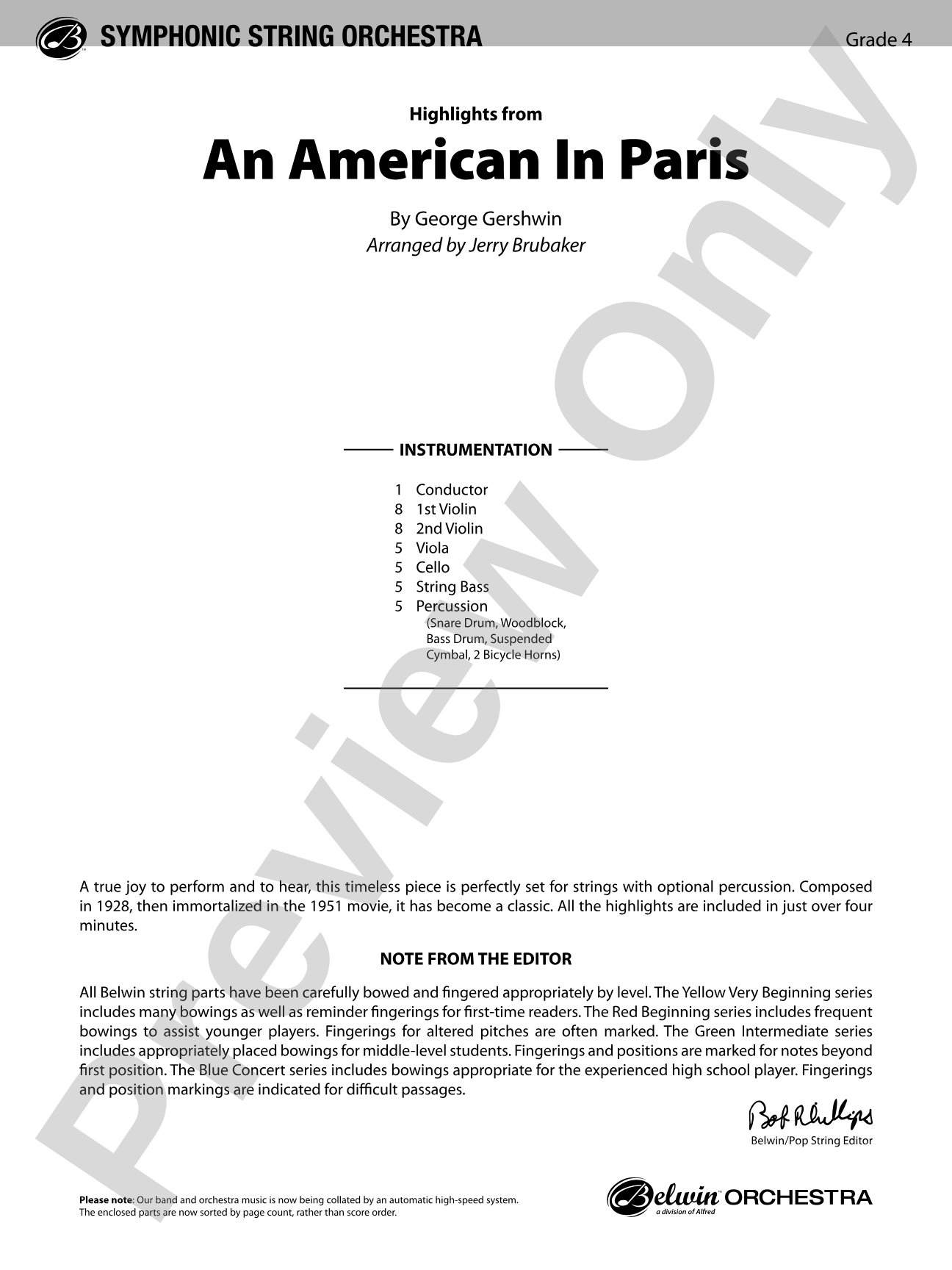
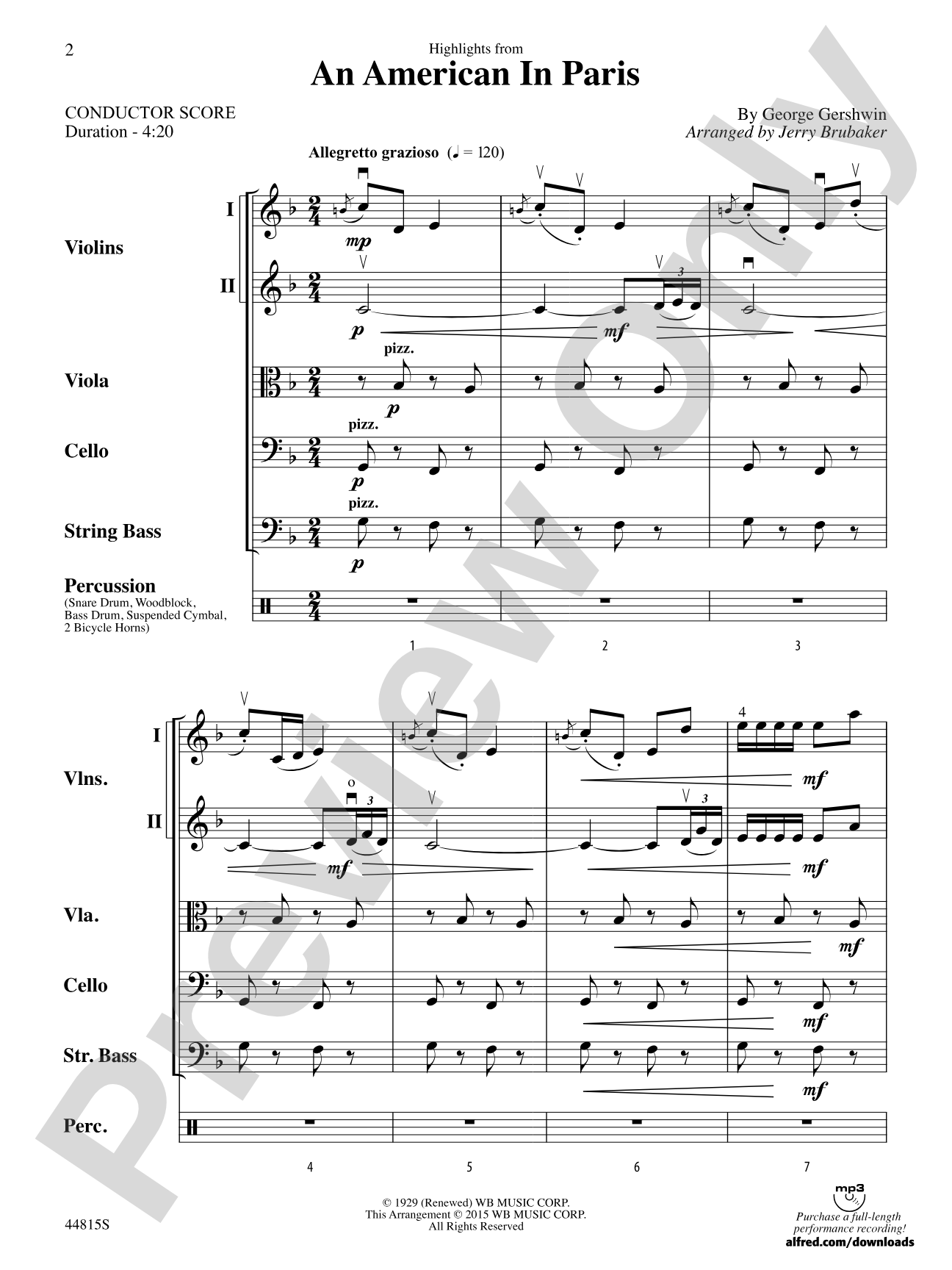
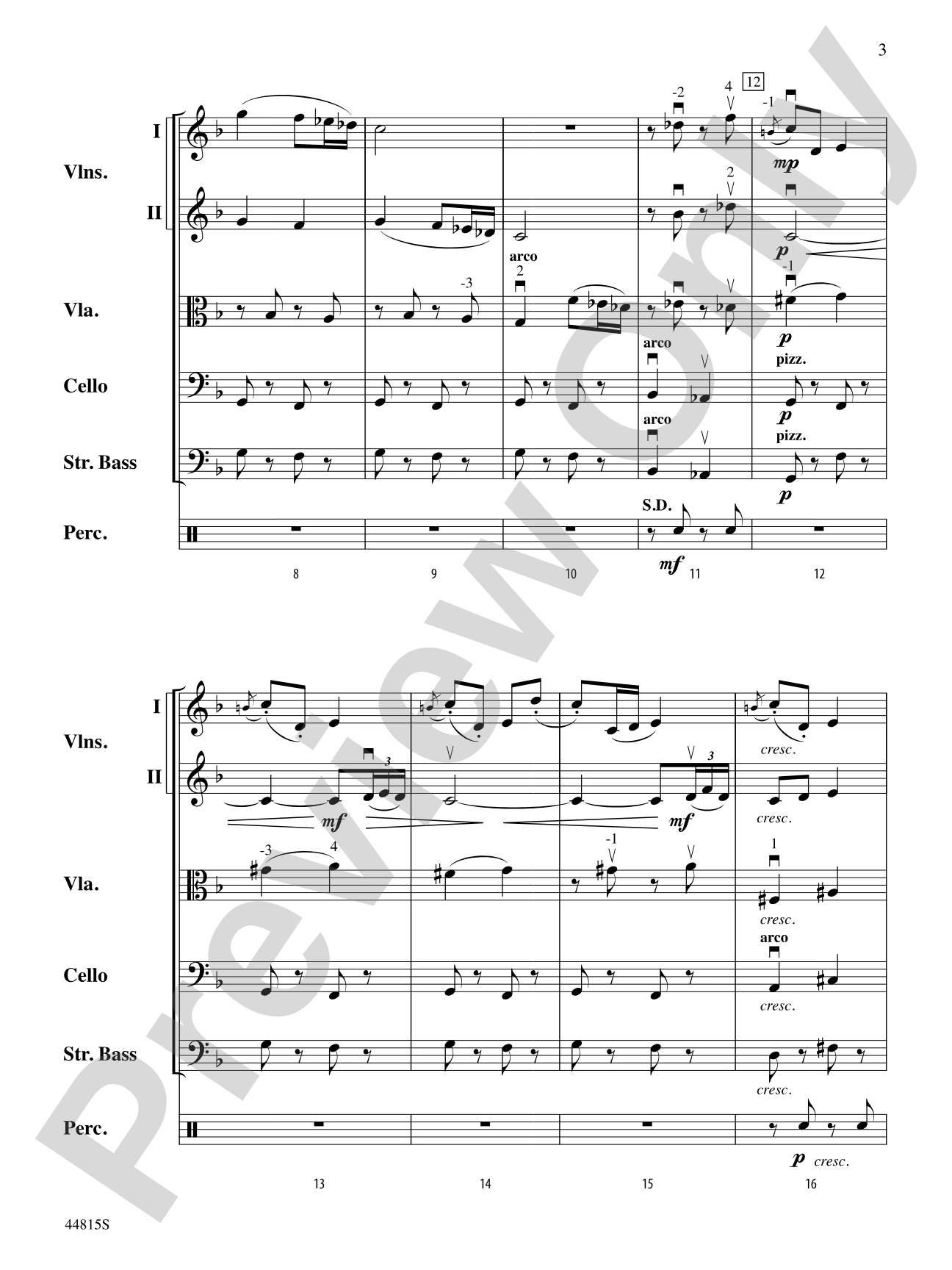
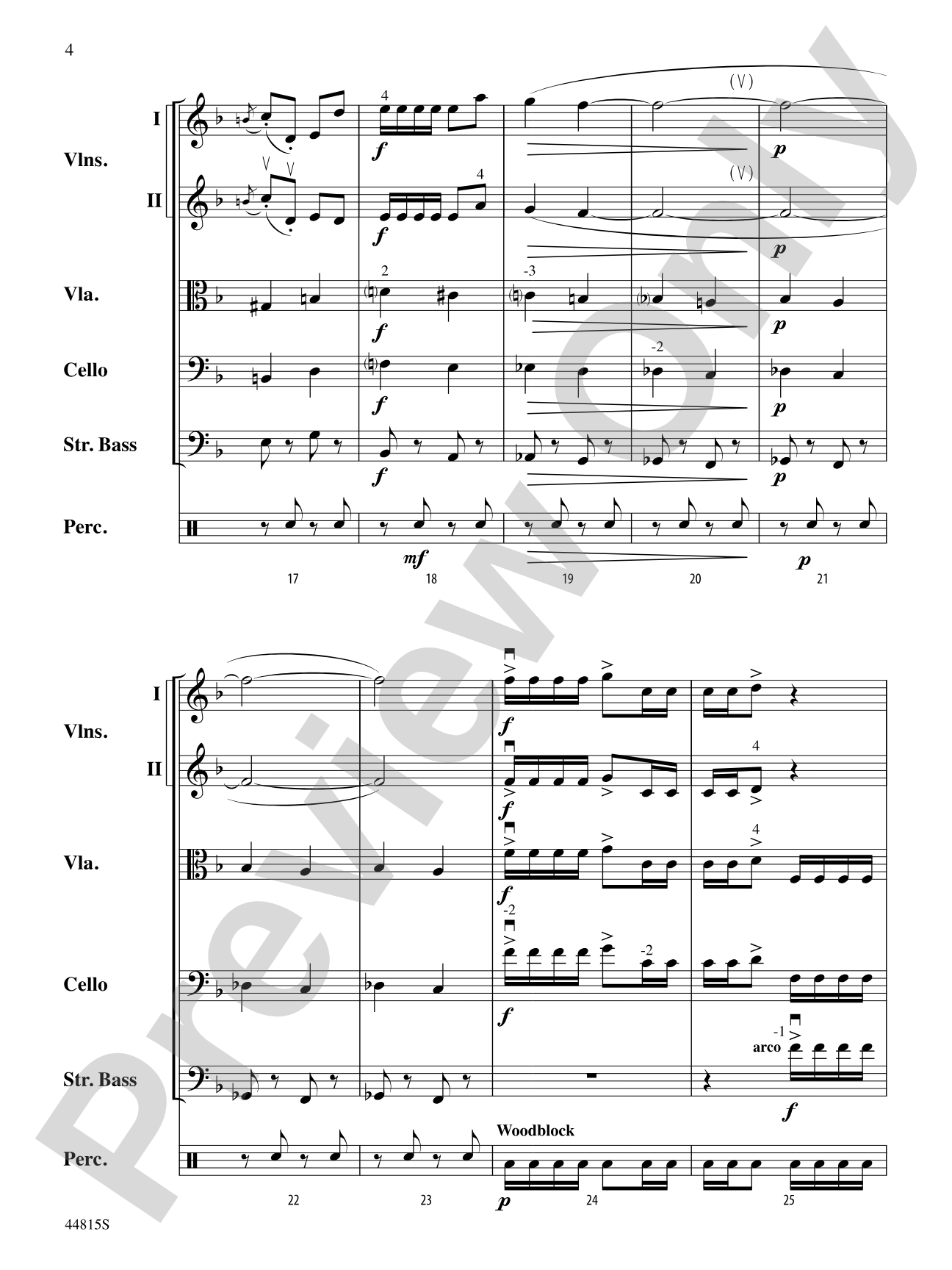
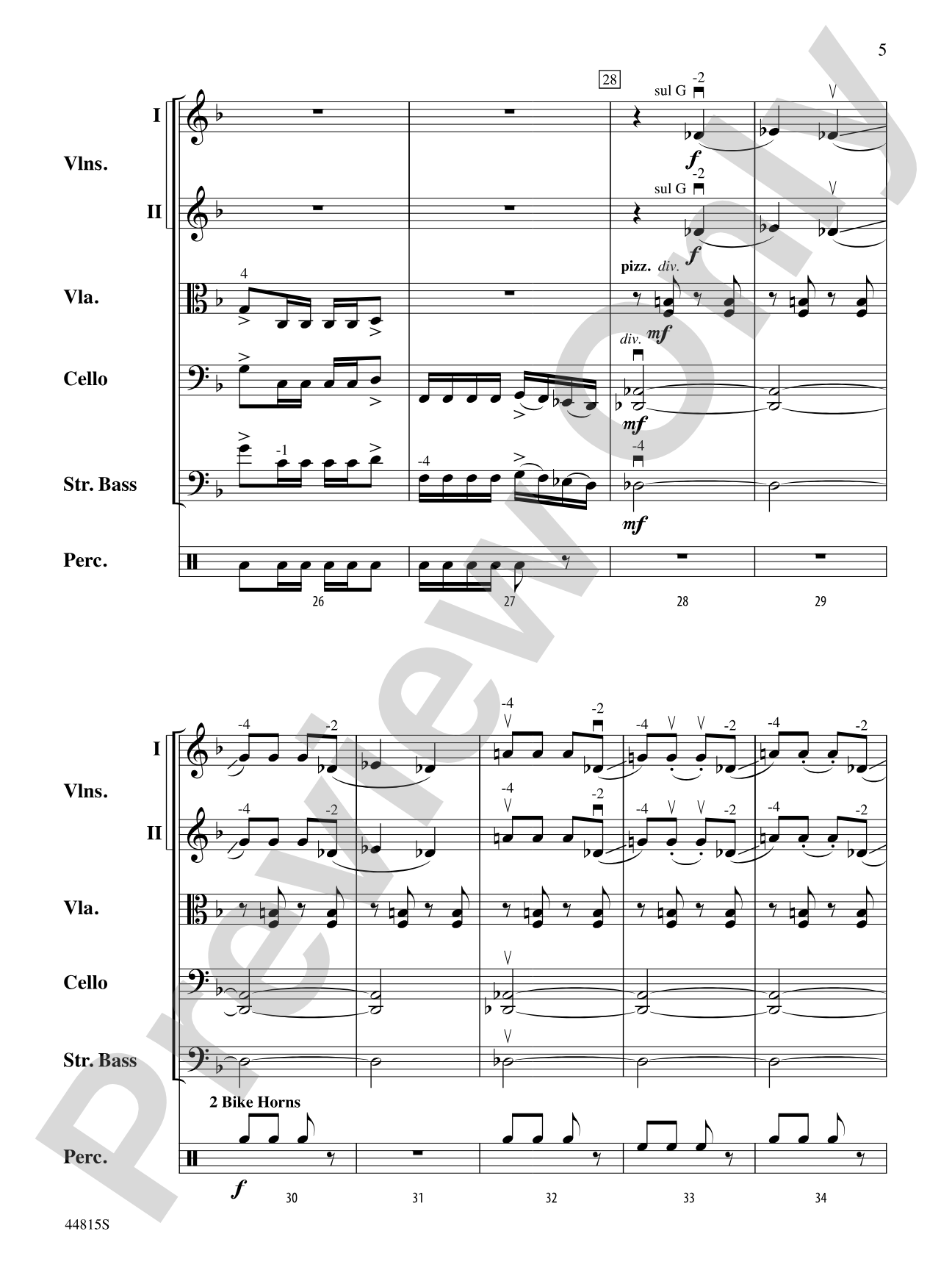
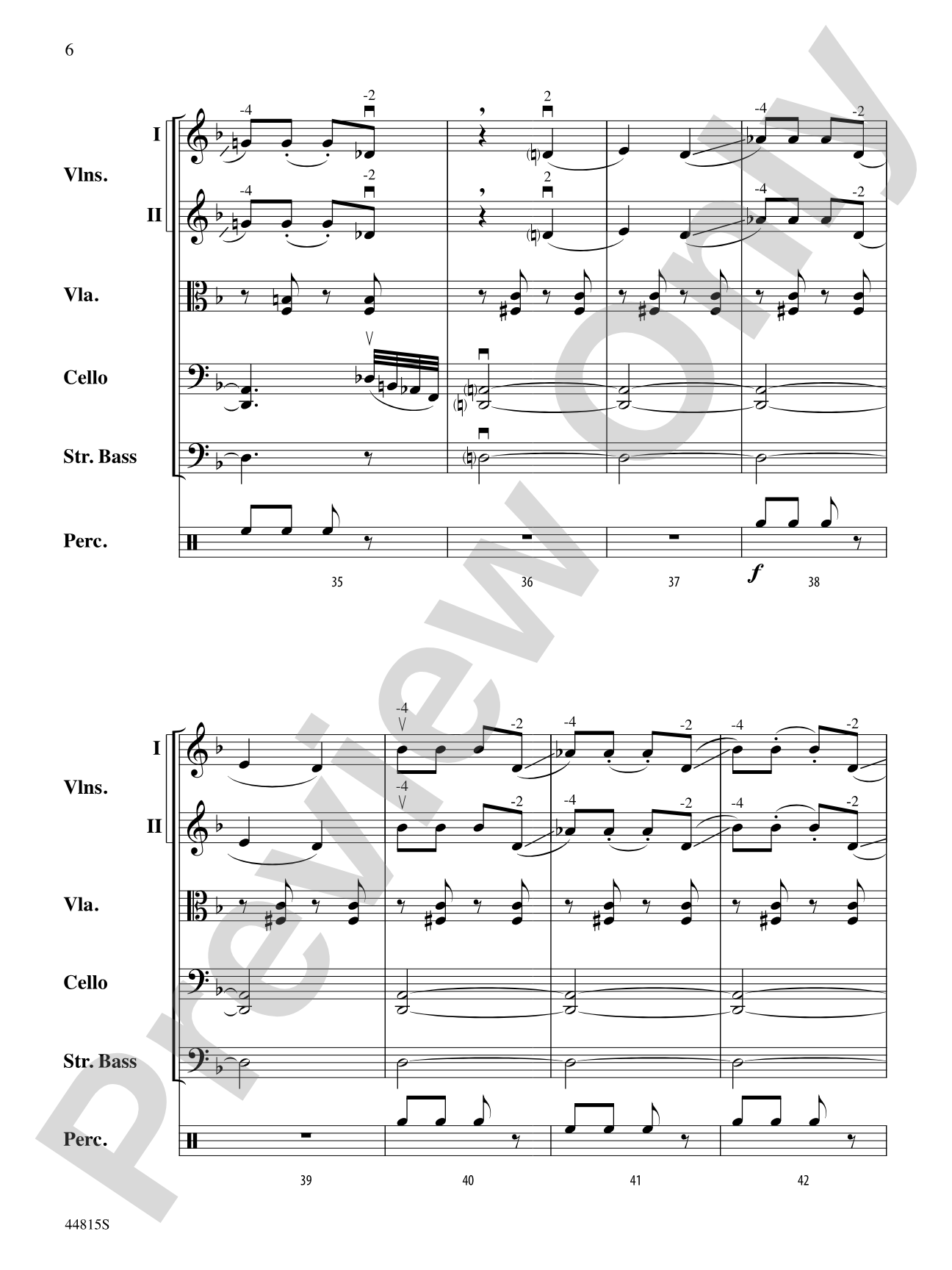
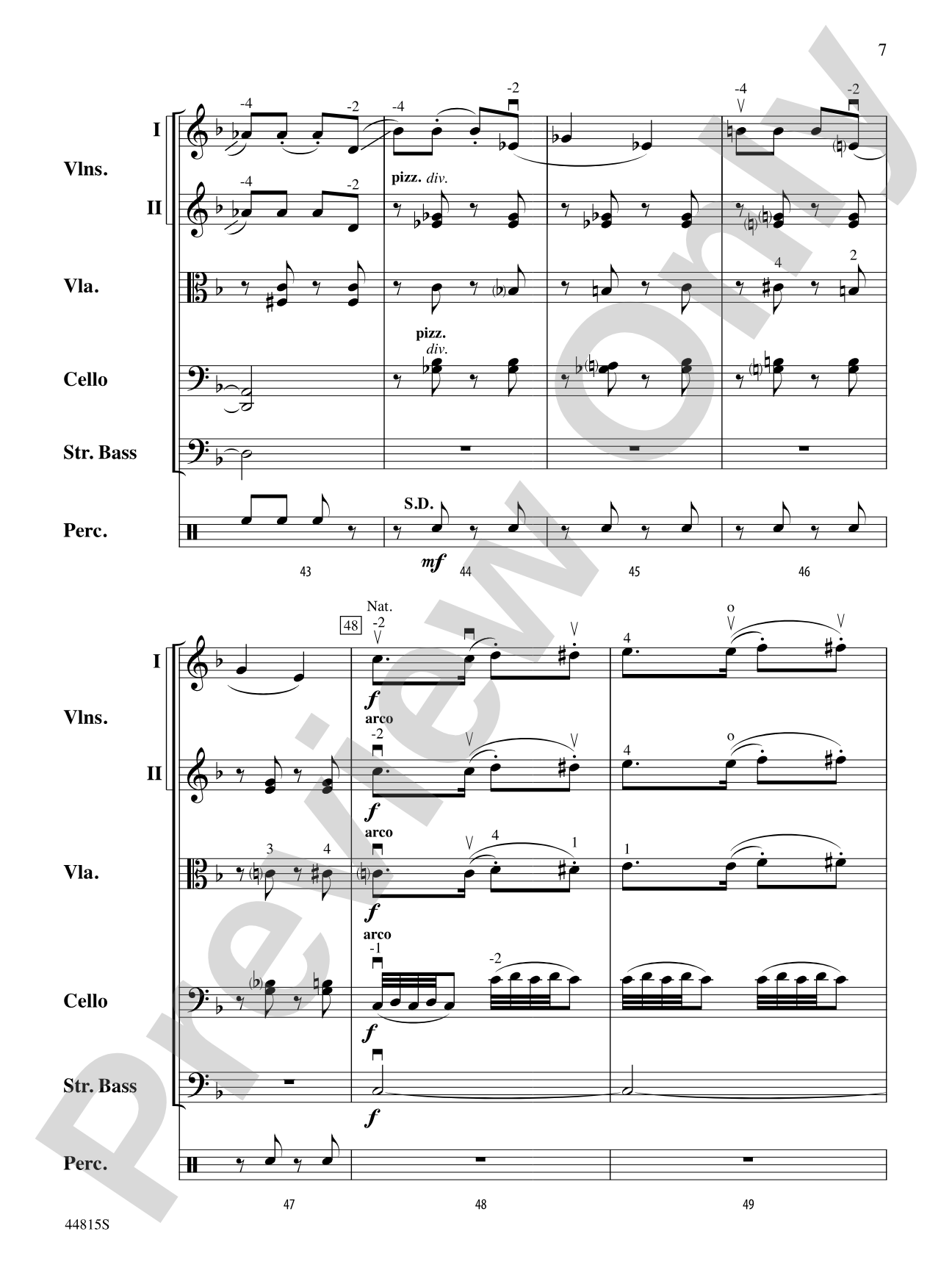
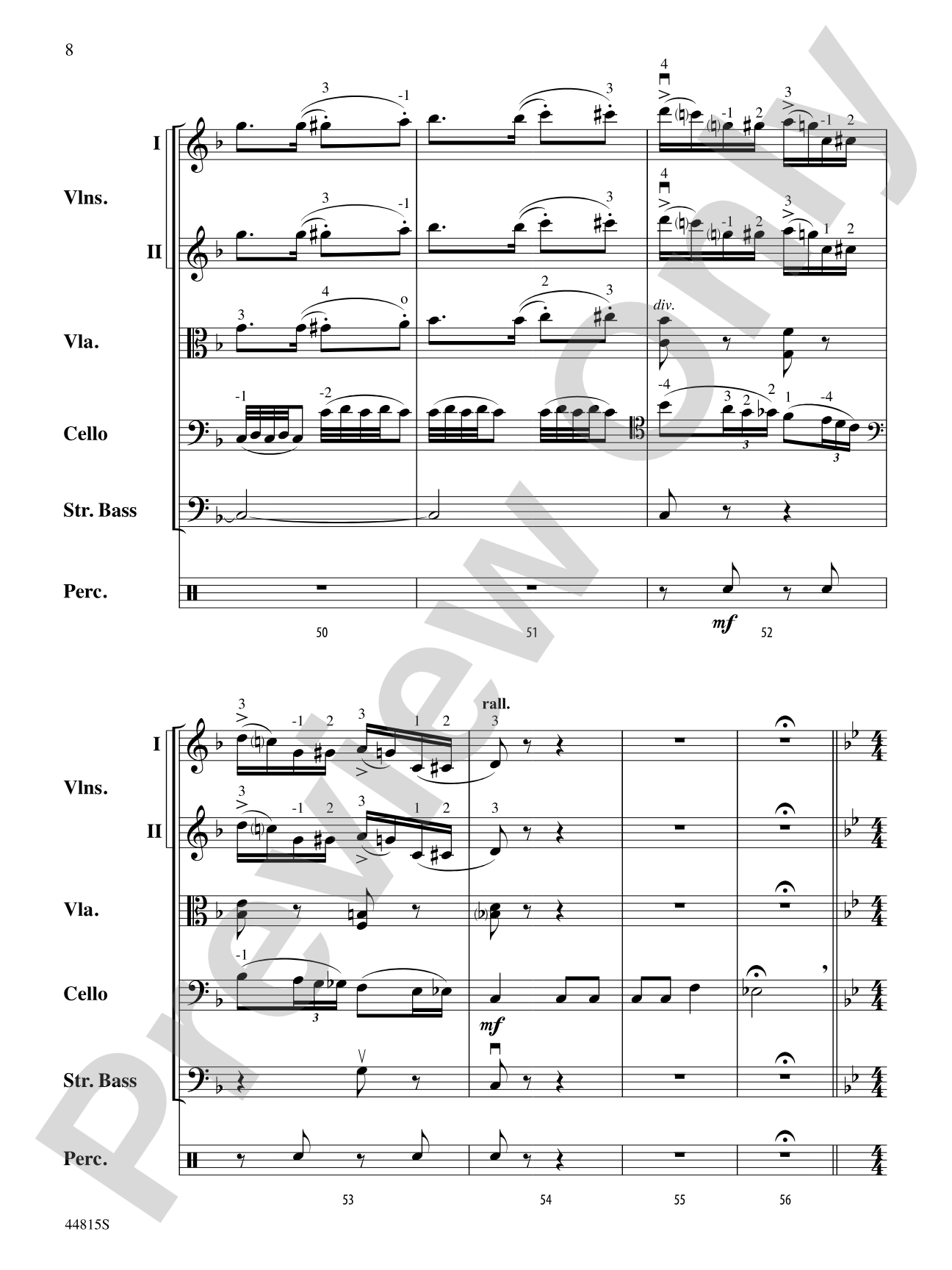
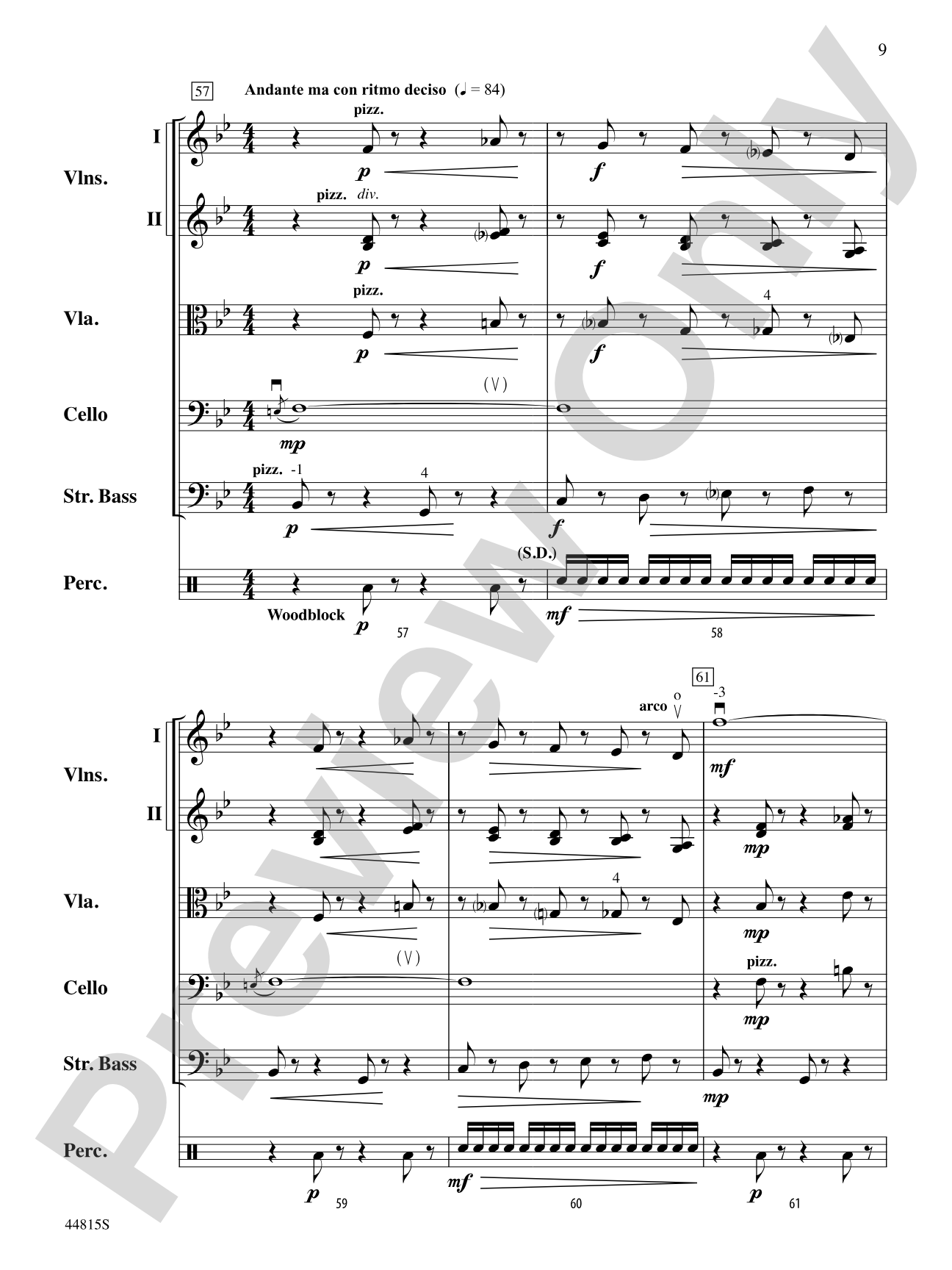
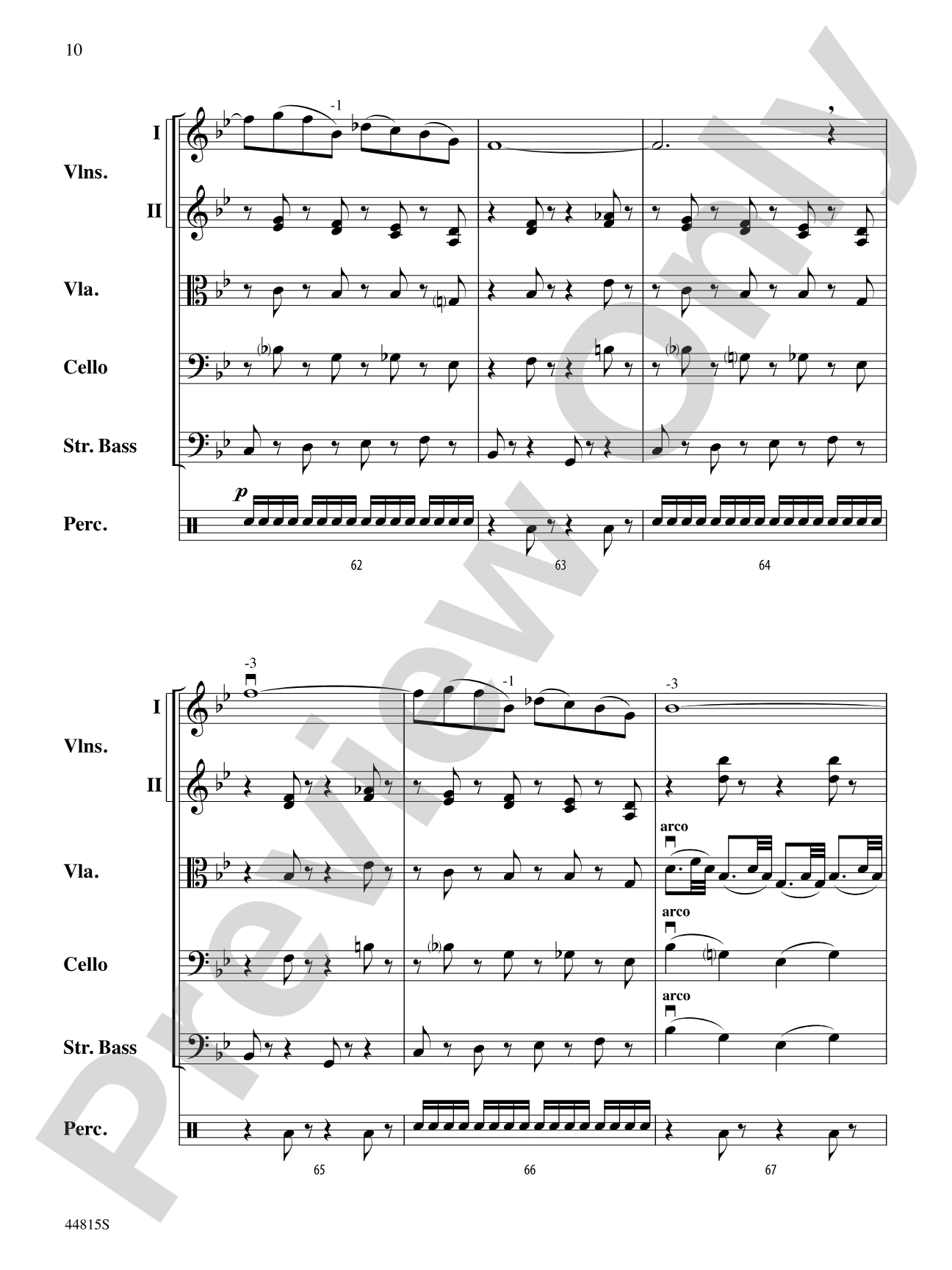
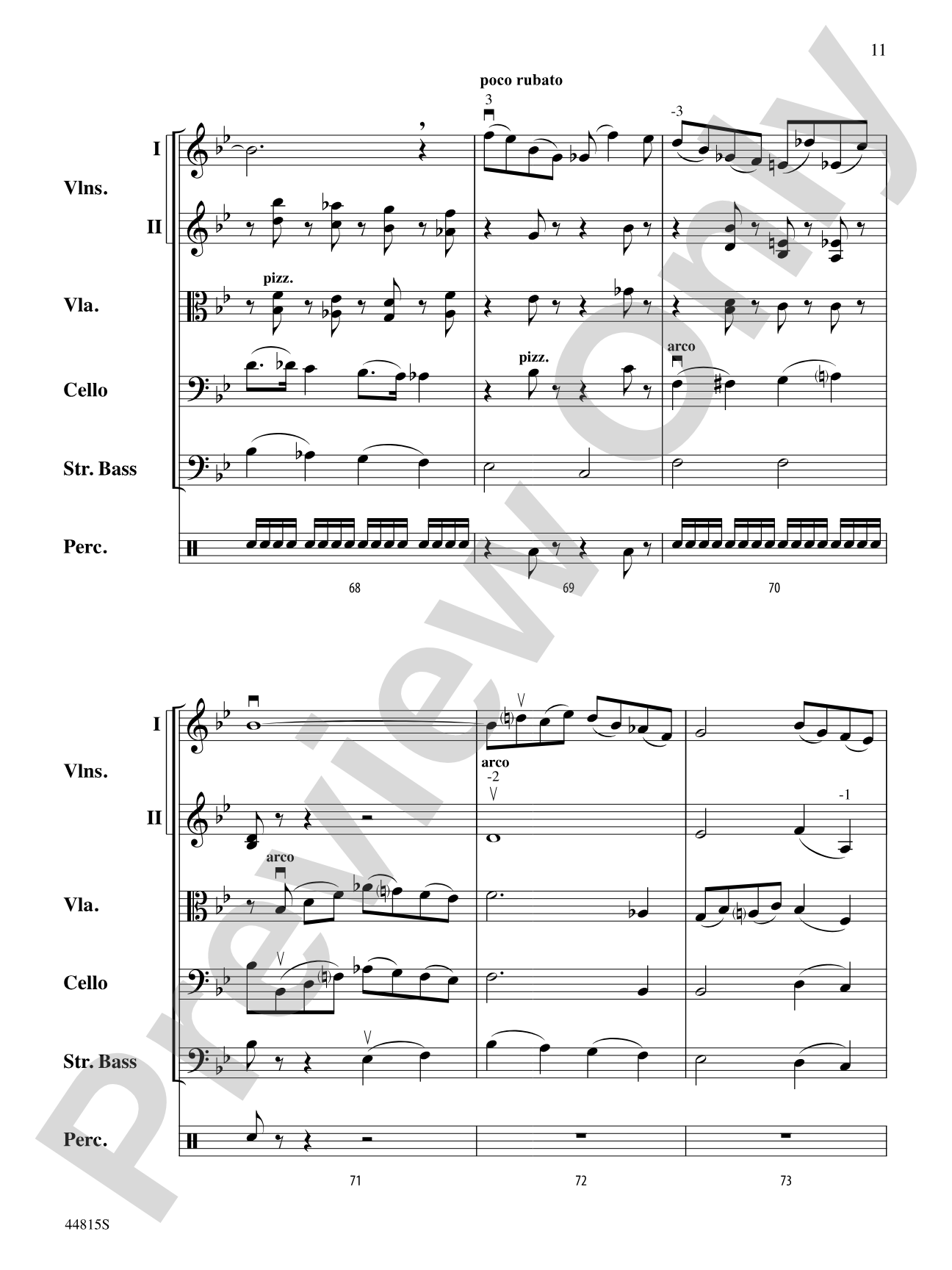
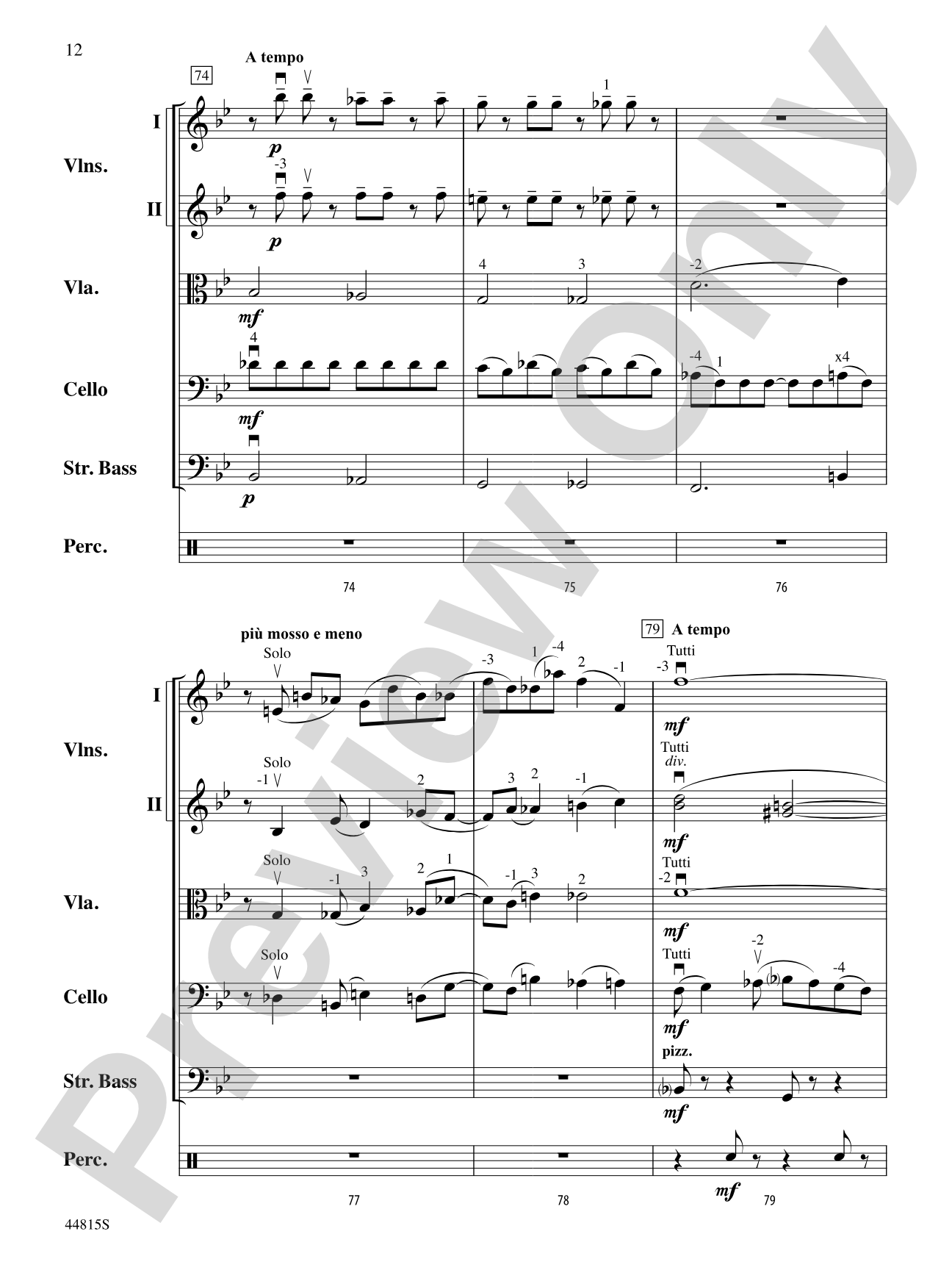
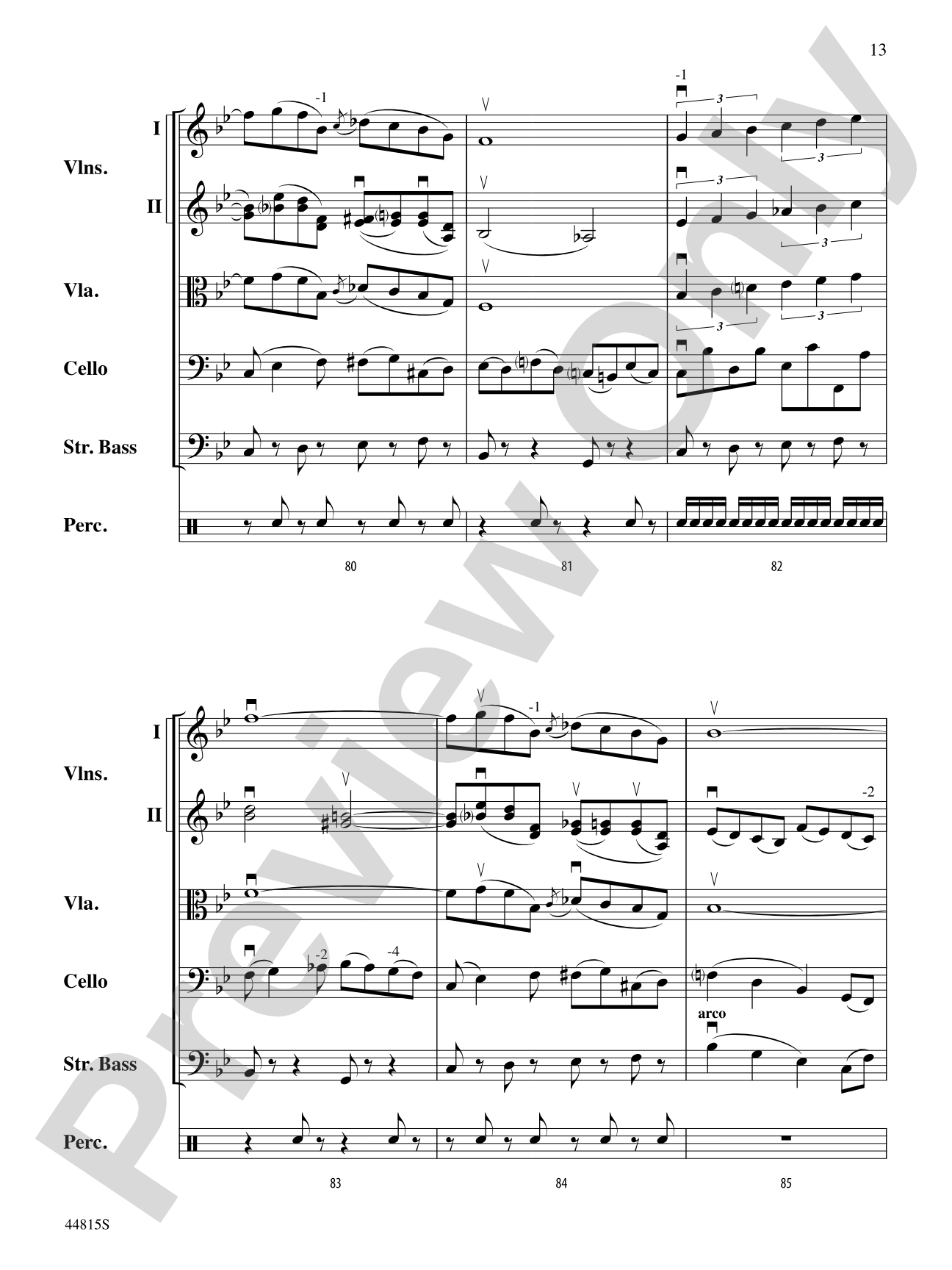
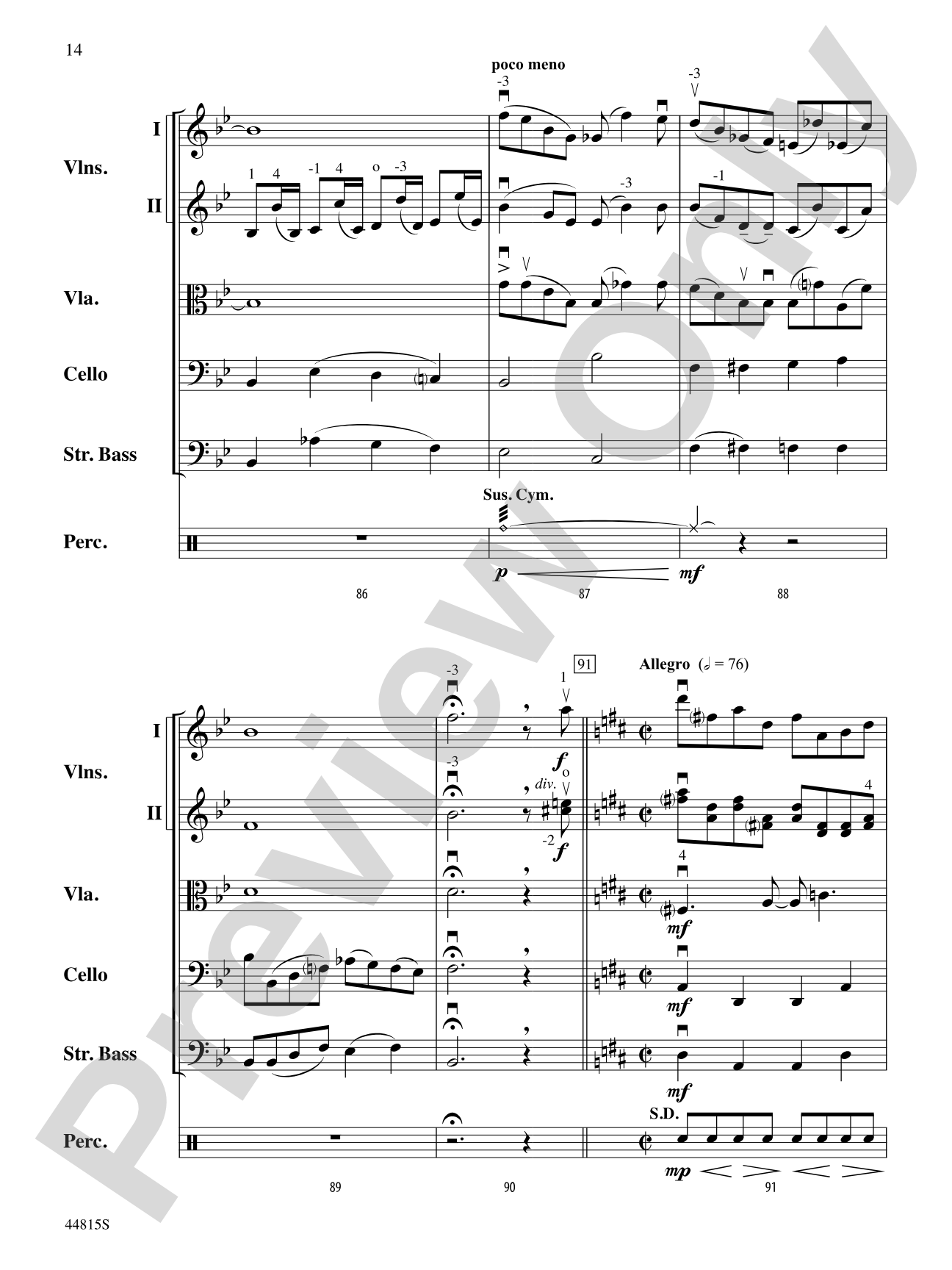
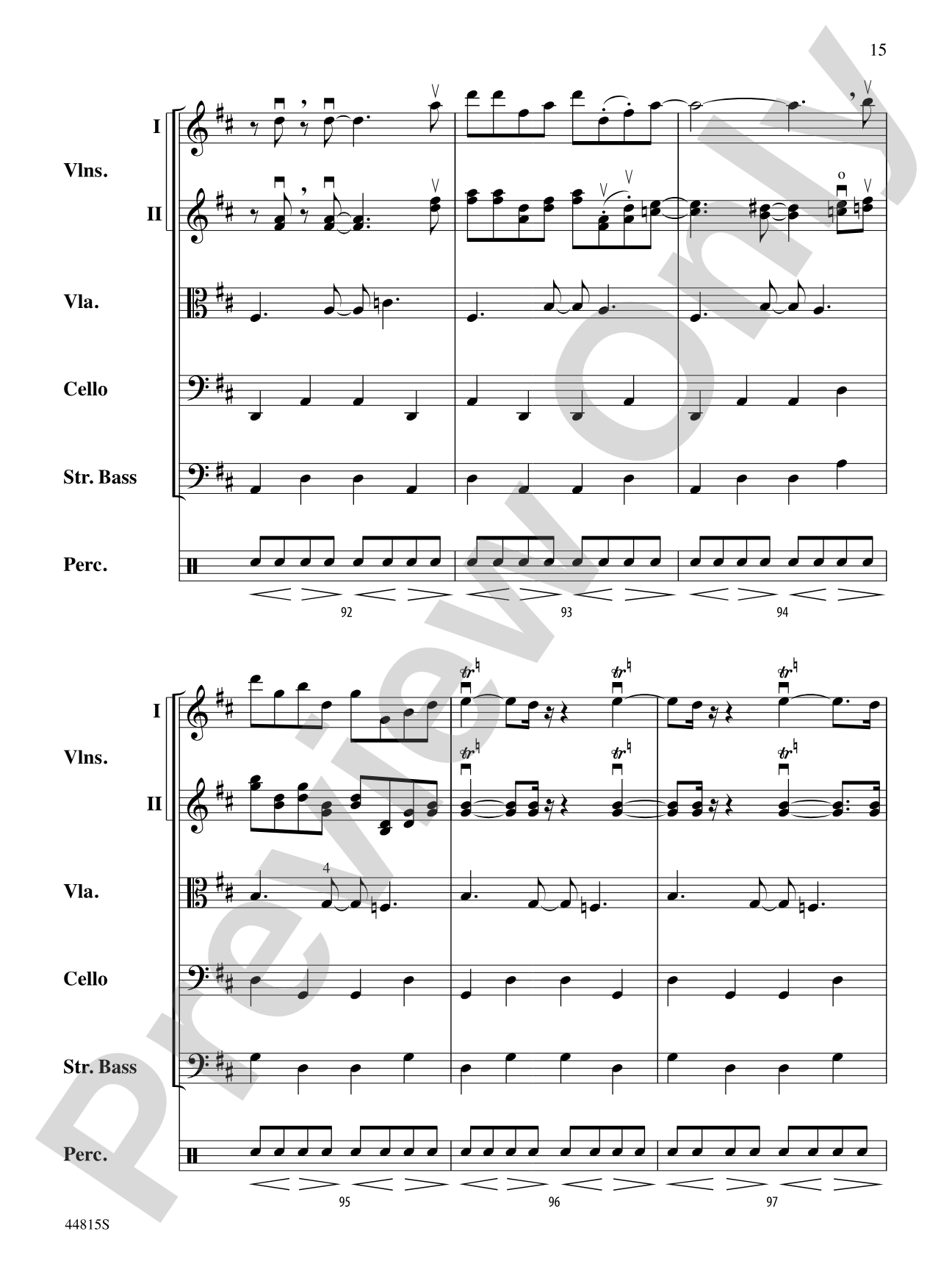
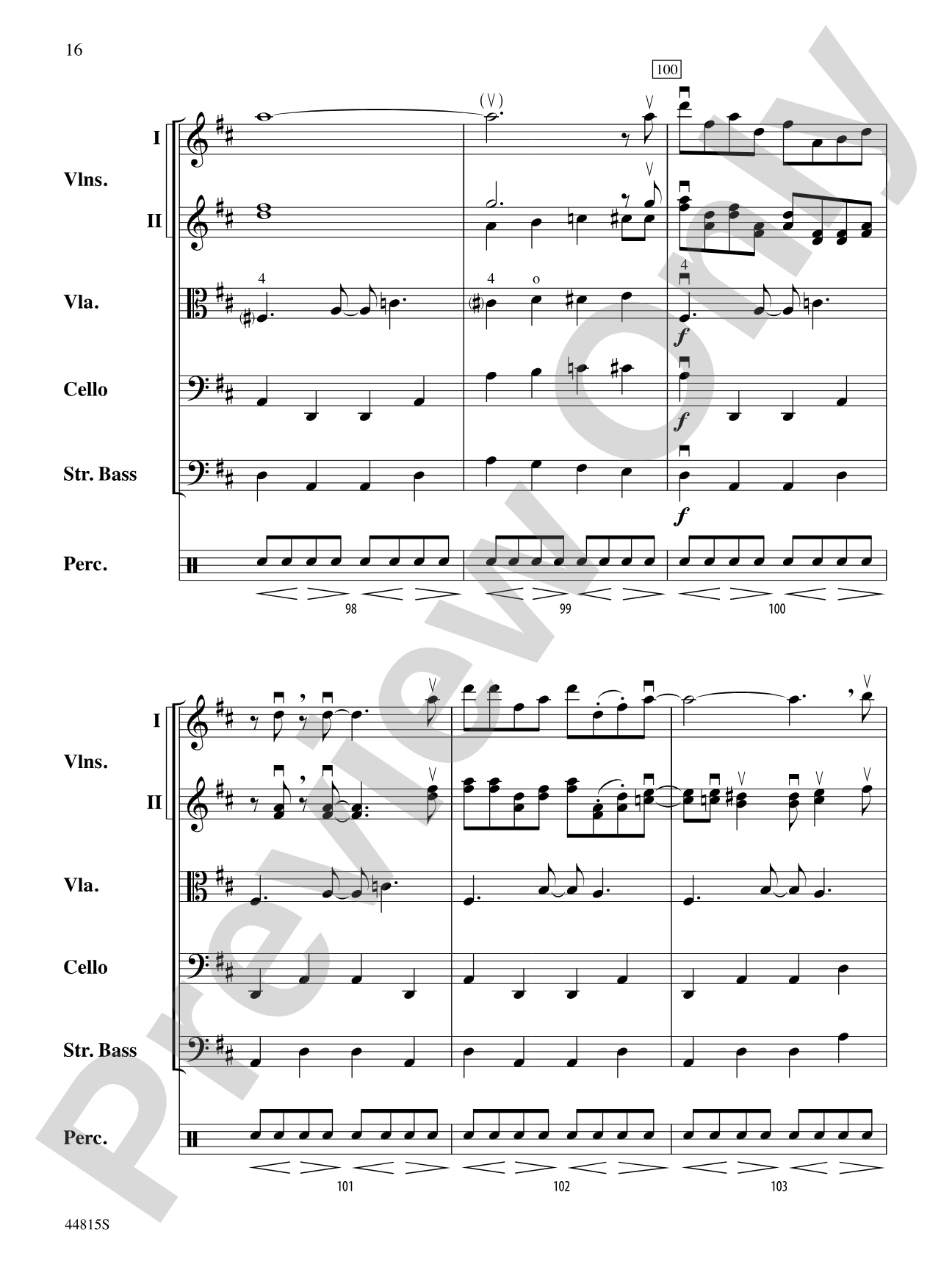
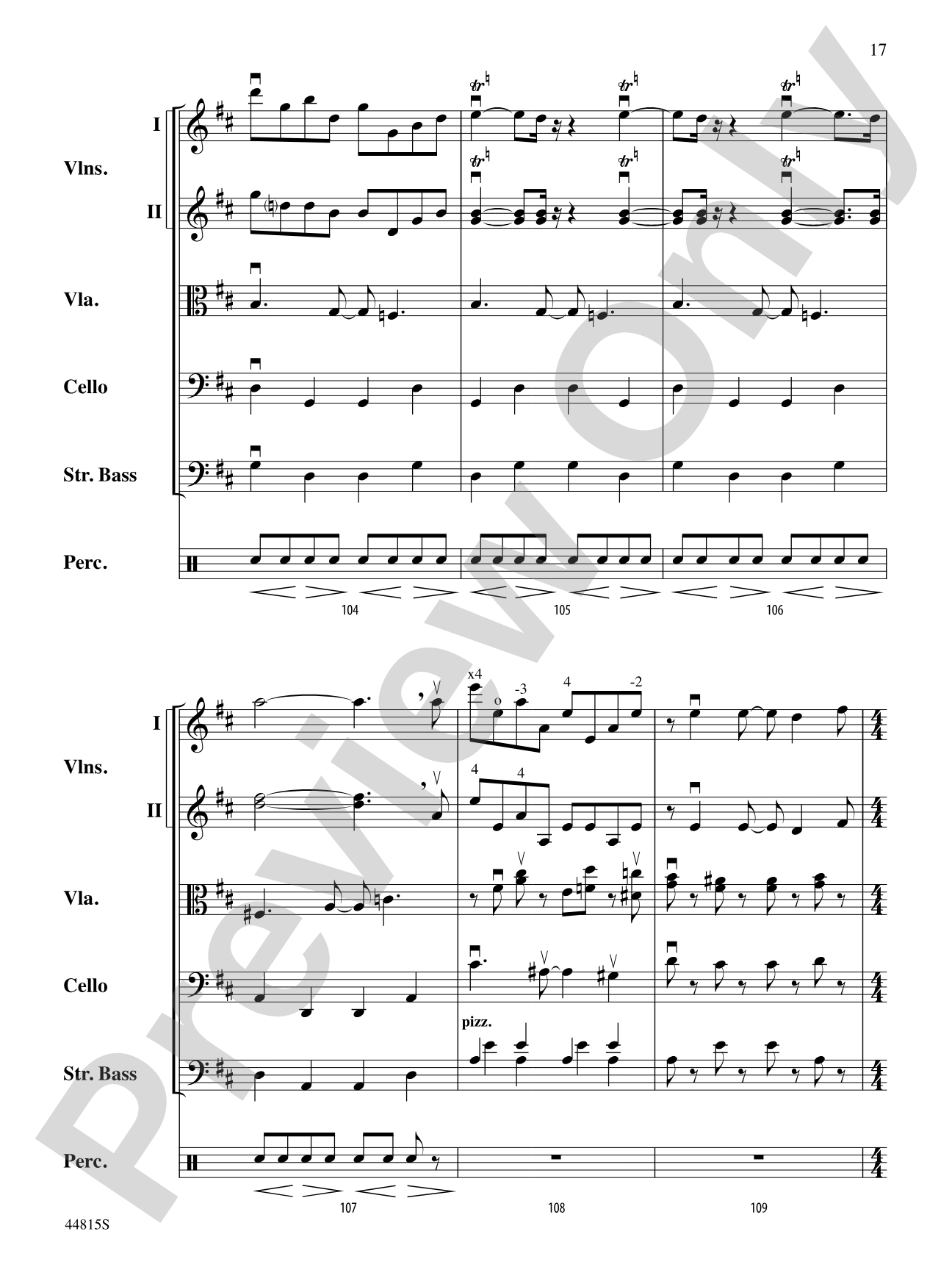
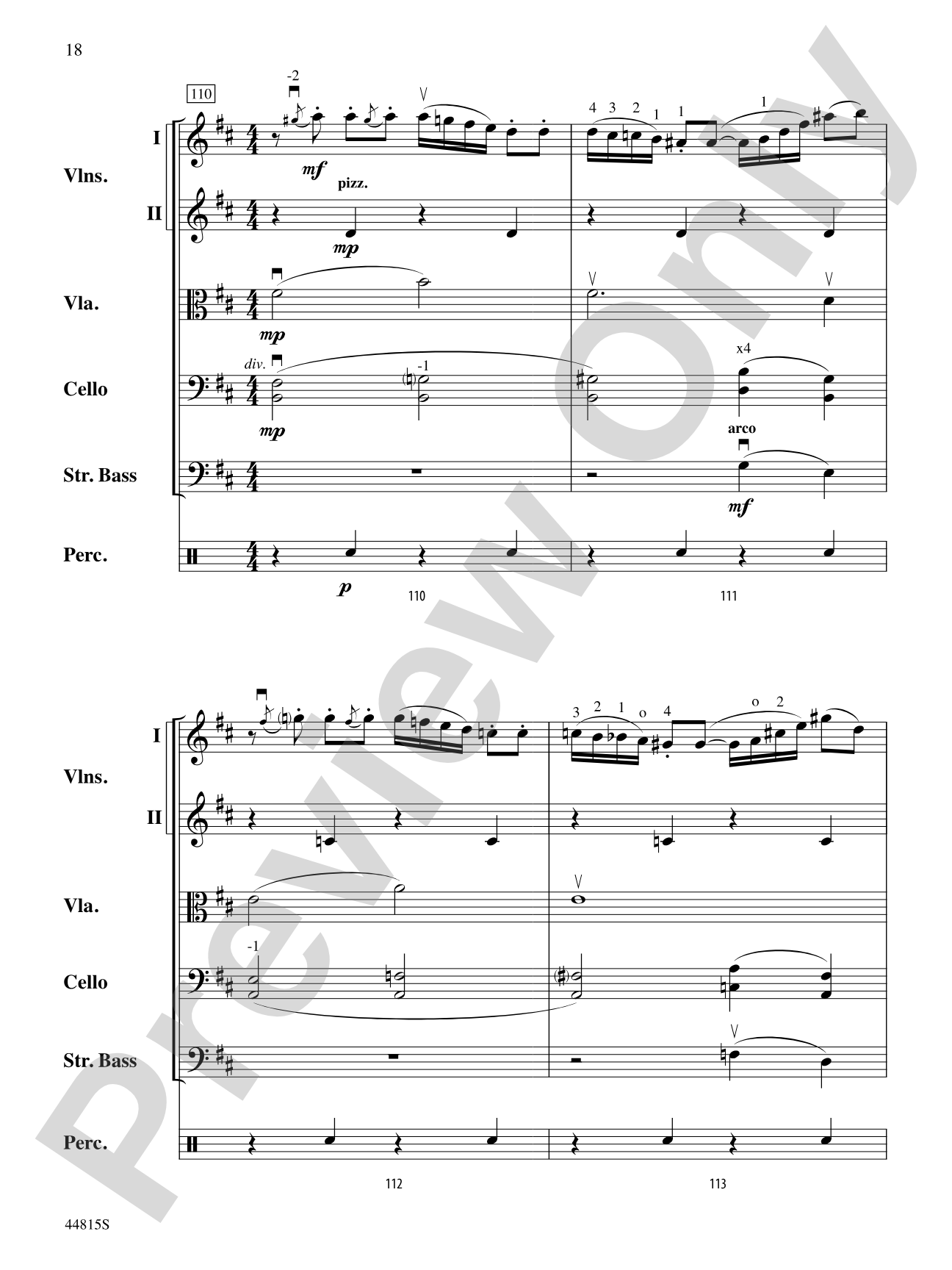
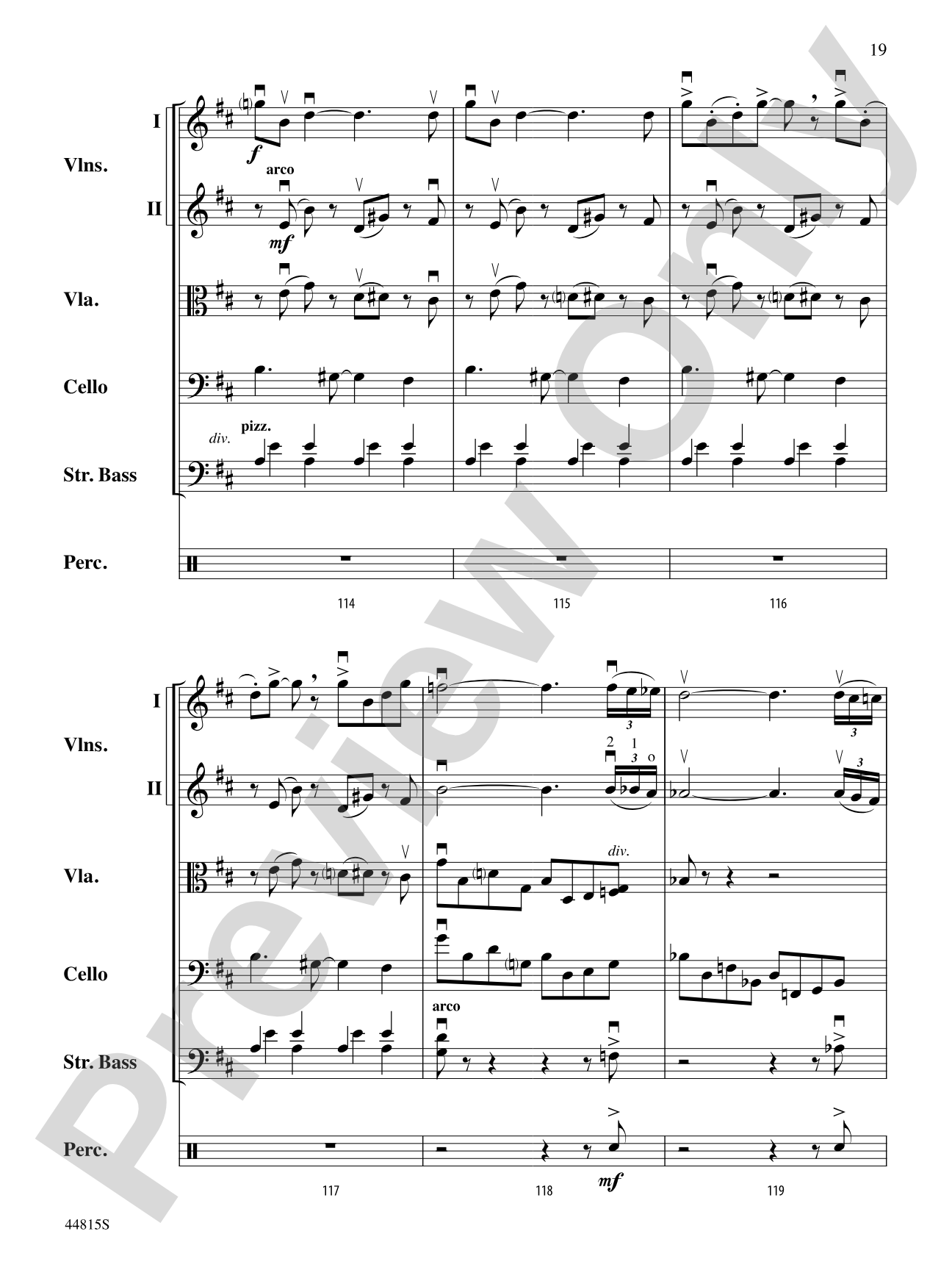
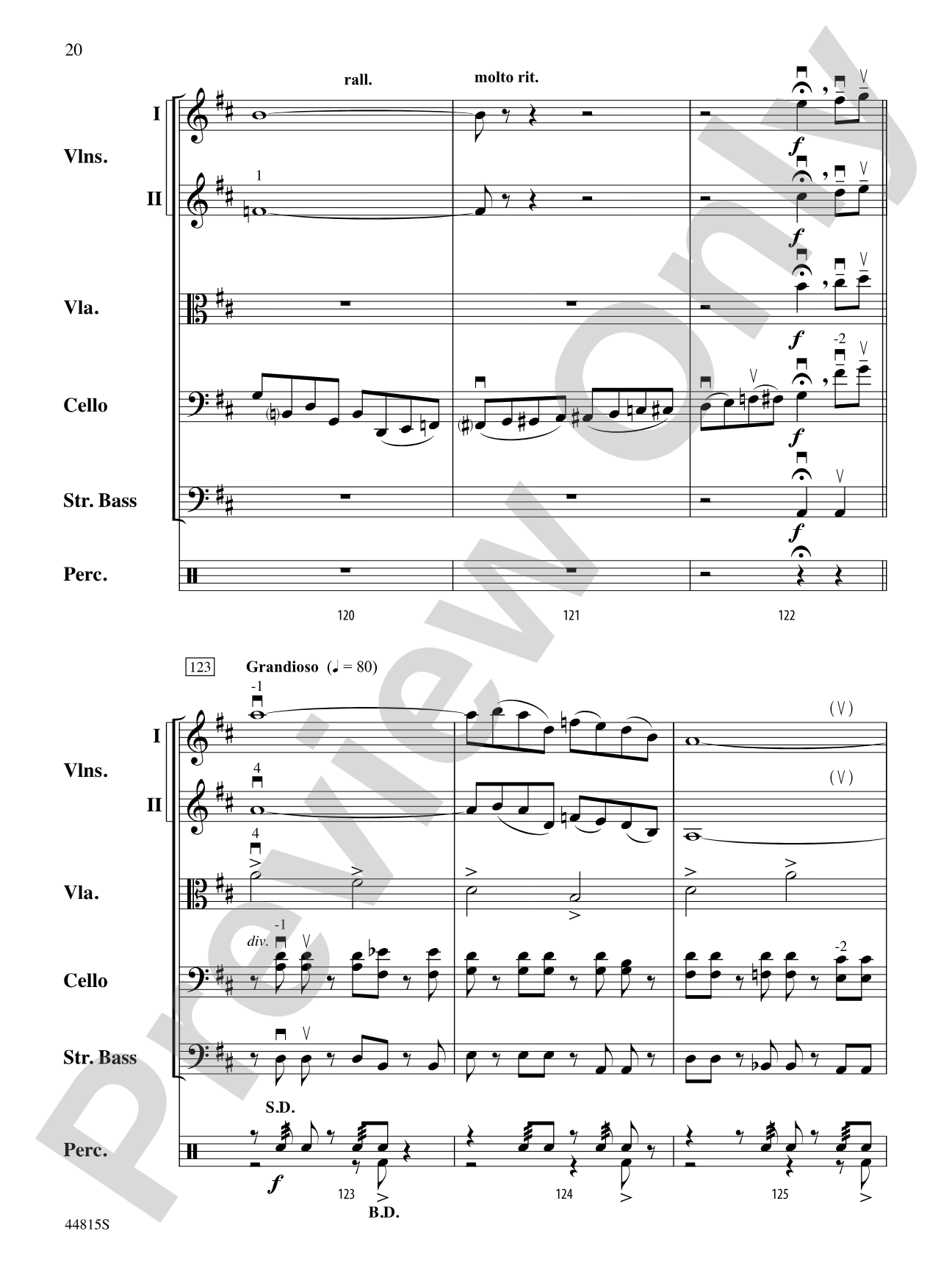
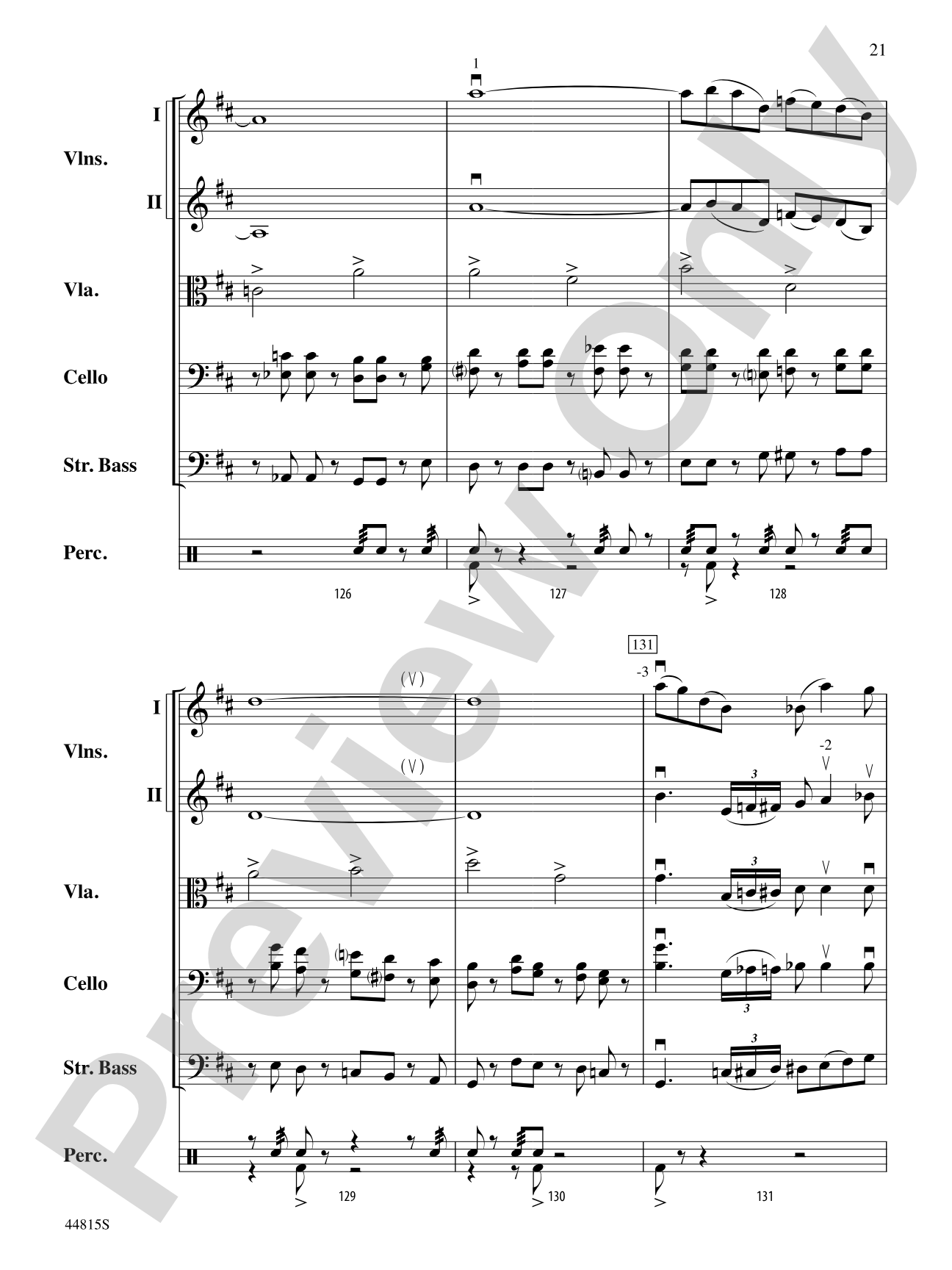
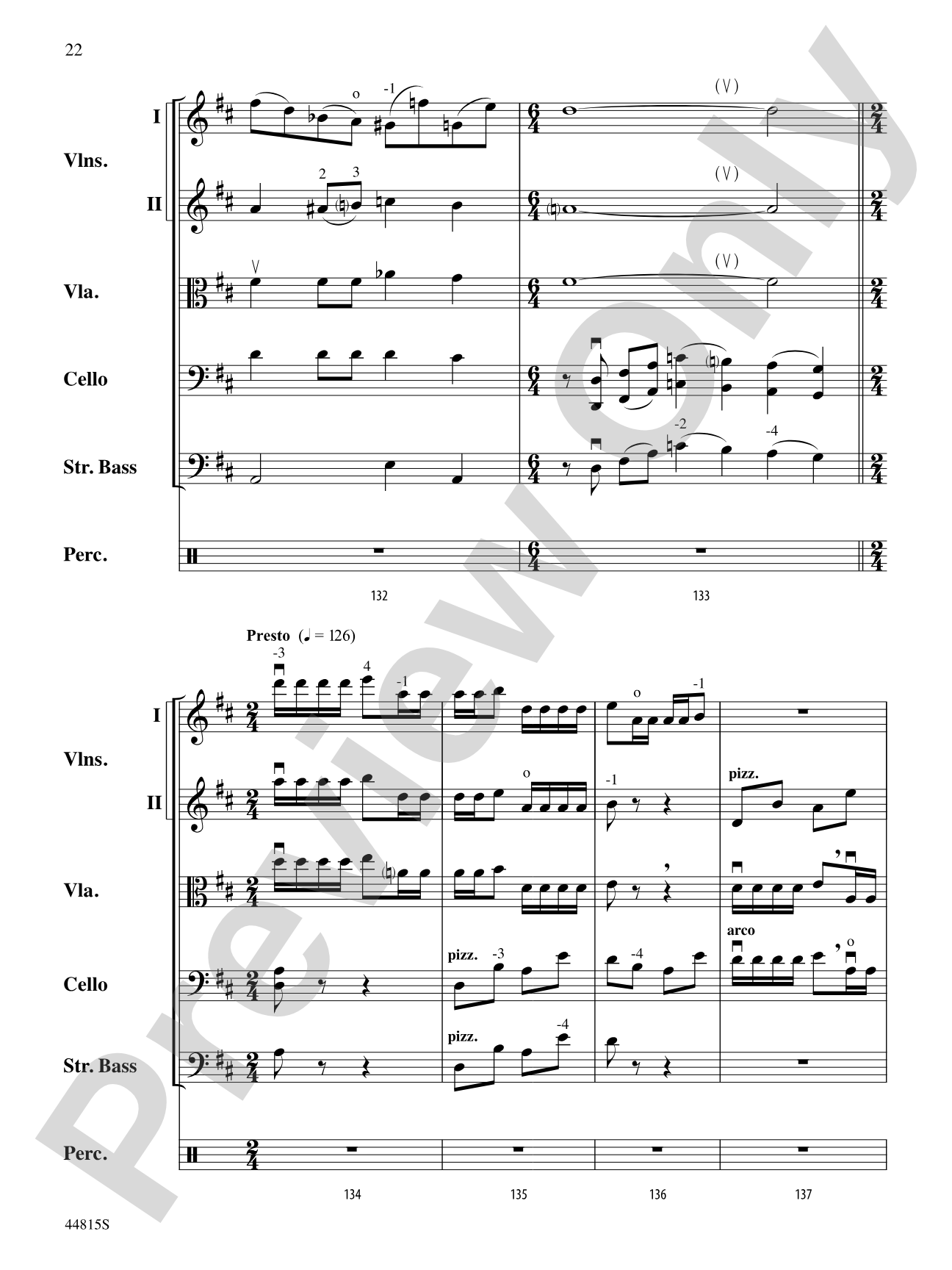
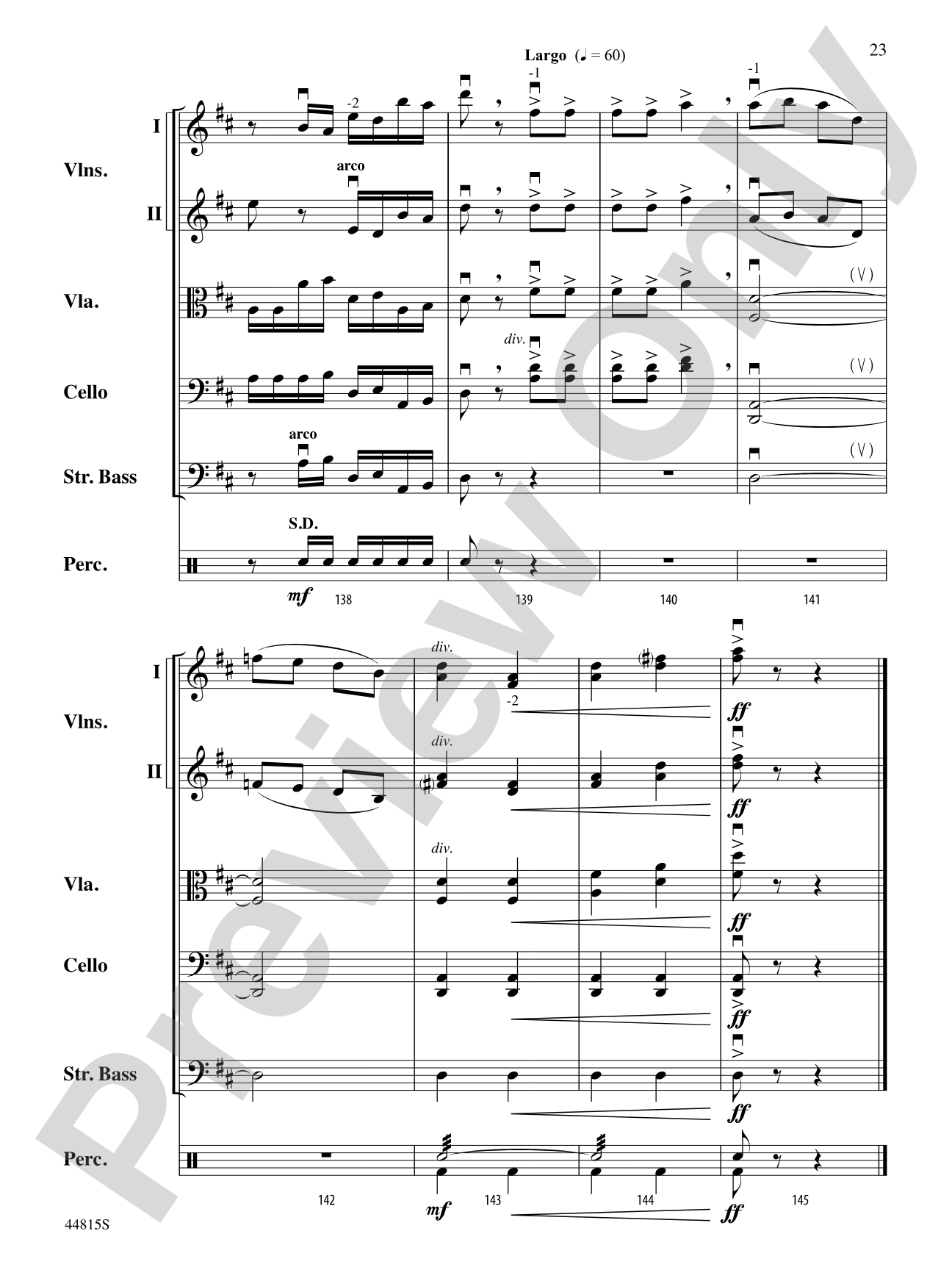

An American in Paris, Highlights from: String Orchestra Conductor Score & Parts
By George Gershwin / arr. Jerry Brubaker
Grade: 4
Item: 00-PK-0007087

$70.00
Pickup currently not available
Buy Extra Parts (Digital PDF Download)
Parts Added to Cart!
Description
A true joy to perform and to hear, this timeless George Gershwin piece is perfectly set for strings with optional percussion and arranged by Jerry Brubaker. Composed in 1928, then immortalized in the 1951 movie, it has become a classic. All the highlights are included in just over four minutes. (4:20) This title is available in MakeMusic Cloud.


Don't just read it, hear it, play along with it, and watch your students grow with it. In MakeMusic Cloud, An American in Paris, Highlights from: String Orchestra Conductor Score & Parts comes alive with professional accompaniment, adjustable tempo, and built-in practice tools that turn solo practice into real progress.
Open in the Player
Jump straight in and assign it today.
Start Your Free Trial
Open this title and explore the full library in minutes.
Sample Audio
1
Audio File
--:--
0:00
0:00
Sample Video
Additional Details
Series:
Pop Symphonic String Orchestra
Publisher:
Alfred Music
Page Count:
144
SKU:
00-PK-0007087
More about this title
About the Composer: George Gershwin
George Gershwin (1898–1937) stands as one of the most significant American composers of the twentieth century, bridging classical form with jazz idiom in ways that felt revolutionary at the time. His gift for melody was unmatched, and his ability to capture the energy and sophistication of urban American life made his works immediate classics. An American in Paris, composed in 1928, exemplifies his genius for blending orchestral grandeur with vernacular musical language.
Gershwin's short life was extraordinarily prolific. He composed for concert hall and theater alike, creating works that remain central to the American orchestral repertoire and continue to inspire musicians across all genres. His harmonic language, rhythmic vitality, and unapologetic embrace of popular music idioms in serious composition fundamentally reshaped what classical music could be.
Why we love this
Brubaker's arrangement distills the iconic themes into a lean, energetic package that fits a standard concert slot without sacrificing the work's symphonic ambition. The optional percussion keeps the piece flexible for your ensemble size, while the string writing remains idiomatic and rewarding even at Grade 4. Your students will recognize this masterwork immediately, and audiences never tire of hearing it.
What to expect
An American in Paris captures the exuberance of arriving in a great city: leisurely strolls broken by sudden bursts of energy, snippets of street music woven into sweeping romantic gestures, and a pervasive sense of possibility. Brubaker's arrangement preserves those contrasts, moving from introspective passages into moments of infectious joy and sophisticated orchestral color.
Who it's for
String orchestras at the Grade 4 level who want to tackle a genuinely famous work without overshooting their technical capabilities. Directors seeking authentic Gershwin for a concert program will find this arrangement delivers the full character of the original in a rehearsal-friendly format.
How to get the most out of it
- Balance the solo passages that emerge in first violin and cello against the harmonic foundation. These lines carry the melodic narrative and need room to breathe without drowning the ensemble texture.
- Treat the jazz inflections and syncopated rhythms as natural to the phrasing, not as obstacles. Let the swing sit in the rhythm section so the upper strings can shape their lines with confidence.
- Shape the dynamic arc across the full 4:20 span. With multiple themes packed into this highlights version, clear sectional control prevents the piece from feeling episodic.
- If you include the optional percussion, reserve them for strategic moments rather than continuous accompaniment. Their punctuation will land with more impact.
How to use it
Program this as a crowd-pleasing centerpiece in a concert built around American themes, or use it to open a pops-style performance where you want to establish sophistication from the outset. At just over four minutes, it pairs well with other short works and gives audiences a genuine showpiece without requiring extended rehearsal time for ambitious young ensembles.
Skills your students will build
- Balancing multiple melodic lines within a rich harmonic texture
- Playing with jazz-influenced articulation and rhythmic freedom
- Interpreting dynamic shaping across extended musical phrases
- Coordinating ensemble timing while maintaining individual line independence
- Reading and responding to conductor cues in a fast-moving, multi-thematic arrangement