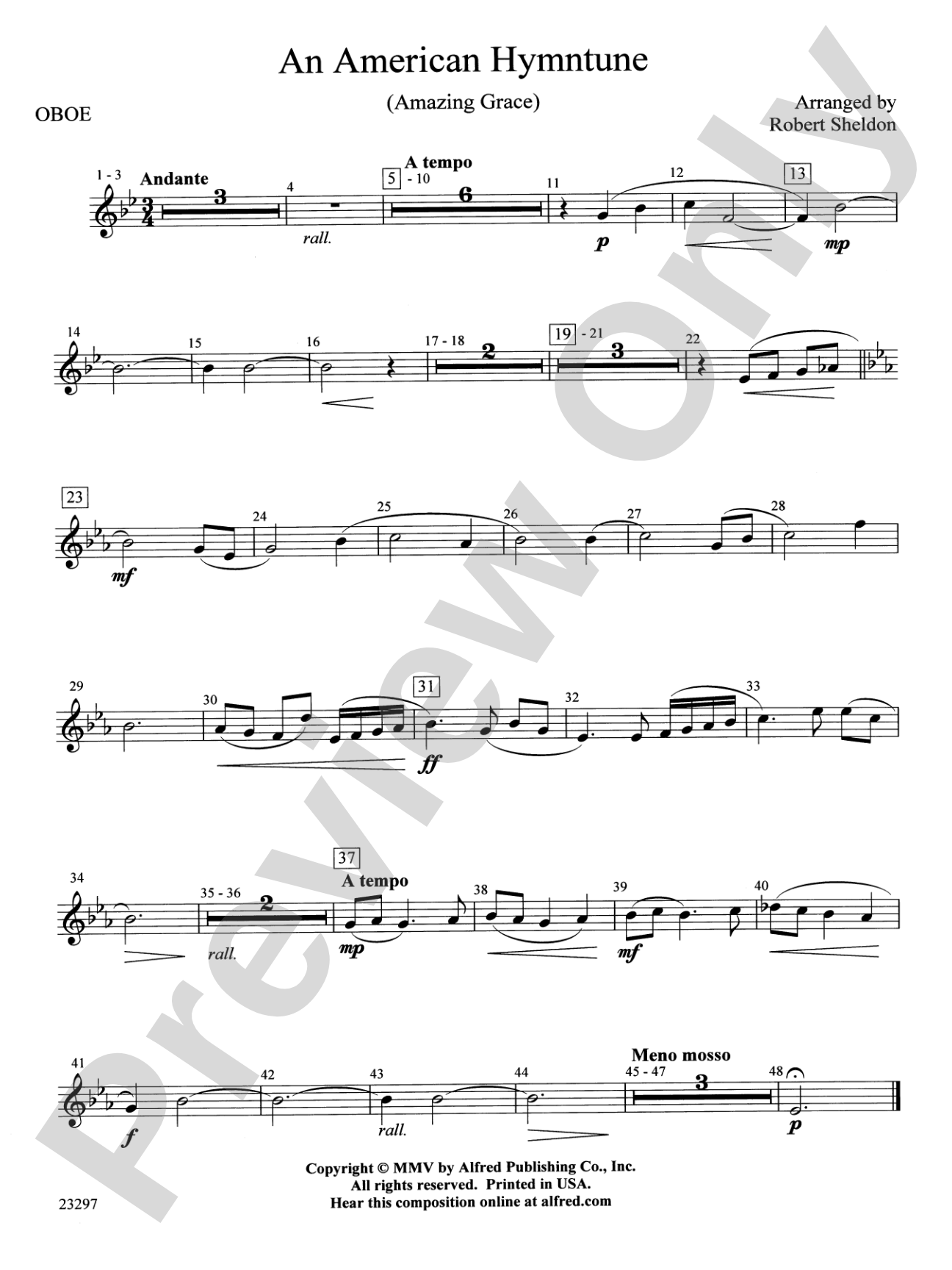
An American Hymntune (Amazing Grace): Oboe Sheet Music Preview

An American Hymntune (Amazing Grace): Oboe

Arr. Robert Sheldon

Grade: 1 (Very Easy)

Item: 00-PC-0000647_O1

Digital Download
$3.00
Description
This gentle and loving setting of "Amazing Grace" is sure to become a classic. Perfect for contest and concerts, this arrangement features an optional horn or baritone solo, and a harmonic treatment that is simply gorgeous.

Don't just read it, hear it, play along with it, and watch your students grow with it. In MakeMusic Cloud, An American Hymntune (Amazing Grace): Oboe comes alive with professional accompaniment, adjustable tempo, and built-in practice tools that turn solo practice into real progress.

Sample Audio
0:00
0:00
Sample Video
Additional Details
Series: Alfred Debut Series
Publisher: Alfred Music
Page Count: 114
SKU: 00-PC-0000647_O1

More about this title

About the Arranger: Robert Sheldon

Robert Sheldon

Robert Sheldon's compositions for wind band are performed more frequently than almost any other living composer's work. His catalog spans decades of commissions, festival premieres, and educational publications that have shaped how thousands of ensembles make music.

Sheldon's influence extends across the profession as a guest conductor, clinician, and advocate for music education. He has led All-State and Regional Honor Bands throughout North America and internationally, and his expertise in pedagogy is evident in every page he writes. His recognition includes honors from the American School Band Director's Association, Phi Beta Mu, ASCAP, and a 2020 honorary doctorate from VanderCook College of Music. His works regularly appear on state and national contest lists, and his arrangements and compositions are performed in concert halls from Carnegie Hall to the Kennedy Center to the Sydney Opera House.

Why we love this

Sheldon brings his characteristic clarity and warmth to this well-known melody without over-arranging it. The optional horn or baritone solo gives young soloists a chance to shine in a piece that sits comfortably for first-year players, while the harmonic underpinning rewards careful listening. This is the kind of arrangement that builds program coherence without demanding technical heroics.

What to expect

Reverent and accessible. The arrangement honors the hymn's meditative quality while remaining transparent enough for younger ensembles to hear themselves and their section partners. There's warmth in the harmonic treatment without sentimentality.

Who it's for

Beginning and intermediate concert bands looking for a dignified patriotic opener or closer that challenges young players to blend and balance rather than navigate technical passages. This is also an excellent choice for groups preparing for festival or contest performances where emotional maturity and ensemble cohesion are valued.

How to get the most out of it

  • Balance the solo line over the accompaniment by asking the horn or baritone to sing through the phrase rather than play at it; a gentle dynamic will carry naturally in a well-blended band.
  • Shape each phrase with a subtle crescendo and decrescendo, treating the hymn tune with the respect it deserves while keeping the energy moving forward.
  • Pay attention to ensemble intonation in the sustained chords; a tuning moment before the performance with the full band standing will tighten the harmonic sonority Sheldon wrote.

How to use it

Open a summer pops concert or patriotic program with this arrangement to set a thoughtful tone before moving into lighter fare. It also works effectively as a featured piece at a spring concert, particularly in programs that include other Americana or folk-song arrangements. The Grade 1 difficulty means even developing ensembles can perform it with confidence by mid-season.

Skills your students will build

  • Sustaining long tones with steady air pressure
  • Balancing dynamic contrast within slow, lyrical music
  • Blending harmony across sections with careful intonation
  • Responding to conducting nuance in non-march tempos
  • Supporting a solo line while maintaining ensemble cohesion

You May Also Like