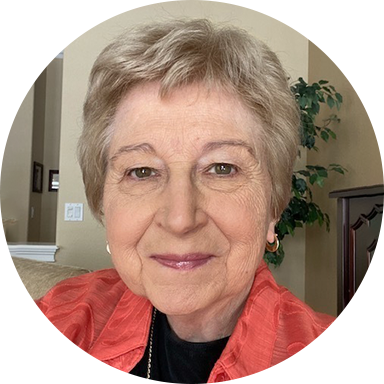
Mary Donnelly spent three decades teaching general music and choir in Reno, Nevada's Washoe County schools, where she developed a gift for creating accessible, engaging music for young singers. She holds a Bachelor of Arts in English and French from the University of Nevada, Reno, and later earned a Master's Degree in Education from Lesley College, where she focused on integrating the arts across the curriculum.
In 1985, Donnelly began collaborating with George L.O. Strid when their principal asked them to compose a musical for Reading Week. That first project launched a prolific partnership that has produced over two hundred songs and twenty-five musicals. Both educators understood what works in the rehearsal room and what resonates with student singers, giving their compositions both pedagogical soundness and genuine appeal.
Why we love this
Donnelly and Strid wrote this piece with real choirs in mind. The 2-part voicing sits naturally for younger or less experienced singers while maintaining musical substance, and the straightforward language about friendship gives singers an emotional anchor they can sing with conviction.
What to expect
Warm and celebratory, with a melody that feels both familiar and freshly composed. The text's sincere celebration of friendship gives the piece an unpretentious charm that singers enjoy and audiences find genuinely moving.
Who it's for
This octavo works well for middle school choirs, upper elementary ensembles ready for 2-part writing, and community choirs seeking accessible repertoire with heart. It's equally suited to concert performance or informal singing contexts where the focus is on connection rather than technical complexity.
How to get the most out of it
Balance the parts so both voices contribute equally to the overall sound; resist the urge to let the melody dominate.
Establish a comfortable tempo in rehearsal before introducing the accompaniment; rushing through either part undermines the piece's warmth.
Encourage singers to think about the text's meaning with specific friendship memories; genuine emotion will carry better than technical perfection alone.
How to use it
Pair this with other accessible 2-part pieces for a concert that showcases your younger singers' growing independence and musicality. It also serves as an excellent opener for any program where you want to establish an immediate sense of warmth and inclusion.
Skills your students will build
Reading and performing independent melodic lines in 2-part texture
Sustaining vocal line while listening to a second part
Interpreting text with emotional authenticity
Blending voices while maintaining individual part clarity
You May Also Like
Scan to Complete Your Purchase
Use your phone's camera to scan the code below
You'll log in on your phone and the order will be added to your account